Executive Overview
The global music community, cultural historians, and millions of devoted fans worldwide are mourning the loss of a true American titan. Dolly Parton, the peerless singer-songwriter, multi-instrumentalist, actress, author, and philanthropist whose career spanned an astonishing seven decades, passed away on August 25, 2026, at the age of 80 in Nashville, Tennessee. Her death came just days after she publicly disclosed mounting health challenges, casting a sudden shadow over a cultural landscape that had long taken her omnipresent warmth, wit, and wisdom for granted.
In the wake of her passing, tributes have poured in from every corner of the entertainment industry, transcending genres, generations, and national borders. Among the most resonant of these memorials came from alternative-rock icon Jack White, who took to social media to advocate for Parton’s "instant sainthood." White’s sentiment captured a universal cultural feeling: that Parton was not merely a pop-culture celebrity, but a moral and humanitarian force whose impact redefined the intersection of artistic genius and radical empathy.
Parton’s legacy is monumental. Rising from the abject poverty of rural East Tennessee to become one of the most recognizable and enduring figures in modern history, she built an empire out of rhinestone-studded glamour, razor-sharp business acumen, and a down-to-earth authenticity that never wavered. Whether through her timeless catalog of country and pop anthems—such as "Jolene," "I Will Always Love You," and "9 to 5"—or her tireless philanthropic endeavors, including the world-renowned Imagination Library, Parton permanently altered the cultural fabric of the world.
This retrospective examines the extraordinary life, career, and enduring legacy of Dolly Parton, charting her rise from the Smoky Mountains to global superstardom, detailing the official statements surrounding her passing, and exploring the profound void she leaves behind in the worlds of music, literature, and humanitarianism.
Detailed Chronology: A Seven-Decade Tapestry of Stardom
To understand the magnitude of Dolly Parton’s impact, one must trace a trajectory that began in the most humble of circumstances and scaled the absolute pinnacle of international acclaim.
The Smoky Mountain Roots (1946–1964)
Born on January 19, 1946, in Locust Ridge, Tennessee, Dolly Rebecca Parton was the fourth of twelve children born to Robert Lee Parton Sr. and Avie Lee Caroline Owens. Growing up in a two-room cabin in the Great Smoky Mountains, Parton’s early life was defined by extreme financial hardship—famously immortalized in her song and television movie Coat of Many Colors—and a rich musical heritage rooted in Appalachian folk traditions and the church.
Despite the lack of material wealth, music was the lifeblood of the Parton household. Encouraged by her uncle, Bill Owens, who recognized her prodigious talent at an early age, Dolly began performing locally on radio and television stations in East Tennessee while still a pre-teen. By the time she graduated from Sevier County High School in 1964, she packed her bags and moved to Nashville on the very next day, determined to conquer Music City.
The Nashville Breakthrough and Porter Wagoner Years (1965–1973)
Parton’s early years in Nashville were characterized by a relentless grind as a songwriter, penning hits for other artists alongside her partner Bill Owens. Her breakthrough as a recording artist came when entertainer Porter Wagoner invited her to join his popular syndicated television program, The Porter Wagoner Show, in 1967.
As the "Girl Singer" on the show, Parton gained national exposure and signed with RCA Records. While her early solo singles gained moderate traction, her duet recordings with Wagoner—including a soaring cover of Jimmie Rodgers’s "The Last Letter" and original compositions like "Just Someone I Used to Know"—catapulted her to country music superstardom.
However, Parton’s artistic ambitions could not be permanently tethered to a supporting role. In 1973, she made the difficult decision to strike out on her own, immortalizing the career transition by writing and recording "I Will Always Love You." The song, a poignant masterclass in graceful parting, went straight to number one on the Billboard Country Chart. Legend has it that when she played the song for Wagoner to explain her departure, tears came to his eyes, and he said, "The best thing you ever did was write that song."
Pop Crossover, Hollywood, and Global Omnipresence (1974–1999)
Having conquered the country charts with definitive solo anthems like "Jolene," "Coat of Many Colors," and "Love Is Like a Butterfly," Parton set her sights on the mainstream pop market. Throughout the late 1970s and 1980s, she deliberately softened her hardcore country twang for a slicker pop production style, yielding monumental crossover smashes like "Here You Come Again," "9 to 5" (the title track to her blockbuster 1980 film debut), and "Islands in the Stream," her historic 1983 duet with Kenny Rogers written by the Bee Gees.
Parton’s cinematic career flourished concurrently. She starred alongside Jane Fonda and Lily Tomlin in 9 to 5, earning widespread acclaim for her comedic timing and screen presence. She followed this with roles in The Best Little Whorehouse in Texas (1982), for which she received a Golden Globe nomination, and Steel Magnolias (1989), where her portrayal of Truvy Jones cemented her status as a beloved cinematic fixture.
In 1986, Parton returned to her roots by opening Dollywood, her signature theme park in Pigeon Forge, Tennessee. The park revitalized the local economy of Sevier County, transforming it into a major tourism hub while providing thousands of jobs to the region.
The Elder Stateswoman and Cultural Icon (2000–2026)
As the new millennium dawned, Parton embarked on a creative renaissance. She pivoted back to her acoustic roots, releasing a critically acclaimed series of bluegrass-inflected albums starting with The Grass Is Blue (1999), which earned her a Grammy Award. She continually refused to slow down, releasing a boundary-pushing rock album, Rockstar, in late 2023 at the age of 77, which featured collaborations with an all-star roster of rock royalty including Paul McCartney, Elton John, Steven Tyler, and Debbie Harry.
Throughout her later years, Parton became a unifying figure in an increasingly polarized world. Her self-effacing humor, willingness to adapt to cultural shifts, and absolute refusal to court controversy through partisan politics made her one of the most universally beloved figures on Earth. Her financial support of medical research—including a $1 million donation to Vanderbilt University Medical Center that helped fund the Moderna COVID-19 vaccine—further burnished her credentials as a modern saint of pragmatism and compassion.
Supporting Context & Metrics: Jack White’s Tribute and Cultural Resonance
The outpouring of grief following Parton’s passing on August 25, 2026, manifested in myriad ways across digital platforms, but few tributes captured the public consciousness quite like the one posted by alternative-rock visionary Jack White.
"Instant Sainthood"
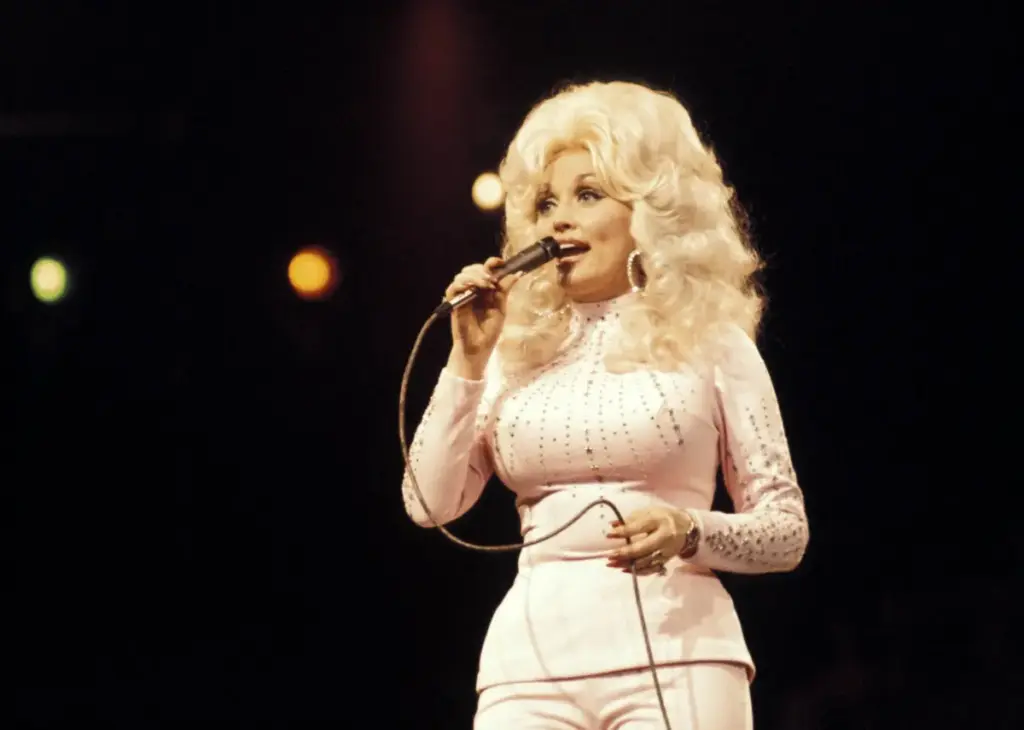
Shortly after news broke of Parton’s death at age 80, Jack White took to his official Instagram account to share a striking, black-and-white portrait of Parton from the early years of her career. With characteristic economy, White captioned the post simply: "Instant Sainthood."
The phrase struck a chord with millions. Within hours, the post accumulated hundreds of thousands of likes and thousands of comments from fans and fellow artists alike. The commentary thread functioned as a digital wake, highlighting the multi-generational impact of Parton’s art and character.
One follower encapsulated the public sentiment, writing:
"Dolly was one of the best humans to ever walk this earth. She had indelible talent, unfathomable kindness, and beauty inside and out."
Another fan added:
"Truly, few people actually leave behind a legacy of positive change, love, healing, hope, and kindness. She’s done so much for so many. What a lady. What an artist. What a humanitarian. What a beautiful and kind badass she was, is, and will always be."
The Metrics of a Legend
To contextualize White’s call for "sainthood," one must look at the hard data of Parton’s life and career:
- The Music: Over a seven-decade career, Parton penned more than 3,000 songs, released over 40 studio albums, and achieved 25 number-one singles on the Billboard Country Airplay chart.
- The Accolades: She received 11 Grammy Awards from 50 nominations, two Academy Award nominations, ten Country Music Association Awards, and induction into the Country Music Hall of Fame (1999) and the Rock and Roll Hall of Fame (2022).
- The Philanthropy: Through her Dollywood Foundation, her Imagination Library has mailed over 200 million free books to children from birth to age five across the United States, Canada, the United Kingdom, Australia, and the Republic of Ireland.
Official Statements and Family Legacy
The official announcement of Parton’s passing was released by her representatives on August 25, 2026, detailing her peaceful final moments in Nashville, Tennessee.
The statement read:
"Global icon and humanitarian, Dolly Parton, known to the world as a beloved singer, songwriter, philanthropist, actress, playwright, and author, died peacefully today in Nashville, Tennessee.
A rhinestone life that shone bright enough for the world to see, Dolly will forever stand as an inspiration not only through her timeless music and prolific songwriting, but also her wit, warmth, and kindness that made us all feel like family. Dolly Parton’s legacy is one of love, compassion, and resilience.
With a seven-decade career, she inspired multiple generations of artists and fans with her music and an unwavering commitment to making the world a better place. Her songs will continue to resonate with people of all ages, and her philanthropic work will have a lasting impact."
Parton’s death closes a monumental chapter for her family as well. She is preceded in death by her devoted husband of 59 years, Carl Thomas Dean (1942–2025), who famously maintained a quiet life away from the blinding spotlights of her career; her mother, Avie Lee Caroline Owens (1923–2003); and her father, Robert Lee Parton Sr. (1921–2000).
Future Outlook: Preserving the Gospel of Dolly
As the dust settles on the passing of Dolly Parton, cultural critics and institutional leaders are left with a critical question: How do we preserve the immense cultural and humanitarian infrastructure she leaves behind?
Ensuring the Survival of the Imagination Library
Chief among Parton’s living legacies is the Dollywood Foundation’s Imagination Library. Institutional partners and trustees have already stepped forward to reassure the public that the program—which currently puts books into the hands of more than two million children every single month—has been heavily endowed and structurally protected to continue indefinitely. The program’s board of directors issued a brief memorandum assuring donors and participating families that Dolly’s vision of childhood literacy will not falter in her absence.
Cultural Preservation in Nashville and Sevier County
In Nashville and Pigeon Forge, plans are already underway for permanent public memorials. The Country Music Hall of Fame and Museum is reportedly curating an expansive, definitive retrospective exhibition slated for early 2027, drawing on thousands of artifacts from Parton’s personal archives—ranging from her iconic theatrical costumes designed by Retta Partington to the original manuscript notebooks containing handwritten lyrics to her most enduring compositions.
Meanwhile, Dollywood remains a living monument to her theatrical flair and entrepreneurial spirit. Management has confirmed that the theme park will continue to operate under the guiding philosophy that Parton instilled from day one: to make people smile, make them feel welcome, and celebrate the rich, complex heritage of the American South without cynicism or prejudice.
The Undying Echo
Dolly Parton often joked about her own mortality, famously remarking that she intended to look like a porcelain doll until the day she checked out, and that her body would eventually be packed with formaldehyde and glitter. Beneath the self-deprecation, however, was a woman who understood the permanence of true art.
As Jack White aptly noted, the music, the literature, the philanthropy, and the radical, unyielding kindness have left an imprint on humanity that requires no formal canonization to be recognized as sacred. Dolly Parton is gone, but the rhinestone light she cast across the world will continue to shine for generations yet unborn.