Executive Overview
A verbal misstep by Vice President JD Vance during a campaign address in Brewer, Maine, has illuminated the increasingly transactional and contentious relationship between the United States and its northern neighbor. Speaking at the headquarters of Compotech, a defense-adjacent manufacturer, Vance accidentally referred to Canada as a "state" before quickly retracting the statement as a "Freudian slip."
While dismissed by Vance’s team as an innocent gaffe, the remark has reverberated across Ottawa and Washington. It occurs against a backdrop of intensifying bilateral trade disputes, aggressive tariff threats from the Trump administration, and deep-seated American frustration over Canadian defense expenditures.
Historically characterized by seamless diplomatic cooperation and the world’s longest undefended border, the US-Canada partnership is undergoing a profound structural shift. The administration’s rhetoric, coupled with proposed 50% tariffs on Canadian automotive exports, suggests a departure from traditional diplomacy toward a policy of economic coercion. This investigative report dissects the chronology of Vance’s address, the economic metrics fueling the current trade dispute, and the strategic implications of a fractured North American alliance.
Detailed Chronology of the Brewer Address
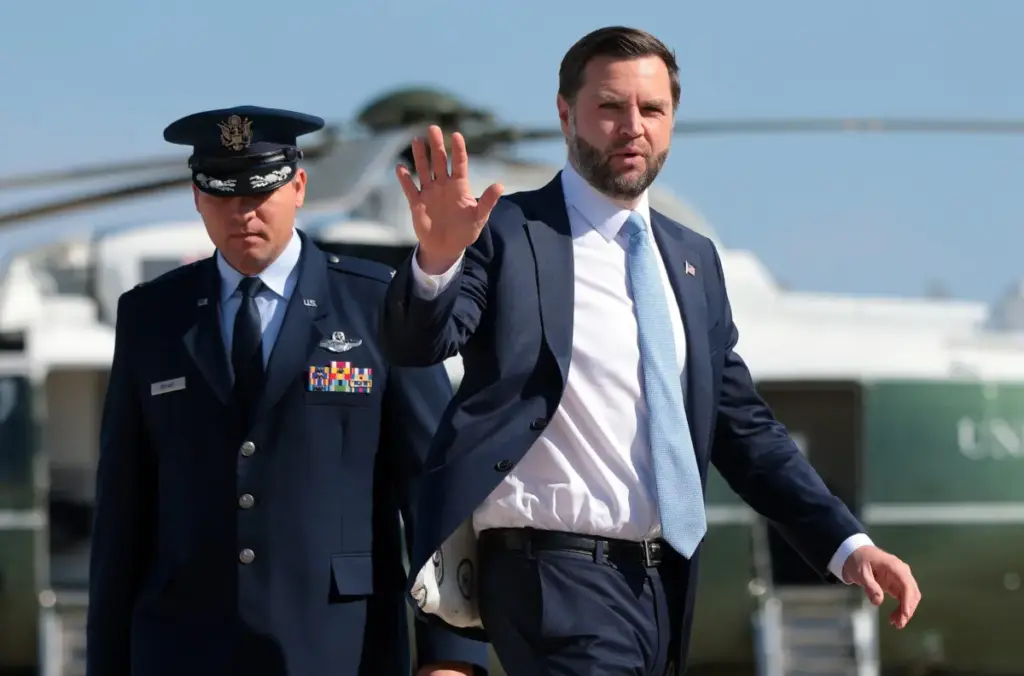
On Monday, August 24, Vice President JD Vance arrived at the Brewer, Maine headquarters of Compotech—a firm specializing in advanced composite materials and blast-resistant structures for the US military. The venue was carefully selected to underscore the administration’s focus on domestic manufacturing, national security, and the protection of local industries from foreign competition.
[Vance Arrives in Brewer, ME]
       │
       ▼
[Address at Compotech HQ] ──► Focus: Domestic Manufacturing & Maine Trade
       │
       ▼
[The Verbal Slip] ──────────► "We have to remember Canada is a state."
       │
       ▼
[Immediate Correction] ─────► "Sorry, Freudian slip... actually an accident."
       │
       ▼
[Policy Pivot] ─────────────► Criticizes Canadian Tariffs & Defense Spending
The Anatomy of a Slip
During his speech, Vance transitioned from discussing domestic economic revitalization to addressing the trade challenges faced by Maine’s agricultural, forestry, and manufacturing sectors. He specifically targeted foreign trade practices that local producers argue have undermined their market share.
"We have to remember Canada is a state," Vance declared.
Realizing the geopolitical implications of the phrasing, Vance paused, offering an immediate correction: "Sorry, Freudian slip. That was actually an accident."
The self-described "Freudian slip" was captured on video and widely circulated across social media and international news outlets. While Vance attempted to minimize the gaffe with a brief laugh, the transition back to his prepared remarks was swift and uncompromising.
From Gaffe to Geopolitical Critique
Vance utilized the moment to pivot back to a sustained critique of Ottawa’s trade policies, placing Canada in the same category of economic competitors as Beijing.
"China, you of course expect," Vance argued, establishing a contrast between the two trading partners. "They’re our biggest economic competitor. I would expect that from China. I would not expect that from Canada."
Vance proceeded to lambast Canadian tariffs on Maine-specific products—such as lobster, timber, and agricultural goods—calling them "ridiculous." He then expanded his critique beyond trade, targeting Canada’s defense spending and suggesting that the country’s sovereign security is entirely contingent upon American military goodwill.
"Canada is a country that has underinvested in its military that quite literally would get invaded by a foreign country were it not for the umbrella of protection provided by the United States of America," Vance asserted. He concluded with a warning: "We’re sick of that. We are actually going to fight back against unfair trade practices, whether it’s coming from China or Canada."
Supporting Context & Metrics: The Anatomy of a Trade Dispute
Vance’s rhetoric is not an isolated incident of diplomatic friction; rather, it reflects a calculated economic strategy. The United States and Canada share one of the largest bilateral trading relationships in the world, with daily goods and services trade exceeding $2 billion. However, this integration has become a primary target for the administration’s "America First" economic platform.
US-Canada Trade Conflict Metrics:
┌────────────────────────────────────────────────────────┐
│ Proposed US Automotive Tariffs:  50%                   │
├────────────────────────────────────────────────────────┤
│ Canada Retaliation Pledge:       Dollar-for-Dollar     │
├────────────────────────────────────────────────────────┤
│ NATO Defense Target:             2.0% of GDP           │
├────────────────────────────────────────────────────────┤
│ Canada Current Defense Spending: ~1.37% of GDP         │
└────────────────────────────────────────────────────────┘
The Automotive Tariff Threat
The immediate flashpoint in the current dispute is President Donald Trump’s threat to impose a 50% tariff on Canadian-assembled cars, trucks, and automotive parts. This proposal followed the collapse of recent bilateral trade negotiations.
The automotive supply chain in North America is highly integrated, with parts frequently crossing the US-Canada border multiple times during the assembly process. Industry analysts warn that a 50% tariff would have severe consequences for both economies:
- Supply Chain Disruption: Major manufacturing hubs in Ontario, Michigan, Ohio, and Indiana rely on just-in-time delivery systems. High tariffs would disrupt these operations, potentially leading to factory closures and job losses on both sides of the border.
- Consumer Price Hikes: The cost of new vehicles in the United States could rise by thousands of dollars, as manufacturers pass the tariff costs onto consumers.
- Retaliatory Measures: Canadian policymakers have made it clear that they will not yield to economic pressure without a fight, raising the prospect of a prolonged trade war.
Defense Spending and the NATO Commitment
Vance’s assertion that Canada "underinvests" in its military points to a long-standing grievance in Washington. Under NATO’s 2014 Wales Summit Declaration, member states committed to spending at least 2% of their Gross Domestic Product (GDP) on defense by 2024.
Canada has consistently fallen short of this benchmark, spending approximately 1.37% of its GDP on defense. While Ottawa recently announced an updated defense policy titled Our North, Strong and Free, which outlines a path to reach 1.76% by 2030, the timeline has failed to satisfy critics in Washington.
| Country | Defense Spending (% of GDP) | NATO Target Status |
|---|---|---|
| United States | ~3.49% | Exceeds Target |
| Canada | ~1.37% | Non-Compliant |
| NATO Target | 2.00% | Benchmark |
The administration has increasingly linked defense spending directly to trade access. The underlying message is clear: the United States will no longer guarantee defense protection or favorable trade terms to allies that it views as failing to contribute their fair share to collective security.
Official Statements and Rhetorical Analysis
The language employed by Vance—and his characterization of the slip as "Freudian"—suggests a deeper perspective within the administration regarding Canadian sovereignty. In psychoanalytic theory, a Freudian slip is an unintentional error regarded as revealing subconscious feelings or thoughts. By calling Canada a "state" and labeling it a Freudian slip, Vance inadvertently highlighted a perspective that views Canada not as an equal sovereign partner, but as an economic and security dependency of the United States.
This perspective is shared by President Trump, who has previously referred to Canada as a U.S. state during intense trade negotiations. This rhetorical strategy serves to diminish Canada’s diplomatic leverage by framing its economic survival as entirely dependent on American goodwill.
The View from Ottawa
In response to the escalating threats and Vance’s remarks, Canadian Prime Minister Mark Carney has maintained a firm stance. Speaking to reporters in Ottawa, Carney addressed the proposed 50% automotive tariffs directly:
"Canada has always been a constructive partner, but we will not be intimidated by unilateral tariffs that violate existing trade agreements and threaten the livelihoods of working families on both sides of the border. Should the United States proceed with these unwarranted levies, Canada is prepared to respond with dollar-for-dollar retaliatory tariffs targeting key American economic sectors."
Carney’s "dollar-for-dollar" retaliation pledge mirrors the strategy Canada employed during the 2018 steel and aluminum tariff dispute. At that time, Ottawa carefully targeted retaliatory tariffs on goods produced in politically sensitive US congressional districts, eventually forcing a negotiated resolution.
Bilateral Stances:
┌────────────────────────────────────────┐  vs.  ┌────────────────────────────────────────┐
│             United States              │       │                 Canada                 │
├────────────────────────────────────────┤       ├────────────────────────────────────────┤
│ • Demand 2% GDP defense spending.      │       │ • Defense spending increasing to 1.76%.│
│ • Threaten 50% auto tariffs.           │       │ • Threaten dollar-for-dollar tariffs.  │
│ • Frame relationship as transactional. │       │ • Demand adherence to USMCA terms.     │
└────────────────────────────────────────┘       └────────────────────────────────────────┘
Future Outlook: Geopolitical and Economic Trajectories
The current friction between Washington and Ottawa points to a challenging period ahead for North American relations. As both nations navigate these domestic and economic pressures, three potential scenarios emerge for the future of the alliance:
                          ┌──► Scenario A: De-escalation & Compromise
                          │    (USMCA preserved; gradual defense increases)
                          │
Future Geopolitical Paths ┼──► Scenario B: Targeted Trade War
                          │    (50% auto tariffs enacted; Canadian retaliation)
                          │
                          └──► Scenario C: Structural Realignment
                               (Canada diversifies trade; US defense ties weaken)
Scenario A: Tactical De-escalation and Compromise
In this scenario, the aggressive rhetoric from Washington is understood as a high-stakes negotiating tactic designed to secure specific concessions. Canada could agree to accelerate its defense spending timeline to meet the 2% NATO target more quickly, while offering minor concessions on dairy imports or digital services taxes. In exchange, the Trump administration would shelve the 50% automotive tariff threat, preserving the core framework of the United States-Mexico-Canada Agreement (USMCA).
Scenario B: A Prolonged and Targeted Trade War
Should negotiations fail, the implementation of a 50% tariff on Canadian automotive imports would trigger immediate, matching retaliatory measures from Ottawa. This would likely disrupt the North American manufacturing sector, drive up consumer prices, and lead to job losses in key industrial states like Michigan and Ohio, as well as Ontario. The economic fallout could force both nations back to the negotiating table, but only after significant economic damage has occurred.
Scenario C: Deepening Cleavages and Structural Realignment
If the administration continues to treat Canada as an economic dependency rather than a sovereign ally, Ottawa may look to diversify its trade relationships away from the United States. While complete decoupling is impossible due to geography, Canada could strengthen trade ties with the European Union, the Indo-Pacific region, and non-traditional partners. This shift would weaken the security partnership of NORAD and NATO, leading to a more fragmented and less secure North American continent.
Conclusion
JD Vance’s verbal slip in Maine was more than a simple campaign error; it reflected the transactional, skeptical approach that defines the current administration’s foreign policy. By linking trade access directly to defense spending and questioning the sovereignty of its closest ally, the United States is rewriting the rules of North American diplomacy. Whether this approach yields the economic concessions Washington seeks—or instead triggers a damaging trade war that undermines regional security—remains the central question for the future of the alliance.