Executive Overview
Ever watched a ballet dancer effortlessly hold a breathtaking, gravity-defying pose for minutes on end and wondered how it’s physically possible? The secret does not solely lie in raw, explosive power; rather, it is the masterclass product of exceptional muscular endurance. This foundational principle serves as the heartbeat of barre training—a low-impact, highly effective fitness phenomenon that marries the elegance and posture of classical ballet with the core-stabilizing dynamics of Pilates and yoga.
In a fitness culture obsessed with heavy lifting, maximal exertion, and breaking personal records with brute force, barre offers a refreshing, highly sustainable alternative. According to prominent fitness instructor Siri Chilazi, barre is deliberately designed as a muscular endurance workout rather than a traditional muscular strength session.
"Instead of lifting a heavy weight a couple of times like we would if we were trying to build strength and grow muscle, we’re working with bodyweight or light dumbbells, but we’re moving for longer so we’re training muscular endurance," Chilazi explains.
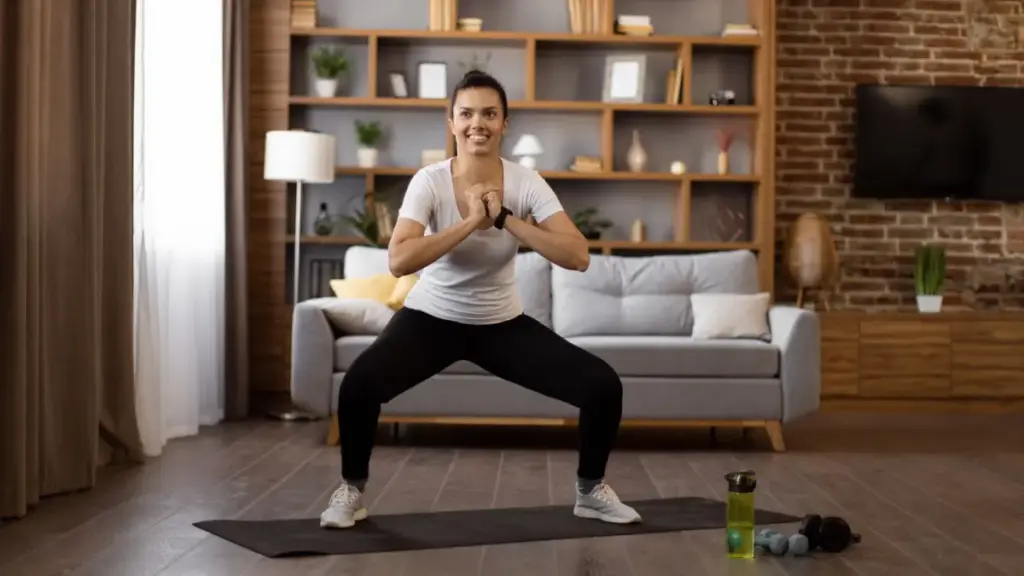
Far from being merely a niche dancer’s conditioning tool, muscular endurance is an unsung hero of everyday life. While lifting a heavy suitcase into an overhead bin on an airplane requires acute muscular strength, hauling a wriggling toddler for ten minutes or marching home from the supermarket with heavy grocery bags for ten consecutive blocks demands deep, reliable muscular endurance. To bridge the gap between studio aesthetics and practical, real-world fitness, Chilazi has exclusively shared a comprehensive home barre routine. Utilizing high-tension techniques like strategic variations of squats, extended holds, and micro-pulses, this routine challenges your body to maintain peak performance under prolonged fatigue.
Detailed Chronology: The Evolution and Mechanics of Barre
The genesis of barre traces back to 1959, when German dancer Lotte Berk injured her back and sought a way to combine her ballet conditioning background with rehabilitative physical therapy. Opening a studio in her London basement, she inadvertently birthed an entirely new fitness paradigm. Over the decades, Berk’s method evolved through various iterations—most notably through the creation of "The Lotte Berk Method" in the United States during the 1990s—before exploding into the modern boutique fitness empire recognized today.
As the modality matured, fitness scientists and expert instructors began documenting the specific physiological adaptations triggered by barre workouts. The timeline of barre’s rise is characterized by a shift from niche celebrity-endorsed classes to evidence-based functional training.
The Modern Adaptation: Bringing the Studio Home
For years, experiencing the transformative burn of a barre class required access to specialized studios equipped with mounted wooden barres, resistance bands, and stability balls. However, the paradigm shifted dramatically in the wake of global fitness disruptions, prompting top-tier instructors to democratize the discipline.
Siri Chilazi’s newly released home routine represents the pinnacle of this evolution. By stripping away the requirement for bulky studio equipment, Chilazi has crafted a sequence that relies purely on bodyweight, furniture for balance, and time-under-tension physics. The routine is meticulously structured to flow seamlessly from movement to movement with minimal rest, mirroring the continuous cardiovascular and muscular demands of a live studio session.
The Five-Step Tension Sequence
What sets Chilazi’s protocol apart from standard calisthenics is its adherence to a strict, multi-phase execution formula. For every exercise in the regimen, practitioners do not merely perform standard, repetitive up-and-down motions. Instead, they cycle through a sophisticated five-step sequence:
- Full Repetitions: Moving through the complete range of motion to prime the target muscle groups and lubricate the joints.
- Half Repetitions: Cutting the movement short to keep continuous, unyielding tension locked inside the muscle fibers.
- Micro-Pulses: Performing tiny, rhythmic oscillations at the point of maximum resistance, pushing local muscle fibers to recruit secondary motor units.
- Isometric Holds: Freezing the body completely still at the most challenging point of the exercise. This eliminates momentum and forces deep stabilizing muscles to fire continuously.
- Progressive Overload Variations: Where applicable, introducing balance challenges, alternating heel raises, or directional taps to test neurological control alongside muscular stamina.
Supporting Context & Metrics: Strength vs. Endurance
To truly appreciate the value of a barre workout, one must understand the distinct physiological differences between muscular strength and muscular endurance.
The Physiology of Muscle Fibers
Human skeletal muscle is composed of different types of muscle fibers, primarily categorized into Type I (slow-twitch) and Type II (fast-twitch).
- Type II fibers are recruited for high-power, short-duration activities, such as a one-rep max deadlift or a 100-meter sprint. They fatigue rapidly but generate immense force.
- Type I fibers are optimized for endurance. They rely on aerobic metabolism, resist fatigue, and are responsible for maintaining posture, stability, and repetitive sub-maximal movements over extended periods.
Barre training heavily targets Type I fibers through the concept of time under tension (TUT). By forcing muscles to contract continuously for 45 to 60 seconds per set—often augmented by the isometric holds and pulses characteristic of Chilazi’s routine—practitioners deplete local oxygen stores and flood the muscle tissue with metabolic byproducts. This process signals the body to improve capillary density, enhance mitochondrial efficiency, and build exceptional resistance to fatigue.
Real-World Applications and Metrics
Fitness experts often point to the functional limitations of traditional strength training. A person might be able to squat 300 pounds in a squat rack, yet struggle to maintain good posture while standing at a standing desk for four hours. This discrepancy highlights a deficit in muscular endurance and postural stamina.
According to exercise science metrics, integrating endurance-focused routines like barre yields several distinct systemic benefits:
- Enhanced Joint Stability: Because barre movements are low-impact, they protect cartilage and connective tissues while strengthening the smaller peri-articular muscles that stabilize knees, hips, and ankles.
- Postural Realignment: Ballet-inspired movements intensely engage the deep core (transverse abdominis), pelvic floor, and scapular stabilizers, directly combating the postural degradation associated with modern sedentary lifestyles.
- Metabolic Conditioning: The sustained muscle contractions elevate heart rates without the joint-pounding trauma of high-intensity interval training (HIIT) or heavy plyometrics, making it an ideal modality for sustainable body composition management.
Official Statements and Expert Insights
Siri Chilazi’s philosophy on functional fitness emphasizes that physical training should directly translate to the quality of a person’s daily life.
"Muscular endurance can be just as important as muscular strength in everyday life," Chilazi emphasizes. "If you’re on an airplane and you have to lift your heavy carry-on into the overhead bin, that requires strength. But carrying your kid for 10 minutes or walking home with grocery bags for 10 blocks requires muscular endurance."
This perspective is echoed by a growing consensus within the physical therapy and kinesiology communities. Traditional strength training builds the engine, but endurance training builds the fuel tank. Without endurance, strength cannot be sustained over time, leading to premature fatigue, compensatory movement patterns, and an increased risk of chronic overuse injuries.
Furthermore, Chilazi notes that home-based barre routines are designed with self-regulation in mind. While the sequence is structured to be performed with little to no rest between movements, she issues a vital safety advisory for practitioners at all fitness levels: listen to your body.
"Rest in between sections if you need to, or if your form is compromised," Chilazi advises. Maintaining pristine biomechanical alignment takes precedence over pushing through fatigue with poor form, particularly when executing isometric holds and pulses where minor postural shifts can alter muscle recruitment patterns.
Future Outlook: The Integration of Barre into Holistic Fitness
As the wellness landscape continues to evolve past the false dichotomy of "cardio versus lifting," hybrid modalities like barre are securing a permanent, respected place in mainstream fitness regimens. The future of physical conditioning points toward cross-training—the deliberate blending of heavy resistance training, cardiovascular endurance, and low-impact muscular endurance work.
Why Barre is Here to Stay
The longevity of barre as a fitness trend lies in its profound accessibility and infinite scalability. Whether you are an elite athlete looking to correct muscular imbalances and enhance core stability, an older adult seeking to preserve bone density and joint health without heavy axial loading, or a busy parent trying to stay fit in a living room, barre offers a tailored pathway to physical resilience.
As routines like Chilazi’s become more widely accessible through digital platforms and social media, the barrier to entry has evaporated. Practitioners no longer need specialized studio memberships to reap the benefits of dancer-level muscular endurance.
Actionable Advice for Your Next Workout
If you are ready to incorporate barre principles into your weekly training schedule, consider the following implementation strategy:
- Frequency: Aim for 2 to 3 barre sessions per week, allowing adequate recovery between lower-body focused endurance days.
- Pairing: Balance your barre work with 1 to 2 sessions of traditional strength training (such as deadlifts, rows, and overhead presses) to ensure you are developing both maximum strength and endurance proportionately.
- Focus on Form: Prioritize depth of movement and structural alignment over the speed of execution. When Chilazi prescribes pulses and holds, lean into the shake—that muscular tremor is the direct biological sign of your Type I fibers adapting, growing stronger, and building the endurance needed to carry you through the challenges of everyday life.