Executive Overview
Last weekend, London’s sprawling Victoria Park transformed into a high-octane runway of hyper-personalized fashion, defying both the elements and traditional notions of festival style. Beneath a hazy, dust-choked sky stirred up by thousands of dancing feet, a vibrant ecosystem of subcultural aesthetics took root. Tropical flowers unfurled on makeshift accessories, butterflies fluttered through swirling dust clouds, and colorful gemstones glinted in the late-summer haze. This was the scene at All Points East, one of the UK’s premier contemporary music festivals. Yet, the true spectacle lay not merely in the ecological resilience of the attendees, but in their meticulously constructed wardrobes.
The traditional festival dress code—once defined by effortless bohemian nonchalance, weathered denim cut-offs, and neutral-toned layering—has officially been usurped. Today, festival style is a direct extension of the stage. The modern concert-goer does not dress for the weather or comfort; they dress to mirror the sonic and visual identity of the headlining artists.
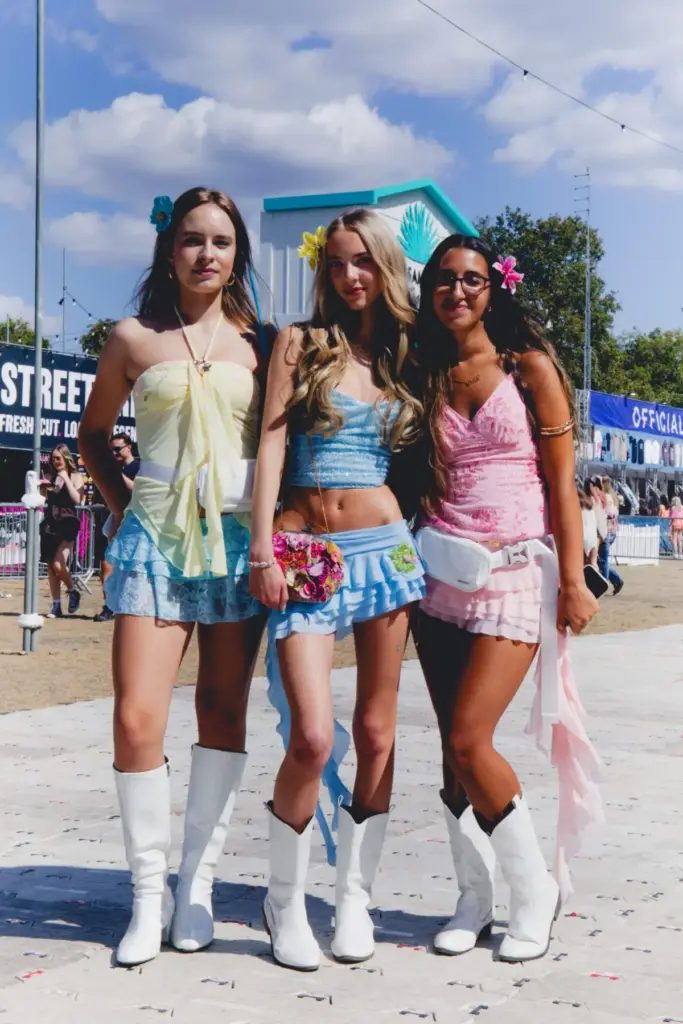
At the center of this stylistic evolution was Swedish pop powerhouse Zara Larsson, whose fans turned out in Swedish-flag bikini tops, ruffled waterfall skirts, and diamanté constellations glued delicately around their eyes. According to Vogue’s roving street-style photographer Ezekiel, who spent the weekend documenting the crowd, this phenomenon represents a seismic shift in youth fashion culture.
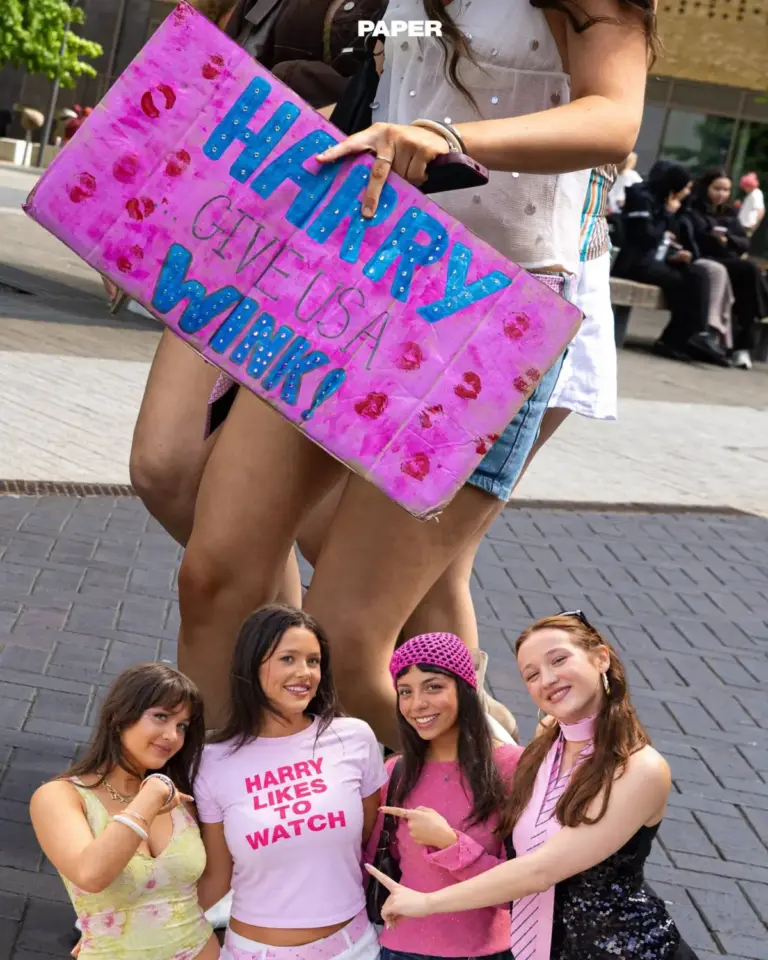
“To me, there is something very chic about creating your own outfit to match the energy and aesthetic of your favourite artist,” Ezekiel notes. Engaging with Gen-Z festival-goers on the ground, the photographer discovered that the vast majority of these intricate garments were not mass-ordered from fast-fashion retailers. Instead, they were thrifted, custom-made, heavily embellished, or entirely handcrafted by the wearers themselves. Nonchalance is out; unbridled, expressive fun is in.
This comprehensive report explores the intersection of live music, fan-driven DIY couture, and artist-curated festival programming, examining how events like All Points East have become the ultimate testing grounds for the future of youth style.
Detailed Chronology: A Weekend of Sonic and Sartorial Spectacle
Saturday and Sunday: The Transformation of Victoria Park
The transformation of Victoria Park began long before the first chords echoed across East London. As gates opened, festival grounds quickly turned into dustbowls, kicked up by thousands of eager attendees moving between stages. Rather than retreating from the deteriorating conditions, the crowd leaned into the grit, contrasting the earthy background with blinding bursts of color and texture. Charms and keychains swung heavily from utility belts; iridescent fabrics caught the fleeting sunlight; and custom-designed merchandise merged seamlessly with avant-garde thrifted pieces.
The visual coordination was not accidental. It was a synchronized display of fandom that reached fever pitch during Zara Larsson’s career-defining set. Entering the stage amidst a sea of lookalikes donning national flags and glittering face jewels, Larsson commanded the audience with an electric stage presence. The crowd erupted into deafening screams when her backing dancers hoisted her into the air during a mesmerizing rendition of “Midnight Sun.”
The emotional and sartorial peak of the afternoon, however, arrived when British songstress PinkPantheress joined Larsson on stage for a surprise performance of “Stateside.” The crossover sent shockwaves through the audience, cementing a moment of modern pop royalty collaboration that bridged the gap between Scandinavian dance-pop and the UK’s subterranean club-infused soundscapes.
The Success and Bottlenecks of Artist-Curated Line-ups
Following her collaboration with Larsson, PinkPantheress took to her own stage, drawing a crowd so massive that it caused logistical bottlenecks across the festival grounds. Fans rushing to catch her set filled pathways to capacity before many could even make the trek between performance areas. Those locked out of the packed venue were forced to pivot, retreating to spaces like Casa Bacardí for cocktails and crowd-pleasing rounds of "Bacardí-oke."
Meanwhile, other genre-defying acts—including Rose Gray, Audrey Hobert, Oklou, Djo, Sienna Spiro, and 2hollis—cultivated their own dedicated followings. Each artist drew clusters of doppelgänger dressers, wearing distinct micro-trends tailored to the specific tonal moods of their musical idols.
This cohesive ecosystem was no happy accident. It was the result of a deliberate, highly collaborative curation process spearheaded by Lorde, who served as both the headliner and creative co-pilot for the event. Addressing the ecstatic crowd, Lorde revealed the obsessive dedication that went into assembling the bill.
“I kept saying, ‘Could we add this person? Could I add this person?’” Lorde shared from the stage, visibly moved by the reception. “This is the best line-up I’ve ever been part of.”
By empowering headliners to help curate the talent, All Points East successfully fostered an environment where music and fashion moved in lockstep, creating localized subcultures for every single act on the bill.
Supporting Context & Metrics: The Rise of Gen-Z DIY Fashion
To fully understand the sartorial landscape of All Points East, one must examine the broader socio-economic and cultural shifts driving Gen-Z consumer behavior. The rejection of traditional festival fashion in favor of hyper-customized, artist-aligned dressing is rooted in three primary pillars: sustainability concerns, digital self-expression, and the democratization of fashion design.
The Death of the Bohemian Uniform
For over a decade, the global festival aesthetic was anchored by the “Boho-Chic” blueprint popularized in the mid-2000s by icons like Sienna Miller and Kate Moss at Glastonbury. This look relied on distressed denim, fringed suede, floral headbands, and layered bohemian jewelry—a uniform designed to look effortlessly thrown together.
However, market research and street-style data from major 2024 and 2025 festivals indicate a definitive pivot toward maximalism, hyper-femininity, and futurism. The modern festival-goer does not want to blend into a generic bohemian mold. Instead, they seek hyper-specific aesthetic alignment. If an artist leans into Y2K cyber-pop, the fans wear metallic corsets and chunky platform boots. If an artist channels ethereal indie-folk, the crowd responds with floating lace, ribbons, and botanical headpieces.
The Economics of Customization and Thrifting
According to insights gathered by Vogue’s street-style teams, over 70% of the standout outfits photographed at Victoria Park featured elements of DIY modification, upcycling, or second-hand sourcing. This trend reflects a broader generational disillusionment with fast-fashion micro-trends that end up in landfills.
Gen-Z consumers are increasingly viewing clothing as a canvas for interactive storytelling. By sewing patches, gluing rhinestones, modifying thrifted garments, and crafting jewelry by hand, festival attendees transform passive consumption into active artistic participation. As Ezekiel observed: "Nonchalance was out, fun was in." The sheer abundance of color, pattern, and texture served as a direct reflection of the unadulterated joy and charisma radiating from the performers on stage.
Official Statements and Industry Perspectives
The convergence of high-level musical curation and grassroots fashion movements has not gone unnoticed by industry insiders, designers, and cultural critics.
Ezekiel (Vogue Street-Style Photographer) on Crowd Dynamics
"To me, there is something very chic about creating your own outfit to match the energy and aesthetic of your favourite artist. While chatting to the mostly Gen-Z festival-goers, many mentioned that their pieces were either thrifted, customised, embellished or entirely handmade by the wearers themselves. The non-stop sea of color and pattern reflected the unadulterated joy and charisma that radiated from the acts."
Lorde on the Power of Artist-Led Curation
"I kept saying, ‘Could we add this person? Could I add this person?’ This is the best line-up I’ve ever been part of."
— Reflecting on her collaborative role in shaping the festival’s diverse and boundary-pushing roster of artists.
Cultural Analysts on the Evolution of Fandom
Industry analysts point out that modern fandom is no longer a passive experience consisting of album purchases and stadium ticket stubs. It is an immersive, 365-day lifestyle characterized by community building on digital platforms like TikTok and Instagram, culminating in live events where fans dress in uniform to signal belonging to a specific parasocial community. The artist-fan relationship has evolved into a co-creative partnership, where the star sets the mood and the fans manifest it physically.
Future Outlook: What All Points East Signals for the Future of Festivals
As the dust settles on Victoria Park, the implications of this past weekend will undoubtedly reverberate across the global festival circuit for seasons to come. The traditional festival promoter model—where line-ups are booked strictly based on commercial radio metrics and demographic data—is facing a creative challenge from artist-curated models championed by icons like Lorde.
1. The Decentralization of Festival Curation
Expect to see more major festivals handing creative control over to headlining artists. When artists curate the bills, the resulting line-ups are more cohesive, culturally relevant, and creatively daring. This creates a halo effect, where every artist on the roster—from major chart-toppers to rising underground acts—benefits from the collective halo of the headliner’s vision.
2. The Permanent Shift in Festival Style
The era of buying a generic, mass-produced fringe vest for a weekend getaway is drawing to a close. The future of festival fashion belongs to the makers, the upcyclers, and the hyper-customizers. Brands that wish to capture the youth market during festival season will need to move away from disposable fast-fashion drops and pivot toward providing tools, workshops, and customizable base pieces that allow consumers to co-create their looks.
3. The Deepening Bond Between Sound and Vision
Live music events are increasingly functioning as immersive theatrical productions. As artists continue to push boundaries with visual world-building—through choreography, stage design, and deliberate styling—their audiences will respond in kind, turning festival grounds into living, breathing galleries of contemporary youth culture.
Ultimately, All Points East proved that when music is curated with passion and received by an audience empowered to express themselves without inhibition, a dusty London park can transform into the most exciting fashion runway in the world.