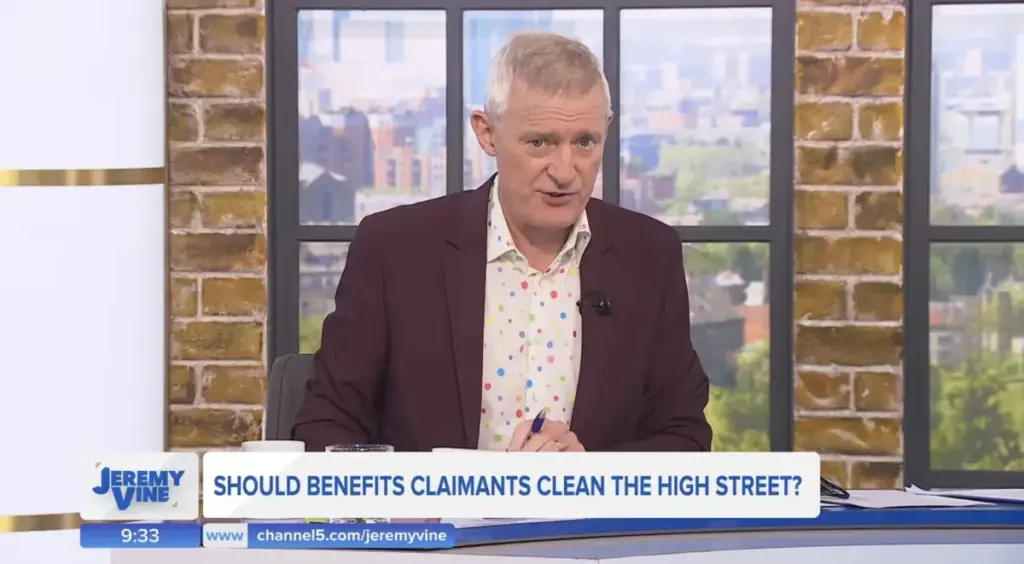
Broadcaster and television personality Jeremy Vine has stepped down from his upcoming role as the host of the Carers UK Awards following an intense public backlash. The controversy erupted shortly after the charity announced Vine would serve as the Master of Ceremonies for its flagship event, an annual gala designed to spotlight the vital contributions of unpaid carers across the United Kingdom.
Critics, activists, and members of the disabled community rapidly mobilized online, accusing the 61-year-old presenter of hypocrisy, harm, and the stoking of hostility toward disabled people through his daily Channel 5 talk show. Opponents argued that Vine’s routine editorial framing of welfare and disability benefits—frequently featuring provocative debates questioning the legitimacy of claimants—rendered him entirely unsuited to front an awards ceremony heavily intertwined with the disability and social care ecosystem.
Faced with mounting public pressure and direct appeals from community members, Vine announced his withdrawal via social media, stating that he wished to prevent any distraction from the achievements of the nominees. Carers UK subsequently confirmed the mutual decision, releasing a statement acknowledging the profound strength of feeling surrounding media representations of disability and welfare.
This high-profile withdrawal exposes a deepening fault line within British media: the friction between daytime television’s reliance on controversial, polarized debate formats and the real-world impact such programming is alleged to have on vulnerable communities.
Detailed Chronology: From Announcement to Resignation
The controversy unfolded at a rapid pace over a 48-hour period, tracing a direct line from corporate celebratory announcements to crisis management and public withdrawal.
Monday: The Announcement and Initial Outcry
Carers UK proudly announced that Jeremy Vine would host the upcoming Carers UK Awards. The organization framed the booking as a coup, emphasizing Vine’s widespread visibility across British television and radio.
However, the celebratory atmosphere evaporated almost immediately. Within hours of the announcement, social media platforms—particularly X (formerly Twitter) and Facebook—were flooded with critical commentary from disability rights advocates, welfare campaigners, and unpaid carers themselves.
Commentators argued that Vine was uniquely ill-equipped to celebrate a community where a vast number of individuals are either disabled themselves or care for disabled relatives dependent on a fragile social safety net. Critics targeted Vine’s editorial output, alleging that his Channel 5 programme regularly platforms unchecked misinformation regarding welfare claimants, frames disabled individuals as economic burdens, and encourages aggressive public hostility.
Tuesday: Vine’s Statement and Refusal to Yield to Initial Criticism
As the backlash intensified, Vine elected to address the controversy directly. Taking to social media, the broadcaster defended his record while formally announcing his decision to step down from the unpaid hosting gig.
"Because I host debates about welfare, benefits etc I see I was a controversial choice to be the (obviously unpaid) host of the prestigious @CarersUK awards so I’m very happy to stand aside and give someone else the honour of doing it," Vine wrote.
He clarified that he had originally accepted the invitation to support a personal friend—whom he described as a "heroine"—who had experienced the prolonged, painful loss of her husband. Vine maintained that his professional role requires strict impartiality, asserting that he is "not a campaigner" and that his shows have consistently covered carers sympathetically.
Despite his conciliatory tone, Vine’s statement provoked a fresh wave of criticism. Rather than quelling the controversy, his defense of his on-screen impartiality alienated critics further. Respondents argued that framing debates around whether to slash benefits or whether disabled people should be forced into work inherently poisons the public discourse, regardless of whether the presenter claims personal neutrality.
Wednesday: Carers UK Responds
Following Vine’s withdrawal, Carers UK issued a carefully worded follow-up statement confirming that the presenter was stepping down "following discussions."
The charity expressed gratitude for Vine’s historical support of unpaid carers—including segments broadcast on his radio show—but conceded that public sentiment necessitated a change in plans.
"After listening carefully to our community over the past couple of days, we’ve agreed with Jeremy that the focus of the evening should stay entirely on celebrating carers and the individuals and organisations that support them," the charity stated.
Carers UK added: "We recognise the strength of feeling around how disability & benefits claimants are sometimes portrayed in the media, inc on daytime television. Many of the carers we support are disabled themselves or care for someone who is and rely on a benefits system that too often fails them."
Supporting Context & Metrics: The Anatomy of Daytime Controversy
To understand the ferocious public reaction to Jeremy Vine’s appointment, one must examine the specific broadcast history that ignited the controversy. Vine’s eponymous Channel 5 talk show frequently navigates populist political talking points, using punchy, polarizing questions designed to drive viewer engagement and social media interaction.
Recent Broadcast Segments
The timing of the Carers UK controversy coincided with a series of contentious segments on Vine’s morning programme:
August 16: The show aired a segment titled, "Reform right to call for cuts to disability benefits?" directly engaging with political proposals from the Reform UK party regarding Personal Independence Payments (PIP) and welfare restructuring.
August 17: A companion social media prompt on Facebook asked viewers: "Also on the show, we’re asking if we should cut disability benefits and give people help in kind instead. Half of disability benefit claimants would swap a thousand pounds of their benefits for things such as therapy, healthy meals and workplace support. Would it be a good idea to make cuts here…?"
A Pattern of Contentious Welfare Coverage
Critics noted that this latest broadcast cycle is part of a multi-year pattern. Archive analysis of Vine’s show reveals recurrent themes questioning the expansion of the social safety net:
March (Prior Year): During a debate on social security spending, Vine remarked, "You’re going to have to cut the benefits first and then expect them to get out the front door and work," subsequently claiming there was "something fishy going on" due to a 25% post-Covid surge in individuals categorized as too ill to work. Observers noted that these assertions went largely unchallenged by the panel.
November (Prior Year): When discussing whether the UK should allocate billions more to welfare against a backdrop of rising income tax, Vine explicitly asked, "Why don’t you cut welfare?"
May (Current Year): Vine allowed a guest’s assertion that the national "benefits bill is out of control and spiralling" to pass without dispute or rigorous counter-interrogation.
The Broader Media Landscape and Accountability
This incident does not exist in a vacuum. Just weeks prior to the Carers UK announcement, the Disability News Service (DNS) formally challenged major UK broadcasters—including the BBC, Sky News, and Channel 5—regarding their coverage of welfare economics.
DNS argued that presenters routinely fail to challenge inaccurate or exaggerated narratives regarding "spiralling welfare spending," pointing out that macroeconomic indicators do not support the panic often stoked on daytime television. While networks such as Sky and the BBC defended their output by citing commitments to impartiality and diverse perspectives, disability advocacy groups maintained that the relentless repetition of "scrounger" or "burden" tropes inflicts measurable psychological and social harm on disabled citizens.
Official Statements and Social Reactions
The public reaction to Vine’s resignation highlighted a profound ideological divide over the boundaries of media neutrality and the social responsibilities of high-profile broadcasters.
Critical Voices on Social Media
Social media users and welfare advocates did not mince words when analyzing the appointment and subsequent resignation:
@cfs_jo wrote: "I’m sure he really believes he’s impartial. Why can’t he see that having the ‘should we cut benefits’ discussions over and over again just feeds into the negative narrative? He’s not stupid, he must know."
@Salliepops stated: "You, on your show, debate our lives as if we’re a problem to be solved. You fuel hostility, abuse & harassment towards disabled people, while advocating for cuts to the support we rely on to live independently. It’s not supporting carers. It’s harming the very community they serve."
@CulhamAndy1 welcomed the news of his departure, calling Vine "the last person who should be presenting these awards with his constant ragebaiting against the disabled."
Supporters and Counter-Perspectives
Conversely, Vine retained vocal defenders within both the charity sector and his viewing audience.
@TiggyWalker, a patron of Carers UK, publicly declared that "no other media presenter has been as supportive" of unpaid carers, prompting a heartfelt response from Vine, who noted that the endorsement meant "more to me than I can say."
Supporters argued that silencing or penalizing mainstream broadcasters for hosting difficult socio-political debates undermines free speech and penalizes presenters who are merely reflecting national political conversations.
Future Outlook: Accountability, Media Ethics, and the Charity Sector
The Jeremy Vine controversy serves as a cautionary tale for non-profit organizations, charities, and media personalities alike. As public scrutiny intensifies regarding how vulnerable demographics are portrayed in mainstream media, cultural institutions must navigate reputational minefields when selecting high-profile ambassadors and hosts.
Implications for Charities
For organizations like Carers UK, the incident underscores the necessity of deep stakeholder consultation prior to high-profile bookings. Charities operating at the intersection of health, disability, and social care represent populations that frequently bear the brunt of political and media-driven austerity narratives. Aligning with broadcasters whose daily output is perceived to contradict the charity’s advocacy goals risks alienating the core constituency the organization was created to protect.
The Future of Daytime Debate Formats
For television networks, particularly Channel 5 and similar commercial broadcasters, the episode raises hard questions about the ethics of "rage-baiting" and polarization. As advocacy groups become increasingly organized—utilizing rapid digital mobilization to hold media figures accountable—broadcasters may find that the commercial benefits of controversial debate formats carry steep collateral costs in terms of public trust, institutional partnerships, and brand reputation.
Ultimately, while Jeremy Vine has stepped away from the Carers UK podium, the broader debate regarding media impartiality, journalistic rigor, and the human cost of welfare sensationalism remains as volatile as ever.