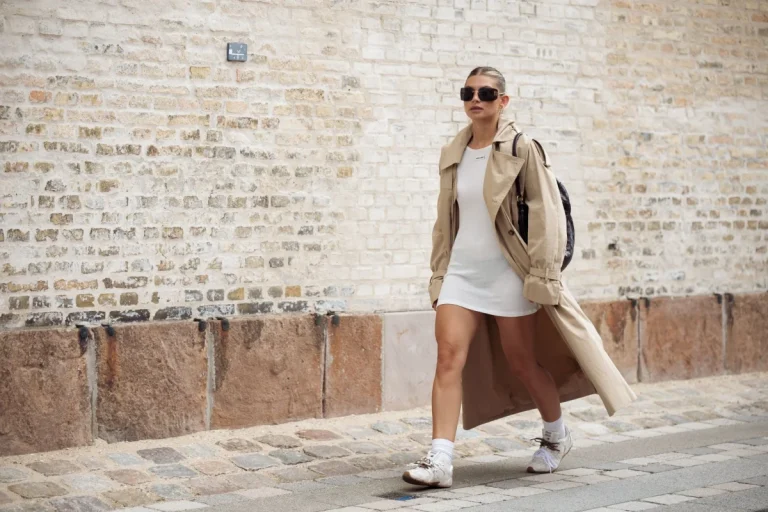
While the broader footwear landscape continues its relentless obsession with minimalist low-profile silhouettes and razor-thin flats, Miuccia Prada is, characteristically, looking in the exact opposite direction. For the Miu Miu Fall/Winter 2026 runway collection, the legendary designer doubled down on volume, texture, and structural irony, reintroducing one of the brand’s most polarizing and idiosyncratic footwear creations from the turn of the millennium: the bubble-soled sneaker.
First debuted during the Fall/Winter 1999 collections, this orthopedic-leaning silhouette is defined by its chunky, buoyant platform and signature rubberized dot matrix. Two decades later, this once-futuristic, slightly cartoonish design feels less like a historical artifact and more like the ultimate prognosticator of contemporary style. Spotted on the runway paired with shaggy Penny Lane coats, butter-yellow shorts, and prim shift dresses in rich burgundy and cream, the reissued bubble shoes encapsulate Miu Miu’s signature high-low tension. They are simultaneously practical and precious, channeling an elevated vision of "glamping" (glamorous camping) through a distinctly high-fashion lens.

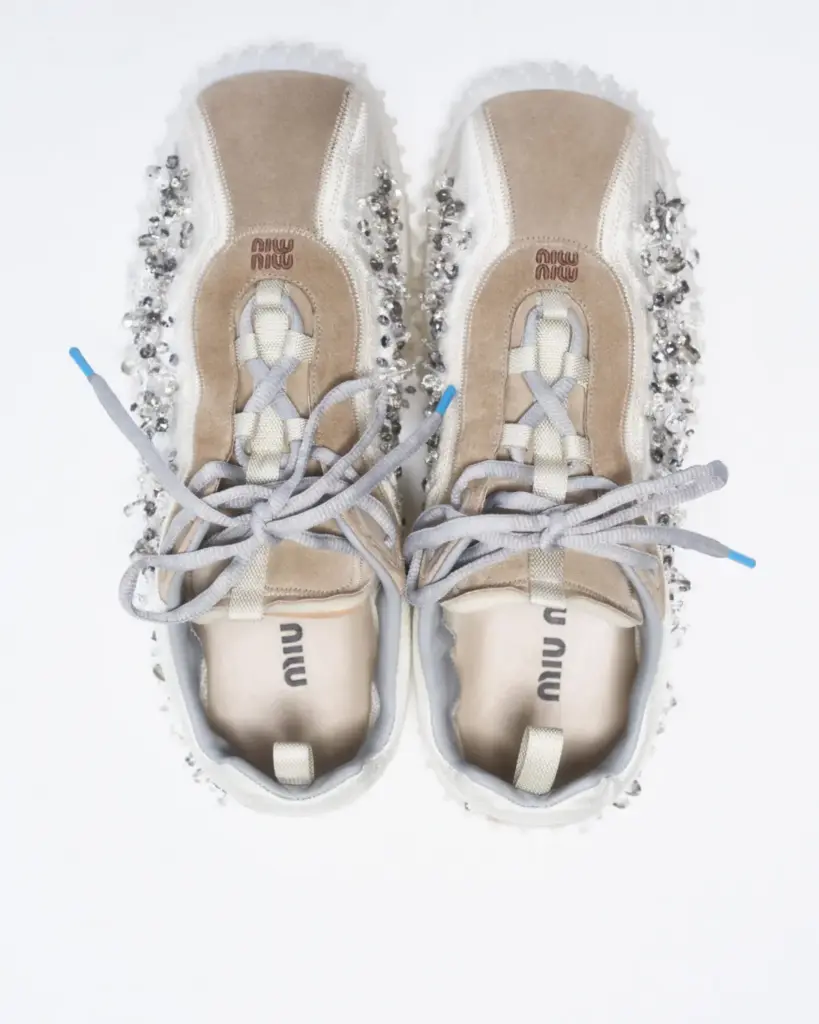
Beyond the sneaker iterations—which range from technical fabric and suede colorways to versions dripping in sequins and crystals—the bulbous sole architecture has permeated the entirety of the Fall/Winter 2026 accessories lineup. From office-siren-inspired leather loafers and mules to stretch nappa leather knee-high boots, Miu Miu has transformed its archive into an expansive study of proportions. This strategic revival arrives squarely at the intersection of fashion’s ongoing nineties nostalgia boom and the reigning styling philosophy of the "wrong shoe theory." In an industry currently saturated with predictable iterations, Miu Miu’s defiant, delightfully weird bubble shoe proves that thinking big—and a little bit bulbous—is the ultimate luxury.
Detailed Chronology: From 1999 Millennial Oddity to 2026 Runway Icon
To truly understand the cultural gravity of the Miu Miu Fall/Winter 2026 footwear collection, one must retrace the lineage of a design that was nearly ahead of its time by an entire generation.

1999–2000: The Genesis of the Bubble Sole
At the tail end of the 20th century, the fashion industry was gripped by a dual fascination with sleek cybernetic minimalism and rugged, tech-infused sportswear. Amidst this backdrop, Miuccia Prada introduced her Fall/Winter 1999 ready-to-wear collection for Miu Miu. Known as Prada’s rebellious, younger sibling brand, Miu Miu served as a laboratory for ideas that were too playful or experimental for the main Prada house.
The runway introduced a series of footwear characterized by rounded, orthopedic-inspired soles studded with rubberized bubble protrusions. These shoes appeared in unexpected formats—ranging from utilitarian athletic hybrids to metallic gold kitten heels. At the time, the reception was mixed; the fashion press was transfixed by the strange, bulbous proportions, viewing them as a cheeky subversion of traditional feminine elegance. However, commercial adoption was slow, relegated to avant-garde collectors who recognized the shoes as wearable conceptual art.

The Intervening Decades: Archival Caching and Cult Status
Over the next twenty-five years, the original 1999 and early 2000s bubble shoes quietly ascended into the upper echelons of fashion lore. As Gen Z and younger millennial consumers developed an insatiable appetite for turn-of-the-millennium aesthetics, archival platforms like 1stDibs and Grailed became treasure hunts for original pairs. A pristine pair of metallic gold bubble-sole heels or rare early-season sneakers could command staggering resale prices, cementing their status as holy grails for vintage fashion enthusiasts.
Concurrently, Miu Miu solidified its reputation as the undisputed king of viral footwear. The brand’s ongoing collaborative partnership with New Balance—transforming classic running shoes into distressed, frayed-edge luxury objects—provided a masterclass in how to bridge the gap between orthopedic utility and high-fashion exclusivity.

Fall/Winter 2026: The Full-Scale Revival
Fast-forward to the present day, and the archive has officially come home to roost. For the Fall/Winter 2026 presentation, Miuccia Prada chose not merely to reference the 1999 silhouette, but to completely re-engineer it for a modern consumer base attuned to eccentric styling.
The runway presentation showcased the reissued bubble shoes in multiple iterations. The core offering includes the Bubble Technical Fabric and Suede Sneaker, priced at $1,170, designed for the luxury consumer dipping their toes into high-fashion gorpcore. For evening wear and high-impact styling, the brand introduced the Bubble Embroidered Technical Fabric and Suede Sneaker retailing at $2,300, encrusted with glittering crystals and sequins that turn a utilitarian shape into a dazzling jewel.

Crucially, the bubble sole did not stop at the sneaker. Miu Miu expanded the architectural language across its entire footwear ecosystem, treating footwear aficionados to stretch nappa leather boots ($2,300), structural leather loafers ($1,270), and slip-on mules ($1,150) that all share the signature, gravity-defying sole profile.
Supporting Context & Metrics: The Economics and Psychology of the "Wrong Shoe Theory"
The resurgence of Miu Miu’s bubble shoe is not happening in a vacuum; it is supported by distinct economic shifts in the luxury market and a psychological pivot in how consumers style their wardrobes.

Market Valuation and Retail Pricing Architecture
Miu Miu’s pricing strategy for the Fall/Winter 2026 collection reflects its current status as one of the most commercially successful and culturally relevant brands under the LVMH and Kering rival umbrella (owned by the Prada Group).
| Footwear Silhouette | Material Profile | Retail Price (USD) | Target Aesthetic/Use Case |
|---|---|---|---|
| Bubble Technical Fabric & Suede Sneaker | Technical mesh, suede, rubber sole | $1,170 | Elevated Gorpcore / Everyday Utility |
| Bubble Embroidered Sneaker | Technical fabric, suede, crystals, sequins | $2,300 | High-Impact Evening / Statement Piece |
| Leather Loafers | Brushed calfskin with bubble sole | $1,270 | Subverted Office Siren / Preppy Tailoring |
| Leather Mules | Calfskin slip-on with exaggerated base | $1,150 | Transitional Transitional Dressing |
| Stretch Nappa Leather Boots | Buttery stretch nappa with structural sole | $2,300 | Maximalist Outerwear Pairing |
These figures position the bubble shoe firmly in the upper tier of contemporary luxury accessories. Despite the four-figure price points, industry analysts project high sell-through rates, driven by the halo effect of high-profile marketing campaigns starring cultural figures like Hailey Bieber.

The Psychology of the "Wrong Shoe"
Stylists and trend forecasters have increasingly leaned into the concept of the "wrong shoe theory"—a styling methodology popularized on social media that dictates an outfit should always be finished with a shoe that feels slightly counterintuitive or jarring to the rest of the look.
Miu Miu’s bubble shoes are the textbook physical manifestation of this theory. When paired with prim, proper shift dresses in burgundy and cream, or shaggy, bohemian Penny Lane coats, the chunky, tactile, almost trypophobia-inducing grommets of the bubble sole create a delightful visual dissonance. The shoes prevent the ensemble from feeling too precious, injecting a dose of ironic humor and grounded realism into otherwise hyper-feminine or bourgeois outfits.

Furthermore, the trend taps into the fatigue surrounding hyper-sanitized, quiet luxury aesthetics. Consumers are hungering for pieces with a distinct point of view—items that provoke a reaction, whether that reaction is adoration or bemusement.
Official Statements and Creative Insights
While Miuccia Prada is renowned for letting her collections speak for themselves rather than relying on overt press-release manifestos, background insights from the design house shed light on the conceptual underpinnings of the Fall/Winter 2026 lineup.

Design team representatives emphasize that the revival of the 1999 bubble shoe was born out of an internal exercise in exploring historical continuity. Rather than chasing fleeting micro-trends dictated by algorithmic feeds, Prada looked inward to examine how garments and accessories from her own past could be recontextualized for a generation experiencing the world through a radically different technological and social lens.
"Fashion is never just about looking backward; it is about recognizing when a discarded idea possesses a latent truth that the present moment is finally ready to receive," noted an industry insider close to the Prada design studio. "In 1999, the bubble sole was an experiment in volume and artificial nature. In 2026, it is an antidote to conformity. It offers a physical manifestation of individuality in a sea of standardized minimalism."

The integration of outdoor-inspired materials—technical mesh, weather-resistant suede, and rugged tread patterns—alongside high-glamour elements like hand-embroidered crystals underscores the brand’s ongoing dialogue between utility and fantasy. It is an acknowledgment that the modern luxury consumer lives a multifaceted life, requiring footwear that can transition effortlessly from the concrete canyons of global fashion capitals to the whimsical fantasies of high-end editorial campaigns.
Future Outlook: Where Footwear Goes From Here
As the fashion calendar marches toward subsequent seasons, the cultural footprint of the Miu Miu bubble shoe offers a clear roadmap for where the footwear industry is heading.

- The Death of Uniformity: The success of exaggerated proportions signals that consumers are moving past safe, streamlined silhouettes. Expect competing luxury houses to explore unconventional, bulbous, and biomorphic forms in their upcoming accessory drops.
- The Archival Gold Rush: Miu Miu’s triumph validates the strategy of deep archival mining. Brands with rich design histories from the late 1990s and early 2000s will likely accelerate the re-edition of cult footwear favorites, satisfying a collector’s market that values historical pedigree alongside modern manufacturing upgrades.
- The Evolution of Gorpcore: The outdoor-meets-glamour aesthetic pioneered by Miu Miu’s "glamping" sneakers will continue to expand. Technical materials will increasingly be divorced from pure athletic utility, treated instead as blank canvases for couture-level embellishments, embroidery, and hardware.
Ultimately, Miuccia Prada has once again proven her uncanny ability to identify the exact pulse of cultural desire. By taking a polarizing, twenty-seven-year-old shoe design and thrusting it onto the modern runway, she has reminded the fashion world that true style often begins where conformity ends. The bubble shoe is here to stay—bouncy, bulbous, and wonderfully bizarre.