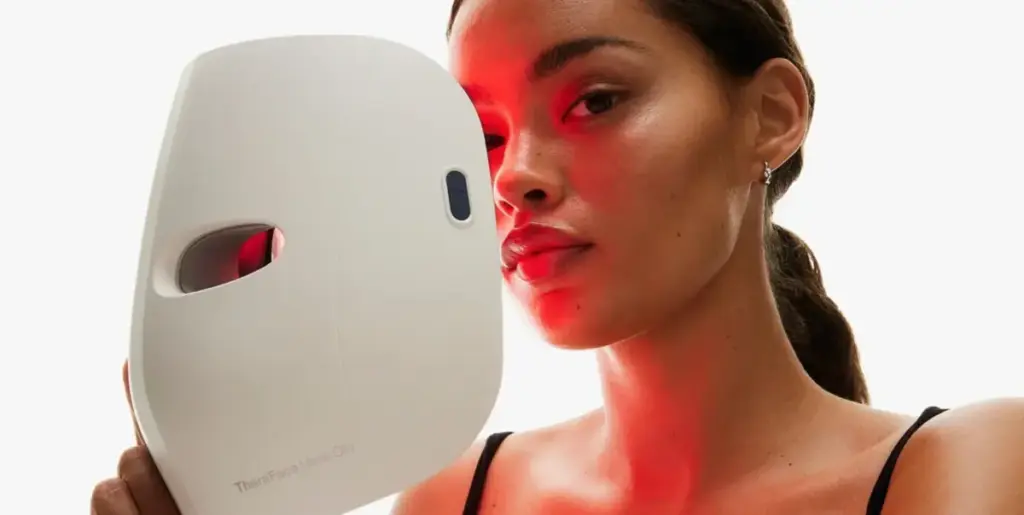
Executive Overview
Red-light therapy has cemented its status as a cornerstone of modern skincare routines. What began as an esoteric, in-office dermatological treatment has rapidly evolved into a multi-million-dollar consumer tech market. Today, beauty enthusiasts and everyday consumers alike regularly sit beneath glowing LED panels or strap futuristic masks to their faces. Touted by dermatologists, aestheticians, and beauty editors for nearly six years as a holy grail treatment, these devices promise a litany of benefits: boosted collagen production, minimized fine lines and wrinkles, smoothed uneven skin texture, and faded hyperpigmentation.
Beyond surface aesthetics, ongoing clinical research continues to uncover how red and near-infrared light can improve microcirculation, accelerate wound healing, and downregulate systemic cellular inflammation. Yet, as the market swells with an overwhelming array of consumer-grade gadgets—ranging from flexible silicone masks to heavy-duty body panels—a fundamental technical question lingers: What actually separates these devices, and how does proximity to the skin impact efficacy?
To unpack the physics governing photobiomodulation, we turned to leading board-certified dermatologists, including Dr. Fatima Fahs and Dr. Annette Czernik. Their insights reveal that while consumer convenience often drives purchasing decisions, achieving real results requires looking past marketing hype to understand the intricate balance of wavelength, irradiance, and energy dosage. Ultimately, the physics of light delivery show that closer isn’t always better, and the "best" device on the market is defined less by its form factor and more by how reliably it delivers a precise, scientifically backed dose of energy to your skin.
Detailed Chronology: The Evolution of Consumer Photobiomodulation
To understand where red-light therapy stands today, it is essential to trace its journey from clinical laboratories to bedside vanity tables.
1. The NASA Roots (1990s)
The foundational technology underpinning modern LED (Light Emitting Diode) therapy traces its origins back to space exploration. In the early 1990s, NASA initiated experiments using red LEDs to promote plant growth in space shuttle environments. Researchers quickly noticed an unexpected biological side effect: the light dramatically accelerated tissue regeneration and wound healing in human subjects working in the lab. This discovery catalyzed early interest in photobiomodulation (PBM)—the use of specific light wavelengths to stimulate cellular function.
2. Clinical Adoption and Dermatology Offices (Early 2000s)
By the turn of the millennium, dermatology clinics and plastic surgery centers began adopting low-level light therapy (LLLT) machines. These early clinical devices were massive, expensive, and stationary, requiring patients to visit specialized clinics for targeted anti-aging and acne treatments. The technology relied on specific narrow-band light frequencies to penetrate the dermal layers, prompting fibroblasts to synthesize fresh collagen without thermal damage.
3. The Miniaturization Wave (2010s)
As LED manufacturing costs plummeted and component efficiency improved, consumer electronics companies recognized an opportunity. The early 2010s saw the introduction of handheld wands and rudimentary desktop lamps. However, these early consumer devices often lacked the necessary power output to replicate clinical results, leading to mixed reviews and skepticism from medical professionals.
4. The Smart Mask Boom (2018–Present)
The market experienced a massive paradigm shift in the late 2010s and early 2020s with the advent of flexible silicone LED masks, hard-shell aesthetic shields, and high-output whole-body panels. Brands refined diode configurations, engineered precise nanometer outputs, and optimized ergonomic designs. Today, top-tier devices—such as the Shark CryoGlow and the Dr. Dennis Gross Spectralite FaceWare Pro—represent sophisticated marriage points between consumer ergonomics and dermatological science, bringing clinical-grade photobiomodulation directly into the home.
Supporting Context & Metrics: Decoding Wavelengths, Irradiance, and Dosage
"Red-light therapy seems pretty simple, but there is a lot of physics behind how these devices work," explains Michigan-based dermatologist Dr. Fatima Fahs. To evaluate whether standing in front of a heavy-duty panel is as effective as wearing a contour-hugging mask, one must master three core metrics: wavelength, irradiance, and total energy dose.
[ Photobiomodulation Efficacy Equation ]

   Wavelength (nm)        Irradiance (mW/cm²)      Treatment Time (min)
(Determines depth)  +  (Determines power output)  +  (Duration of exposure)
                            = Total Energy Dose (J/cm²)
Wavelengths: Penetrating the Dermal Layers
Wavelength refers to the specific type of light being delivered, measured in nanometers (nm). Different nanometers penetrate human tissue at varying depths:
- Red Light (630–650 nm): Primarily targets the upper layers of the skin (the epidermis and upper dermis), stimulating superficial cellular repair, boosting microcirculation, and tackling surface inflammation and hyperpigmentation.
- Near-Infrared Light (810–850 nm): Features a longer wavelength that penetrates deeper into subcutaneous tissue, muscles, and joints. It is prized for deep collagen synthesis, reducing deeper wrinkles, and alleviating musculoskeletal inflammation.
Irradiance and Power Output
Irradiance measures the power density emitted by a device, typically expressed in milliwatts per square centimeter ($mW/cm^2$). High-powered panels often feature high irradiance ratings, allowing them to deliver significant photon density from a distance. Masks, by contrast, may have lower nominal irradiance because the LEDs rest mere millimeters from the skin’s surface, minimizing photon scattering and energy loss in transit.

Treatment Time and Total Energy Dose
Dr. Fahs emphasizes that wavelength and irradiance do not act in isolation. Together with the manufacturer’s recommended treatment time, they dictate the actual energy dose (measured in joules per centimeter squared, or $J/cm^2$) delivered to cellular mitochondria.
- Masks: Because they sit directly on or mere millimeters from the skin, they minimize light dispersion. This allows them to deliver an effective therapeutic dose in a relatively short window—typically three to five minutes per session.
- Panels: Operating from a distance of several inches to a few feet, panels often require longer sessions (ranging from 10 to 20 minutes) to achieve parity in total energy absorption, compensating for the photon loss that occurs as light travels through open air.
Official Statements & Expert Analysis
To resolve the ongoing debate between masks and panels, industry experts have weighed in on how physical design impacts clinical outcomes.
The Proximity Paradox: Does Closer Mean Better?
A common consumer assumption is that placing an LED device as close to the skin as possible yields exponentially better results. According to Dr. Annette Czernik, a dermatologist based in Connecticut, the reality is far more nuanced.
"Unfortunately, this isn’t as simple as, the closer the device, the better the result," notes Dr. Fahs. "It’s super important with these devices to actually read the manufacturer-specified treatment guidelines, including the recommended distance from your skin."
Dr. Czernik adds that skin tolerance plays an equally vital role in determining optimal device placement and intensity:
"Someone with very sensitive or reactive skin may tolerate a lower-intensity treatment better than a stronger one. This is another reason why more light or a closer distance isn’t always necessary to get a benefit."
Masks vs. Panels: Form Factor Breakdown
When choosing between wearing a facial mask or standing before a freestanding panel, dermatologists advise weighing mechanical advantages against treatment goals:
- Mask Pros & Cons:
- Pros: Maintain a highly consistent distance from the skin across every session, ensuring predictable dosing. They deliver light uniformly across facial contours and require minimal time investment.
- Cons: Limited treatment area restricted strictly to the face (and occasionally the neck/décolletage if an extension accessory is used).
- Panel Pros & Cons:
- Pros: Possess powerful, densely packed LEDs capable of covering massive surface areas simultaneously (e.g., the entire face, chest, back, or legs).
- Cons: Require strict user discipline. If a user shifts closer or further away during sessions, the delivered energy dose fluctuates wildly, compromising results.
Furthermore, improper positioning of high-powered panels too close to the skin can generate noticeable thermal heat. Dr. Czernik warns that while red and near-infrared light are non-thermal by design, excessive proximity to high-output industrial panels can leave sensitive skin feeling warm, dry, or irritated, transforming a restorative treatment into a pro-inflammatory hazard.
Future Outlook: The Next Generation of Photobiomodulation
As consumer beauty tech converges with medical science, the future of red-light therapy points toward hyper-personalization, smart dosing, and multi-wavelength integration.
- Smart Biometric Feedback: Upcoming iterations of consumer LED devices are beginning to incorporate skin-sensor technology. These smart sensors measure real-time cutaneous hydration, melanin density, and inflammatory markers, automatically adjusting irradiance and wavelength output during a session to deliver a truly bespoke therapeutic dose.
- Hybrid Therapies: Manufacturers are increasingly pairing red and near-infrared LEDs with complementary modalities, such as blue light for acne-causing bacteria, amber light for redness reduction, and localized cryotherapy (as seen in cutting-edge hybrid launches like the Shark CryoGlow) to soothe inflammation while stimulating collagen.
- Standardized Clinical Metrics: As the regulatory landscape tightens around at-home medical and cosmetic devices, consumers can expect more transparent labeling regarding true irradiance outputs and standardized energy dosage metrics, replacing vague marketing buzzwords with rigorous physics.
The Final Verdict
Ultimately, unlocking the age-defying benefits of photobiomodulation comes down to compliance and consistency. As Dr. Fahs aptly summarizes:
"When it comes to collagen production, I would focus less on whether you choose a mask or panel and more on the device’s specifications for use and your consistency of use. Photobiomodulation is not an overnight process; it is gradual and requires consistent use over time to see meaningful benefits. So just like sunscreen, the best device is ultimately the one you will actually use consistently and correctly."