Executive Overview
For decades, the humble espadrille has been categorized strictly as resort wear—a seasonal footwear option reserved exclusively for sun-drenched European coastlines, beach clubs, and breezy sundresses. However, the contemporary fashion landscape is undergoing a significant stylistic recalibration. As transitional dressing becomes the dominant framework for modern wardrobes, street style tastemakers and high-end designers alike are championing a surprisingly effortless combination: espadrilles paired with denim.
Far from being a temporary micro-trend, this pairing represents a masterclass in high-low styling. It bridges the gap between structured, utilitarian denim and the relaxed, tactile charm of traditional braided jute soles. Whether styled as lace-up wedges, flat canvas silhouettes, contemporary Mary Janes, or platform variations, espadrilles are shedding their vacation-only status to become foundational elements of the everyday urban wardrobe.
This comprehensive analysis explores the historical evolution of the espadrille, dissects five expert-approved ways to style the shoe with various denim cuts, and evaluates the commercial shift making this transitional look a mainstay for the modern consumer.
Detailed Chronology: From Basque Peasant Staple to Runway Icon
To understand the current resurgence of the espadrille-and-jeans pairing, one must trace the footwear’s rich, centuries-old history. Far from the polished boutiques of modern European capitals, the espadrille was born out of utilitarian necessity.
The Origins: Practicality in the Pyrenees
The word "espadrille" derives from espardenya, a Catalan term rooted in esparto, a rough, coarse Spanish grass native to the Mediterranean basin used to weave ropes and baskets. Originating in the Pyrenees mountain region spanning the border between France and Spain (specifically the Basque Country and Catalonia), these shoes were originally worn by peasant farmers, infantrymen, and priests as early as the 14th century.
Characterized by a flexible canvas upper hand-stitched directly to a braided jute rope sole, early espadrilles prioritized comfort, breathability, and affordability over aesthetics. They were designed for rugged terrain and blistering heat, making them the ultimate working-class shoe.
The Mid-Century Shift: Hollywood and High Fashion
The trajectory of the espadrille shifted dramatically in the mid-20th century. As post-war European tourism boomed, glamorous coastal destinations like the French Riviera introduced traditional local goods to an international elite. Icons of silver-screen style—including Grace Kelly, Audrey Hepburn, and Salvador Dalí—were frequently photographed wearing simple canvas espadrilles during their summer retreats.
However, the definitive turning point for the shoe occurred in the 1970s. Spanish footwear label Castañer entered into a fateful collaboration with legendary French designer Yves Saint Laurent. Together, they revolutionized the craft by designing the world’s first wedge-heeled espadrille. By fusing the rustic charm of the jute sole with a flattering, elevated heel and silk ankle ribbons, Saint Laurent transformed a peasant work shoe into a high-fashion runway staple.
The Modern Renaissance: Redefining Transitional Style
Fast-forward to the 2020s, and the fashion industry is rewriting the rulebook on seasonality. Traditional boundaries separating "summer" clothes from "winter" or "transitional" clothes have dissolved, driven by unpredictable climate patterns and a growing consumer preference for versatile, long-lasting wardrobes.
Street-style arbiters in fashion capitals like London, Paris, and New York have begun anchoring their transitional wardrobes with denim—ranging from deep indigo straight-leg cuts to relaxed barrel-leg styles—and pairing them with various iterations of the espadrille. No longer confined to floaty cotton dresses and sandy boardwalks, the espadrille is officially an all-season, all-occasion urban essential.
Supporting Context & Metrics: The Anatomy of the Trend
The commercial appetite for elevated casualwear has experienced a measurable surge, supported by shifting consumer spending habits and a renewed focus on capsule wardrobes.
The Rise of Versatile Footwear
According to recent retail analytics within the British and European womenswear markets, searches for hybrid footwear—items that bridge casual comfort with polished aesthetics—have increased by over 40% year-on-year. Within this category, espadrilles featuring structured leather straps, neutral suedes, and reinforced platforms have outperformed traditional beach-style canvas flats. Consumers are actively investing in footwear that can transition seamlessly from a daytime office environment to an evening dining reservation.
The Enduring Dominance of Denim
Concurrently, denim silhouettes have diversified dramatically. The era of the skinny jean has officially been sidelined in favor of sculptural, architectural shapes:
- Straight-leg and cigarette cuts, which offer a clean vertical line.
- Barrel-leg and horseshoe styles, known for their dramatic, curved volumes.
- Flared and bootcut silhouettes, channeling a sophisticated 1970s nostalgia.
- Mom and high-rise ankle-grazer cuts, prioritizing vintage proportions.
Because these modern denim silhouettes feature varying hems and leg volumes, they require footwear with distinct visual weight. The substantial texture of a braided jute sole provides the perfect counterweight to heavy denim, creating a balanced, harmonious silhouette.
5 Expert-Approved Ways to Style Espadrilles with Jeans
To master the art of wearing espadrilles with denim without looking like you are perpetually en route to a beach club, intentional styling is required. Here are the five key pairings defining modern transitional dressing:
1. Straight-Leg Jeans and Gold Espadrilles
Straight-leg jeans are arguably the most versatile denim cut in existence. When cropped to finish just above the ankle, they act as a natural frame for footwear.
- The Look: Pair mid-blue, dark indigo, or off-white straight-leg denim with metallic gold leather espadrilles.
- Why It Works: The clean, narrow cut of the trouser leaves the shoe fully visible, while the metallic finish adds an unexpected jolt of sophistication. Balance the lower half with an oversized poplin button-down shirt, a fitted cardigan, or a crisp white T-shirt, allowing the shoes to serve as the focal point of the ensemble.
2. Barrel-Leg Jeans and Wedge Espadrilles
Barrel-leg and curved-seam denim can be notoriously difficult to footwear-match due to their voluminous shape. Flat shoes can make the bottom half look heavy, while delicate stilettos look entirely disproportionate.
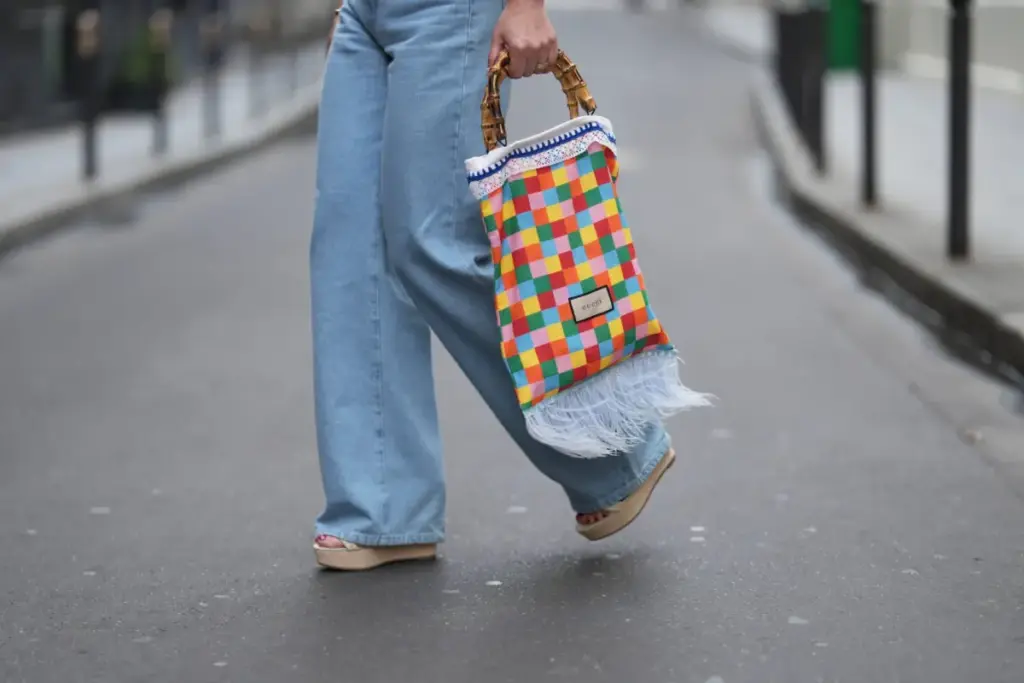
- The Look: Combine architectural barrel jeans with substantial wedge espadrilles featuring suede straps, slingback details, or subtle ankle ties.
- Why It Works: The platform and wedge height provide the structural heft necessary to hold their own against the curved, oversized shape of the denim. Paired with a minimalist ribbed vest and a lightweight tailored blazer, this look achieves an ideal balance between casual ease and polished tailoring.
3. Flared Jeans and Mary Jane Espadrilles
The 1970s aesthetic continues to heavily influence contemporary design, with flared denim remaining a cornerstone of high-fashion street style.
- The Look: Style mid-blue or dark-wash flared jeans with closed-toe Mary Jane espadrilles.
- Why It Works: The slim strap and closed toe of a Mary Jane silhouette sit neatly beneath a wider hem without competing for attention. By selecting a flare length that skims the top of the shoe rather than dragging on the floor, the distinct Mary Jane framing remains visible, elevating the vintage appeal of the outfit.
4. Mom Jeans and Lace-Up Wedge Espadrilles
Mom jeans offer a flattering high-waisted fit and tapered leg that naturally draws the eye downward toward the ankles.
- The Look: Pair cuffed or ankle-grazer mom jeans with traditional lace-up wedge espadrilles (such as classic canvas styles with wrap-around cotton ribbons).
- Why It Works: The slightly shorter hem ensures that the ribbons do not get swallowed up by the denim, allowing the intricate lacing to wrap gracefully around the ankle. Keep the upper half understated with a tucked-in striped Breton top or a romantic cotton blouse.
5. Wide-Leg Jeans and Espadrille Sneakers
For those who prioritize absolute comfort without sacrificing style credentials, the hybrid espadrille sneaker offers the best of both worlds.
- The Look: Wear full-length or cropped wide-leg denim with flat, chunky-soled espadrille trainers.
- Why It Works: The sneaker silhouette keeps the overall outfit relaxed and grounded, while the braided jute detailing along the midsole injects a subtle summer texture into an otherwise casual streetwear look. Complete the outfit with a simple tank top and an unstructured bomber jacket.
Official Industry Perspectives and Styling Insights
Fashion editors and luxury buyers continue to champion the pairing as an essential masterclass in transitional capsule dressing.
Industry experts note that the success of the trend lies entirely in texture juxtaposition. “Denim is inherently rigid, durable, and industrial,” notes prominent London-based fashion commentator Lucy Morgan. “Espadrilles introduce organic warmth through woven jute, cotton canvas, and soft leathers. When you combine the two, you instantly elevate a basic casual outfit into something intentional and chic.”
Furthermore, prominent retail buyers emphasize the economic practicality of the trend. In an era where consumers are increasingly auditing their closets for cost-per-wear value, items that transcend strict seasonal boundaries are prioritized. By styling summer-coded espadrilles into autumn and spring denim wardrobes, consumers effectively double the utility of their footwear investments.
Future Outlook: The Longevity of Hybrid Footwear
As the fashion calendar continues to flatten—discarding rigid dictates about what can and cannot be worn during specific months—the integration of resort-wear staples into everyday urban attire is set to accelerate.
Looking forward, designers are expected to experiment further with hybrid materials, merging traditional espadrille construction elements (such as vulcanized rubber treads and jute braiding) with heavier autumnal textiles like oiled leather, suede, and tweed uppers. This evolution ensures that the humble espadrille will remain far more than a fleeting vacation novelty; it is a permanent, versatile pillar of modern footwear.
Whether you are stepping out in polished metallic wedges, effortless canvas flats, or contemporary Mary Jane hybrids, pairing your favorite denim with an espadrille is no longer a stylistic gamble—it is the ultimate hallmark of effortless, modern elegance.