Executive Overview
The modern beauty landscape exists at a volatile intersection of technological innovation, artistic expression, and aggressive consumer capitalism. On one hand, cosmetics and skincare have evolved into sophisticated tools for personal empowerment and creativity. On the other hand, the multi-billion-dollar beauty industry thrives on a foundation of manufactured insecurity, continuously capitalising on human vulnerabilities to market redundant, over-priced, and occasionally counterproductive products.
As social media algorithms dictate the rhythm of global commerce, viral beauty trends emerge and fade with dizzying speed. Platforms like TikTok and Instagram have democratised beauty education, yet they have simultaneously accelerated the proliferation of hyper-specific, highly questionable product categories. From color-changing sunscreens that compromise UV protection to peel-away lip tints that risk skin damage, the modern consumer is constantly bombarded with novelties promising miracle transformations.
To cut through the digital noise, we consulted a panel of leading professional makeup artists—Saffron Hughes, Scarlett Burton, Rose Gallagher, and Mira Parmar—to interrogate the most pervasive viral beauty trends of the year. Their verdict is clear: while some innovations genuinely elevate a makeup routine, many are nothing more than marketing gimmicks designed to drain your wallet. This investigative report examines the absolute worst offenders in the beauty market, dissects the science behind their failures, and provides expert-approved alternatives that deliver superior results without the financial or dermatological cost.
Detailed Chronology: The Rise of Micro-Trends and Market Saturation
To understand how the market became flooded with superfluous items like mascara combs, lip primers, and peel-away tints, one must examine the evolution of beauty consumption over the past decade.
The Shift from Traditional Retail to Algorithm-Driven Consumption
Historically, beauty trends were dictated by seasonal runway shows, magazine editors, and legacy cosmetic houses. Consumers relied on foundational staples: a reliable foundation, a signature lipstick, a versatile eyeshadow palette, and a standard mascara. Innovations occurred incrementally, driven by technological breakthroughs in formulation chemistry.
However, the proliferation of short-form video platforms fundamentally altered this trajectory. In the mid-2010s, beauty vloggers gave way to algorithmic content creators incentivized to capture immediate visual shock value. Products that performed well on camera—such as intense color-correcting green creams, dramatic peel-off tints, and stark white lash primers—began to dominate feeds. The metric of a product’s success shifted from its long-term utility on real human skin to its immediate visual impact within a 15-second video loop.
The Proliferation of Hyper-Specific Products
As traditional categories reached market saturation, brands needed to manufacture new problems for consumers to solve. This gave rise to hyper-niche product categories. If you already owned a facial primer, you were suddenly told you needed a dedicated eyelid primer and a lip primer. If your mascara provided length and volume, you were introduced to a white primer base coat. If your foundation matched your skin, you were sold a color-changing pigment that promised to magically adapt to any complexion.
This chronology of manufactured necessity has left consumers overwhelmed, confused, and financially strained. By examining individual product categories, industry experts help dismantle the illusion of necessity that props up these viral sensations.
Supporting Context & Metrics: Deconstructing Viral Beauty Products
1. Color-Changing Sunscreens and Universal Moisturizers
TikTok is perpetually flooded with viral reviews of color-changing sunscreens and moisturizers, frequently endorsed even by well-meaning dermatologists. The theoretical promise is alluring: "universal" pigments enclosed in micro-capsules burst upon application, purportedly adapting to your exact skin tone while delivering broad-spectrum UV protection and a lightweight tint.
On camera, the transformation appears seamless. In reality, the physics and chemistry of these formulations fall short.
"Fascinating on screen, color-changing sun and moisturizing creams frequently result in a grey, ashy cast or an entirely mismatched undertone," explains Saffron Hughes, a professional makeup artist at falseeyelashes.co.uk. "This is particularly detrimental for individuals with deeper skin tones. Consumers are far better off investing in complexion products specifically formulated for their exact shade matrix to guarantee reliable, authentic results."
Furthermore, dermatologists routinely warn against relying on tinted sunscreens or hybrid makeup products for primary UV protection. Achieving the stated Sun Protection Factor (SPF) on a bottle requires applying a specific volume of product—the well-established "two-finger rule" (generous lines along the index and middle fingers). When consumers apply tinted moisturizers or color-changing sunscreens in these quantities, the resulting pigmentation is overwhelmingly heavy, cakey, or unnatural.
Expert Alternative: Apply a dedicated, untinted broad-spectrum sunscreen as the foundational layer of your skincare routine. Once absorbed, layer a lightweight, high-performance skin tint for sheer, customizable coverage. Recommended alternatives include the MAC Strobe Dewy Skin Tint (€39.00) or the Fenty Beauty Eaze Drop Blurring Skin Foundation (€38.45).
2. The Fallacy of Green CC Creams and Color Correction
Color theory is a foundational pillar of professional makeup artistry: complementary colors neutralize one another. Consequently, green color-correcting (CC) creams designed to counteract redness have become a retail staple. However, makeup artist Scarlett Burton cautions against their indiscriminate use.
"While color theory is brilliant when applied strategically to localized areas of irritation or vascular redness, I frequently observe consumers applying green CC creams across their entire face," Burton notes. "The inevitable result is a dull, grey, corpse-like complexion. You do not need to neutralize your entire face unless you are dealing with widespread, severe erythema."
3. Peel-Off Lip Tints: Social Media Stunts
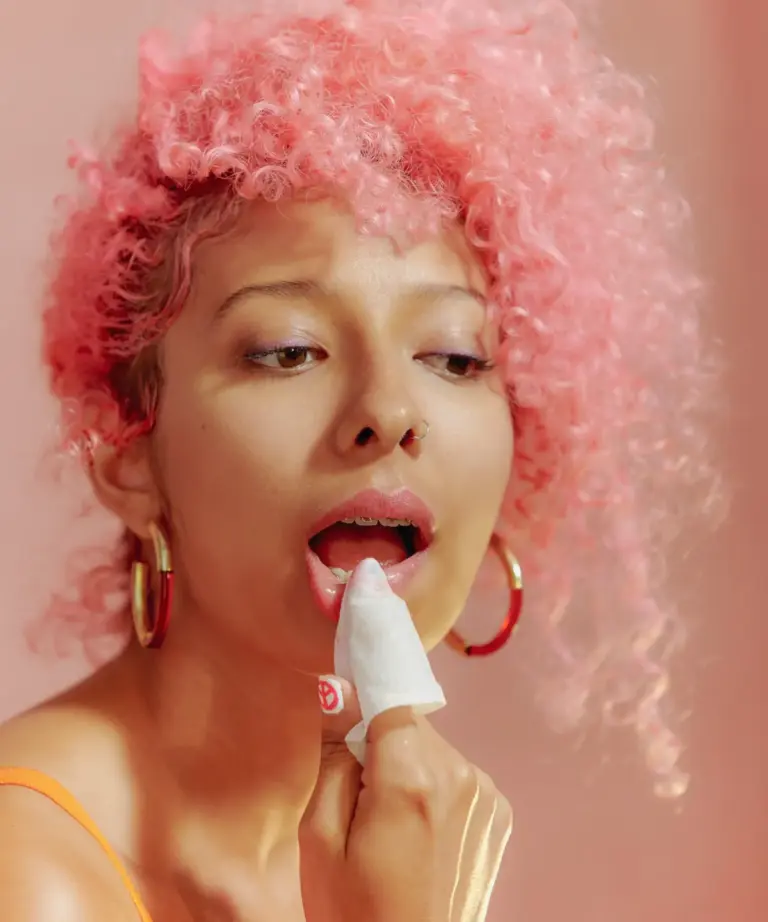
Few products epitomize the absurdity of algorithm-driven beauty quite like "peel-off lip tints." Users apply a thick, often bizarrely colored gel to their lips, wait for it to dry into a rubberized film, and peel it away to reveal a stained pout.
According to beauty editor and makeup artist Rose Gallagher, these products serve a singular purpose: manufacturing viral content.
"Every time I encounter one of these gimmicks on my TikTok For You Page, my heart sinks," Gallagher remarks. "No one navigating a rushed morning commute has time to paint, dry, and peel away a lip stain—especially when elegant, efficient alternatives exist that achieve identical results without the mess or the risk of stripping delicate lip tissue."
Expert Alternative: Opt for pH-reactive lip balms that interact with the skin’s natural chemistry to deliver a customized, enduring flush of color. Gallagher’s personal recommendation is the Givenchy Rose Perfecto Pink Irresistible (€27.95), which provides hydration and a bespoke rose tint with a single swipe.
4. Dedicated Freckle Pens vs. Everyday Brow Pencils
The faux-freckle trend has proven remarkably resilient, transitioning from summer festival staple to a year-round cosmetic choice. Yet, specialized freckle pens often fail to deliver realistic results.
"Whenever I watch someone utilize a dedicated faux-freckle marker, the pigment invariably bleeds into the surrounding epidermis," warns Burton. "The dots lack the crisp, defined perimeter of natural sun-exposure spots. Moreover, they frequently oxidize into an unnatural, orange hue—the dead giveaway of artificial application."
Expert Alternative: Bypass overpriced, specialized freckle pens and repurpose a product already in your makeup bag: a fine-tipped, cool-toned eyebrow pencil. Burton recommends the e.l.f. Ultra Precise Brow Pencil (€7.00), which allows for precise, hair-like strokes or pinpoint freckle placement that mimics natural melanin distribution without bleeding or orange oxidation.
5. Eyelid Primers and Lip Primers: Redundant Layers
As intricate eyeshadow looks cycle back into trend prominence, the market has seen a surge in dedicated eyelid primers designed to lock powder in place. However, Hughes argues that this is an unnecessary expenditure.
"There is a persistent misconception that facial primers cannot be applied within the immediate orbital eye area," Hughes explains. "Unless a product label explicitly prohibits ocular proximity, standard facial primers undergo rigorous safety and ophthalmic testing. They contain smoothing agents, sebum-controllers, and longevity-extending polymers that perform exceptionally well on the delicate skin of the eyelids, saving consumers from purchasing a redundant, single-use product."
Similarly, makeup artist Mira Parmar challenges the utility of lip primers. Designed ostensibly to prep the mouth, ease lipstick glide, and extend wear time, Parmar notes that these claims lack empirical backing. Instead, she advises applying a thin layer of remaining foundation or concealer directly to the lips, followed by a precise lip liner and lipstick application, which yields superior longevity without specialized priming products.
6. Makeup Sponges and the Absorption Trap
The beauty sponge—popularized globally in the last decade—revolutionized foundation application, but its utility depends heavily on product formulation.
"If you utilize a high-coverage, heavily pigmented liquid foundation or concealer, a damp sponge is fantastic for diffusing edges and creating a seamless finish," Gallagher explains. "However, as the beauty industry shifted toward lightweight skincare-makeup hybrids—such as skin tints and tinted serums—the mechanics changed."
Because skincare-infused hybrids possess a thinner, more aqueous viscosity, a porous sponge acts like a sponge literal: it greedily absorbs the expensive product rather than depositing it onto the skin. This accelerates product depletion, forcing consumers to repurchase expensive items at an unsustainable rate. For lightweight complexion products, Gallagher advises abandoning the sponge entirely and using clean fingertips to press the product into the skin, maximizing both longevity and coverage efficiency.
7. White Mascara Primers: Complication Over Clarification
Mascara primers—particularly those that dry down to an opaque, chalky white finish—are marketed as essential precursors for adding volume and length to fine lashes. In practice, they frequently complicate the application process.
"On most natural lashes, white primers create a clunky, unnatural silhouette," Hughes observes. "If the white base coat is not meticulously covered by subsequent layers of dark mascara, it peeks through at the roots or tips, resulting in a grey, dusty look. Modern mascara formulations are engineered with advanced polymers, waxes, and specialized brush designs that simultaneously lift, lengthen, and volumize without requiring a chalky foundation."
Hughes highlights high-performing alternatives that eliminate the need for a primer step entirely, including the Lancôme Lash Idôle Mascara (€21.95), benefit They’re Real! Lengthening Mascara (€19.39), and the budget-friendly Maybelline Lash Sensational Sky High Mascara (€12.99).
8. Alcohol-Heavy Setting Sprays
The final step of many modern makeup routines involves a generous mist of setting spray. However, Hughes urges consumers to scrutinize ingredient lists, particularly those with sensitive or dehydrated skin types.
"The majority of setting sprays—particularly those marketed as offering a ‘matte finish’—contain high concentrations of denatured alcohol," warns Hughes. "This strips the skin of its natural lipid barrier, triggering excessive dehydration, flaking, and irritation. Ironically, the primary ingredient in most setting sprays is simply water, which can occasionally cause makeup to break down and migrate if disturbed before complete evaporation."
Expert Alternative: For long-wearing security without chemical dehydration, invest in a finely milled setting powder. Premium formulations like the Laura Mercier Translucent Loose Setting Powder (€52.49) or Charlotte Tilbury Airbrush Flawless Finish Powder (€25.95) lock base makeup in place indefinitely. For budget-conscious shoppers, the e.l.f. Halo Glow Setting Powder (€9.00) delivers professional results without compromising skin hydration.
Official Statements and Industry Insights
To contextualize these findings within the broader commercial framework of the cosmetics industry, we look to the consensus among practicing professionals. The underlying theme from all interviewed artists is clear: intentional consumerism.
| Viral Product Category | Professional Verdict | Primary Drawback | Cost-Effective Alternative |
|---|---|---|---|
| Color-Changing Sunscreen | Avoid | Ashy cast; compromises UV protection | Standard broad-spectrum SPF + Skin Tint |
| Green CC Creams (Full Face) | Avoid | Creates a dull, grey, washed-out complexion | Targeted color correction on localized redness |
| Peel-Off Lip Tints | Avoid | Gimmick for social media; strips delicate skin | pH-reactive tinted lip balms |
| Dedicated Freckle Pens | Avoid | Bleeds into skin; oxidizes orange | Fine-tipped cool-toned brow pencil |
| Eyelid Primers | Redundant | Unnecessary expenditure | Standard, multi-use facial primers |
| Makeup Sponges for Skin Tints | Counterproductive | Absorbs expensive liquid product | Clean fingertips for seamless pressing |
| White Mascara Primers | Redundant | Clumpy finish; difficult to cover completely | High-performance modern mascaras |
| Alcohol-Based Setting Sprays | Proceed with Caution | Dehydrates skin barrier; causes product slip | Finely milled translucent setting powders |
Future Outlook: Where the Beauty Industry is Heading
As consumers become increasingly literate regarding ingredient decks, marketing psychology, and formulation chemistry, the era of unbridled, trend-driven overconsumption is facing a necessary correction.
The future of beauty lies in rational minimalism and multitasking efficacy. Consumers are prioritizing capsule makeup collections over overflowing vanity drawers, demanding transparency, clinical validation, and true sustainability from brands. Regulatory bodies are also casting a critical eye on exaggerated marketing claims, particularly regarding SPF hybrids and color-correcting efficacy.
Moving forward, the smartest investment a beauty consumer can make is not in the latest viral novelty pushed by an algorithm, but in versatile, high-performing staples that respect the biological integrity of the skin. By stripping away redundant steps—such as unnecessary primers, peel-off stains, and chalky bases—consumers can streamline their routines, protect their skin barriers, and retain their hard-earned money.
Transparency Note: Editorial selections are independently curated by industry experts. Purchases made via embedded affiliate links may generate a commission to support ongoing investigative journalism.