Executive Overview
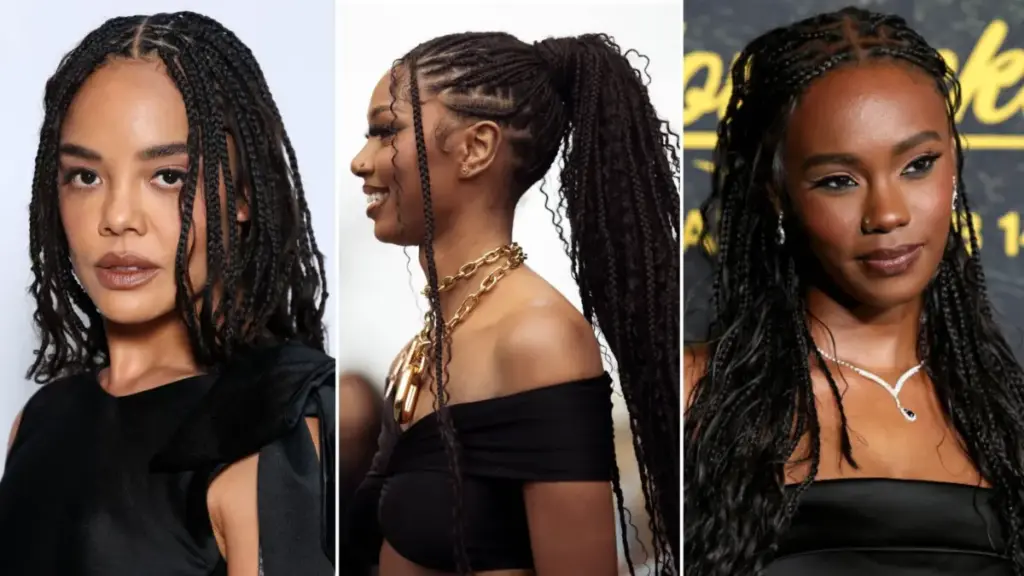
In the ever-evolving landscape of natural hair trends, few styles manage to strike the elusive balance between timeless cultural heritage and modern aesthetic innovation quite like goddess braids. Characterized by their flowing, curl-accented plaits, these knotless installations have firmly established themselves as a dominant force in contemporary beauty culture. Offering the wearer a majestic, ethereal appearance reminiscent of ancient deities, goddess braids are far more than a fleeting social media phenomenon—they represent a masterclass in scalp health, structural versatility, and protective styling evolution.
However, as the popularity of goddess braids surges across global style capitals from London to New York City, a nuanced conversation among professional braiders has emerged regarding definitions, techniques, and maintenance. Often used interchangeably with "boho braids," the true definition of a goddess braid depends heavily on the artisan crafting the look. Whether defined by a minimalist incorporation of delicate curls or a voluminous, full-bodied cascade of human hair that obscures the underlying plaits, this hairstyle has captured the hearts of beauty enthusiasts worldwide.

This comprehensive report explores the anatomy of goddess braids, investigating installation processes, regional pricing metrics, expert-backed maintenance regimens, and a detailed stylistic breakdown. By examining the intersection of low-tension technology and high-fashion aesthetics, we uncover why modern consumers are pivoting away from heavy, traditional styles in favor of these lighter, celestial crowns.
Detailed Chronology: The Evolution from Heavy Roots to Ethereal Flow
To fully understand the current dominance of goddess braids, one must examine the historical trajectory of braided protective styles over the past three decades. The evolution of this craft highlights a continuous push toward minimizing scalp trauma while maximizing aesthetic expression.

The 1990s and Early 2000s: The Era of Heavy Plaiting
For decades, traditional protective styling was synonymous with structured, knotted installations. During the Poetic Justice era of the 1990s and early 2000s, thick, heavy box braids secured tightly at the root with traditional knots reigned supreme. While these styles offered longevity and cultural significance, they often came with a steep physical cost. The sheer weight of the synthetic hair, combined with the secure mechanical tension required at the root to hold the knots in place, frequently resulted in acute post-installation discomfort—commonly known as "headache days"—as well as long-term traction alopecia along the hairline.
The Shift Toward Low-Tension Mechanics
As natural hair education expanded in the 2010s, braiders and trichologists alike began sounding the alarm on the damage caused by high-tension styling. This realization catalyzed the development of knotless installation techniques. By feeding braiding hair progressively into the natural hair rather than anchoring it with a bulky knot at the scalp, stylists revolutionized the industry. The weight distribution became infinitely more balanced, dramatically reducing pressure on the scalp and preserving delicate edge hairs.

The Birth of the Goddess and Boho Aesthetic
Building upon the foundation of knotless technology, the modern "goddess" and "boho" braid movements emerged in the late 2010s and accelerated exponentially through digital platforms like TikTok and Instagram. Stylists began incorporating loose human or synthetic curls directly into or alongside the plaits. This fusion introduced unprecedented visual movement, texture, and dimension to traditional braiding. What began as a niche stylistic variation has now matured into a sophisticated, multi-million-dollar sector of the natural hair economy, championed by master braiders across the globe.
Supporting Context & Metrics: Defining the Aesthetic and Economic Landscape
Navigating the world of textured hair trends requires a clear understanding of terminology, technical variations, and financial investments. As the lines between "goddess braids" and "boho braids" blur, industry experts provide essential clarity.

The Great Debate: Goddess vs. Boho Braids
While both styles utilize a knotless foundation with loose curls integrated into some or all of the plaits, the exact volume and placement of these loose strands remain a subject of creative interpretation among professional braiders.
- The Minimalist Approach: According to renowned New York City-based braider Susy Oludele, true goddess braids are defined by restraint and precision. "Goddess braids take only a few curls," Oludele explains. "The braid stays defined and the finish is clean." In this style, the structural integrity of the individual plaits remains the primary visual focal point, punctuated by subtle, cascading curls.
- The Fuller Finish Approach: Conversely, London-based braider Jess Rutana, founder of Zuri Hair Studio, offers a contrasting perspective. At her salon, goddess braids are characterized by a significantly higher volume of loose human hair. "This creates a fuller finish where the braids are less visible," Rutana notes.
- The Boho Counterpart: In contrast to these variations, boho braids often utilize massive quantities of loose hair distributed densely throughout the head, creating a bold, hyper-textured, and voluminous look where the distinction between loose waves and braided shafts dissolves entirely.
Market Pricing and Financial Transparency
Investing in a luxury protective style requires careful financial planning. According to industry benchmarks provided by leading professionals, goddess braids generally command a price range of $300 to $500.

However, several variables influence the final cost at the register:
- Geographic Market: Salons located in high-cost-of-living metropolitan areas (such as New York City, London, or Los Angeles) command top-tier pricing due to overhead and specialized demand.
- Hair Fiber Selection: As braider Ariana Greene points out, installations utilizing exclusively synthetic hair tend to be more cost-effective. Premium installations incorporating 100% human hair for the loose curls significantly increase material costs but yield a more natural, longer-lasting finish.
- All-Inclusive Pricing vs. Add-ons: A critical pitfall for consumers is failing to clarify whether the cost of the hair extensions is included in the initial quote. Master braiders strongly advise clients to confirm pricing structures prior to booking to avoid unexpected expenses.
Official Statements & Expert Insights
To maintain journalistic rigor, we turn to the leading authorities in the textured hair community. Their insights illuminate the technical brilliance, health benefits, and maintenance protocols essential for sustaining goddess braids.

The Ergonomics of Low-Tension Styling
The surge in popularity of goddess braids is not merely driven by aesthetics; it is deeply rooted in scalp wellness. Shanna St. Cyr Alexander, a prominent New York-based braider, notes: "It’s because they offer versatility, longevity, and a little more dimension than traditional knotless braids."
This sentiment is echoed by Susy Oludele, who emphasizes the physiological relief provided by the technique. "There’s less weight, less pressure on the scalp, and less tension on the edges," Oludele states. "We’ve all watched what heavy styles do to a hairline over time, and women are done with it. Goddess braids give you a full, beautiful look without your head hurting for three days after you leave the chair."

Technical Execution: The Installation Process
Achieving a divine finish requires meticulous preparation and execution. According to professional standards, the installation protocol follows a strict sequence:
- Scalp Preparation: The natural hair undergoes a thorough cleansing, deep-conditioning treatment, and a stretching or blow-drying phase to ensure an optimal foundation.
- Strategic Integration: The braider feeds in the extension hair using a knotless technique, systematically incorporating the loose curly pieces as the plait progresses downward.
- Fiber Customization: Depending on the desired longevity and texture, stylists may utilize synthetic hair, premium human hair, or a strategic hybrid combination.
Advanced Maintenance Regimes for Human Hair vs. Synthetic Fibers
Maintaining the ethereal look of goddess braids requires diligence, particularly when premium human hair is used for the loose curls.

- Scalp Hygiene: Susy Oludele advises oiling the scalp two to three times a week and washing the hair every two to three weeks. Crucially, cleansing should be performed using a diluted shampoo dispensed via an applicator bottle, focusing exclusively on the scalp rather than scrubbing the lengths of the braids. "A dirty scalp breaks hair," Oludele cautions. Recommended products include Camille Rose’s Rosemary Oil Strengthening Hair + Scalp Drops for soothing moisture and Aunt Jackie’s Grapeseed Style and Shine Recipes Power Wash Intense Moisture Clarifying Hair Shampoo, which leverages antibacterial apple cider vinegar and aloe.
- Detangling Loose Human Hair: Jess Rutana highlights the specialized care required for human hair strands, which are prone to matting if neglected. "I recommend gently separating the loose strands and using a soft-bristled detangling brush. Start at the ends and work upward, holding the hair close to the braided section to avoid pulling on the braid or natural hair."
- Moisture and Shine Enhancement: To maintain hydration and prevent friction-induced tangling, stylists recommend lightweight leave-in conditioners such as SheaMoisture’s Jamaican Black Castor Oil Strengthen & Restore Leave-In Conditioner, paired with smoothing serums like L’Oréal Paris Elvive Extraordinary Oil Miracle Hair Serum or protective hair oils suggested by Shanna St. Cyr Alexander.
- Nighttime Protection: Ariana Greene emphasizes the importance of nocturnal care: "I would advise sleeping with a satin pillowcase, along with a satin scarf, and splitting your hair into two sections and putting it into braids or twists." Oversized satin bonnets, such as the Kitsch XL Satin Bonnet, provide ample coverage without compressing the style.
Future Outlook: The Longevity and Versatility of Goddess Braids
As we look toward the future of natural hair styling, goddess braids have secured their place as a modern classic. Far from being a short-lived trend, their adaptability ensures they will remain a staple in salons worldwide.
The Golden Rule: Knowing When to Take Down
Despite the temptation to extend the life of a flawless protective style for months, professional consensus dictates a strict removal timeline of six to eight weeks. Prolonged wear beyond this threshold can lead to matting at the new growth line and accumulation of debris, undermining the primary purpose of protective styling. As Oludele aptly summarizes: "A protective style should give your hair back to you healthier than it came."

Stylistic Variations for Every Preference
The versatility of goddess braids is best demonstrated through the diverse array of lengths and configurations currently dominating the fashion landscape:
- Small Goddess Braids: Striking a balance between micro braids and medium installations, smaller plaits offer exceptional longevity and can be effortlessly swept into elaborate updos.
- Smedium Goddess Braids: Positioned precisely between small and medium sizing, "smedium" braids provide maximum visual fullness while significantly reducing installation time in the stylist’s chair.
- Half-Up, Half-Down Configurations: A perennial favorite, this style keeps face-framing curls pristine while offering an ideal canvas for decorative accessories, such as luxury claw clips.
- Goddess Ponytails: Gathering plaits into a high or low ponytail creates an instantly regal aesthetic, whether wrapped cleanly at the base or accented with loose, romantic tendrils framing the face.
- The Goddess Lob: Challenging the notion that protective styles must cascade to the waist, the short goddess lob brings contemporary edge to one of today’s most popular haircut silhouettes.
In conclusion, goddess braids represent the pinnacle of modern protective styling—seamlessly marrying ancestral braiding traditions with cutting-edge comfort, ergonomic innovation, and breathtaking artistry. For the modern individual seeking a crown fit for a deity, this earthly delight remains an unmatched expression of beauty and self-care.