Executive Overview
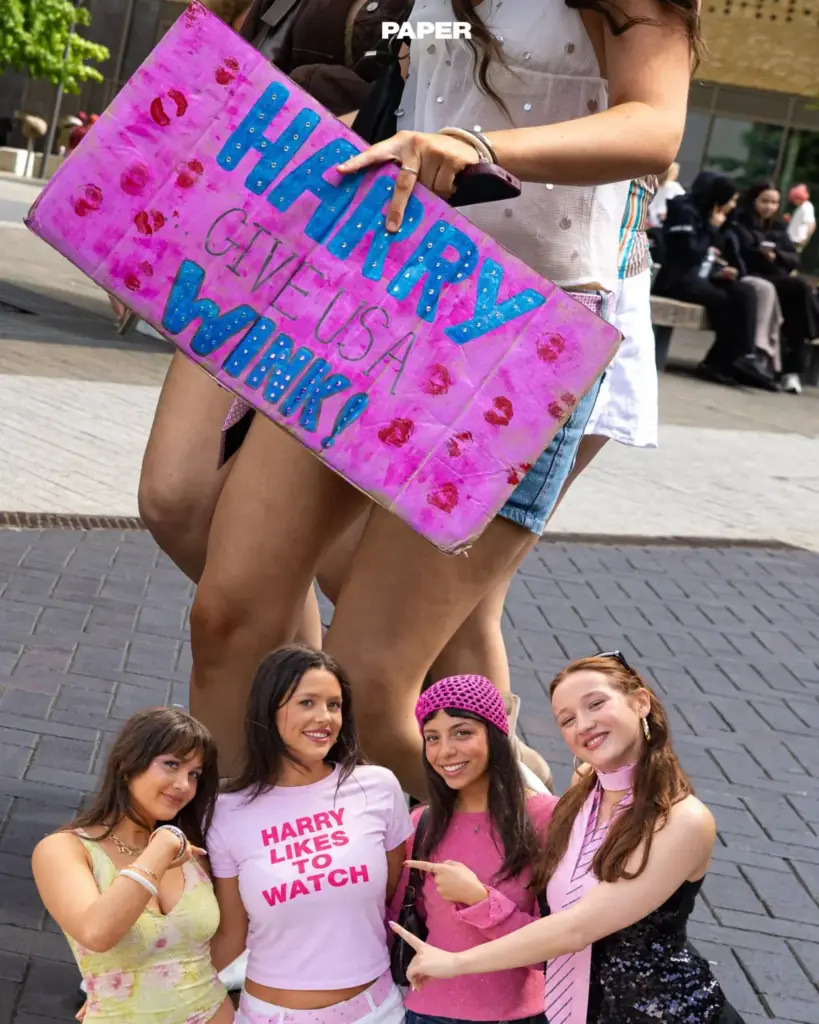
It is another suffocating summer night in London, and the capital is locked in the relentless grip of a continental heatwave. Sweat glistens on foreheads, necks, and the backs of legs as commuters pack tightly into the London Underground. "Thank fuck Wembley has air-con," a young woman mutters to her companion. She doesn’t need to announce her destination; the pink cowboy hat perched atop her head and the matching feather boa trailing over her shoulder make her final stop glaringly obvious.
Predictably, this is one of the nights Harry Styles is headlining Wembley Stadium. Almost the entirety of the tube carriage—and arguably the wider transit line—is gussied up in a remarkably uniform sartorial code. Stepping off the train in a standard pairing of cool boots and a mini skirt, a familiar concert-going uniform of decades past, suddenly feels starkly out of place.
It is 2026, and the traditional "jeans and a nice top" or standard gig attire no longer suffices for today’s Big Live Pop zeitgeist. Outside the stadium, stands are a blinding sea of feather boas and Elton John-style sunglasses worn by multigenerational attendees—from young children and their mothers to teenagers eager to push their looks to theatrical extremes. This scene is replicated globally wherever tour merchandise is sold and fifty-dollar shirts advertise the latest stadium stops.
Concert dressing has evolved far beyond casual appreciation; it has transformed into a high-stakes, highly coordinated tribal ritual. This investigative report examines the rise of cult concert dressing, tracing its modern roots, cultural significance, commercial implications, and the psychological motivations driving a post-pandemic generation to seek community through costume.
Detailed Chronology: The Evolution of Gig Fashion
To understand how live music morphed into a high-fashion, costume-heavy subculture, one must chart the modern milestones that redefined the relationship between artist, audience, and apparel.
1. The Pre-Pandemic Baseline: Casual and Individualistic
For decades, dressing for a concert followed a predictable, relaxed logic. Fans curated outfits that blended general night-out aesthetics with subtle nods to a musical genre or specific band. Wearing a vintage Nirvana tee to an indie rock gig signaled a certain "old school" coolness. For mainstream pop or acoustic shows, the informal constitutional order of "jeans and a nice top" reigned supreme. The underlying objective was individual expression or, in the case of intense pop fandoms like early One Direction "Directioners," dressing to capture the fleeting, individual attention of the heartthrob on stage. Fantasies immortalized in digital fanfiction hinged on the idea of being singled out by the artist.
2. 2023: The Renaissance of Collective Decorum
When live music roared back to life following pandemic-era lockdowns, the unwritten rules of concert attendance shifted dramatically. Beyoncé’s historic 2023 Renaissance tour demanded unprecedented aesthetic commitment from its audience. Rather than leaving wardrobe choices entirely up to individual whim, the artist herself issued a royal decree: fans were encouraged to dress in head-to-toe silver, particularly aligning with Virgo season, honoring the star’s birth month. Audiences transformed stadiums into glittering, chrome-plated spaces, proving that fans were eager to actively participate in the thematic universe of the tour.
3. 2024: The Eras Phenomenon and the Era of Rituals
Taylor Swift’s record-shattering Eras tour brought international, mainstream media attention to the cult costume-dressing phenomenon. Attendees were no longer just dressing for a general vibe; they were meticulously recreating specific album eras, from the 2008 VMA nods to custom-made sequin ensembles mirroring Midnights.
Concurrently, the Swiftie community popularized the ritual of crafting and trading friendship bracelets—a direct interpretation of a single lyric from the track "You’re On Your Own, Kid." What began as a crafty fan-led initiative quickly escalated into an obligatory social custom observed with evangelical fervor. Social media channels buzzed with tutorials and documentation of bracelet-making, treating the hobby with the industrial scale of a local manufacturing plant.
4. 2025–2026: Total Subcultural Assimilation
By 2026, the phenomenon had expanded beyond pop royalty. Even legacy acts and niche performers saw shifts in audience decorum. Pitbull concerts practically mandated bald caps and sunglasses à la "Mr. Worldwide." Meanwhile, artists who made little fuss about fashion—such as Charli XCX during her Brat tour—saw their audiences spontaneously uniform themselves in rave shades and white ribbed tanks, bathed in a hyper-specific, neon lime-green shade that saturated venues globally.
Supporting Context & Metrics: The Economics and Sociology of Fandom
The shift toward cult concert dressing is not merely a superficial stylistic trend; it is backed by substantial economic investment and deep sociological shifts.
The Financial Footprint of Fan-Led Economies
The financial commitment required to attend a major pop concert no longer stops at ticket acquisition. Industry analysts note that ancillary spending—comprising specialized outfits, custom footwear, handmade accessories, and tour-specific merchandise—now represents a significant percentage of total consumer expenditure per event.
- The DIY Industry: Platforms like Etsy and TikTok have birthed micro-economies dedicated entirely to concert preparation. Sellers specialize in bespoke tour merchandise, custom cowboy hats, and specialized jewelry tailored to individual artist aesthetics.
- Fast Fashion and Retail Adaptations: Major high-street retailers and fast-fashion giants now drop dedicated "Concert Collections" synchronized with major tour announcements, offering pre-styled sequin dresses, feather trims, and themed footwear to capture immediate market demand.
Psychological Drivers: Community Over Parasocial Validation
Psychologists and cultural sociologists point out a fundamental paradigm shift in why fans dress up. Historically, teenage and young adult fans dressed to attract the gaze of the performer. Today, the gaze matters very little.
Fans are dressing for each other.
For a generation raised predominantly online—many of whom experienced critical formative years disrupted by the COVID-19 pandemic—the desire for tangible, physical community is paramount. Sociological studies on post-pandemic youth culture frequently highlight high rates of reported isolation and anxiety among Gen Z. In response, mass concert gatherings have evolved into safe harbors for collective effervescence.
When a fan spends hours gluing rhinestones to a cowboy hat or stringing beads onto friendship bracelets, they are signaling membership in a tribe. As one attendee noted when queried about her outfit choice, validation from the artist is secondary to securing a recognized, welcoming place within an artist-made, people-led community.
Official Statements & Cultural Commentary
Industry insiders, fashion historians, and cultural critics have increasingly weighed in on the permanence of this trend.
"We are witnessing the death of the passive spectator," notes Dr. Elena Vance, a professor of contemporary cultural studies at the University of London. "Live music has transitioned from a performance-viewer dynamic to an immersive, participatory theater. The audience has effectively become the set design."
Fashion commentators have similarly observed the democratization of high-concept styling. While red carpets and high-fashion runways dictate luxury trends, stadium tours dictate street-level, experiential fashion.
"You see a level of coordinated creativity in a football stadium hosting a pop concert that you rarely see during fashion week," says veteran music stylist Marcus Thorne. "It’s raw, it’s highly commercialized, yes, but it is fundamentally driven by grassroots fan collaboration. They are building a shared visual language in real time."
Music executives have also taken notice. Tours are increasingly designed with visual "moments" specifically engineered to photograph well and encourage user-generated content across social media platforms, embedding marketing directly into the audience’s sartorial choices.
Future Outlook: Where Does Concert Culture Go From Here?
As the live entertainment industry continues to break box-office records year after year, the trajectory of cult concert dressing shows no signs of abating. Several key developments are projected to shape the future of live music aesthetics:
- Hyper-Thematic Festival Integration: Music festivals, traditionally known for bohemian or eclectic street style, are adopting structured, artist-specific dress codes days. Promoters are beginning to curate daily lineups that encourage audiences to transition through distinct aesthetic themes.
- Sustainability Challenges and Circular Fandom: With the massive influx of disposable fashion—such as cheap polyester feather boas, synthetic sequins, and single-wear plastic accessories—criticism regarding the environmental impact of concert dressing is mounting. The next frontier of the movement is anticipated to embrace sustainable swaps, clothing rental services for tours, and community-led vintage styling swaps to combat festival waste.
- The Expansion to Legacy and Non-Pop Genres: While pop, hip-hop, and hyperpop have dominated the costumed concert space, rock, metal, and jazz subcultures are observing peripheral influences. Even legacy acts from the 1980s and 90s are noting older demographics embracing playful, referential dressing, proving that the desire to play dress-up spans across generations.
Conclusion
Ultimately, the phenomenon of cult concert dressing is a fascinating paradox. Pop music remains a ruthlessly efficient, highly commercialized corporate machine designed to maximize capital returns. Yet, within the cavernous bowls of stadiums worldwide, young audiences subvert that commercialism by turning their gaze inward—toward one another.
Whether it costs twenty dollars for a shedding feather boa or hundreds of hours of labor to hand-craft an era-accurate costume, the modern concert-goer is participating in something profoundly human. They are building shrines of connection out of sequins, thread, and shared lyrics, proving that even in an increasingly digitized and anxious world, the impulse to gather, dress up, and belong remains entirely unbreakable.