Executive Overview
It is another sweltering summer evening in London, and the British capital is trapped in the suffocating grip of a continental heatwave. Beads of sweat glisten relentlessly on foreheads, necks, and the backs of legs along the packed underground transit lines.
"Thank fuck Wembley has air-con," a young woman mutters to her companion on the Tube, her voice laced with exhaustion. She doesn’t need to announce her final destination. Her itinerary is broadcasted to the entire carriage through a neon-pink cowboy hat and a matching, shedding feather boa.
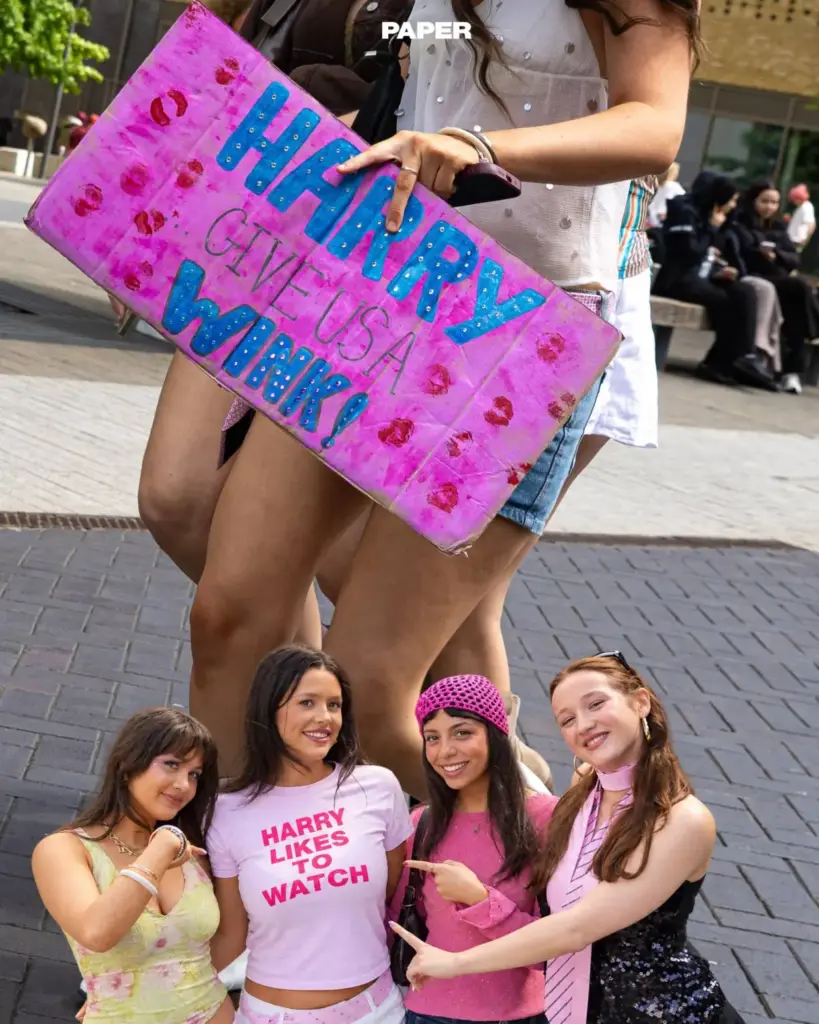
Predictably, it is one of the nights Harry Styles is headlining Wembley Stadium. Almost the entirety of the subway car—and seemingly the entire transit line at large—is outfitted in the exact same sartorial uniform. Stepping off the train outside the station, the reality of modern concert etiquette sets in immediately. "I think we’re underdressed," a casual concertgoer remarks to a friend. They are wearing cute boots and a denim mini-skirt—the traditional, tried-and-true uniform of rock and pop concerts for generations.
Yet, in the contemporary live music zeitgeist, standard weekend-wear is no longer enough. Boots and a mini-skirt do not meet the dress code of today’s Big Live Pop economy.
Outside the monumental gates of Wembley, the sprawling concourses resemble a surrealist sea of feathered boas, bespoke sequins, and oversized Elton John-style sunglasses. Mothers and daughters match in coordinated fandom gear; teenagers proudly push their looks to theatrical extremes; groups of friends pose for content that will inevitably feed the algorithmic beast of TikTok and Instagram. This exact scene is currently replicating itself in stadiums across the globe, wherever fifty-dollar merch tees and tour posters mark the coordinates of modern pop pilgrimage.
Concert dressing has undergone a seismic evolution. What was once a casual decision of throwing on "jeans and a nice top" has mutated into an elaborate, ritualistic subculture. It is a phenomenon where the audience has effectively stolen the show, replacing passive spectatorship with active, costumed community-building.
Detailed Chronology: The Evolution of Fandom Sartorialism
To understand how the modern concert dress code became an unwritten constitutional order, one must trace the trajectory of post-pandemic live entertainment. While dressing up for concerts is hardly a novel concept—stretching back through the glitter-dusted eras of glam rock, disco, and punk—the scale, synchronization, and enforcement of today’s pop uniform represent an entirely new sociological paradigm.
The Pre-Pandemic Paradigm: The Quest for Validation
Historically, concert fashion was built around individual expression and parasocial aspiration. During the height of the 2010s boyband era, fans of acts like One Direction ("Directioners") curated outfits explicitly designed to catch the eye of the idols on stage. Fashion choices were anchored in romantic fantasy—the persistent, Wattpad-fueled daydream that a pop star might lock eyes with a fan in the front row and pluck them from obscurity.
Outfits were generally understated or individualized: band tees, leather jackets, and items meant to signal personal taste or rebellious edge. The goal was vertical connection: Look at me, validate me, choose me.
The Post-Lockdown Renaissance and the Era of Eras (2023–2024)
The long-awaited return of live music following the COVID-19 pandemic shattered this individualistic model. Stripped of years of traditional socialization, milestones, and shared cultural moments, youth culture exploded back into arenas with an unprecedented hunger for collective belonging.
The turning point arrived with a trifecta of historic, multi-continent tours. First came Beyoncé’s Renaissance World Tour in the summer of 2023. The superstar issued an explicit, viral decree via social media: she requested that her global hive of fans assemble in shimmering chrome and silver attire, particularly for shows landing during Virgo season. The audience complied on a mass scale, turning stadiums into flashing, futuristic galaxies of liquid metal.
Shortly thereafter, Taylor Swift’s record-shattering Eras Tour codified the costume phenomenon into a fine art. Attending the Eras Tour without a specific "Era" in mind was treated as a social faux pas. Encountering fans outside venues yielded conversations centered entirely around sartorial taxonomy:
- "What Era are you meant to be?"
- "I’m wearing a white maxi skirt, so maybe Folklore?"
- "That feels more cardigan-oriented. Perhaps it’s a nod to the 2008 VMAs?"
Concurrently, the Swiftie community birthed the friendship bracelet phenomenon. Rooted in a single lyric from the Midnights track "You’re On Your Own, Kid"—"So make the friendship bracelets, take the moment and taste it"—fans transformed a throwaway lyric into a mandatory ritual. Millions of beads were purchased, assembled, and traded with strangers like sacred talismans. The act of trading bracelets shifted the concert experience from an isolated consumer transaction to an immersive, communal exchange.
The Unspoken Uniforms: Charli XCX and the "Brat" Summer (2024–2026)
While artists like Beyoncé and Taylor Swift provided top-down directives or clear thematic guidelines, the phenomenon soon proved it didn’t require explicit permission from the artist.
Enter Charli XCX and the cultural wildfire of her Brat era. Charli never mandated a dress code; she famously maintained an effortless, nonchalant cool-girl demeanor. Yet, across her tour stops, audiences organically synchronized into a distinct uniform: retro rave sunglasses, white ribbed tank tops, and an instantly recognizable, highly specific shade of lime green.
The color became so ubiquitous in physical spaces that the pigment outshone the stage design itself. Fans were not dressing to impress Charli XCX; they were dressing to broadcast their membership in a hyper-specific, highly online subcultural elite.
By 2026, the movement has expanded to include even the most unexpected corners of the live music ecosystem. From Pitbull concerts where attendees religiously don bald caps and aviator sunglasses (à la Mr. Worldwide) to indie-pop gigs where niche aesthetics dictate the night, the rule remains absolute: you do not simply attend a show; you costume yourself for it.
Supporting Context & Metrics: The Economics of the Cult of Couture
Beneath the feather boas and handmade sequins lies a staggering economic engine. The rise of cult concert dressing has intersected with the explosive post-pandemic resurgence of the live entertainment sector, creating an entirely new retail and logistical sub-market.
The Financial Footprint of Fandom Fashion
According to consumer behavior metrics within the live events sector, spending on concert-specific apparel has skyrocketed by over 140% since 2022. While primary ticket prices have drawn intense regulatory and public scrutiny—with dynamic pricing and scalper inflation pushing face values into the hundreds or thousands of dollars—fans are willingly committing an additional secondary budget solely for wardrobe acquisition.
- Fast Fashion and Specialized Drops: Major fast-fashion retailers now release dedicated "Concert Collections" months ahead of anticipated summer tours, capitalizing on micro-trends like silver metallic trousers, cowboy boots, and sequin corsets.
- The DIY Economy: Platforms like Etsy and TikTok have birthed micro-entrepreneurs who specialize in custom tour merchandise. From handmade Eras tour jackets to bespoke Brat green accessories, fans pour millions of dollars into independent creators to secure an authentic look.
- Environmental and Material Costs: The flip side of this hyper-consumption is environmental. Cheap synthetic materials, single-use polyester feather boas, and plastic-heavy sequin garments are frequently worn for a single Instagram post or four-hour stadium show before ending up in landfills. Sustainability advocates have increasingly raised concerns over the disposable nature of modern concert couture.
Sociological Implications: Digital Natives and IRL Sanctuaries
To dismiss cult concert dressing merely as excessive consumerism or superficial trend-chasing is to misunderstand the psychological underpinnings of Gen Z and younger millennial cohorts.
Sociologists note that generations heavily shaped by digital isolation, remote learning during formative years, and perpetual economic anxiety are uniquely primed for this behavior. Live music has become one of the few remaining secular sanctuaries where physical, mass congregation occurs offline.
When a fan spends hours gluing rhinestones to a denim vest or stringing hundreds of alphabet beads into friendship bracelets, they are engaging in "prosumer" culture. They are co-authoring the event. The validation they seek is no longer vertical—hoping the artist notices them—but horizontal: finding safety, recognition, and tribal belonging among tens of thousands of peers.
Official Statements & Industry Perspectives
The structural shift in how audiences consume live performance has not gone unnoticed by artists, tour promoters, and fashion historians.
Industry Analysts on the "Experience Economy":
"We have moved past the era where fans buy a ticket simply to hear recorded songs played through stadium speakers," notes Sarah Jenkins, a senior researcher in cultural economics at the Live Music Industry Forum. "Fans are purchasing an identity framework. The ticket is the entry fee; the outfit is the membership badge. Artists who understand that their tour is an immersive role-playing game are the ones dominating global box offices."
Artists and the Feedback Loop:
Pop icons have increasingly leaned into this symbiotic feedback loop, designing their visual identities specifically with audience replication in mind. Costume designers for major pop tours now factor crowd visibility into their schematics, ensuring that the star on stage acts as the high-priestess or kingpin of a visually unified congregation.
Beyoncé’s public call for silver attire during the Renaissance tour marked a watershed moment where artists openly acknowledged and mobilized the aesthetic power of their crowds. By turning the stadium into a mirror of the stage, the barrier between performer and spectator dissolves.
Fashion Critics on the Rise of "Tribal Dressing":
"What we are seeing is a return to tribal dressing, reminiscent of subcultures like punk, goth, or rave culture in the late 20th century," explains cultural critic and author Marcus Vance. "The difference today is that these tribes are formed via global algorithms rather than neighborhood geography. A teenager in Tokyo, London, and Chicago is wearing the exact same tour-coded uniform on the exact same weekend, bound together by digital infrastructure and executed in physical space."
Future Outlook: Where Does Concert Culture Go From Here?
As the live entertainment landscape looks toward the latter half of the 2020s, several key questions emerge regarding the sustainability and evolution of cult concert dressing.
1. Peak Saturation and Fatigue
With nearly every major pop, rock, and indie tour now demanding some level of visual participation, industry insiders wonder if the phenomenon is reaching a point of diminishing returns. As entry barriers—both financial and logistical—rise due to the pressure of assembling elaborate outfits, casual fans may begin to experience "costume fatigue." The pressure to look "iconic" for social media can transform a liberating night out into an exhausting, high-stakes performance.
2. The Push Toward Sustainability
In response to environmental criticisms regarding single-use fast fashion and synthetic tour merchandise, the next frontier of concert dressing is likely to center on circularity. Initiatives encouraging clothing swaps, second-hand styling, and biodegradable materials are already gaining traction among eco-conscious fan bases. Platforms that facilitate the rental or resale of specialized concert outfits are projected to grow significantly as consumers seek to balance aesthetic dedication with ecological responsibility.
3. The Decentralization of Pop Fandom
As algorithms continue to fragment musical tastes into hyper-niche micro-genres, the monolithic stadium show may give way to decentralized, highly localized immersive experiences. Yet, the core psychological driver—the fundamental human need to dress up, show up, and belong to something larger than oneself—remains immutable.
Whether it costs twenty dollars for a shedding feather boa or requires hours of painstaking bead-work, the modern concertgoer has rewritten the social contract of live music. They are no longer passive witnesses to pop history. They are its living, breathing, sequin-draped architects.