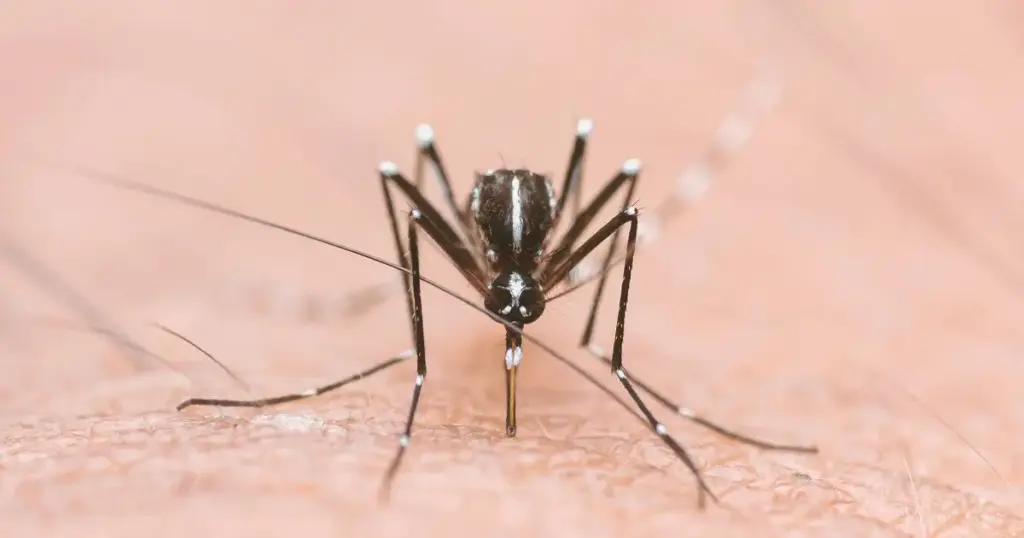
The UK Health Security Agency (UKHSA) has issued a critical public health alert following the unprecedented discovery of invasive Aedes aegypti mosquitoes and their larvae actively breeding at residential properties in east London. This landmark detection—identified through the agency’s vigilant Mosquito Watch surveillance scheme—marks the very first time this medically significant species has been confirmed to be breeding on British soil.
While public health officials emphasize that the immediate risk to human health remains low, the finding represents a significant milestone in the changing landscape of vector-borne disease in the United Kingdom. Aedes aegypti is renowned globally as a primary vector for severe human pathogens, including dengue fever, chikungunya, and the Zika virus. Although no human infections have been linked to this localized incursion, the confirmation of active breeding cycles during recent summer heatwaves has triggered enhanced government surveillance, trapping operations, and rapid containment protocols across the affected east London neighborhoods.
Experts note that this incident is the fourth time the species has been intercepted in the UK in recent years, but the first time it has progressed to breeding. As global trade increases and climate patterns shift toward warmer temperatures, public health authorities are intensifying their monitoring framework to prevent these "hitchhiking" insects from establishing permanent populations in the British Isles.
Detailed Chronology and the East London Discovery
The sequence of events leading to the UKHSA’s urgent alert began with a public-spirited report submitted via the agency’s Mosquito Watch surveillance scheme. Residents in an east London neighborhood noticed unfamiliar insect activity and captured photographic evidence, which they forwarded to medical entomology experts at the UKHSA.
Upon receiving the submission, a rapid deployment team of entomologists and public health inspectors was dispatched to the residential properties in question. Field inspections confirmed the presence of adult Aedes aegypti mosquitoes, alongside viable larvae developing in localized standing water within domestic gardens.
Immediate containment measures were deployed. Environmental health teams initiated targeted larvicide treatments and physical removal strategies to eliminate all standing water sources identified as potential breeding sites. Specialized mosquito traps have since been installed across the perimeter of the affected zone to capture any surviving adults and determine the exact geographic spread of the incursion.
According to the UKHSA’s operational breakdown, this event is categorized distinctly from previous interceptions:
Previous Interceptions: On three prior occasions in recent years, single, isolated adult Aedes aegypti specimens were detected—typically near transport hubs or ports of entry—having arrived via international travel or cargo.
The Current Incursion: This marks the first verified instance where the insects not only survived transport but successfully located suitable micro-habitats to lay eggs and produce a subsequent generation of larvae on British soil.
Despite the confirmation of breeding, authorities have stressed that intensive localized monitoring has found no evidence of the mosquitoes or their larvae spreading into surrounding public parks, commercial spaces, or neighboring boroughs.
Supporting Context, Disease Risks, and Climate Factors
To understand the gravity of the UKHSA’s warning, it is essential to examine the biology and epidemiological significance of the Aedes aegypti mosquito. Often referred to as the yellow fever mosquito, this species is easily identifiable by its striking black-and-white striped legs and distinctive markings on its thorax.
Pathogen Transmission Profile
Aedes aegypti is a highly efficient vector for several devastating viral diseases:
Dengue Fever: Characterized by high fever, severe headache, pain behind the eyes, joint and muscle pain, and a characteristic rash. Severe forms can lead to life-threatening bleeding and shock.
Chikungunya: A viral disease causing severe, often debilitating joint pain, alongside fever, fatigue, and muscle pain.
Zika Virus: While often causing mild symptoms or passing unnoticed in adults, Zika infection during pregnancy can cause severe birth defects, including microcephaly.
However, epidemiological experts urge calm. For transmission to occur in the UK, a local Aedes aegypti mosquito would first need to bite an infected human traveler who recently returned from a region where these diseases are actively circulating—such as parts of Southeast Asia, Central and South America, or the Caribbean—and then subsequently bite another uninfected local resident after an incubation period within the insect’s body. Given the absence of local disease circulation and the swift containment of the east London population, the probability of local transmission remains negligible.
The "Hitchhiker" Phenomenon and Climate Pressures
Aedes aegypti is not native to the United Kingdom, nor is the British climate naturally hospitable to its long-term survival. The species thrives in tropical and subtropical environments. In the UK, prolonged winters and cold average temperatures typically prevent the species from surviving year-round.
However, international trade, global travel, and a warming climate are altering these historical boundaries. Invasive mosquitoes frequently "hitchhike" across international borders by secreting themselves away in imported goods, used tires, potted plants, commercial shipping containers, and the luggage or cabins of international aircraft.
Recent summer heatwaves and unseasonably warm urban micro-climates in London provided a temporary window of opportunity for the imported females to lay eggs and complete their larval development. While the UKHSA maintains that the species cannot yet survive the broader British winter, these localized incursions serve as an early warning of shifting ecological vulnerabilities.
Official Statements and Expert Analysis
Addressing the media and public health stakeholders, Dr. Jolyon Medlock, Head of Medical Entomology and Zoonoses Ecology at the UKHSA, provided a detailed assessment of the situation:
"While Aedes aegypti can transmit diseases such as dengue, chikungunya, and Zika virus in countries where these infections are circulating, the risk to the public from this finding is assessed as very low. There is no evidence that these mosquitoes have caused human infections and importantly, to date, there is no evidence of the mosquitoes or larvae being detected in nearby public areas."
Dr. Medlock elaborated on the nature of the introduction, framing it as an accidental importation driven by global mobility:
"We believe these mosquitoes are accidental importations. Invasive mosquitoes can hitchhike in vehicles, baggage, and imported plants and, if they find a suitable climate, can survive. Despite evidence of breeding in this local area and the recent heatwaves, the species is not established in the UK and cannot survive long-term in the typical UK climate, which is too cold overall."
Looking toward the future, Dr. Medlock issued a stark reminder regarding broader environmental trends:
"However, it is expected that in a warming climate, we will continue to see incursions of invasive mosquitoes and increased reports of them being able to survive in the UK."
Public health authorities have underscored that managing this emerging threat requires a collaborative defense strategy involving government surveillance agencies, local councils, and vigilant private citizens.
Future Outlook and Public Action Plan
As the UKHSA continues its enhanced trapping and monitoring operations across east London, public health officials have outlined clear preventative measures that residents across the UK can adopt to mitigate the proliferation of invasive and native mosquito species alike.
Practical Steps for Homeowners and Gardeners
Mosquitoes require stagnant water to complete their life cycle—from egg to larva, pupa, and finally, adult flying insect. Eliminating these aquatic breeding grounds is the single most effective defense mechanism available to the public.
Clear Standing Water: Regularly inspect gardens, balconies, and yards for pools of accumulated water. Empty and scrub containers that collect rainwater.
Secure Outdoor Equipment: Turn over buckets, watering cans, wheelbarrows, and plastic storage bins when not in use.
Manage Garden Features: Ensure paddling pools are emptied and stored away after use, and check that tarps covering furniture or firewood do not form sagging water pockets.
Maintain Plant Pots: Empty saucers beneath flower pots frequently, or fill them with sand to prevent water pooling. Water butts and garden water storage tanks should be securely fitted with fine mesh screens to prevent adult mosquitoes from entering and laying eggs.
Engaging with the Mosquito Watch Scheme
The successful identification of this east London breeding site was entirely reliant on citizen science through the UKHSA’s Mosquito Watch initiative. The agency is actively encouraging members of the public to remain vigilant and report any unusual biting insects or suspected mosquito infestations.
Citizens can participate by:
Photographing suspected invasive mosquitoes, particularly those displaying distinct black-and-white striping on their legs or bodies.
Submitting digital images or physical specimens to the UKHSA via their official online guidance portal (www.gov.uk/guidance/mosquitoes-how-to-report).
Reporting high concentrations of biting pests to local environmental health departments if standard backyard management fails to reduce activity.
As climate change continues to reshape European ecosystems, the boundary between tropical and temperate disease vectors is becoming increasingly porous. The swift detection and containment of Aedes aegypti in east London stands as a testament to the effectiveness of modern biosecurity surveillance, but it also serves as a clear harbinger of the proactive public health measures that will define the decades ahead.