Executive Overview
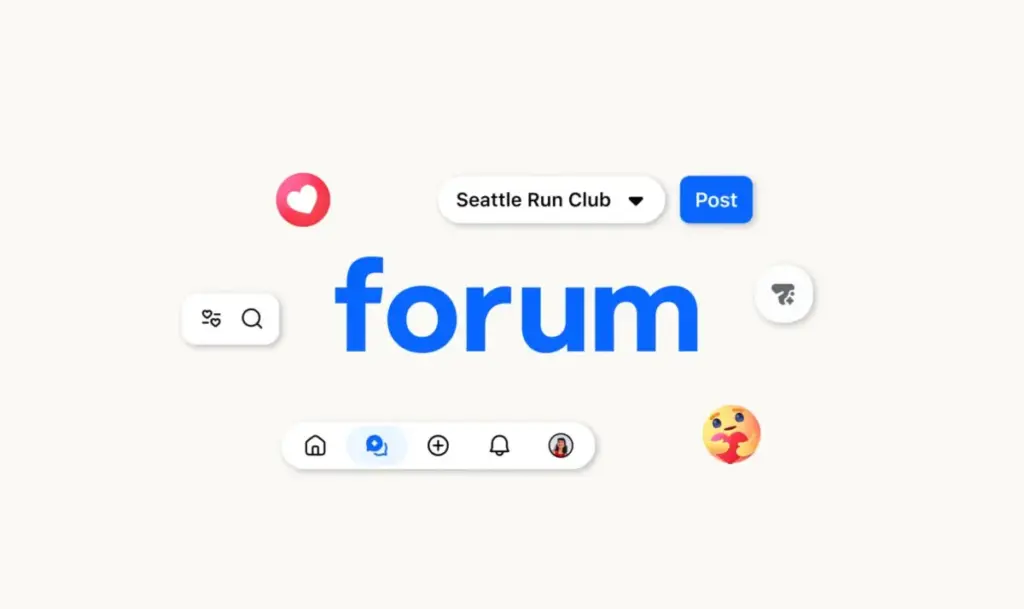
The landscape of social media is undergoing a profound, nostalgic pivot. As modern internet users increasingly suffer from algorithmic fatigue—wearied by endless algorithmic recommendation feeds populated by content they didn’t specifically ask to see—tech giants are looking backward to recapture the intentionality of early web culture. In a move that marries retro digital aesthetics with modern artificial intelligence, Meta has officially launched Forum, a standalone, community-centric application designed to completely revolutionize how users interact with Facebook Groups.
Following a localized testing phase that quietly commenced in May, Forum has stepped out of beta and into the global spotlight. Serving as the dedicated "Messenger" equivalent for Facebook Groups, Forum centralizes a user’s disparate community memberships into a single, streamlined hub. It allows individuals to monitor existing group feeds, discover new micro-communities aligned with niche hobbies, and parse massive volumes of user-generated discussions with unprecedented ease.
While the branding playfully nods to the golden age of internet message boards, dial-up culture, and primitive HTML formatting, the technology driving Forum is aggressively modern. Incorporating granular topic-labeling systems, a conversational "Ask" search cue powered by Meta’s proprietary large language models, and a human-centric "Top Voices" accreditation metric, Forum represents a massive strategic pivot. Meta is no longer just trying to compete with short-form video monoliths like TikTok; it is actively attempting to recapture the organic, text-based search utility that has traditionally made platforms like Reddit the veritable "front page of the internet."
This comprehensive report explores the genesis of Forum, the mechanics of its user interface, the competitive pressures driving its development, and what this structural unbundling means for digital creators, marketers, and everyday users.
Detailed Chronology: From Underground Leaks to Global Launch
To understand how Forum came to be, one must examine the timeline of its development, which reflects Meta’s broader reactive strategy toward shifting consumer behavior and AI-driven information discovery.
Early 2026: Tech Leaks and the "Reddit Killer" Speculation
The existence of Forum first came to light in early 2026, when sharp-eyed application researchers and tech leakers discovered unreleased code strings and test builds buried within Meta’s developer ecosystem. Initially whispered about in tech circles as Meta’s direct answer to Reddit, the application was scrutinized for its potential to siphon away users who prefer threaded, topic-based discussions over fleeting, algorithmically suppressed social media posts.
For years, Reddit’s structured comment threads and massive repositories of authentic human discourse had made it an invaluable asset—not only for human web-surfers seeking genuine peer-to-peer advice, but also for AI developers looking to train generative models. As search engines and AI chatbots increasingly relied on conversational forums to source factual, human-vetted recommendations, major platforms recognized that keeping users inside a proprietary, searchable text ecosystem was paramount.
May 2026: The Quiet Beta Phase
Following the initial leaks, Meta confirmed it was testing a dedicated community experience. In May 2026, a limited beta rollout of Forum was deployed to select regional markets. This testing period allowed engineers to stress-test the application’s backend architecture, ensuring that notifications, group syncs, and real-time database queries from the main Facebook app could be reliably mirrored without straining server capacities.
During this beta phase, early testers noted that the application stripped away the clutter of Marketplace alerts, Reels tabs, and personal friend updates. Instead, Forum offered an uncompromising, laser-focused feed dedicated entirely to collective human interest groups—ranging from localized parent networks to hyper-specific enthusiast clubs.
September 2026: Official Global Rollout
By September 2026, Meta felt confident enough in the platform’s stability and feature set to remove the beta tag. The company published an official announcement detailing the app’s core value propositions, formally introducing the world to Forum. The launch was accompanied by targeted updates to the main Facebook application, seamlessly bridging the gap between traditional social networking and this newly unbundled community experience.
Unpacking the Architecture: How Forum Works
Forum is not merely a cosmetic reskin of Facebook Groups; it is an architectural unbundling designed to solve a fundamental UX problem: group fragmentation. Historically, participating actively in multiple Facebook Groups required users to navigate deep within the main Facebook application, managing a chaotic flurry of notifications that competed directly with algorithmic video feeds and direct messages.
The Messenger Analogy: Centralization of Community
The easiest way to understand Forum’s utility is through structural analogy: Forum is to Facebook Groups what Messenger is to Facebook’s private chat threads.
Before Messenger was spun off into its own dedicated mobile application in 2014, chatting with friends on Facebook was an integrated, albeit clunky, secondary feature. By unbundling messaging, Meta created a frictionless communication environment that could scale independently. Forum applies this exact playbook to community management. Users open the app to find a unified dashboard housing every group they belong to, eliminating the need to hunt through bookmarks or algorithmic feeds to check on favorite discussions.
Dynamic Topic Labels and Algorithmic Discovery
One of Forum’s most powerful additions is its dynamic topic-labeling system. Rather than forcing users to scroll blindly through an entire group’s timeline hoping to stumble upon relevant advice, Forum automatically or manually tags posts with granular category markers—such as Solo Travel, Home Renovation, or Korean Food.
By tapping any of these labels, users are instantly transported to an aggregated feed of similar conversations drawn from across their entire network of groups, or even public communities. This effectively transforms Facebook Groups from isolated silos into an interconnected, searchable web of niche human knowledge.
AI Integration and the "Ask" Cue
True to Meta’s current corporate roadmap, artificial intelligence is baked deeply into the Forum experience. While tech trends have recently shifted away from rudimentary "Reddit-copycat" answer engines toward sophisticated Answer Engine Optimization (AEO), Meta’s infrastructure relies heavily on LLM integration to improve utility.
Within Forum, users will encounter a prominent "Ask" cue. This conversational search feature allows members to query their collective group history using natural language. Instead of scrolling through hundreds of comments on a thread from six months ago to find a specific restaurant recommendation in Tokyo, a user can simply ask the Forum AI, which will instantly parse group archives and surface the most accurate, peer-approved answers.
Human Authority: The "Top Voices" Framework
Algorithms and AI can organize data, but they cannot replace authentic human expertise. To combat the erosion of trust in online spaces, Forum replaces outdated, ambiguous contributor badges with a formalized "Top Voices" label.
This credentialing system identifies trusted, highly engaged community experts, giving veteran members and moderators a distinct visual marker that highlights their authority within specific subject domains. It provides an incentive structure for high-value contributors, encouraging them to share deep insights without fear of their expertise getting lost in the noise.
Supporting Context & Metrics: The Macro Trend of Web Unbundling
Forum’s arrival does not happen in a vacuum. It is part of a massive, industry-wide reversion toward older models of web-surfing, discovery, and community curation.
The Death of the Endless Feed Fatigue
For the better part of a decade, social media product design was entirely dictated by the almighty algorithmic feed—popularized by TikTok and subsequently adopted by Instagram, YouTube, and Facebook. While these feeds proved exceptionally effective at capturing passive attention spans, user fatigue has set in. Consumers are increasingly exhausted by algorithmic suggestion engines that prioritize engagement-bait, outrage culture, and viral fluff over genuine utility.
Market research from late 2025 and early 2026 indicates a steady consumer migration toward "intentional digital spaces"—platforms where users control what they see, rather than letting an opaque machine-learning model dictate their screen time. By unbundling groups into a dedicated app, Meta is capitalizing on this exact psychological shift.
The Rise of Intentional Discovery
Platforms are realizing that the future of digital advertising and creator monetization lies not in passive viewership, but in active intent. When a user opens Forum to research Solo Travel or Home Renovation, they are signaling high commercial and informational intent.
This structural shift mirrors changes seen across other tech sectors:
- Facebook Marketplace has transformed casual browsers into hyper-targeted local buyers through curated collections.
- Facebook Video Feeds have integrated immersive, seller-verified video content to bridge the gap between community recommendation and e-commerce.
- Forum now completes this trifecta by turning passive group memberships into high-intent discovery engines.
Official Statements and Industry Reception
Meta’s official communications surrounding the launch of Forum emphasize a return to foundational social media principles: authentic connection and shared interests.
In an official corporate blog post detailing the rollout, Meta representatives noted:
"On Forum, we’re testing a new way to explore your interests. You may start to see topic labels on posts, like Solo Travel or Korean Food. Tap one and you’ll find more conversations on the same topic, making it easier to dive deeper into the things you care about."
Industry analysts have offered mixed, yet largely intrigued, reactions to the launch. While skeptics point out that users are increasingly reluctant to download another standalone app from Meta—pointing to the historical friction of the original Messenger unbundling—optimists argue that Facebook Groups remain one of the platform’s most defensible moats. Unlike ephemeral stories or fleeting video clips, Facebook Groups represent sticky, long-form human communities with years of accumulated tribal knowledge. Giving those communities a dedicated home could breathe new life into an aging social network.
Future Outlook: What Forum Means for Creators and Marketers
As Forum rolls out globally, its implications for digital creators, brands, and community managers will be profound.
1. A Shift in Community Management Strategies
For years, brands and creators have used Facebook Groups as organic funnels to build loyal follower bases. However, the sheer noise of the main Facebook app often buried group announcements. With Forum’s centralized layout and topic-labeling capabilities, content creators who position themselves as subject matter authorities will find it much easier to have their content surfaced via the "Top Voices" metric.
2. The Dawn of Answer Engine Optimization (AEO) for Communities
As AI-powered search tools like Forum’s "Ask" cue become the primary way users extract information from group histories, marketers must adapt. Traditional Search Engine Optimization (SEO) focused on keywords for web browsers; modern strategies must pivot toward AEO. Creators and brands will need to craft their group posts in clear, conversational language that Meta’s LLMs can easily parse, index, and surface when users prompt the app for recommendations.
3. Will Users Make Space on Their Home Screens?
The ultimate question facing Forum is adoption velocity. Meta has immense distribution power, but convincing users to migrate their group habits out of the primary Facebook application and into a secondary icon remains a steep psychological hurdle.
If Forum can successfully deliver a clean, fast, and ad-balanced experience free from the cognitive overload of the main feed, it just might succeed. By blending the retro appeal of old-school internet forums with modern AI utility, Meta has crafted a compelling experiment. Whether users are truly ready to log back into the "Forum age" will define the next chapter of social media history.