Executive Overview
On October 2, rock-and-roll history was written under the crisp autumn air at New Jersey’s MetLife Stadium. Legendary Australian hard-rock outfit AC/DC closed the curtain on their monumental Power Up Tour, a massive global undertaking mounted in support of their chart-topping, critically acclaimed 2020 studio album of the same name. What was initially slated to be a routine, albeit massive, stadium performance transformed into an unforgettable, generation-bridging spectacle when the band welcomed an unexpected guest to the stage: Foo Fighters frontman Dave Grohl.
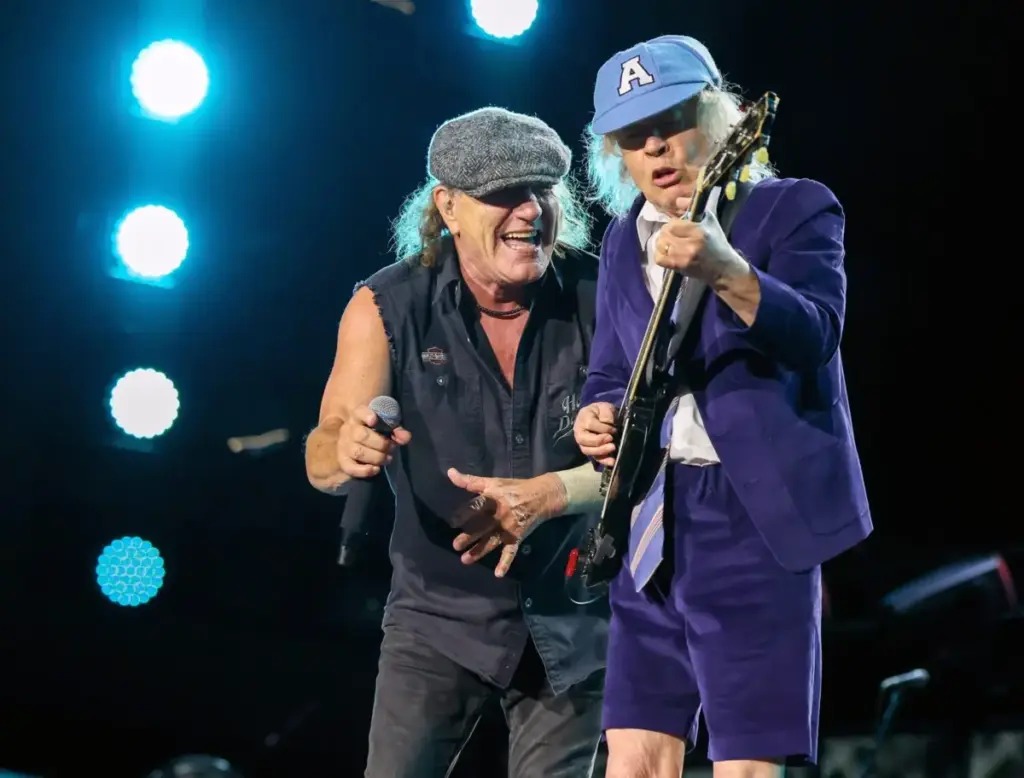
Grohl, who had spent the evening performing double duty as the night’s surprise opening act, bounded onto the stage to join AC/DC architects Brian Johnson and Angus Young for a blistering, high-octane rendition of the anthemic classic “Highway to Hell.” The collaboration was the emotional and sonic apex of a rescheduled evening—one that had been pushed back due to severe weather. More than just a routine guest appearance, the moment served as a poignant full-circle milestone: an eleven-year-old kid who had once had his worldview irrevocably altered by a midnight screening of AC/DC’s Let There Be Rock was now sharing a stadium stage with his lifelong heroes at the absolute zenith of rock dominance.
This comprehensive report examines the convergence of events that led to this historic finale, exploring the structural anatomy of the Power Up Tour, the logistical hurdles that shaped its conclusion, the profound mutual respect linking two generations of rock royalty, and the ambiguous future facing one of the most enduring bands in music history.
Detailed Chronology: From Nor’easter Delays to MetLife Glory
The journey to the October 2 grand finale was anything but straightforward. The final leg of the Power Up Tour had faced mounting schedule pressures and meteorological disruptions. Originally, AC/DC was scheduled to rock New Jersey’s sprawling MetLife Stadium on September 25. However, Mother Nature intervened in the form of a ferocious, unseasonal nor’easter that battered the Tri-State area, forcing event organizers and local safety officials to cancel the open-air gig in the interest of public safety and production integrity.
Rather than canceling the historic tour stop outright, promoters and the band scrambled to secure a new date. Within days, the concert was triumphantly rescheduled for Friday, October 2. Yet, the date change created a cascading logistical puzzle: the tour’s designated opening act, The Pretty Reckless (fronted by Taylor Momsen), was unable to fulfill the new date due to prior scheduling commitments.
In a twist of fate that thrilled rock purists worldwide, the Foo Fighters stepped into the breach. Fresh off their own relentless touring schedules, Grohl and company volunteered to pull double duty as the replacement opening act—marking the second time in less than a month that the Foo Fighters had rushed to AC/DC’s side. (The rock icons had previously filled in for The Pretty Reckless on September 8 in St. Louis under similarly abrupt circumstances).
When Friday evening arrived, MetLife Stadium was packed to capacity with tens of thousands of die-hard fans—colloquially known as "AC/DC Army" loyalists—enduring electric anticipation. The Foo Fighters delivered a fierce, emotionally charged opening set. During his stage banter, an visibly moved Grohl paused to recount his lifelong devotion to the headliners.
"When I was 11 years old and I went to a midnight movie, and I saw the Let There Be Rock movie in the f—king movie theater, at 11 years old, I didn’t know that rock n’ roll could be like that," Grohl confessed to the roaring New Jersey throngs. "I didn’t know that rock n’ roll was sweat and blood and f—king tears and every ounce of energy you had. I saw that movie, I was 11 years old, I said, ‘I want to do that for the rest of my f—king life.’ So here we are… I’m going to live my childhood dream again, tonight."
That dream manifested in literal terms later in the evening. As AC/DC powered through their masterclass of high-voltage rock, vocalist Brian Johnson stepped up to the microphone to deliver a special announcement:
"Hey everybody, we got something to tell you. You better listen up close now. A very good friend of ours asked us today if he could come up and join us on the stage for ‘Highway for Hell.’ And we said, ‘Yes Dave, you can.’ David Grohl!"
As Johnson embraced the Foo Fighters frontman, the stadium erupted into decibels that rivaled any jet engine taking off from nearby Teterboro Airport. Grohl strapped on a guitar, locked eyes with legendary lead guitarist Angus Young—who was decked out in his trademark schoolboy uniform—and together, the collective titans of rock delivered a five-minute masterclass in pure, unfiltered heavy metal and hard rock heritage.
Supporting Context & Metrics: The Triumphant Return of Power Up
To understand the cultural weight of the October 2 finale, one must examine the improbable narrative of the Power Up Tour itself. Released in November 2020 amid the isolating backdrop of a global pandemic, Power Up was viewed by industry analysts as a potential swan song. The album marked a miraculous reunion for the surviving core members of the band, galvanized by the return of frontman Brian Johnson (who had been forced to step away during the Rock or Bust Tour due to severe hearing loss), drummer Phil Rudd, and bassist Cliff Williams, all rallying around lead guitarist and founding member Angus Young to honor the creative spirit of late rhythm guitarist Malcolm Young.

The gamble paid off spectacularly:
- Commercial Dominance: Power Up stormed global music markets, debuting at No. 1 on the Billboard 200 albums chart, alongside top-spot chart achievements in 19 other countries, including the United Kingdom, Australia, Germany, and France.
- Critical Acclaimed Resurgence: Music critics lauded the record for preserving the unmistakable, crunching AC/DC blues-rock DNA—built on three-chord simplicity, driving tempos, and unapologetic hedonism—while demonstrating remarkable sonic vitality from musicians well into their golden years.
- The Live Renaissance: Translating the studio triumph to the live stage required an extensive, multi-legged global trek. The Power Up Tour crossed continents, selling out massive stadiums, proving that generational fatigue is a myth when countered by authentic, unpretentious rock and roll.
The tour’s late-addition support acts further highlighted the deep lineage of rock music. Dave Grohl, a self-admitted disciple of the genre, represents the bridge between 1970s stadium behemoths and modern alternative rock royalty. Having the Foo Fighters step in as emergency openers was not merely a matter of convenience; it was a passing of the sonic torch in real-time, executed in front of 80,000 witnesses.
Official Statements and Onstage Transcripts
The mutual admiration between AC/DC and Dave Grohl underscored the camaraderie that defines top-tier rock musicianship. While corporate pop acts often rely on manufactured collaborations for chart metrics, the MetLife Stadium crossover was rooted in authentic, decades-old fandom.
In his pre-set address, Grohl elaborated on how AC/DC’s ethos shaped the foundational philosophy of the Foo Fighters:
"I didn’t know that rock n’ roll was sweat and blood and f—king tears and every ounce of energy you had… I said, ‘I want to do that for the rest of my f—king life.’"
Brian Johnson, whose legendary career spans iconic albums like Back in Black (the second best-selling album of all time worldwide), matched Grohl’s reverence with warm, gracious hospitality on stage. Welcoming Grohl not merely as a guest, but as "a very good friend," Johnson cemented a bond forged in the trenches of international rock touring.
Throughout the evening, Angus Young maintained his blistering, kinetic performance level, cutting through the autumn air with searing solos executed on his signature Gibson SG. The symbiotic energy between Young’s timeless blues-based shredding and Grohl’s driving rhythm work offered a masterclass in stagecraft.
Future Outlook: The Twilight of Titans?
As the final chords of "Highway to Hell" faded into the New Jersey night and the house lights of MetLife Stadium flickered on, a bittersweet realization hung over the departing crowd. The Power Up Tour has drawn its final breath, and as of this writing, AC/DC management has made no official announcements regarding future recording sessions, residencies, or touring schedules.
When addressing the stadium audience during the tour’s final moments, Brian Johnson offered a characteristically humble, open-ended farewell:
"Good night, hope we’ll see you again."
Whether those words represent a definitive adieu or merely a pragmatic pause remains to be seen. Given the advanced ages of the band members and the rigorous physical demands of staging a full-scale world tour—compounded by historical health hurdles—fans and industry experts alike are treating every recent AC/DC performance as a precious historical artifact.
What is certain, however, is that rock and roll was fundamentally altered for the better by the events of October 2, 2026. By bridging past and present—uniting Angus Young’s eternal schoolboy riffage with Dave Grohl’s stadium-shaking passion—AC/DC did not merely close out a tour. They delivered a living testament to the enduring, regenerative power of live music.