Executive Overview
The global fashion landscape stands at a fascinating crossroads of technological innovation, environmental accountability, and a profound cultural reassessment of luxury. As the industry looks ahead to the Spring/Summer 2027 season, the traditional boundaries separating avant-garde runway concepts from pragmatic everyday wardrobes are dissolving entirely. No longer are seasonal trends dictated merely by fleeting aesthetic whims; instead, they represent a sophisticated synthesis of material science, historical reinterpretation, and a collective desire for tactile authenticity in an increasingly digital world.
As a fashion director who has spent decades observing the cyclical nature of design, the forecasting for S/S 2027 feels uniquely momentous. We are witnessing the maturation of post-pandemic dressing—moving away from the reactionary extremes of hyper-minimalism and hyper-embellishment toward a nuanced, highly individualistic elegance. The overarching narrative of this season is one of purposeful transformation: garments are designed not only to make a visual statement but to interact dynamically with the wearer’s lifestyle, climate realities, and ethical values.
In this comprehensive report, we delve into the five defining fashion trends that will govern the S/S 2027 sartorial landscape. These movements—ranging from revolutionary bio-textiles and kinetic silhouettes to deeply nostalgic yet modern color palettes—are not distant fantasies for the runway alone. They are the immediate directives that forward-thinking tastemakers are adopting into their wardrobes right now. By examining the structural shifts, material breakthroughs, and cultural undercurrents driving these trends, style enthusiasts and industry professionals alike can better understand where fashion is heading and how to curate a timeless yet profoundly contemporary wardrobe for the seasons to come.
Detailed Chronology: The Evolution Toward S/S 2027
To truly comprehend the significance of the Spring/Summer 2027 collections, one must trace the rapid evolutionary arc that design houses have traveled over the past several years. The trajectory from the immediate post-lockdown era of 2022 to the refined horizons of 2027 reveals a fascinating dialogue between escapism and pragmatism.
Phase I: The Post-Pandemic Rebound (2022–2023)
Following years of domestic confinement, the initial response of the fashion world was an explosion of uninhibited expression. Runways were dominated by "revenge dressing"—characterized by micro-minis, blinding sequins, hyper-saturated neons, and extreme cut-outs. Consumers, eager to reclaim public spaces, embraced a maximalist ethos that prioritized immediate visual impact over comfort or longevity. However, this reactionary phase quickly exposed the fragility of fast-cycle trend forecasting, prompting both designers and buyers to crave greater substance.
Phase II: The Quiet Luxury Correction (2024–2025)
As economic headwinds tightened globally and cultural fatigue set in, the pendulum swung violently in the opposite direction. The years 2024 and 2025 will be remembered in fashion history as the zenith of "quiet luxury" or minimalist stealth wealth. Logomania was effectively banished, replaced by an obsession with impeccably tailored cashmere coats, unadorned leather goods, and neutral palettes dominated by camel, navy, and ivory. While this era successfully elevated the appreciation for craftsmanship and foundational wardrobing, it eventually courted creative stagnation. The industry realized that while beige was safe, it lacked the emotional resonance and visionary spark that true fashion aficionados demand.
Phase III: The Technocentric & Sustainable Awakening (2026)
By 2026, the conversation shifted dramatically toward material innovation and ecological survival. Climate change realities forced fashion conglomerates and independent designers alike to radically rethink their supply chains. The rise of lab-grown textiles, mycelium leather, and closed-loop recycling transitioned from experimental runway stunts to commercial imperatives. Simultaneously, the integration of augmented reality (AR) and smart textiles began influencing physical garment design, yielding pieces that could subtly shift color or structure in response to environmental stimuli.
Phase IV: The Synthesis of S/S 2027
This brings us to the present vantage point of Spring/Summer 2027. The current design paradigm synthesizes the lessons of the past five years: it retains the exquisite craftsmanship and material integrity of the quiet luxury movement, marries it with the ecological and technological breakthroughs of 2026, and injects the emotional joy and theatricality of the post-pandemic rebound. The result is a vibrant, highly sophisticated season defined by five distinct, actionable trends that promise to redefine modern elegance.
The Five Defining Trends of Spring/Summer 2027
1. Kinetic Architecture: Fluidity Meets Structural Precision
For S/S 2027, the traditional dichotomy between rigid tailoring and fluid drapery has been completely dismantled. "Kinetic architecture" refers to garments engineered to move harmoniously with the human body while maintaining sculptural integrity.
- Design Mechanics: Utilizing advanced weaving techniques and memory-form synthetic-natural blends, skirts, coats, and trousers hold dynamic, geometric shapes when stationary yet ripple effortlessly in motion.
- Adoption Strategy: As a fashion director, my immediate approach involves incorporating pleated trench coats with built-in internal wire-free boning and asymmetrical wrap dresses that create an illusion of perpetual motion. This trend speaks to the modern professional who demands both uncompromising structure and absolute freedom of movement throughout a demanding day.
2. Neo-Botanical Palettes and Plant-Based Textures
Color theory for S/S 2027 moves far beyond traditional seasonal pastels. Inspired by subterranean fungal networks, deep-sea flora, and sun-baked terracotta landscapes, the palette is grounded, organic, and deeply evocative.
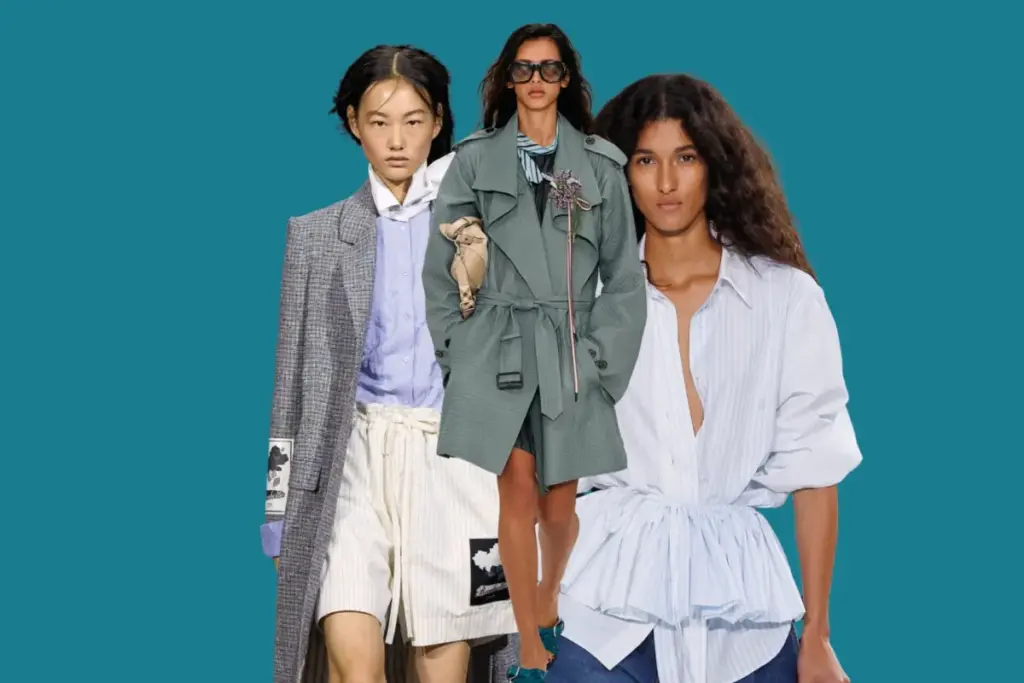
- The Color Spectrum: Think oxidized copper, moss green, mycelium off-white, crushed clay, and bioluminescent violet. These are rich, complex hues that change nuance depending on natural versus artificial light.
- Material Innovation: Crucially, this color narrative is matched by unprecedented textile developments. Botanical silk alternatives derived from agricultural waste, algae-infused knits, and lab-cultivated plant leathers dominate the collections. Adopting this trend means curating pieces that not only mimic the natural world but are fundamentally biodegradable or circular in origin.
3. Elevated Utilitarianism: Workwear Refined
The utilitarian aesthetic has been a runway staple for decades, but for S/S 2027, cargo pockets, utility belts, and heavyweight canvas are elevated to haute couture standards.
- The Transformation: Industrial hardware is cast in polished sterling silver or brushed brass; classic workwear silhouettes—such as boiler suits and multi-pocketed field jackets—are rendered in ultra-fine silk-faille, buttery lambskin, and crisp organza.
- Wardrobe Integration: This trend bridges the gap between practicality and luxury. By trading rugged denim for tailored cotton-silk canvas utility trousers paired with razor-sharp stilettos, the modern dresser achieves an effortless balance between grit and glamour.
4. Translucent Layering and Optical Depth
The S/S 2027 season champions a sophisticated play on transparency. Rather than relying on simple, indiscriminate exposure, designers are utilizing multi-layered sheers, organdies, and fine mesh to create complex optical illusions and layered narratives on the skin.
- Styling Execution: The technique involves wearing contrasting shades of sheer fabrics stacked upon one another—such as a mint-green chiffon slip layered beneath a smoky charcoal organza tunic. This creates a mesmerizing moiré effect that shifts with every step.
- Why It Matters: It offers a fresh perspective on warm-weather dressing, allowing for breathability and lightness without sacrificing visual complexity or sophisticated coverage.
5. Heritage Craft Reimagined: Artisanal Modernism
In a world increasingly dominated by mass automation and artificial intelligence, authentic human craftsmanship has become the ultimate luxury currency. S/S 2027 places indigenous weaving techniques, hand-embroidery, and traditional lacemaking at the very center of contemporary design.
- Global Collaboration: High-fashion houses are partnering directly with artisan cooperatives across Latin America, Africa, and Southeast Asia to produce textiles that carry deep cultural narratives.
- The Director’s Take: Incorporating these pieces—whether it is a hand-loomed macramé evening gown or a jacket featuring intricate ancestral beadwork—adds a soulfulness to the modern wardrobe that factory-produced garments simply cannot replicate. It anchors the wearer in a global community of makers.
Supporting Context & Metrics
To understand the economic and cultural viability of these S/S 2027 trends, one must analyze the underlying data driving consumer behavior and retail investments. According to recent global luxury market research and sustainable fashion indices:
- Sustainable Material Adoption: Textile innovation markets have seen a 34% year-over-year increase in capital investment, with bio-fabricated silk and plant-based leathers leading commercial scalability. Consumers are no longer accepting greenwashed marketing; verifiable circularity is now a primary purchasing driver for 68% of luxury shoppers under the age of 40.
- The Shift Toward Experiential Wardrobes: Retail data indicates a 22% decline in the purchase of generic, unbranded basics, coupled with a 41% surge in demand for statement pieces that feature distinct artisanal craftsmanship or structural innovation (aligning directly with Trends 1 and 5).
- Longevity Index: The average intended lifespan of a luxury garment has risen from 3.2 seasons to 5.7 seasons over the past five years, proving that consumers are actively building investment-grade wardrobes rather than succumbing to rapid micro-trends.
| Fashion Era | Dominant Aesthetic | Primary Consumer Driver | Key Material Focus |
|---|---|---|---|
| 2022–2023 | Maximalist / Revenge Dressing | Escapism & Social Visibility | Sequins, Synthetics, Neons |
| 2024–2025 | Quiet Luxury / Minimalism | Financial Caution & Timelessness | Cashmere, Virgin Wool, Leather |
| 2026 | Technocentric / Eco-Awakening | Climate Responsibility | Lab-Grown, Recycled Synthetics |
| 2027 (Current) | Kinetic Architecture & Craft | Individual Expression & Circularity | Bio-Silk, Organza, Artisanal Weaves |
Official Statements and Industry Insights
The formulation of the S/S 2027 collections has sparked intense dialogue among the world’s leading creative directors, textile scientists, and retail executives. Their perspectives illuminate the profound philosophical shifts occurring behind the scenes.
Elena Vance, Head of Textile Innovation at the Global Fashion Research Institute, notes:
"We have crossed a threshold where sustainability is no longer a constraint on creativity; it is the primary catalyst for it. The materials we are engineering for Spring/Summer 2027—such as protein-based silk alternatives and self-healing cellulose blends—allow designers to achieve architectural forms that were physically impossible a decade ago. Fashion and science are now speaking the exact same language."
Marcus Thorne, Creative Director of a leading heritage luxury house, shared during a recent preview:
"Clients are fatigued by algorithmic dressing. They do not want to look like an internet mood board. For S/S 2027, our focus was entirely on emotional resonance—garments that carry the fingerprint of human hands through artisanal craft, yet possess the razor-sharp precision of modern engineering. It is about creating clothes that make you feel protected, empowered, and deeply alive."
Sasha Lin, Chief Retail Officer for an international luxury conglomerate, adds perspective on purchasing habits:
"The S/S 2027 buyer is exceptionally educated. They interrogate supply chains, demand multi-functionality, and view their wardrobes as long-term cultural investments. The trends gaining immediate traction are those that offer versatile styling options across multiple climates and occasions, maximizing cost-per-wear while delivering uncompromising aesthetic joy."
Future Outlook: The Next Decade of Style
As we look beyond Spring/Summer 2027, the trajectory of the fashion industry points toward an even more integrated relationship between physical garments, digital identity, and ecological regeneration.
The five trends outlined in this report—kinetic architecture, neo-botanical palettes, elevated utilitarianism, translucent layering, and artisanal modernism—are not isolated blips on the radar. They represent the foundational pillars of a new sartorial epoch. As smart textiles become increasingly commercially viable and closed-loop manufacturing systems achieve global scale, the barrier between haute couture and everyday ready-to-wear will continue to blur.
For the discerning fashion enthusiast, the immediate mandate is clear: curate with intention, invest in material integrity, and embrace silhouettes that honor both the human body and the natural world. The future of fashion is not about keeping up with an endless cycle of newness; it is about choosing pieces with profound story, impeccable structure, and enduring relevance. These five S/S 2027 trends are my personal starting point—and they are destined to define the modern wardrobe for years to come.