Executive Overview
In the sprawling landscape of modern television, prestige genre adaptations have become the gold standard for networks attempting to capture both mainstream appeal and critical acclaim. With HBO’s premiere of Lanterns, the creative brains behind television touchstones like Ozark (Chris Mundy), Lost (Damon Lindelof), and veteran comic-book-writer-turned-screenwriter Tom King have brought a radically grounded, rural noir aesthetic to the cosmos-spanning lore of DC Comics.
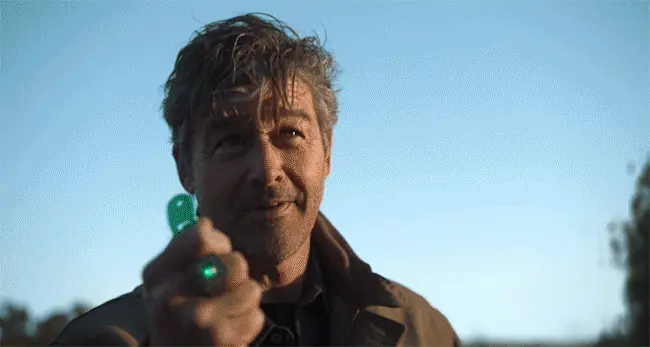
Eschewing the polished, high-gloss CGI spectacles typically associated with modern blockbuster superhero cinema, Lanterns positions itself as an earthy, slow-burn crime procedural. Spanning multiple decades from the mid-1990s through the mid-2026 horizon, the narrative utilizes time jumps to investigate a central mystery: How did Hal Jordan, Earth’s celebrated inaugural Green Lantern, evolve from an all-American, media-savvy pop-culture icon into a bitter, isolated burnout, ultimately ending up frozen to death in the aluminum stands of a Nebraska high school football stadium?
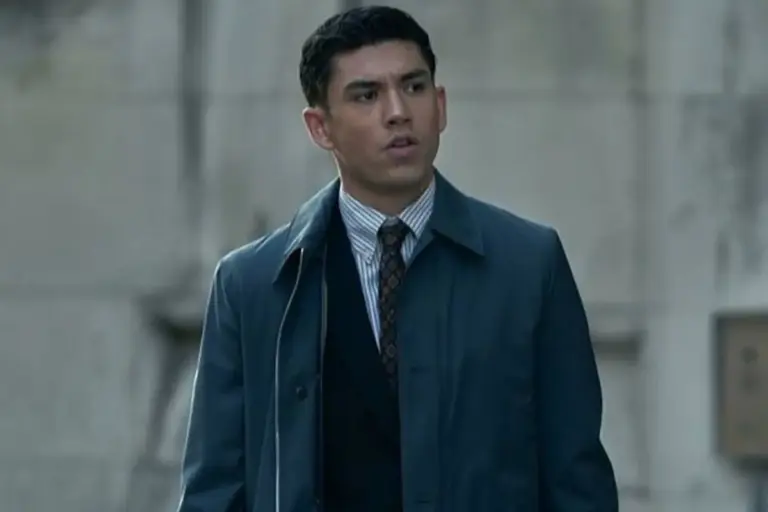
Bolstered by towering performances from Kyle Chandler and Aaron Pierre, Lanterns heavily leans into a "superheroes-plus" paradigm reminiscent of classic 2000s comic book storytelling. By marrying the cosmic mythology of the Green Lantern Corps with the moody, conspiratorial atmosphere of prestige detective dramas like True Detective and neo-westerns like Yellowstone, HBO has constructed a compelling television experiment. This review breaks down the multi-decade chronology of the series pilot, analyzes its thematic and structural mechanics, examines its stellar ensemble cast, and evaluates its broader implications for the future of comic book adaptations on the small screen.
Detailed Chronology: A Multi-Decade Descent
The narrative engine of Lanterns operates through a carefully constructed series of temporal leaps, allowing the audience to trace the shifting legacy of Earth’s ring-bearers across a thirty-year timeline.
The 1996 Peak: The Media Darling
In the mid-1990s, Hal Jordan is the undisputed face of extraterrestrial defense on Earth. In a sequence that plays like a satirical yet sincere nod to real-world media integration, a younger Jordan appears on 60 Minutes, proudly unmasked in full green costume. He is packaged for the public as an approachable, down-to-earth defender—an Air Force test pilot with a tragic lineage, transformed into an interstellar lawman. He projects invulnerability, defined by the core trait required by his power ring: an absolute, unshakeable lack of fear. He is Earth’s primary protector, guarding this sector of the galaxy with unwavering confidence.
The 2006 Shift: The Procedural Maintenance
Fast forward a decade to 2006. Jordan remains the dutiful, friendly face of the Corps, though time has begun to weather his edges. During this era, we see him backing up his consciousness into digital or metaphysical storage per standard Corps protocol—a routine procedure that, crucially, marks the final time he will perform this digital preservation for at least ten years. The cracks in the veneer are beginning to form, though the public remains largely unaware.
The 2016 Friction: The Reluctant Mentor
By 2016, the dynamic within Earth’s defense network has grown toxic. John Stewart has been designated as Earth’s second Green Lantern, but his initiation is bottlenecked by a deeply resistant Hal Jordan. Rather than welcoming a successor, Jordan is bitter, reckless, highly sarcastic, deeply egomaniacal, and pathologically territorial. The Green Lantern gig on Earth is his, and he displays zero administrative or fraternal haste in bringing his backup up to speed.
Their dynamic is forged in shared tragedy and contrasting military upbringings. While Hal’s father was a test pilot who died in a fiery crash—making his son’s career choice an ironic and haunting family business—John was raised by a military father whose intense conditioning verged on psychological abuse. Flashbacks reveal a young John having apples shot off his head in a chilling, William Tell-style exercise designed to beat all fear out of him. Despite these structural parallels, Jordan continuously abandons Stewart, at one point kicking him out of a moving vehicle to force him to master his ring just to survive, while cruelly leaving him to navigate travel to Nebraska the hard way.
The 2026 Aftermath: The Frozen End
The destination of that fateful Nebraska journey is realized a decade later. In 2026, John Stewart stands alone as Earth’s established second Green Lantern. Hal Jordan, the man who started it all, is dead—discovered frozen solid in the bleachers of a Rushville, Nebraska high school football stadium. The mystery of how Jordan traversed the path from 1996’s media darling to 2016’s abrasive gatekeeper to a literal ice sculpture in the mid-west forms the overarching backbone of the series.
Supporting Context, Setting, and Atmospheric Mechanics
The inciting incident that brings the mismatched pair to Rushville involves a cryptic message left by Jordan’s older, ring-stored self: "There’s hail in Rushville, Nebraska." This remote town sits geographically adjacent to the crash site where the dying alien whose ring originally chose Hal met his end decades prior.
When a bizarre shootout breaks out in the high school football stadium among a group of human-passing extraterrestrials, local law enforcement clashes with interstellar jurisdiction. Hal immediately locks horns with Sheriff Kerry Kane (Kelly Macdonald), a harried local official in a brown uniform who insists the Green Lanterns have no legal standing since the victims belong to the visiting high school football team and show no outward signs of alien biology.
Hal’s institutional instincts prove correct. When he finally corners the lone surviving "visiting team fan," the suspect unmasks himself as an operative of an interstellar war faction before detonating himself in a massive explosion. Only a last-ditch defensive bubble from Hal’s nearly depleted power ring prevents a massacre.
Rural Paranoia and the Macon Family
The twenty-four hours the Lanterns spend embedded in Rushville expose a deeper web of local tension, small-town politics, and apocalyptic preparation:
- The Bar Fight: In a classic noir maneuver, Hal deliberately sparks a bar brawl—soundtracked by an incessant loop of Melanie’s "Brand New Key" on the jukebox—to engineer an arrest that places him in a holding cell near his suspected alien threat.
- The Legal Representation: Hal’s arraignment introduces Billy Macon (Jason Ritter), a sharp-witted local attorney who happens to be Sheriff Kerry’s husband and the son of local militia leader William Macon (Garret Dillahunt).
- The Militia Leader: Garret Dillahunt commands the screen as William Macon, a bearded, rugged anti-alien extremist operating a Yellowstone-esque ranch. Macon Sr. is convinced an extraterrestrial invasion is imminent and welcomes the Lanterns as unexpected tactical allies, all while remaining entangled in a deeply complicated web of local secrets.
The atmospheric DNA of Lanterns draws heavily from modern prestige television. It rejects the cosmic sprawl of traditional space-opera storytelling in favor of grounded, neo-Western tropes. The rural isolation, the looming threat of hidden conspiracies, and the gritty procedural pacing evoke comparisons to Fargo, True Detective, and contemporary ranch dramas.
Ensemble Performances and Character Dynamics
Much of the pilot’s immense weight is carried by its central and supporting cast, whose magnetic presence elevates high-concept comic book fiction into character-driven drama.
| Actor | Character | Role Description & Impact |
|---|---|---|
| Kyle Chandler | Hal Jordan | Portrays the aging, cynical, and increasingly unhinged first Lantern with world-weary charisma. |
| Aaron Pierre | John Stewart | Features piercing intensity (tempered by subtle contact lenses to ground his divine appearance) as the disciplined, military-bred successor. |
| Kelly Macdonald | Sheriff Kerry Kane | Grounds the chaos with a weary, pragmatic authority as the local law enforcement officer caught between human laws and cosmic threats. |
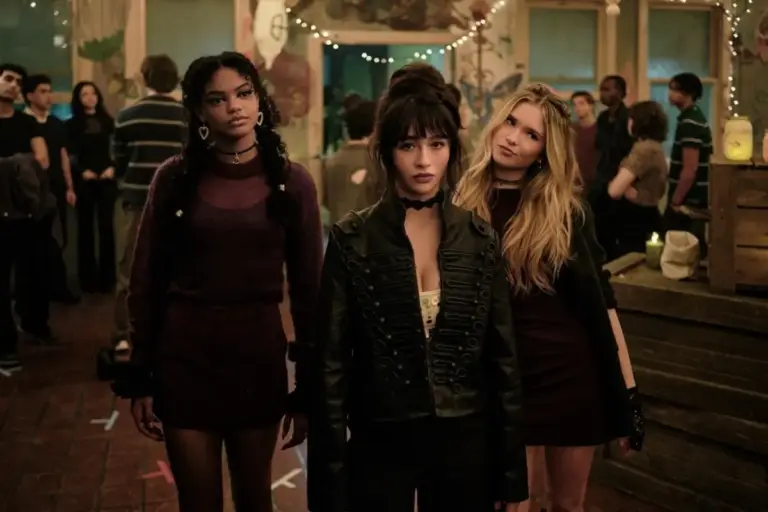
| Poorina Jagannathan | Zoe Macon | Delivers crackling, immediate on-screen chemistry opposite Pierre, highlighted by a memorable ring-ignited cigarette scene. |
| Garret Dillahunt | William Macon | Commands rural menace as a MAGA-coded militia leader preparing his followers for an extraterrestrial war. |
The immediate, palpable chemistry between Pierre’s John Stewart and Jagannathan’s Zoe Macon—punctuated by a scene where Stewart casually lights a cigarette using the emerald flame of his power ring—injects a sultry, dangerous edge into the narrative that keeps viewers off balance.
Future Outlook and Critical Reception
In adapting DC Comics’ lore, creators Chris Mundy, Damon Lindelof, and Tom King have deliberately leaned into a 2000s-style "superheroes-plus" philosophy. Recognizing that pure superhero storytelling can occasionally suffer from fatigue, they have successfully embedded the Green Lantern mythos inside an intimate, slow-paced rural murder mystery. For fans raised on the grounded, human-scaled writing of comic scribes like Brian Michael Bendis and Ed Brubaker, this approach feels both refreshing and overdue.
However, the production is not entirely without missteps. The script’s reliance on verbal product placement for the Harry Potter franchise—a corporate synergy play tied to Warner Bros. Discovery—feels jarringly out of place in a gritty noir narrative. Furthermore, critics have noted the ongoing industry frustration regarding corporate branding over creator attribution; while the series bears the DC Comics banner, foundational credit for these characters rightfully belongs to creators like Martin Nodell, Bill Finger, John Broome, Gil Kane, Dennis O’Neil, and Neal Adams. Print their names, and compensate them accordingly.
The Verdict
Flawed marketing tics aside, Lanterns proves that superhero television can achieve artistic maturity when treated with atmospheric gravity rather than empty spectacle. By grounding space cops in the mud, blood, and political paranoia of rural America, HBO has crafted a mystery box well worth opening. Whether the overarching mystery of Hal Jordan’s frozen fate will pay off remains to be seen, but the journey promises to be one of the most compelling rides on television.
Final verdict pending the inevitable appearance of a giant, hard-light green boxing glove, but until then, these space cops are more than worth the ride-along.