Executive Overview
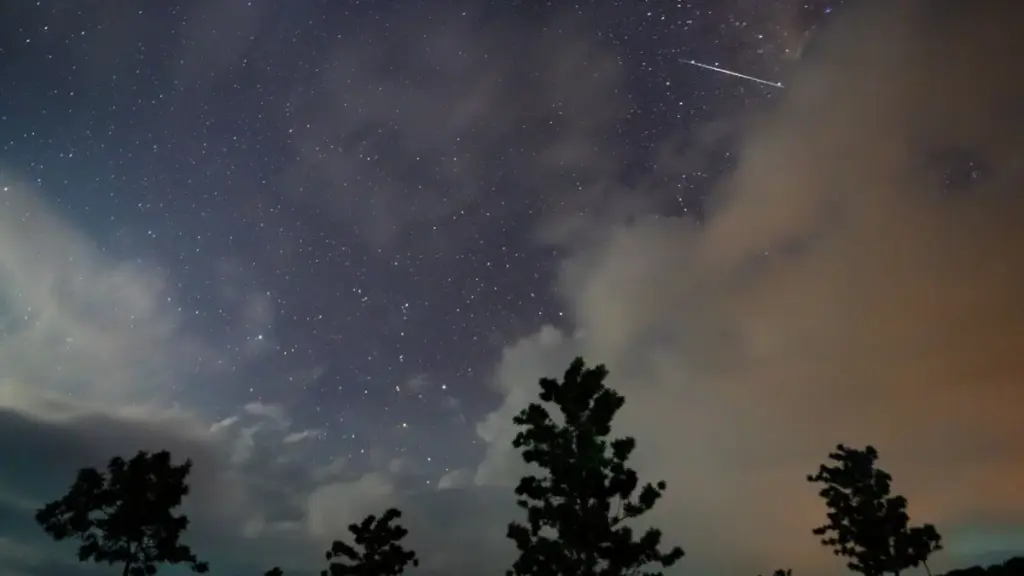
For skywatchers accustomed to the relentless pace of prolific celestial displays like August’s Perseids or December’s Geminids—where streaks of light tear across the stratosphere every few seconds—the Southern Taurid meteor shower requires a profound shift in mindset. Operating at a modest rate of just five to ten meteors per hour, the Southern Taurids are never going to win a contest for sheer volume. Yet, trading quantity for quality, this autumn event holds a reputation among astronomers and seasoned stargazers for producing some of the most spectacular, luminous, and dazzlingly slow-moving fireballs of the entire astronomical calendar.
Spanning a nearly two-month window from late September through November, the Southern Taurid shower is currently underway, with observers looking toward two distinct viewing epochs this autumn. According to data provided by the American Meteor Society (AMS), general shooting-star activity reaches an initial crest around mid-October, followed by the main fireball peak in early November. Fortuitously, lunar conditions this year are remarkably cooperative, offering moonless or near-moonless skies during both crucial viewing windows.
Beyond its visual appeal, however, the Taurid meteor stream harbors a more complex and potentially hazardous scientific narrative. Originating from the orbital path of Comet 2P/Encke, the stream is believed to contain not only microscopic space dust but also a hypothesized "resonant swarm" of significantly larger rocky fragments. While the vast majority of these encounters yield harmless, albeit breathtaking, streaks of cosmic light, researchers warn that this debris trail may harbor larger bodies capable of generating atmospheric airbursts. With orbital calculations pointing toward closer encounters with this anomalous swarm in the decades of the 2032 and 2036, the Taurids bridge the gap between casual autumn stargazing and serious planetary defense research.
Detailed Chronology
The Autumn Window: Key Dates and Milestones
The timeline of the Southern Taurids is uniquely elongated compared to short, sharp meteor bursts. The shower officially commenced on September 20 and will continue to deposit debris into Earth’s upper atmosphere until November 20. Rather than featuring a single, explosive maximum night, the shower unfolds in phases, giving patient observers multiple opportunities to catch a glimpse of its trademark fireballs.
[Sept 20: Shower Begins] ──> [Oct 13-14: Initial Activity Peak (Moonless)] ──> [Nov 4-5: Main Fireball Peak] ──> [Nov 20: Shower Concludes]Phase One: The Mid-October Buildup (October 13–14)
Activity within the stream begins to notably intensify around October 13 and 14. For observers, the timing this year could scarcely be better. The initial peak coincides with a completely moonless sky, eliminating the primary obstacle to meteor hunting: light pollution from Earth’s natural satellite. Observers willing to brave the crisp autumn air during these mid-October nights will find themselves working against a backdrop of deep, uncompromised darkness, maximizing the visibility of even fainter meteors within the stream.
Phase Two: The Main Fireball Peak (November 4–5)
The definitive climax of the Southern Taurids arrives on the nights of November 4 and 5. This is the period historically associated with the appearance of the shower’s most brilliant, horizon-to-horizon fireballs. Crucially, the lunar phase remains favorable. On the morning of November 5, only a faint, delicate waning crescent will be visible in the predawn sky, casting negligible illumination and leaving the theater of the night sky largely undisturbed for fireball hunters.
The Overlap: Entering the Northern Taurids
As the Southern Taurids taper off toward the latter half of November, they seamlessly overlap with their celestial sister stream, the Northern Taurids. Driven by a similar parent body dynamic, the Northern Taurids extend the autumn meteor season well into early December. This extended timeframe ensures that even if overcast weather spoils the primary November peaks, consecutive weeks of residual activity provide ample opportunity to try one’s luck beneath clear skies.
Supporting Context & Metrics
The Physics of a Fireball: Why the Taurids Move Slowly
To understand why the Taurids produce such arresting visual spectacles despite their low numerical frequency, one must look to the physics of orbital mechanics.
Most prominent meteor showers are generated by comets or asteroids traveling on highly eccentric, fast-moving orbits relative to Earth. When Earth intersects these debris streams, the closing speeds are immense. For instance, the Perseids slam into Earth’s upper atmosphere at blistering speeds of roughly 37 miles per second (60 kilometers per second). At such velocities, smaller meteors disintegrate almost instantaneously in a swift flash, while faster ones leave fleeting, high-speed streaks.
Meteor Stream Comparison:
──────────────────────────────────────────────────────────
Perseids:        ~37 miles/sec  (Fast, frequent flashes)
Southern Taurids: ~17 miles/sec  (Leisurely, long-duration fireballs)
──────────────────────────────────────────────────────────
The Taurids, by contrast, are remarkably leisurely by cosmic standards. They intersect Earth’s orbit at a comparatively sedate velocity of approximately 17 miles per second (about 27 kilometers per second). While 17 miles per second still sounds astonishingly fast to terrestrial observers, in the realm of meteorics, it is positively glacial.
This reduced speed has a profound optical consequence: duration. Because the particles cross the upper atmosphere more slowly, they take longer to ablate (burn up). This extended residency allows a Taurid meteor to carve a long, luminous glowing trail across the firmament. When a slightly larger fragment hits the atmosphere at this moderate velocity, the result is an extended, sustained flare of light—a true fireball capable of casting shadows on the ground and lighting up entire landscapes in a vivid flash of color.
Celestial Anatomy: Comet 2P/Encke and the Taurid Complex
The progenitor of the Taurid meteor stream is Comet 2P/Encke, a periodic comet characterized by one of the shortest orbital periods known for a comet, completing a circuit around the Sun roughly once every 3.3 years. Over millennia of perihelion passages—moments when the comet swings closest to the Sun—solar heat has fractured its icy nucleus, shedding massive quantities of dust, gravel, and larger rocky debris along its orbital path.
Over thousands of years, planetary gravitational perturbations—particularly the massive gravitational influence of Jupiter—have spread this debris out into a remarkably broad, diffuse stream. Earth takes several weeks to plow through the wide river of dust left in Encke’s wake, accounting for the protracted duration of both the Southern and Northern Taurid showers.
Official Statements & Scientific Inquiries
The Darker Side of the Stream: The Taurid Resonant Swarm
While the standard astronomical narrative frames the Taurids as a picturesque autumn diversion, recent decades of planetary research have revealed a more alarming hypothesis. Beyond the fine dust responsible for ordinary shooting stars, leading astrophysicists and planetary scientists believe the Taurid stream contains a concentrated, gravitationally bound substructure known as the Taurid resonant swarm.
This swarm consists of much larger objects—potentially asteroid-sized rocks and dense chunks of primordial comet core measuring tens to hundreds of meters across. Because of orbital resonances with Jupiter, these large fragments tend to clump together in specific regions of the debris trail.
The most chilling piece of circumstantial evidence linking this swarm to terrestrial history is the 1908 Tunguska event. On the morning of June 30, 1908, a mysterious cosmic explosion flattened an estimated 80 million trees across 830 square miles of remote Siberian taiga. While no impact crater was ever found, overwhelming scientific consensus points to an atmospheric airburst caused by an incoming space rock roughly 50 to 100 meters in diameter. A persistent body of research strongly suggests that the Tunguska impactor was a fragment liberated from the Taurid resonant swarm.
Clues from Space and Modern Predictions
Investigating the reality and density of the Taurid resonant swarm requires indirect detective work, as these larger fragments are difficult to track continuously via ground-based telescopes until they make relatively close approaches to Earth.
Physicist Mark Boslough and his colleagues at the University of New Mexico have spearheaded research analyzing the behavior of the Taurid stream. Boslough has pointed to several distinct anomalies that signal the presence of larger objects embedded within the debris:
- Anomalously Bright Fireballs: Observers routinely log Taurid fireballs that far exceed the brightness expected from standard cometary dust grains, suggesting the ablation of much more massive rocky bodies.
- Seismic Signatures on the Moon: During the Apollo lunar missions, seismometers left on the lunar surface recorded impacts from micro-meteoroids and sporadic space rocks. Data analyses have indicated spikes in impact activity that correlate with Earth’s passage through the Taurid stream, hinting at a higher density of larger particulate matter in space than previously calculated.
Crucially, orbital models indicate that the Earth is on a collision course with denser segments of this hypothetical resonant swarm in the near future. Planetary scientists have flagged specific windows—notably 2032 and 2036—when Earth will pass significantly closer to the core of the swarm, elevating the theoretical risk of encountering larger meteoroids or potential airburst-class impactors. While astronomers emphasize that the statistical probability of a catastrophic impact remains low, the proximity of the swarm serves as a compelling driver for ongoing, rigorous sky-monitoring programs.
Future Outlook & Observational Guide
How to Observe the Southern Taurids
For amateur astronomers and casual stargazers alike, the beauty of the Southern Taurids lies in their accessibility. No sophisticated hardware, tracking mounts, or dark-sky photography rigs are required to enjoy the display.
Step-by-Step Field Guide for Stargazers:
- Escape Light Pollution: Travel to a location as far removed from urban light domes as possible. State parks, rural farmlands, and designated dark-sky reserves offer the ideal canvas.
- Give Your Eyes Time to Adapt: Turn off cell phones and white flashlights, and allow your eyes at least 20 minutes to adjust fully to the darkness. Red-light headlamps can be used if illumination is strictly necessary.
- Ditch the Optics: Leave binoculars and telescopes at home. Optical aids narrow your field of view; meteor watching requires taking in as much of the open sky as humanly possible.
- Scan Broadly: The constellation Taurus serves as the radiant point—the optical perspective from which the meteors appear to originate—climbing high into the southeastern sky by late evening. However, Taurid meteors can streak across any quadrant of the heavens. Rather than staring directly at Taurus, recline comfortably in a lawn chair, wrap up warm against the autumn chill, and gaze broadly toward the zenith.
The Verdict on Autumn’s Slow-Burn Shower
The Southern Taurids demand patience. They will not overwhelm the senses with a flurry of constant motion. There will be long stretches of quiet sky where nothing appears to happen, testing the resolve of the casual observer.
Yet, when the silence is suddenly broken by a magnificent, golden-orange fireball tearing across the constellations—burning slowly and deliberately through the upper atmosphere—the long wait is instantly vindicated. Blending the quiet poetry of autumn stargazing with the high-stakes science of planetary defense and ancient cosmic impacts, the Southern Taurids remain one of the night sky’s most compelling and enigmatic spectacles.