Executive Overview
Every autumn, the beauty world falls into a predictable, comforting rhythm. As the leaves turn and the temperature drops, nail trends reliably retreat into a familiar storybook of cozy, earth-toned nostalgia. Rich chocolate browns, moody Burgundies, deep taupes, and russet reds dominate salon menus year after year. While these shades evoke the charming crunch of fallen leaves and spiced cider, they carry a distinct risk: at a certain point, the relentless parade of warm neutrals begins to blur together, fading into a metaphorical mulch of seasonal conformity.
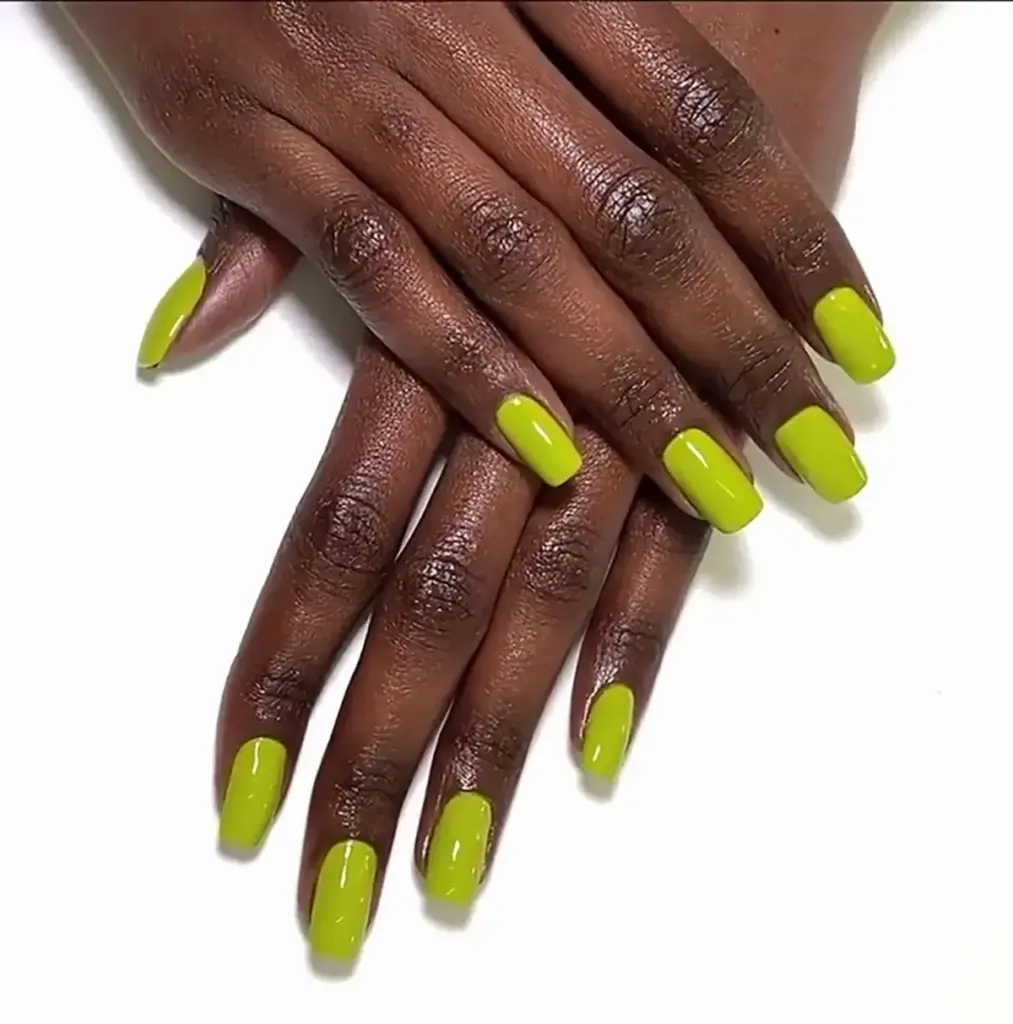
Enter chartreuse—the electrifying, unapologetically vibrant nail trend for fall 2026 that has decisively shattered the tyranny of traditional autumn warm tones.
Balancing precariously between a vivid yellow and an electric green, chartreuse is far from a subtle accessory. It is a high-voltage statement maker that challenges our preconceived notions of seasonal color theory. Yet, despite its radioactive intensity, top industry experts and runway insiders insist it possesses a grounding, mossy undertone that makes it surprisingly wearable.
As we navigate the beauty landscape of late 2026, this unexpected shade is proving that autumn manicures do not have to be quiet to be sophisticated. Supported by runway appearances from major fashion houses and championed by leading product developers, chartreuse has officially transitioned from a transient novelty into a sophisticated statement shade. This comprehensive report investigates the cultural roots of the chartreuse revolution, examines the technical nuances of wearing the color, and offers an authoritative guide on how to pull off fall’s most polarizing manicure.
Detailed Chronology: From "Brat Summer" to Autumnal High Fashion
To understand how a noxious, acid-tinged green became the defining manicure of fall 2026, one must trace its lineage back through recent fashion history. The color’s current renaissance did not materialize in a vacuum; rather, it is the direct evolutionary descendant of the hyper-saturated cultural phenomenon colloquially known as "Brat Summer."
While the viral peak of that movement may have receded, the cultural fascination with raw, unfiltered, neon-adjacent hues has stubbornly lingered, proving to have remarkable staying power. High fashion quickly adopted the torch. During the spring/summer 2026 collections, avant-garde design houses began teasing the shade’s transition into cooler weather. Prada shocked and delighted critics by sending models down the runway in structural taffeta bubble skirts dipped in the unmistakable electric green. Simultaneously, Simone Rocha showcased lustrous crinoline dresses that sashayed down the runway, cementing the color’s high-fashion credentials.
As fashion weeks pivoted toward fall and winter 2026 previews, beauty tastemakers recognized an opportunity to translate these runway statements into accessible cosmetic trends. Giorgia Cappella, head of product and education at premier polish line The Gel Bottle, notes the seamless trajectory of the color.
"It still feels fresh and seasonal on the nails, an autumnal move on from spring/summer’s matcha craze," Cappella explains, noting how consumers have developed an appetite for greens that push boundaries.
Celebrated manicurist Megan Caie echoes this sentiment, emphasizing that the shade respects the mood of the season without surrendering to it. "It’s not trying to fight the classic fall manicure," Caie observes. "Instead, it’s loud enough to make a statement, but still has that mossy, autumnal undertone that feels season-appropriate."
By bridging the gap between summer’s hyper-pop energy and autumn’s moody depth, chartreuse has established a rare cross-seasonal longevity that few runway trends manage to achieve.
Supporting Context & Metrics: The Shift in Consumer Appetite
The rise of chartreuse on fingertips is symptomatic of a broader behavioral shift within the beauty consumer market. Industry data from early 2026 indicates a significant fatigue regarding minimalist aesthetic trends, such as "clean girl" neutrals and sheer milky whites, which dominated the market from 2022 through 2024. Consumers are increasingly seeking micro-rebellions through personal grooming—small, high-impact choices that allow for self-expression without requiring a complete wardrobe overhaul.
Nail art and lacquer sales have historically served as an economic and cultural barometer. During periods of economic or social transition, beauty consumers lean toward either extreme safety (nudes, pinks) or radical escapism (neons, metallics, jarring brights). Chartreuse occupies a fascinating middle ground: it is unapologetically strange, yet deeply rooted in organic, botanical references found in nature.
Furthermore, social media algorithms have played a pivotal role in accelerating the trend. On platforms like TikTok and Instagram, high-contrast manicures generate substantially higher engagement rates than muted tones. A chartreuse set acts as an immediate visual anchor in digital content, driving organic word-of-mouth marketing among beauty enthusiasts. Salon booking data from metropolitan hubs like New York, London, and Tokyo reflects a double-digit spike in requests for custom-mixed green lacquers, proving that the trend has successfully migrated from editorial fantasy to commercial reality.
Official Statements & Expert Guidance
Adopting a color as bold as chartreuse can feel intimidating for even the most seasoned beauty enthusiasts. Fortunately, industry authorities have established a comprehensive playbook to ensure that anyone—regardless of skin tone or nail shape—can successfully wear the shade.
1. Finding the Version That Suits Your Skin Tone
The primary hesitation consumers express regarding chartreuse is the fear that it will clash with their skin or make their hands look sallow. Experts insist that chartreuse is universally flattering, provided you select the precise sub-hue that complements your biological undertones.
- Cool, Blue-Based Skin Tones: "Look at the undertone, not the depth," advises Giorgia Cappella. "Cooler, blue-based skin tones tend to suit a chartreuse with more green in it, while warmer, golden undertones can carry a yellower, almost citrus tone. I sometimes test it against the back of my wrist, like you would with a foundation."
- Deeper Skin Tones: Megan Caie encourages those with rich complexions to lean into the drama. "On deeper skin tones, chartreuse genuinely comes alive," Caie says. "The contrast is gorgeous, and it doesn’t wash out the way it can on paler skin, so don’t be shy about going bold there."
- Fair Skin Tones: For individuals with paler complexions, moderation is key. Caie suggests opting for a slightly softer, less acid-bright iteration of the color to prevent the polish from overpowering the hand.
2. The Critical Importance of Nail Prep
Because chartreuse is a high-visibility, saturated shade, any imperfections in nail health, shaping, or application will be magnified.
"With a bold shade, you can really see the growth as you get closer to your next appointment, so prep is key," explains Cappella. She emphasizes the importance of deliberate styling: "On shorter, rounded, or almond nails, it reads playful and wearable, while on longer squares or coffin shapes, it takes on a much more dramatic, statement-making energy."
Megan Caie concurs, recommending meticulous cuticle care before laying down a ridge-filling base coat. A smooth canvas prevents the pooling of pigment and protects the natural nail plate from potential staining associated with heavily saturated green and yellow pigments.
3. Application and Maintenance Mastery
Achieving a flawless chartreuse manicure requires professional-grade technique, whether executed in a salon or at home.
- Cuticle Proximity: "Bright colors like this do show growth faster, so make sure your nail tech or home manicure is kissing that cuticle line as closely as possible to maximize your wear," Caie instructs.
- Thin, Even Layers: Because electric and radioactive hues can streak or highlight uneven application, product must be laid down in thin, careful layers. Lumps and bumps are exceptionally noticeable under glossy finishes.
- The High-Gloss Seal: Both experts emphasize finishing the set with an ultra-glossy top coat to enhance the shade’s "juiciness" and light-reflecting properties.
- The Low-Commitment Alternative: For those who find the prospect of an all-over chartreuse set too daunting, Cappella offers an accessible entry point: "If you want the color without the full commitment, try it as a French tip or as a single accent nail rather than an all-over set."
To achieve these looks at home, industry standards point toward curated professional lacquers such as Zoya Professional Lacquer in Eunice for a warm-toned, punchy finish, or Essie’s khaki-leaning green formulations for a more subdued, earthy approach.
Future Outlook: Where Goes Chartreuse After Fall 2026?
As the beauty industry looks beyond the immediate horizon of late 2026, the longevity of the chartreuse trend offers fascinating implications for color forecasting. Historically, neon and acid tones are treated as seasonal outliers—flashes in the pan relegated strictly to summer music festivals or tropical vacations.
However, chartreuse’s successful migration into the colder, darker months of autumn signals a permanent evolution in how consumers view seasonal palettes. The rigid boundaries separating "summer brights" from "winter neutrals" are dissolving. Consumers are increasingly empowered to wear whatever brings them joy, unencumbered by antiquated rules that dictate burgundy for October and icy silver for December.
Furthermore, nail technicians and cosmetic chemists anticipate that the success of chartreuse will pave the way for other unexpected botanical shades to enter the mainstream beauty lexicon. We are likely to see an influx of bruised purples, mossy lichens, and deep mustard yellows challenging traditional color hierarchies in the coming seasons.
Ultimately, chartreuse nails for fall 2026 represent more than just a passing aesthetic fancy. They are a celebration of individuality, a rejection of aesthetic fatigue, and proof that true style lies in the courage to stand out. Whether worn as a sleek, high-gloss full set on almond nails or delicately traced along the edge of a modern French manicure, chartreuse has firmly established itself as the defining color narrative of the season—proving once and for all that stepping away from the mulch is the best beauty decision you can make this year.
Have a beauty or wellness trend you’re curious about? We want to know! Send Vogue’s senior beauty & wellness editor an email at [email protected].