Executive Overview
Netflix’s latest international offering, My Sad Dead, arrives as a startling, atmospheric addition to the streaming giant’s prestige drama catalog. Based on the acclaimed novel by Mariana Enríquez and directed by visionary filmmaker Pablo Larraín, the Argentinian series wastes no time alienating and transfixing its audience in equal measure. Blending psychological horror, supernatural realism, and biting social commentary, the series opens with the quiet, agonizing expiration of an elderly woman in a cluttered, decaying home in Buenos Aires—a scene that sets the tone for an unsparing, melancholic exploration of mortality, grief, and hereditary trauma.
At its core, My Sad Dead follows Emma (portrayed with weary precision by Mercedes Morán), a newly retired hospital doctor who returns to her late mother’s house in the rough, volatile neighborhood of Piedrabuena. Emma harbors a heavy secret: she can see, hear, and feel the dead. Far from being a romanticized supernatural gift, this ability is depicted as an invasive, exhausting sensory overload, filled with the endless moans and cries of tortured spirits.
As the narrative unfurls across its premiere episode, the arrival of estranged family members from Oregon introduces a darker, more volatile layer to the supernatural affliction. Blending deeply stylized cinematography, unsettling sound design, and raw performances, Larraín crafts a universe where the boundary between the living and the dead is as porous as it is agonizing. For viewers willing to navigate its deliberately slow burn and deeply unsettling atmosphere, My Sad Dead offers a masterclass in modern psychological storytelling—earning a definitive "Stream It" recommendation for fans of elevated, boundary-pushing television.
Detailed Chronology: The Unfolding of Episode One
The premiere episode of My Sad Dead is a masterclass in slow-burn tension, carefully establishing the rules of its grim supernatural universe while mapping out the fractured dynamics of an extended family brought together by crisis and decay.
The Return to Piedrabuena
The story begins with an overhead, unblinking shot of an elderly woman drawing her final, labored breaths amidst the chaotic accumulation of a lifetime and the messy detritus of end-of-life care. Her daughter, Emma, stands vigil at her bedside.
Following the funeral rites, Emma makes her first major post-retirement move: she relocates to her late mother’s modest home in Piedrabuena, a tough, unforgiving neighborhood in Buenos Aires. Her primary motivation is not merely sentimental; Emma intends to keep her mother’s ghost company. Unlike most mortals, Emma’s retirement does not signal peace and quiet. Plagued by a lifetime of supernatural perception, she exists in a state of perpetual sensory bombardment, constantly harassed by the lingering presences of the deceased. Her other daughter, Carolina (played by Dolores Fonzi), remains entirely unaffected by this generational affliction, serving as a grounded, albeit worried, foil to Emma’s spectral reality.
The Arrival from Oregon
Complications multiply swiftly with the arrival of Emma’s estranged sister, Lidia (Alejandra Flechner). The two siblings share a palpable animosity, having drifted apart over years of geographic and emotional distance. Lidia has traveled down from Oregon accompanied by her husband, Tomas (Carlos Portaluppi), and their troubled daughter, Julie (Carolina Álvarez).
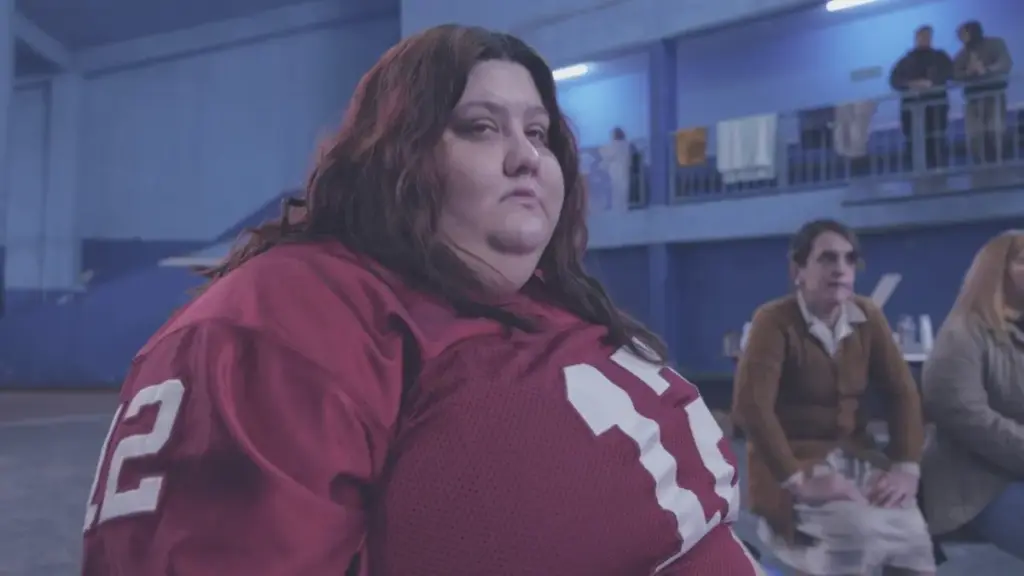
The ostensible reason for the family trip is to leave Julie in Buenos Aires to receive intensive treatment for two major afflictions: her severe, morbid obesity and profound mental illness. However, Emma’s supernatural intuition quickly pierces through the medical diagnoses of her visiting family. She recognizes immediately that Julie possesses the very same "gift" as her—only magnified to a terrifying, deafening degree.
Unlike Emma, who experiences the dead as a nagging, agonizing crowd of mourners, Julie’s interaction with the spirit world manifests primarily through compulsive and unsettling sexual activity. As the episode progresses, Julie’s extreme depression and unique spiritual burden push her toward a horrifying psychological precipice, culminating in a devastating, haunting final sequence that leaves the entire premise hanging in chilling uncertainty.
Supporting Context & Metrics: Adapting Mariana Enríquez and Directing the Macabre
To fully understand the tonal weight of My Sad Dead, one must examine the creative forces steering the production. The series translates the literary sensibilities of Mariana Enríquez—a titan of contemporary Latin American horror and dark fiction—onto the small screen. Enríquez’s writing is celebrated for its unflinching gaze at the social decay, historical trauma, and economic hardships of modern Argentina, seamlessly weaving ghosts and monsters into the gritty fabric of urban poverty.
A Masterclass in Visual and Auditory Unease
Director Pablo Larraín, internationally renowned for biographical dramas like Jackie and Spencer, brings his signature arthouse sensibilities to the horror genre. Every frame of My Sad Dead is meticulously constructed to evoke psychological discomfort:
- Cinematography and Color Palette: Larraín employs a washed-out, muted color grading that strips Buenos Aires of its vibrant warmth, rendering the urban landscape as a concrete purgatory. The faded hues reflect the emotional burnout of the characters, who move through life like ghosts long before their time.
- Sound Design: The auditory landscape of the show is perhaps its most weaponized feature. Quiet, agonizingly prolonged passages of silence are suddenly pierced by low-frequency drones, scratching noises, and distorted moans. The sound mix is deliberately engineered to make viewers question whether the haunting noises are emanating from their own living room speakers or the television screen.
Thematic Parallels and Cinematic Companionship
Premiering alongside other dark international thrillers—such as the Thai psychological drama Delusion—My Sad Dead underscores a broader streaming trend toward transnational, high-concept horror that deals heavily with grief, mental health, and familial inheritance. The series avoids cheap jump scares, opting instead for a lingering, melancholic dread. The supernatural elements are deployed not as external monsters to be defeated, but as physical manifestations of unresolved trauma, societal neglect, and personal despair.
Character Dynamics & Performances Worth Watching
The emotional anchor of My Sad Dead rests firmly on the shoulders of its principal cast, whose performances elevate the script from a standard supernatural thriller into a poignant human drama.
Mercedes Morán as Emma
Mercedes Morán portrays Emma with a weary, pragmatic exhaustion. Having spent decades working in hospitals—a profession intimately acquainted with the threshold between life and death—Emma treats her supernatural burdens not with theatrical terror, but with the weary sigh of someone dealing with an annoying neighbor. Morán captures the tragedy of a woman who cannot escape the noise of the world, even after everyone in it has stopped breathing.
Carolina Álvarez’s Groundbreaking Portrayal of Julie
In a television landscape that frequently reduces characters of size to punchlines, tragic tropes, or medicalized objects of pity, Carolina Álvarez delivers a tour-de-force performance as Julie. Álvarez invests the character with profound dignity, agency, and fierce intellect. Julie understands perfectly that her psychiatric label fails to capture the true nature of her suffering. Her profound, crushing depression is treated by the narrative not as a simple character flaw, but as a complex intersection of bodily alienation, familial misunderstanding, and the unbearable weight of a hyperactive supernatural perception.
Future Outlook: Where the Series Is Headed
As the credits roll on the premiere episode—marked by Julie’s chilling ascent to the top of a Piedrabuena water tower, the opening of the hatch, and her deliberate fall into its depths—My Sad Dead signals that it is willing to go to deeply uncomfortable places.
Based on narrative seeds planted in the first episode, the scope of the series is poised to expand dramatically. With the impending murder of three local teenagers in the projects of Piedrabuena, the supernatural phenomena that plague Emma and Julie are expected to bleed outward into the wider community. The show’s deliberate, unhurried pacing suggests a slow-motion contagion of grief and spectral awareness, where ordinary neighbors will inevitably begin to experience the agonizing burden of the dead.
As Netflix continues to expand its Piedrabuena-set narrative, viewers can expect My Sad Dead to maintain its unyielding, melancholic tone. It is a series that posits a deeply unsettling thesis: that the worst part of dying isn’t the end of life, but the fact that no one ever truly leaves you alone. For those willing to brave its bleak horizons and stylistic rigor, My Sad Dead stands out as one of the most compelling and haunting television events of the year.