Executive Overview
In an era characterized by hyper-accelerated digital cycles—where cultural movements flare up and burn out in a matter of seconds—the shelf life of contemporary relevance has never felt more precarious. This digital transience has catalyzed a collective cultural fatigue, breeding a generation of consumers weary of superficial trends. In a definitive pushback against this ephemeral landscape, Tokyo-based independent luxury streetwear pioneer AMBUSH and automotive giant Lexus have joined forces to engineer something designed to endure.
The result of this unlikely yet symbiotic alliance is the Future Classic Club, a multi-faceted capsule collection, campaign, and philosophical statement that merges the high-octane world of automotive engineering with genre-defying apparel design. Rooted in the shared DNA of their Japanese heritage, AMBUSH founders Yoon Ahn and Verbal collaborated with Lexus to translate the distinct visual and mechanical identity of the Lexus IS sports sedan into wearable architecture.
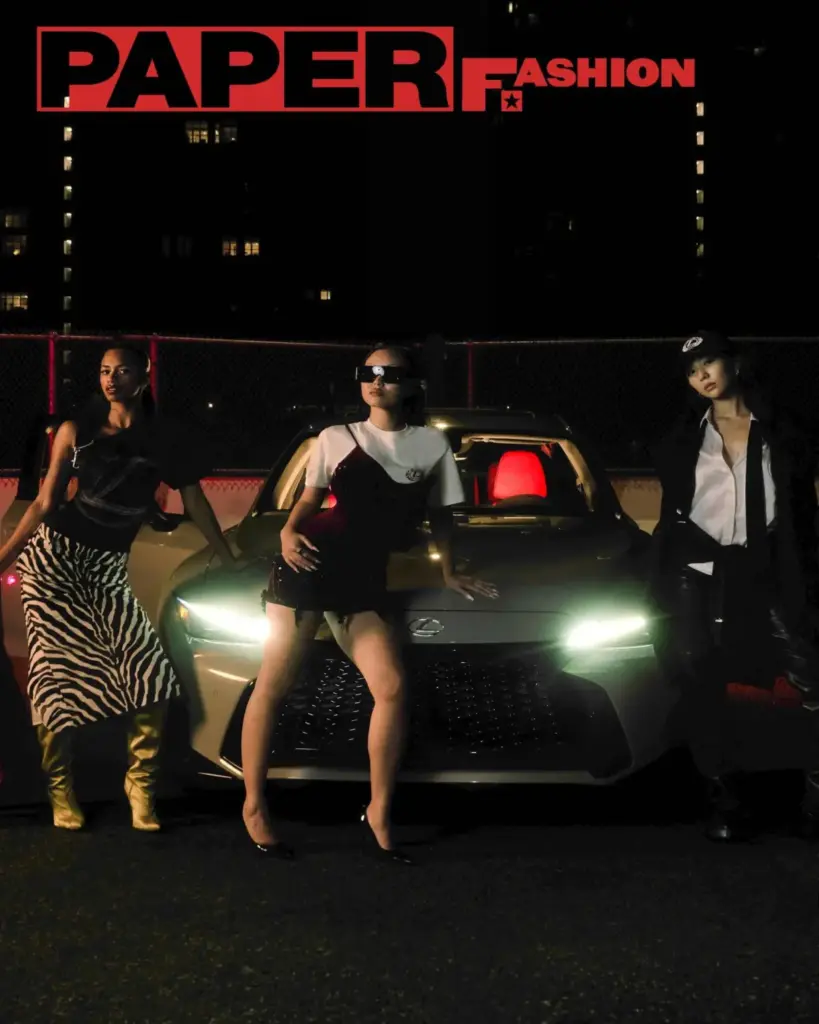
Simultaneously, a striking visual campaign shot on location in Japan brings together three multi-hyphenate tastemakers—pro racer Sara Choi, stylist and designer Sierra Rena, and creative Fiffany Luu—to explore the bleeding edge of speed, style, and permanence. This long-form feature delves deep into the ethos of the partnership, examining how two seemingly disparate industries find common ground in the pursuit of timelessness, craftsmanship, and community-driven subculture.
Detailed Chronology: From Experimental Jewelry to Automotive Haute Couture
To understand the weight of the AMBUSH x Lexus collaboration, one must trace the distinct historical trajectories of both brands, which converged against the backdrop of modern Tokyo’s creative underground.
The Rise of AMBUSH (2008–Present)
Founded in 2008 by visionary designer Yoon Ahn and musical polymath Verbal, AMBUSH began as an experimental jewelry line before expanding organically into full-scale ready-to-wear apparel. Initially capturing global attention with avant-garde, oversized motifs—most notably their signature chain-link designs and sculptural accessories—AMBUSH quickly cultivated a devoted cult following.
Over the years, the brand evolved from an underground darling into a pillar of global luxury streetwear, collaborating with heavyweights across luxury, tech, and entertainment. Yet, despite its international footprint, AMBUSH has consistently maintained its anchor in Tokyo’s idiosyncratic subcultures, refusing to dilute its distinct point of view for mass assimilation.
The Evolution of Lexus and the "Standard of Amazing"
Lexus, meanwhile, has spent decades carving out its own legacy of precision and luxury. Marking a pivotal shift in its brand philosophy, Lexus launched its Standard of Amazing platform in 2025. This initiative is predicated on the belief that modern vehicles must transcend mere utilitarian engineering to evoke genuine emotional resonance. As automation and digital integration continue to reshape human mobility, Lexus has doubled down on a human-centric approach, focusing on the sensory experiences, memories, and emotional connections forged on the road.
At the center of this automotive identity sits the Lexus IS, a luxury sports sedan that has spent 25 years building a fiercely loyal community of drivers and enthusiasts. Known for its rear-wheel-drive dynamics and sharp styling, the IS provided the literal and figurative blueprint for AMBUSH’s capsule collection.
The Genesis of the Capsule Collection
When Yoon Ahn and Verbal began translating the Lexus IS into a sartorial medium, they bypassed superficial branding in favor of deep structural integration. The resulting collection treats garments and hardware as precision-engineered components:
- The Carabiner Keychains: Masterfully engraved with micro-details that mirror the mechanical precision found within the Lexus IS engine bay.
- The Outerwear: Jackets feature industrial reinterpretations of traditional Asian frog fasteners, marrying ancient garment-construction techniques with modern utilitarianism.
- The Tops: Tees and long-sleeves utilize sleek, high-gloss silver graphics that reimagine the iconic Lexus emblem through a futuristic, cyberpunk lens.
Supporting Context & Metrics: The Obsession with Craft
The philosophical alignment between AMBUSH and Lexus is anchored in an obsessive dedication to detail. During interviews accompanying the campaign, Yoon Ahn highlighted the historical origin story of Lexus as a primary catalyst for the partnership.
"Lexus came out of this pivotal moment when Japan was proving that it could define luxury on its own terms, not by copying the European model, but through Japanese engineering, precision, hospitality, and this almost obsessive attention to detail," Ahn noted.
To contextualize this rigor, one can look back at the development of the original Lexus LS 400—a monumental undertaking that mobilized 60 designers, 1,400 engineers, 2,300 technicians, and roughly 450 prototypes. This uncompromising commitment to research, testing, and structural integrity mirrors how AMBUSH approaches fashion design, pushing a single idea through iterative cycles until it achieves absolute specificity.
Furthermore, the campaign’s anchor talent—pro racer Sara Choi—notes a literal full-circle connection to the vehicle. Choi’s entry into automotive enthusiasm began 18 years ago, and her very first drift car was a Lexus IS 200—a platform she continues to own and compete in today.
Official Statements & Insights: Inside the Creator Roundtable
PAPER sat down with Yoon Ahn, Verbal, Sara Choi, Sierra Rena, and Fiffany Luu to unpack what happens when fashion meets velocity. Here is an exclusive synthesis of their perspectives.
Yoon Ahn on the "Future Classic Club" and the Shift in Luxury
Defining the overarching concept of the project, Ahn explained that the Future Classic Club is less an exclusive roster and more a state of mind:
"To me, Future Classic Club is about creating something new without disconnecting from where you came from. A future classic isn’t just something that feels futuristic; it’s something with enough identity and substance that it can still feel relevant years later… The club is a mindset for people who appreciate history and culture, but don’t want to be trapped by nostalgia."
When asked how her definition of luxury has evolved since founding AMBUSH, Ahn reflected on the changing expectations of the modern consumer:
"When we started AMBUSH, luxury felt much more connected to rarity, materials, craftsmanship, and access… Now, luxury to me is also time, freedom, intention, and authenticity. People are less impressed by luxury just because something is expensive. They want to understand why it matters who made it, what the story is, and what kind of feeling it gives them."
Verbal on Translating Sound into Visuals
As a musician and producer stepping into a visual and tactile medium, Verbal offered a fascinating perspective on sensory crossover:
"Even when there’s no actual audio, I think something visual can still feel very musical. A certain color, the way a video is edited, someone’s facial expression, the movement of a car—those things can trigger an emotion that almost makes you imagine a certain sound in your head. When I’m looking at a visual project, I’m always thinking about that emotional frequency."
Sara Choi on the Psychology of Drifting and Car Culture
As a professional drifter, Sara Choi drew direct parallels between the absolute commitment required behind the wheel and the posture required to navigate creative industries:
"For drifting specifically, you have to be a really confident person. I believe confidence is a skill; it’s like a muscle you build. If you have even a moment of doubt or fear in drifting, you mess up the whole run, because drifting is all about fully committing. I believe that skill has translated into how I am IRL as well."
Choi also highlighted the deep semiotics of automotive customization, comparing car builds to personal style:
"In the automotive scene, you’re dressing up your car… You can tell a person’s personality by their build. You get hints of what they like, what they don’t like, and what they might be like. Depending on the style route someone takes and how they dress, you can gauge whether they might be emo, edgy, introverted, or something else."
Sierra Rena and Fiffany Luu on Authenticity and Timelessness
Stylist and designer Sierra Rena emphasized that successful collaborations hinge on organic synergy and shared intuition:
"It’s so important that the brand or person and I can really understand each other creatively. I’m such a visual person… I love organically loving a brand before I collaborate with it. That brings a lot of authenticity and intention to what I’m doing."
Meanwhile, creative Fiffany Luu pointed toward a future where rigid aesthetic categories dissolve entirely:
"I think people are going to care less about following one specific trend and more about having their own point of view. I’m seeing more people mix different eras, styles, and pieces that feel personal to them rather than trying to fit into one aesthetic."
Future Outlook: Where Do Future Classics Come From?
As the cultural landscape continues to fragment across digital platforms, the question of what survives the test of time becomes increasingly urgent. When asked where the next generation of future classics will originate, Yoon Ahn offered a clear prediction:
"I think they’ll come from the edges rather than the center. A lot of the most interesting ideas now are coming from people moving between different worlds: fashion, music, cars, gaming, dance, technology—without feeling like they have to belong to just one category."
The AMBUSH x Lexus partnership serves as a masterclass in this cross-disciplinary ethos. By rejecting the traditional boundaries separating automotive manufacturing, streetwear, music, and motorsports, both brands have laid down a blueprint for modern cultural permanence.
The Future Classic Club is not merely a nostalgic nod to yesterday, nor is it a speculative gamble on tomorrow. Instead, it is an active reclamation of time, substance, and individual perspective—proving that when subculture and rigorous engineering collide, the resulting impact leaves a mark that outlasts the digital noise.