SYDNEY — In a stunning departure from decades of Australian sporting tradition, the National Rugby League (NRL) has officially confirmed that its upcoming grand final will proceed entirely without a pre-match musical spectacle. The decision follows the dramatic breakdown of contract negotiations with global pop phenomenon Tones And I, compounded by lingering industry speculation over creative differences and rigid performance expectations.
Rather than scrambling to secure a last-minute replacement artist for the showpiece event at Sydney’s Accor Stadium, the league has chosen a radical alternative path. Australian Rugby League Commission (ARLC) Chair Peter V’landys announced that the roughly $1 million production budget typically reserved for the 11-minute musical showcase will be completely reallocated. The funds will instead be redirected toward junior rugby league programs, targeting approximately 20,000 underprivileged children who might otherwise be priced out of participating in the sport.
The move marks a watershed moment for Australian sports entertainment. For generations, the NRL Grand Final has operated as a premier cultural crossover event, leaning heavily on high-octane halftime and pre-game concerts featuring legendary international and domestic acts. By stripping away the pop-concert pageantry, the league is signaling a return to purity, asserting that the game itself—not manufactured stadium spectacle—remains the ultimate draw.
Executive Overview: The Anatomy of a Deal That Never Was
The timeline leading to the cancellation of the 2026 grand final entertainment reveals a cascade of logistical hurdles, compressed timeframes, and unresolved artistic friction.
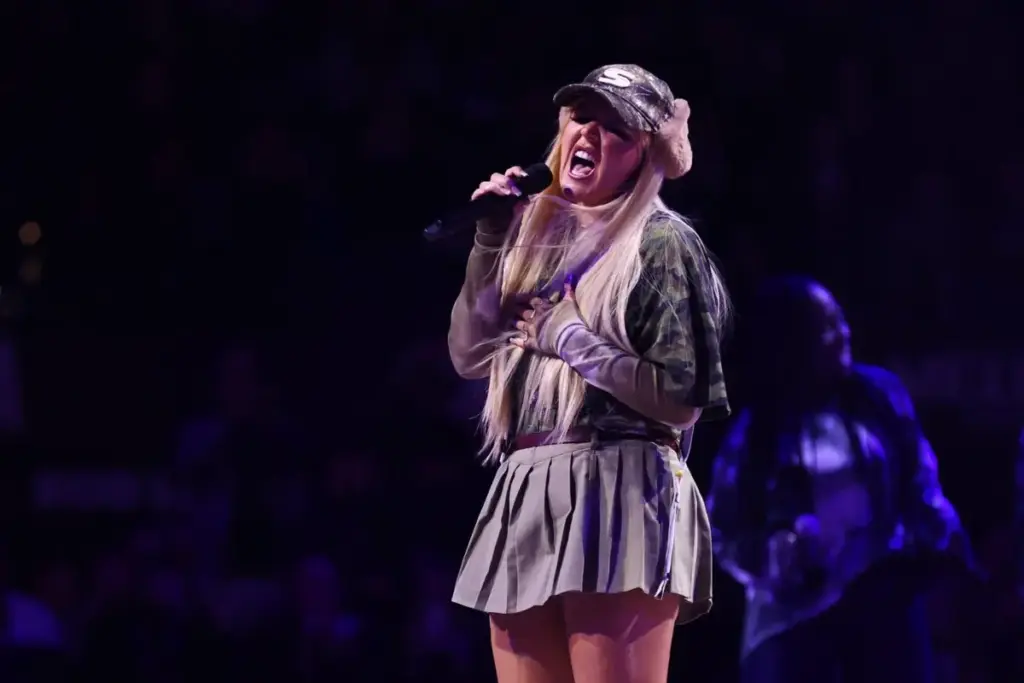
Toni Watson, universally known as Tones And I, had been heavily tipped by industry insiders to serve as the headline music act for the grand final scheduled for Sunday, October 4. However, according to an official statement released by her representatives at Lemon Tree Management and reviewed by Billboard, the initial approach arrived late in the game.
Management confirmed that the formal pitch to perform the pre-show was presented to Tones via her representation on September 5—barely a month out from game day. At the time of the approach, the multi-platinum singer-songwriter was already locked into a strict itinerary of international touring commitments alongside American hip-hop artist Macklemore.
Despite exploring every available logistical avenue to bridge the scheduling gap, the singer’s team ultimately rejected the proposal. Crucially, representatives for the artist emphasized that "nothing was signed or confirmed in writing."
"Due to the last-minute nature and prior commitments by Tones, we were unable to accept the offer," Lemon Tree Management stated, extending well wishes to the league for the upcoming fixture.
However, external reporting has complicated this narrative. According to investigative coverage by The Sydney Morning Herald, sources close to the negotiations suggested that the breakdown was not merely a matter of calendar conflicts. Tensions reportedly flared over the NRL’s insistence that the singer perform her ubiquitous 2019 global mega-hit, "Dance Monkey."
Throughout her career, Watson has maintained a complex, often ambivalent relationship with the track that catapulted her to international superstardom. Her well-documented reluctance to lean exclusively on the song created an impasse that, combined with the impossible turnaround time, sealed the fate of the grand final entertainment slot.

Detailed Chronology: How the Grand Final Entertainment Disintegrated
To fully understand how one of Australia’s premier sporting events lost its signature musical backdrop, one must trace the rapid sequence of events that unfolded behind closed doors throughout September 2026.
- Early September (The Approach): Following months of speculative lists circulating through Australian media regarding potential grand final acts, the ARLC authorized a formal pitch to Tones And I. The offer landed on the desk of Lemon Tree Management on September 5, initiating a frantic round of internal scheduling reviews.
- Mid-September (The Logistical Wall): Tones And I’s team immediately evaluated the feasibility of inserting a high-stakes, cross-continental stadium performance into an already demanding North American tour schedule alongside Macklemore. Simultaneously, preliminary discussions reportedly hit structural roadblocks concerning the creative setlist—specifically the inclusion and mandatory performance of "Dance Monkey."
- Late September (The Collapse and Pivot): Realizing that a satisfactory compromise could not be reached without compromising international commitments and artistic boundaries, Tones And I formally declined the offer. Rather than panicking or initiating a desperate talent hunt for a B-list replacement, ARLC Chair Peter V’landys and league executives pivoted to an unprecedented alternative: cancellation and philanthropic reallocation.
- September 23 (Public Disclosure): The Australian Broadcasting Corporation (ABC) broke the news that the grand final would feature zero entertainment. V’landys publicly unveiled the decision to redirect the A$1 million budget directly into grassroots junior sports, effectively drawing a line under the era of blockbuster pre-match pop concerts.
Supporting Context & Metrics: The Economics of Spectacle vs. Grassroots
The financial mechanics driving the NRL’s pivot offer a fascinating glimpse into the shifting priorities of modern sports administration. For decades, sporting codes globally have treated pre-match entertainment as a non-negotiable expense—a line item designed to capture mainstream media headlines, appease broadcast partners, and draw casual viewers to the screens early.
However, the cost-benefit analysis has undergone a dramatic transformation. Speaking candidly to the Australian Broadcasting Corporation, Peter V’landys laid bare the raw economics of the decision.
+-------------------------------------------------------------------------+
|                  NRL GRAND FINAL BUDGET REALLOCATION                    |
+-----------------------------------+-------------------------------------+
| Traditional Entertainment Budget  | ~A$1,000,000                        |
| Performance Duration              | 11 Minutes                          |
| Proposed Alternative Use          | Grassroots Junior Rugby League      |
| Targeted Beneficiaries            | 20,000 Underprivileged Children     |
+-----------------------------------+-------------------------------------+
"I’d prefer to see 20,000 underprivileged kids who can’t afford to play rugby league play rugby league, rather than spend a million dollars on 11 minutes of a musical performance," V’landys remarked.
The ARLC chair emphasized that his skepticism regarding grand final entertainment is not a sudden reactionary impulse, noting that he had been toying with the concept for several years. The league’s calculus is straightforward: the product on the pitch is strong enough to command absolute attention without requiring artificial sweeteners.
"Our game sells itself," V’landys asserted. "People come to watch rugby league. They don’t come to watch a pop concert."
This philosophy breaks sharply with a rich, decades-long tradition of grand final pageantry. The NRL and its predecessor, the New South Wales Rugby League (NSWRFL), have a storied history of iconic musical moments. From Tina Turner’s legendary "Simply the Best" campaigns that revitalized the sport in the late 1980s and 1990s, to Billy Idol’s unforgettable power-cut appearance, through to modern heavyweights like The Kid LAROI and Teddy Swims—who performed at the 2025 showcase—the grand final stage has been a coveted platform for top-tier global talent. Teddy Swims may now permanently stand as the final artist of that historic lineage.
Official Statements & Industry Fallout
The fallout from the canceled performance has triggered widespread debate across the Australian entertainment and sports landscapes, amplified by the unique positioning of the artists involved.
While negotiations with the NRL fell flat, Tones And I remains an artistic powerhouse. Her ties to American rapper Macklemore—whom she has frequently described as her favorite artist—have deepened in recent years. Following their 2022 collaboration on the single "Chant," the two artists have shared deep creative and professional alignment.
Macklemore himself has experienced an unexpected shift in his touring availability. The Seattle-born rapper recently made headlines following a widely publicized, early exit from Ed Sheeran’s massive Loop tour of the United States. That departure followed intense public scrutiny and controversy surrounding Macklemore’s onstage "Free Palestine" remarks, leaving him with an open calendar and reinforcing his alliance with independent-minded artists like Watson.

Meanwhile, the music community has been quick to contextualize Tones And I’s hesitation around her breakout hit. "Dance Monkey" remains a monumental commercial juggernaut, having held the all-time record for the longest-running No. 1 single on the ARIA charts at a staggering 24 weeks. It also smashed records in the United Kingdom, reigning supreme for 11 weeks—the longest run ever recorded for a solo female artist—while cracking the top 5 of the U.S. Billboard Hot 100 and dominating charts across roughly 30 global territories.
Despite this historic success, Watson has never hidden her complicated emotional attachment to the track. In a candid 2022 interview on Australian commercial radio, she admitted, "A lot of time, I don’t want to sing it."
Her ambivalence has not stopped her from deploying the track selectively for high-profile global stages, including prominent New Year’s Eve performances at Times Square heading into 2026, and Sydney’s New Year’s celebrations in 2022. However, the prospect of rolling out the global anthem under tight constraints and last-minute pressure for an Australian football grand final ultimately proved unpalatable.
Despite the breakdown in talks, ARLC Chair V’landys was quick to defuse any lingering hostility, expressing genuine admiration for the artist.
"I’m a fan of Tones And I," V’landys stated. "She is a great performer, no doubt about that, and she’s got some great songs, but as I said, we both decided to go to a different direction."
Future Outlook: A New Era for Australian Sporting Culture
The decision by the NRL to forgo grand final entertainment entirely in 2026 sets a fascinating precedent that sports administrators across the globe will be watching closely. In an era where sports leagues increasingly lean into multi-media entertainment conglomerates, Super Bowl-style halftime shows, and high-budget spectacles, the NRL is intentionally rowing against the current.
By pivoting capital away from transient, high-cost musical performances and pouring it directly into community infrastructure and youth participation, the league is playing a long game. The move successfully converts a logistical failure and public relations hurdle into a massive corporate social responsibility win, projecting an image of fiscal responsibility and grassroots dedication.
Whether this marks a permanent death knell for grand final concerts or merely a one-off hiatus remains to be seen. V’landys acknowledged that the league evaluates entertainment options over multi-year cycles, leaving the door mathematically ajar for future revivals. Yet, the underlying message is crystal clear: the game of rugby league is placing its absolute faith in the athletes on the field.
As Accor Stadium prepares to host the 2026 grand final, the roar of the crowd will be fueled entirely by the fierce collision of elite athleticism and premiership glory—proven proof that, at least for Australian rugby league, the game truly does sell itself.