Executive Overview
In the sprawling, often opaque landscape of modern investigative journalism, few storytellers manage to bridge the gap between high-stakes geopolitics and raw, intimate human tragedy quite like Josh Baker. Best known for his hard-hitting investigative work for the BBC—including his critically acclaimed I’m Not a Monster podcast series—Baker has built a career by embedding himself within the fractures of the modern Middle East, peeling back layers of official obfuscation, espionage, and state-sanctioned violence.
His latest journalistic pursuit centers on one of the most haunting unresolved mysteries of the 21st century: the disappearance of Austin Tice, a US Marine veteran turned freelance foreign correspondent who vanished in Syria in August 2012. What began as an investigative mission to find a missing person rapidly unspooled into something resembling a classic spy thriller. Yet, as Baker discovered, the narrative is deeply intertwined with the grim realities of the Syrian civil war, American exceptionalism, and an industrial complex of state-sponsored disappearance and torture.
This article examines Baker’s harrowing professional trajectory—from his early days as a night editor to surviving a devastating ISIS suicide car bombing in Mosul—and explores how his investigative tradecraft uncovered classified intelligence failures, Canadian intelligence operations regarding runaway schoolgirls like Shamima Begum, and unprecedented leaks concerning Tice’s fate. Through deep narrative audio journalism, Baker and his contemporaries are redefining how complex, long-form international crises are communicated to an audience fatigued by traditional, rapid-fire news cycles.
Detailed Chronology: From the Newsroom to the Rubble of Mosul
To understand the tenacity required to investigate international intelligence failures and missing journalists, one must look closely at the evolution of Josh Baker himself. Now 37, Baker’s entry into foreign reporting was forged in the crucible of some of the most volatile conflict zones of the past two decades.
The Early Years and the Reality of Modern Conflict
Baker’s career began quietly as a night editor on the foreign desk of The Times, where he cut his teeth reporting on the Serbian refugee crisis and early geopolitical shifts across the Middle East. However, desk work could not contain his appetite for frontline reporting. By the mid-2010s, he was directing Battle for Iraq, a co-production for the Guardian and PBS, which required him to embed directly with Iraqi special forces.
During this period, the prevailing media narrative pushed by the coalition was straightforward: Western-backed forces were systematically dismantling the Islamic State (IS). Baker, however, found a starkly different reality on the ground.
Surviving the Mosul Bombing
While reporting from the center of Mosul during intense urban warfare, Baker’s team sought refuge in a local home as fighting raged outside. Late into the night, incoming radio traffic warned of danger, accompanied by the distinct acoustic signature of gunfire—firepower that Baker immediately recognized as Western weaponry used by coalition forces, contrasting sharply with the sound profile of ISIS armaments.
What the team failed to hear in time was a massive, articulated lorry maneuvering down the narrow street, packed with explosives and deployed by ISIS as a mobile car bomb. As Baker later learned from drone footage captured and broadcast by ISIS itself, the vehicle detonated directly outside their safehouse. The resulting blast collapsed the building, burying Baker alive and fracturing his spine.
The Turning Point: The Raqqa Home Video
Evacuated back to England to undergo grueling physical recovery, Baker was contacted by an established confidential source—a relationship defined by mutual utility and conflicting agendas. This source presented Baker with a piece of media that would alter the trajectory of his career: a home video smuggled out of Raqqa, then the de facto capital of the Islamic State.

The video was not standard terrorist propaganda; it was domestic footage showing a young American boy named Matthew—the oldest son of an American woman named Sam, who had migrated into the IS caliphate with her children after her husband became a sniper—being forced to assemble a suicide bomb.
Despite recovering from a broken back and processing the psychological trauma of surviving a near-death explosion, Baker made a resolute promise: “I’m gonna find this kid.” Seven months later, defying the conventional odds of conflict-zone reporting, he tracked Matthew down.
Supporting Context & Metrics: The Anatomy of an Investigation
Baker’s subsequent work on the I’m Not a Monster series, which later expanded to cover Shamima Begum and, most recently, the disappearance of Austin Tice, relies on an intricate web of sources, intelligence leaks, and dogged fieldwork.
Deconstructing the ISIS Bride Phenomenon
The second season of Baker’s podcast, focusing on Shamima Begum—the London schoolgirl who fled to Syria in 2015 alongside her friends—was catalyzed by his earlier reporting on the Mosul bombing. A Dutch IS bride who had been in Mosul at the same time reached out to Baker via Twitter years later, revealing she was interned in the same refugee camp as Begum.
Baker was already intimately familiar with the roots of Begum’s story, having worked as an assistant producer on Welcome to the Mosque, which placed him inside the East London mosque on the exact day Begum and her peers vanished. Armed with new testimony from the Dutch source, Baker mapped out the harrowing realities faced by young women trapped in the caliphate: rampant deprivation, systemic violence, forced marriages, and constant mortal peril.
Uncovering Intelligence Operations in Turkey
Following an extensive research expedition to Turkey, Baker uncovered a critical piece of the puzzle: the active role played by Canadian intelligence in smuggling Shamima Begum across the Syrian border. This revelation heavily reinforced arguments that Begum—groomed and manipulated as a minor—should be viewed primarily as a victim of terrorism rather than an unmitigated security threat.
Baker offers a pragmatic assessment of Western intelligence tradecraft:
"Had it been an action of British intelligence, I’d never have been able to prove it, because of the tradecraft. Whereas if you look at some of the American or Canadian, or even some European agencies, the tradecraft doesn’t seem to be there in the same way."
The Austin Tice Investigation: A World of Espionage
Transitioning to the case of Austin Tice, Baker encountered an intelligence ecosystem vastly different from anything he had previously navigated. Tice, a former US Marine and freelance journalist, disappeared at a checkpoint near Damascus in August 2012. If he remains alive, he holds the tragic distinction of being the second-longest detained journalist in global history.
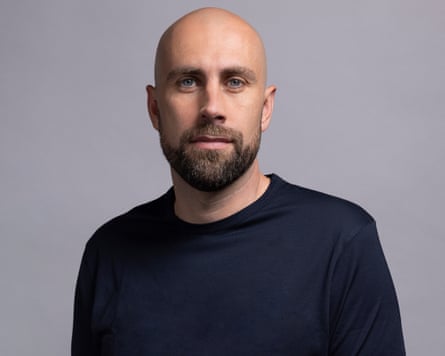
Baker notes the sheer volume of intelligence leaks surrounding the Tice case:
"A lot of my work for the last decade has involved intelligence and espionage and dealing with intelligence agencies, and I have never received so many leaks from so many different places as I have with Austin Tice—from every direction imaginable. It is absolutely extraordinary."
Unlike the bureaucratic opacity often encountered in London, where speaking to an "intelligence source" frequently amounts to chatting with a defensive press officer, Washington’s national security apparatus proved far more porous. In the political and diplomatic hubs of the US capital, journalists can cross paths with intelligence officers and law enforcement officials in social settings. However, Baker observes that the political climate under the Trump administration noticeably chilled this openness, making sources increasingly reticent to speak on record.
Official Statements and Institutional Responses
The investigations spearheaded by Baker and his BBC teams have consistently triggered profound institutional backlash, safety concerns, and ethical debates regarding foreign policy and national security.
The Backlash Over Shamima Begum
Following the release of the documentary series examining Shamima Begum’s radicalization and repatriation issues, Baker and his production team received numerous death threats. The project ignited a fierce national conversation in the United Kingdom regarding:
- National Identity: Who qualifies as genuinely British, and under what conditions can citizenship be revoked?
- State Transparency: The extent to which citizens can trust government agencies to act in accordance with international law and human rights standards.
- Counterterrorism Strategy: The efficacy of stripping citizenship from individuals like Begum. Security experts widely argue that abandoning citizens in foreign detention camps does little to enhance domestic safety, instead creating ungoverned breeding grounds for radicalization.
The Syrian State’s "Industrial Complex of Disappearance"
With the latest focus on Austin Tice, Baker’s reporting goes beyond a standard missing-person search, serving as an indictment of the Assad regime’s systematic human rights abuses. Conservatively, over 100,000 individuals have been forcibly disappeared within the dark network of Syrian detention facilities over the course of the 14-year civil war.
Baker’s reporting navigates these grim archives:
"Through Austin’s story, we also learn a lot about the last 14 years of the civil war in Syria. We really go inside the regime’s industrial complex of disappearance and torture. As episode two begins, Assad is gone, and we enter into these facilities."
For Baker, the hunt for the individuals who possess actionable intelligence regarding Tice’s whereabouts converges directly with the pursuit of accountability for war crimes committed by the Syrian state.

Future Outlook: The Human Cost of Narrative Journalism
As the landscape of global journalism shifts away from traditional, ad-driven breaking news toward immersive, narrative-driven investigative audio and documentary formats, practitioners like Josh Baker are charting a new path forward.
Baker admits that his departure from traditional day-to-day reporting was driven by exhaustion with compressing profoundly complex human suffering into detached, matter-of-fact news bites. Narrative investigative journalism affords him the essential luxury of time—allowing listeners to slow down, engage with deep historical context, and cultivate genuine empathy for the victims caught in the machinery of geopolitics.
Reflecting on his motivation for diving into the harrowing abyss of the Austin Tice investigation, Baker notes that his primary connection was not necessarily an identification with Tice himself as a frontline war reporter, but rather a deep resonance with Tice’s mother, Debra Tice. Watching her wage a tireless, decades-long campaign for answers from a single-parent household, Baker saw a reflection of his own familial bonds:
"I remember seeing her do a press conference, nine or 10 years into his disappearance, and thinking about my own mum. I’m from a single-parent household—we’re very close. I just thought, ‘Jesus Christ, what an awful existence to have.’"
What Lies Ahead for the Tice Investigation?
While Baker believes his extensive fieldwork and unprecedented access to intelligence leaks have yielded a remarkably clear picture of what likely transpired during the fateful days surrounding Austin Tice’s disappearance in 2012, definitive public closure remains elusive. Whether official state actors will ever release conclusive proof, or whether the complex geopolitical shifts in Syria will finally force open the regime’s long-sealed archives, remains one of the defining questions for international journalists operating in the post-Assad era.
Ultimately, Baker’s work stands as a testament to the enduring power of investigative persistence. By refusing to let forgotten souls fade into the background noise of protracted foreign conflicts, audio journalism of this caliber acts not only as a record of historical atrocities, but as a persistent demand for accountability from the corridors of Washington to the detention cells of Damascus.