Executive Overview
In an era dominated by high-intensity fitness trends, the pursuit of a strong core has long been associated with endless sets of speed-driven crunches and frantic abdominal finishers. However, leading fitness professionals and movement specialists are pushing back against the "more is better" mantra. According to certified Pilates instructor, master trainer, and movement specialist Brittni Johnson, true core stability has very little to do with how many repetitions you can churn out and everything to do with how effectively you can command your body under load.
True abdominal strength, Johnson argues, demands discipline—the specific, deliberate discipline to perform each movement with unyielding control and exemplary form. This philosophy forms the bedrock of Pilates-style core conditioning, a training modality that prioritizes intentional pacing, breath awareness, and spinal alignment over raw speed and high-volume fatigue.
By targeting the abdominals, obliques, and deep stabilizing musculature from multiple geometric planes, a properly executed Pilates routine trains the body to function efficiently both on and off the mat. This in-depth report explores Johnson’s authoritative five-move core sequence, analyzes the biomechanics behind each exercise, and outlines how practitioners of all fitness levels can cultivate functional, injury-resilient core strength.
Detailed Chronology & Pedagogical Evolution of Pilates Core Training
The evolution of core training has undergone a dramatic paradigm shift over the past two decades. For years, conventional wisdom dictated that abdominal strength was best achieved through dynamic, high-flexion movements like standard sit-ups. However, advancements in biomechanical research and sports science have revealed that the primary function of the human core is not actually spinal flexion, but rather anti-movement—resisting unwanted rotation, extension, and lateral flexion to protect the spine.
This realization has brought historical movement philosophies back into the modern spotlight, most notably the work of Joseph Pilates. Developed in the early 20th century, the "Contrology" method was explicitly designed to stretch, strengthen, and balance the body through a deep connection between the mind and physical form.
The Shift from Volume to Precision
When Johnson transitioned into elite fitness coaching and curriculum development for major platforms like the BetterMe health coaching app, she observed a recurring issue among trainees: exercisers routinely sacrifice form for the psychological satisfaction of completing higher rep counts.
"Your core keeps you steady while your arms and legs move," Johnson explains. "When I think about a strong core, I think about how well you can control your body, not how many crunches you can do."
This pedagogical philosophy emphasizes moving slowly and with intention. Rather than rushing through repetitions to induce a localized burning sensation, practitioners are taught to synchronize their movements with controlled breathing patterns. This approach engages the transverse abdominis—the deepest layer of the abdominal wall that acts as a natural weightlifting belt—ensuring that stability is prioritized from the inside out.
Supporting Context & Metrics: The Biomechanics of Functional Stability
To understand the efficacy of Johnson’s routine, one must examine the biomechanics of spinal support. The core musculature is an intricate cylinder comprised of the diaphragm at the top, the pelvic floor at the base, the multifidus and erector spinae in the back, and the transversus abdominis, obliques, and rectus abdominis wrapping around the front and sides.
When performing dynamic movements, the core must act as a central powerhouse, transferring force seamlessly between the upper and lower extremities. If stability fails, compensation patterns inevitably occur, frequently resulting in lower back hyperextension, anterior pelvic tilt, or rib flaring.
Quantitative Guidelines for Optimal Training
Johnson’s protocol is designed to eliminate these compensatory habits by offering clear structural parameters:
- Repetition Range: 8 to 12 controlled repetitions per exercise.
- Time-Based Alternative: 30 to 45 seconds per movement (particularly effective for individuals prone to rushing).
- Volume: 2 complete rounds per session.
- Equipment Versatility: Performed entirely using bodyweight, with the option to introduce a lightweight Pilates ring to intensify neuromuscular feedback without adding joint impact.
Official Expert Breakdown: Brittni Johnson’s Five-Move Core Routine
To bring this philosophy into practice, Johnson has curated a foundational five-exercise sequence. Each movement is specifically selected to challenge the core from a different mechanical perspective.
1. The Hundred
- Primary Focus: Isumetric endurance and breath synchronization.
- Execution & Expert Guidance: "The hundred is a great way to start because the sustained position asks your abdominals to stabilize your trunk while your arms and breathing add another layer of demand," Johnson notes.
- Modifications: To prevent unwanted strain, practitioners should monitor their lower back. "If you feel your lower back arching, keep your feet on the floor or bring your knees closer toward your chest."
2. Single-Leg Stretch
- Primary Focus: Pelvic stability during unilateral limb movement.
- Execution & Expert Guidance: "The challenge is keeping your pelvis and torso quiet as the legs move," Johnson explains. Trainees must focus on maintaining a constant, unchanging spatial relationship between their rib cage and pelvis throughout every repetition.
- Progression: The difficulty scales dynamically based on limb placement. "The farther and lower the extended leg travels from your body, the greater the demand on your abs, so beginners can keep the leg higher."
3. Dead Bug
- Primary Focus: Anti-extension strength and lumbar protection.
- Execution & Expert Guidance: "This is a simple but very effective way to train the core to resist extension," says Johnson. The core objective is to move opposing limbs smoothly without allowing the ribs to flare or the lower back to arch excessively off the mat.
- Form Priority: Emphasizing quality over range of motion, Johnson notes: "I would rather see someone use a smaller range with excellent control than reach all the way to the floor and lose their alignment."
4. Seated Saw
- Primary Focus: Thoracic mobility and rotational control.
- Execution & Expert Guidance: "The saw adds controlled rotation, which is an important part of a complete core routine," Johnson states. This movement challenges the internal and external obliques while mobilizing the thoracic spine and rib cage.
- Alignment Cue: Trainees must anchor their lower body firmly. "Keep both sides of the pelvis grounded so the rotation comes through the trunk rather than simply shifting the hips."
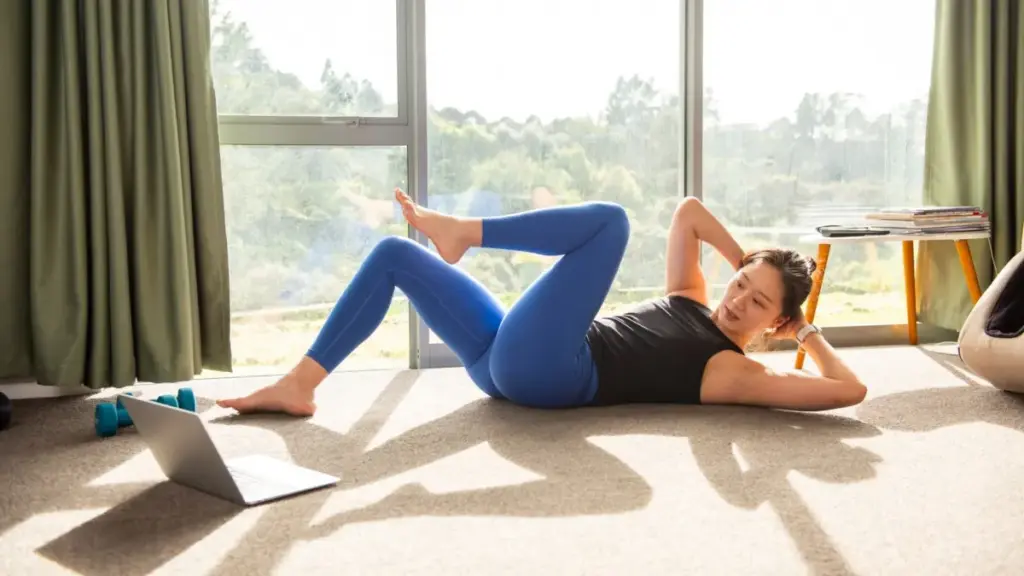
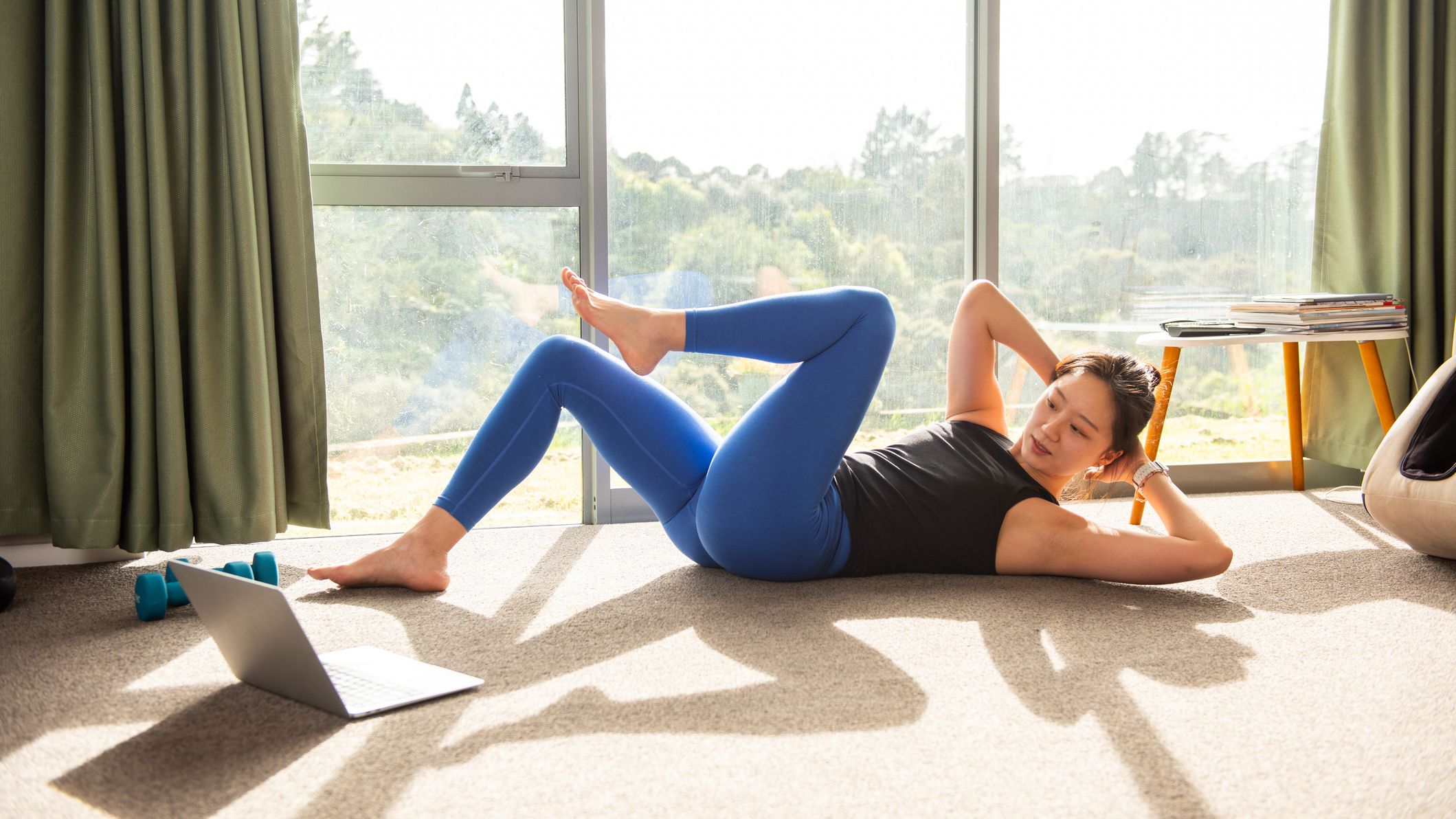
5. Criss-Cross
- Primary Focus: Oblique endurance and complex rotational stabilization.
- Execution & Expert Guidance: "Criss-Cross targets the obliques while asking the deeper core muscles to stabilize the pelvis as your legs move," explains Johnson.
- Common Pitfall Avoidance: True engagement comes from internal twisting rather than superficial arm movement. "The key is to create the rotation through your torso, not by pulling your elbow across your body. Keep your pelvis as still as possible and think about rotating your ribs around a stable center."
Future Outlook: The Evolution of Intelligent Fitness
As the wellness industry continues to mature, the pendulum is swinging firmly away from mindless exhaustion and toward intelligent, movement-based longevity. The widespread adoption of low-impact, high-control disciplines like Pilates signals a broader cultural appreciation for joint health, injury prevention, and functional longevity.
Experts predict that future fitness programming will increasingly integrate somatic awareness—teaching everyday exercisers how to listen to biofeedback signals such as rib flaring or lower back discomfort as immediate indicators to adjust their training intensity.
Ultimately, Brittni Johnson’s methodology serves as a timely reminder that the most productive workouts are not those that leave you depleted, but those that leave you integrated. By prioritizing form over volume, practitioners can build a resilient, adaptable core that serves them reliably far beyond the boundaries of the exercise mat.
About the Expert
Brittni Johnson is a Nationally Certified Pilates Teacher (NCPT) and Club Pilates (CP) Master Trainer boasting over 15 years of professional experience across performance, education, and high-level coaching. With a rich background in competitive gymnastics and professional dance, she earned a Bachelor of Arts in Dance Science from California State University. Today, Johnson applies her extensive biomechanical expertise to global fitness platforms, designing accessible, science-backed Pilates conditioning programs for the BetterMe: Health Coaching application.