Executive Overview
For decades, the hospitality industry viewed wellness as a defensive amenity—a necessary checkbox satisfied by a damp basement gym, a cramped sauna, and a standard-issue spa menu offering basic massages and facials. Today, that paradigm has fundamentally shifted. Driven by shifting consumer expectations where self-care, biohacking, and physical longevity are treated as absolute lifestyle non-negotiables, high-end hotel groups are no longer just renting rooms; they are curating totalizing wellness ecosystems.
At the forefront of this transformation is Proper Hospitality. Founded in 2015 by Brad Korzen, Alex Samek, and Brian De Lowe—with interior design heavily influenced by brand partner and co-owner Kelly Wearstler—the lifestyle hotel group has systematically integrated high-performance wellness into the DNA of its properties. From converting underperforming guest rooms into hyper-profitable "recovery suites" outfitted with six-figure biohacking chambers to partnering with mainstream booking platforms like ClassPass, Proper is proving that modern wellness is not merely an operational cost center, but a powerhouse driver of Average Daily Rates (ADR), local memberships, and brand loyalty.
This report explores the mechanics of Proper Hospitality’s sweeping wellness expansion, the broader operational trends redefining luxury travel, and the explosive growth of the global biohacking market.
Detailed Chronology of an Operational Evolution
The journey of Proper Hospitality from a design-forward boutique hotel brand to an immersive wellness destination reflects a deliberate, multi-year strategic roadmap.
2015–2019: Laying the Foundation
Proper Hospitality was established in 2015 with a clear vision: to create design-driven hotels that reflected the distinct cultural pulses of their local neighborhoods. When the brand opened its flagship property, the Proper Hotel Santa Monica, in 2019, it immediately signaled its intent regarding health and wellness. The hotel launched with an exclusive partnership with Surya Spa, an elite, celebrity-favored destination rooted in Ayurvedic holistic wellness.
Rather than treating wellness as an isolated spa experience, the brand sought to weave holistic health into the physical infrastructure of the property. This foundational bet laid the groundwork for what would soon become a massive portfolio expansion spanning Austin, Downtown Los Angeles, San Francisco, Miami (with The Shelborne by Proper), and a collection of independent properties under "The Collective."
Post-Pandemic Scaling: The "Recovery Suite" Pivot
As travel rebounded globally following the pandemic, consumer attitudes toward health underwent a permanent psychological shift. Recognizing that wellness was no longer a vacation indulgence but a daily lifestyle requirement, Proper began testing the upper limits of its wellness ambitions at its Santa Monica and Austin locations.
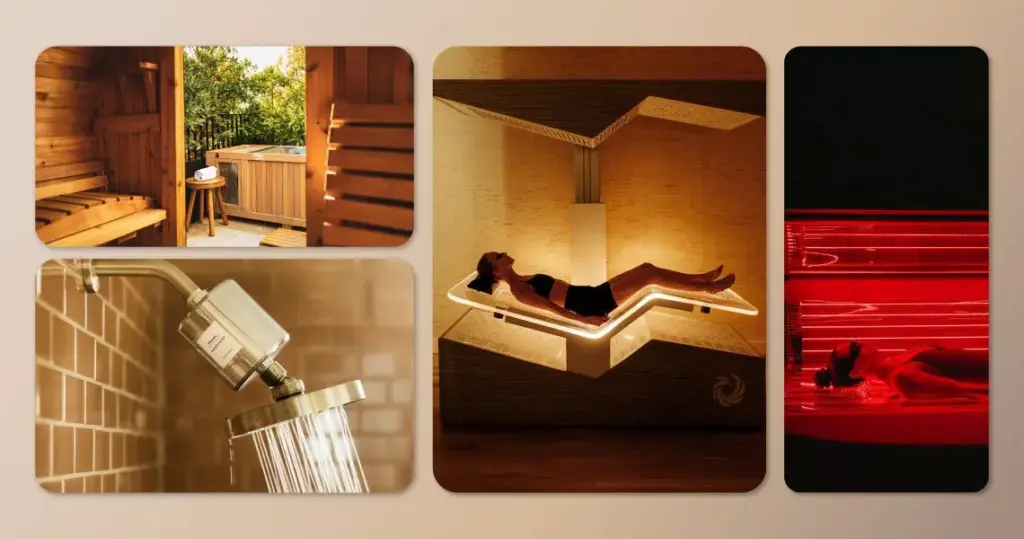
In a bold operational move, the company began retrofitting traditional hotel rooms into state-of-the-art "recovery suites." These rooms were stripped of conventional furniture and outfitted with advanced recovery modalities, including saunas, cold plunges, red-light therapy beds, full-body compression systems by Hyperice, and even access to the ultra-exclusive, $159,000 Ammortal Chamber.
The financial rationale behind this pivot proved immediate and striking. By pricing these sessions by the hour for hotel guests, members, and locals—ranging from $65 to $195 per hour—the converted spaces quickly outperformed traditional room bookings. "We converted existing hotel room spaces, and they’re more profitable as recovery rooms than they were as hotel rooms," notes Brian De Lowe, president and co-founder of Proper Hospitality.
Summer ClassPass Integration and Ecosystem Expansion
To maximize utilization and capture local demand, Proper executed a strategic partnership with ClassPass (owned by Mindbody) ahead of the summer season. By listing its recovery sessions and wellness programming on the digital booking platform, Proper tapped into a pre-existing funnel of local health enthusiasts.
This move dovetailed with ClassPass’s ongoing aggressive expansion into beauty, self-care, and lifestyle experiences. For Proper, ClassPass users served as a frictionless bridge to deeper customer acquisition, successfully funneling casual visitors into long-term, high-value local members.
Supporting Context & Metrics: The Macro Wellness Wave
Proper’s pivot is emblematic of a broader structural shift occurring across the hospitality, aviation, and retail sectors. As consumers demand frictionless wellness access wherever they go, ancillary industries are rushing to adapt.
The Hospitality Industry Responds
Proper is not alone in recognizing the revenue potential of experiential wellness. Across the hospitality sector, legacy brands and independent operators alike are weaponizing their square footage:
- Hilton: The hospitality giant recently expanded its strategic partnership with ResortPass, allowing hotels and resorts to monetize underutilized pools, fitness centers, and spa amenities by selling day passes to local non-guests.
- Fiji Airways: Demonstrating that wellness travel now extends far beyond the hotel lobby, the airline has integrated an extensive in-flight and in-lounge wellness program featuring red-light therapy devices, wearable technology integration, and specialized nutritional wellness shots.
The Biohacking Market Explosion
Underpinning this consumer behavior is a massive financial engine. According to consumer research firm Research and Markets, the global biohacking market—which encompasses wearable tech, advanced health diagnostic kits, specialized supplements, and mobile health subscriptions—is projected to skyrocket to $131.5 billion by 2035, up from $28.2 billion.
Driven by an aggressive cultural shift toward preventive healthcare and optimized longevity, market leaders spanning this ecosystem include tech giants like Alphabet, health innovators like 23andMe, Oura Health, WHOOP, and specialized diagnostic platforms like Viome Life Science and Thorne HealthTech.
Official Statements and Strategic Insights
The strategic intent behind Proper’s expansion was detailed directly to Glossy by key executive leadership, shedding light on how modern lifestyle brands cultivate community and profitability simultaneously.
Redefining the Hospitality Experience
According to Brian De Lowe, wellness has transcended its status as a mere amenity to become the core filter through which the entire brand experience is designed.
"Wellness has moved from being a component of Proper to an important part of the entire experience," Brian De Lowe, President and Co-founder, Proper Hospitality told Glossy. "We think of wellness within our hotels as how you sleep, move, eat, recover, connect with people, and feel inspired and energized."
De Lowe emphasizes that the return on investment extends far beyond direct session fees. The "halo lift"—though difficult to quantify on a traditional balance sheet—manifests in tangible ways: higher average daily rates (ADR) driven by travelers seeking out health-forward accommodations, increased brand advocacy, and a fiercely loyal customer base.
Building the Local Funnel
Jamie Mark, Senior Vice President of Memberships and Partnerships at Proper Hospitality, highlighted the deliberate strategy of bridging the gap between hotel guests and local residents.
"[ClassPass is] a great funnel for membership," Jamie Mark, SVP of Memberships and Partnerships, Proper Hospitality explained to Glossy. "We started to make the [recovery rooms] available to the general public because these were the same people that were eating in our restaurants, and we realized what a great opportunity that was to introduce more people to the Proper ecosystem."
To capture this local devotion, Proper established tier-based annual memberships. In Santa Monica, annual memberships run $6,500 (alongside a $1,500 individual or $2,500 couple initiation fee), while Austin memberships are priced at $5,500. These packages grant locals unrestricted access to facilities, complementary exercise classes, and exclusive community events, anchoring the hotel as a social and physical sanctuary within the city.
The Three-Bucket Consumer Framework
De Lowe categorizes Proper’s surging customer base into three distinct psychological segments:
- Local Members: Residents who utilize the facilities regularly without booking overnight rooms.
- Habituated Travelers: Sophisticated guests who maintain rigorous wellness routines at home and expect those exact modalities to be available while traveling.
- The "Wellness Curious": Travelers who may not practice biohacking at home, but who experiment with the hotel’s offerings and return home inspired to integrate healthy habits into their daily lives.
Future Outlook: Scaling the Ecosystem
Building on the proven success of its Santa Monica and Austin blueprints, Proper Hospitality is setting its sights on aggressive domestic expansion. The executive team is currently mapping out development pipelines in Dallas, Texas and Lake Tahoe, California.
In these upcoming properties, wellness will not be introduced as an afterthought or a modular upgrade; it will command a massive physical footprint from the ground up. By blending entrepreneurial agility with institutional scale, Proper is positioning itself to capture an increasingly lucrative demographic: travelers and locals for whom health optimization is no longer a luxury, but a way of life.
"Proper is in this position where we’re entrepreneurial enough to be early in some of these partnerships," De Lowe concluded, "but we have enough scale as an organization to make a real impact."