Executive Overview
For millions of adults, the milestone of turning 30 brings subtle shifts in metabolism, recovery times, and energy levels. However, one of the most profound and overlooked transformations happening beneath the surface is structural. Long before visible signs of aging appear in the mirror, our musculoskeletal system begins a quiet, steady evolution. Discs lose hydration, bones gradually sacrifice density, and muscle mass begins a slow, progressive decline.
Combined with modern lifestyle habits—namely, the endless hours spent hunched over laptops, tablets, and smartphones—this physiological shift can trigger a slow descent into poor posture. While slouching is often dismissed as a harmless byproduct of desk work or a lack of mindfulness, physical therapists warn that structural alignment is the foundation of physical health. Once it begins to degrade, it can cascade into chronic back pain, reduced mobility, and diminished overall strength.
Fortunately, this trajectory is not inevitable. According to physical therapist Odalisse Figueroa of Spear Physical & Occupational Therapy, the physiological decline of our postural muscles and spinal integrity can be managed, halted, and even reversed. By implementing a targeted, science-backed exercise routine just three times a week, adults over 30 can actively rebuild the scaffolding of their back, pelvis, and upper body. This comprehensive guide explores the science of post-30 structural aging, breaks down the four essential movements needed to restore alignment, and offers professional advice on how to future-proof your body against the gravity of time.
Detailed Chronology: The Invisible Shift at Age 30
To understand why posture demands deliberate attention after the third decade of life, one must examine the biological clock of the human skeleton and muscular system. Human growth and development peak during our twenties, after which a natural, biological aging process begins. While this timeline varies based on genetics, nutrition, and activity levels, standard physiological milestones reveal a clear pattern of structural change.
The Third Decade: Peak and Turning Point
By the time an individual reaches their early thirties, bone mass reaches its absolute peak, known as peak bone mass. From this point forward, bone resorption (the breakdown of old bone tissue) begins to outpace bone formation. Simultaneously, sarcopenia—the age-related loss of muscle mass and function—begins its stealthy progression. Research indicates that adults can lose roughly 3% to 5% of their muscle mass per decade after turning 30, even if they maintain a relatively active lifestyle.
Spinal Compression and Intervertebral Discs
As we move through our thirties and into our forties, the spinal column undergoes significant micro-level transformations. The intervertebral discs—the gelatinous shock absorbers situated between our vertebrae—begin to lose their water content. This desiccation causes the discs to flatten and compress. When the spine loses its natural cushioning and structural integrity, the body’s ability to hold itself upright against gravity diminishes. Without strong supporting musculature, the spine naturally begins to flex forward, creating the classic "hump" or slouched posture associated with physical aging.

The Digital Era Accelerator
Compounding these natural biological processes is the modern work environment. The rise of remote work, mobile devices, and screen-heavy lifestyles has introduced a postural crisis. Hours spent in forward-head flexion—often referred to as "text neck"—place an immense mechanical load on the cervical spine and upper back. Over time, the pectoral muscles and hip flexors tighten, while the deep stabilizers of the core and the retractors of the upper back lengthen and weaken. This muscular imbalance creates a feedback loop: structural aging makes us more susceptible to poor posture, and poor posture accelerates structural wear and tear.
Supporting Context & Metrics: The Anatomy of Alignment
Reversing or preventing postural decline requires looking beyond simple aesthetics. Good posture is a dynamic mechanical state that involves the coordinated effort of the nervous system, skeletal framework, and muscular envelope.
The Cost of Poor Posture
When the body is properly aligned, gravity acts as a balanced force passing through the center of mass—from the ears, through the shoulders, hips, knees, and ankles. When posture fails, this mechanical efficiency is lost. For every inch the head moves forward from its neutral alignment, the perceived weight of the head on the cervical spine doubles. This forces the neck and upper back muscles to work overtime, leading to tension headaches, chronic myofascial pain, and accelerated degeneration of the cervical facets.
Furthermore, slumped postures compress the thoracic cavity, restricting lung capacity by up to 30%. This limits oxygen intake, which can lower energy levels, reduce cognitive focus, and diminish athletic performance. In the lower body, a forward-tilted pelvis and weak gluteal muscles shift pressure onto the lumbar spine, setting the stage for debilitating lower back injuries.
The Equipment and Prescription for Recovery
Rebuilding postural integrity does not require an expensive gym membership or complex weight machines. According to clinical guidelines provided by rehabilitation specialists, the ideal home-based postural reset requires only two accessible tools:
- A moderately heavy resistance band: Essential for challenging the upper back and shoulder retractors through functional planes of motion.
- An exercise mat: To provide joint protection and support during floor-based core and pelvic stabilization work.
The prescription is straightforward yet rigorous: a four-exercise circuit performed three times per week. Beginners are advised to start conservatively, building neuromuscular pathways and baseline endurance before scaling up intensity.
Official Statements & Expert Guidance
Odalisse Figueroa, a seasoned physical therapist at Spear Physical & Occupational Therapy with extensive expertise in outpatient orthopedics, sports injuries, and developmental conditions, emphasizes that posture is an active physical skill rather than a static pose.
"As we age, the discs in our spine lose water content, causing our spine to compress," Figueroa explains. "Bones also weaken, and muscle mass decreases by about 3 to 5% per decade starting at age 30. These changes can decrease our body’s ability to hold itself upright."
Rather than accepting these changes as an inevitable consequence of getting older, Figueroa advocates for proactive neuromuscular re-education. She points out that modern habits compound natural aging, making intentional strength training non-negotiable for anyone looking to preserve their mobility into their 40s, 50s, and beyond.
The Four-Move Postural Reset Workout
To combat spinal compression, strengthen the posterior chain, and restore pelvic neutrality, Figueroa has curated a specific four-move routine. Below is the comprehensive guide to executing each exercise safely and effectively for maximum clinical benefit.
Progression Strategy
- Phase 1 (Foundation): Perform 1 set of 10 repetitions for the pelvic tilts, bird dogs, and banded rows. Hold the side plank for 15 seconds per side. Complete this 3 times per week.
- Phase 2 (Development): Increase repetitions to 12–15 for dynamic movements and extend the side plank hold to 30 seconds.
- Phase 3 (Mastery): Progress to 2–3 full sets of each exercise, executed 3 times per week, maintaining strict form and deliberate muscular control.
1. The Pelvic Tilt
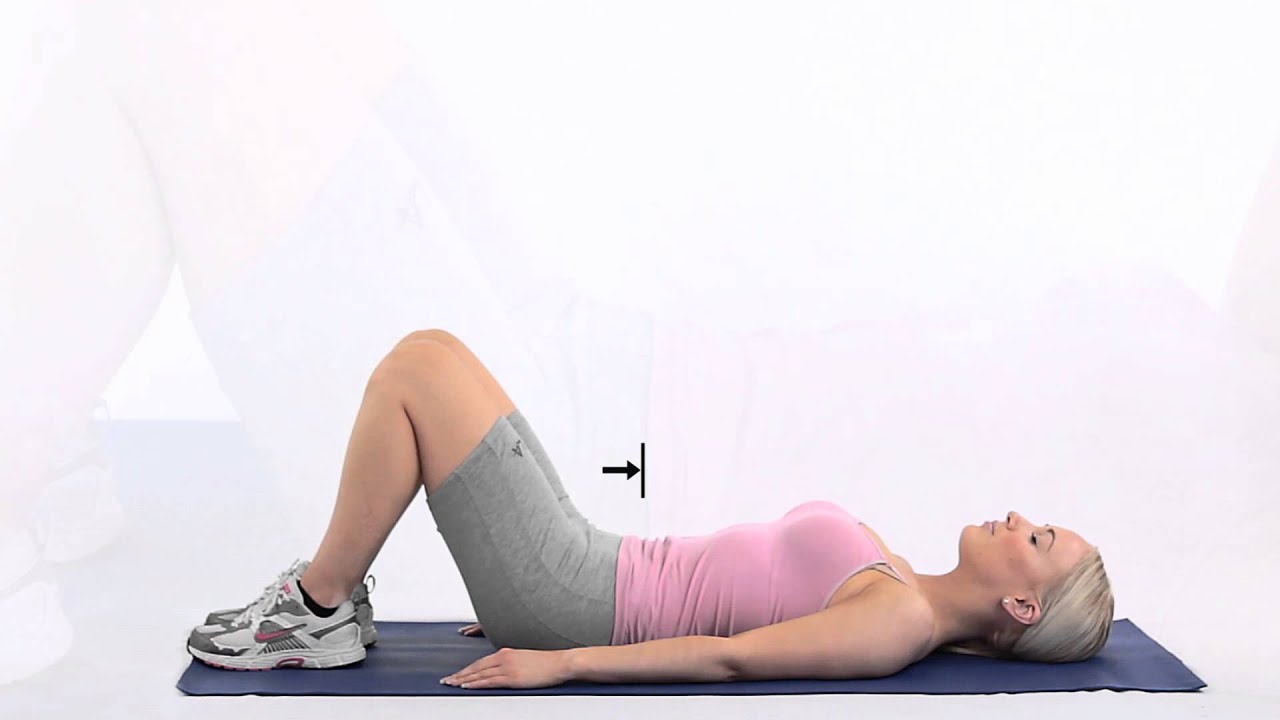
The pelvic tilt is a foundational core exercise designed to release tension in the lower back, engage the deep transverse abdominis, and correct an anterior pelvic tilt—a common postural flaw where the pelvis rolls forward, accentuating the lower back curve.
- Target Muscles: Transverse abdominis, glutes, lower abdominals, erector spinae.
- Prescription: 3 sets of 12–15 repetitions.
Step-by-Step Execution:
- Lie flat on your back on an exercise mat with your knees bent and your feet flat on the floor, hip-width apart. Keep your arms resting relaxed by your sides.
- Take a deep inhalation to prepare, allowing your abdomen to expand naturally.
- As you exhale, draw your navel in toward your spine and gently flatten the curve of your lower back, pressing it firmly down into the mat.
- Tilt your pelvis upward slightly by engaging your glutes and lower abdominals.
- Therapist Tip: "Think about pushing your spine down toward the floor, holding for a few seconds, and then returning to a neutral position," advises Figueroa. Avoid lifting your hips entirely off the ground; the movement should be subtle, controlled, and focused entirely on posterior pelvic rotation.
2. The Bird Dog
The bird dog is a premier functional movement that challenges spinal stability, core engagement, and cross-body coordination without placing vertical compressive loads on the spine.
- Target Muscles: Multifidus, erector spinae, rectus abdominis, gluteus maximus, deltoids.
- Prescription: 3 sets of 10–15 repetitions (alternating sides).
Step-by-Step Execution:
- Begin on your hands and knees in a tabletop position on the mat. Ensure your wrists are stacked directly beneath your shoulders and your knees are positioned under your hips.
- Keep your head in a neutral position, gazing down at the mat to maintain a straight line from the crown of your head to your tailbone.
- Before initiating movement, brace your core by drawing your belly button in toward your spine.
- Simultaneously extend your right arm straight forward and your left leg straight back, keeping both parallel to the floor.
- Pause for two seconds at full extension, then slowly lower both limbs back to the starting position and switch sides.
- Therapist Tip: "This is all about maintaining spinal alignment," notes Figueroa. "When extending the opposite arm and leg, try to prevent your hips from rotating or your back from arching."
3. The Banded Row
Desk work notoriously lengthens and weakens the muscles of the upper back while shortening the chest. The banded row directly counteracts this by targeting the scapular retractors, pulling the shoulders back into an aligned, proud posture.
- Target Muscles: Rhomboids, latissimus dorsi, rear deltoids, trapezius, biceps.
- Prescription: 3 sets of 10–15 repetitions.
Step-by-Step Execution:
- Sit or stand tall with your legs extended or slightly bent, and loop your resistance band securely around the arches of your feet. Hold one end of the band in each hand.
- Sit up with an upright spine, chest open, and shoulders relaxed down away from your ears.
- Initiate the pull by actively squeezing your shoulder blades together before bending your arms.
- Draw your elbows straight back past your torso, maintaining tension on the band.
- Slowly and with control, allow your arms to return to the starting position, resisting the pull of the band.
- Therapist Tip: "A lot of people pull from their biceps or shoulders, but before moving the arms, start by retracting your shoulder blades first," advises Figueroa. "Then, pull your elbows in toward your body as you continue to squeeze your shoulder blades together. For better muscle control, slowly release the band rather than letting it snap back into place."
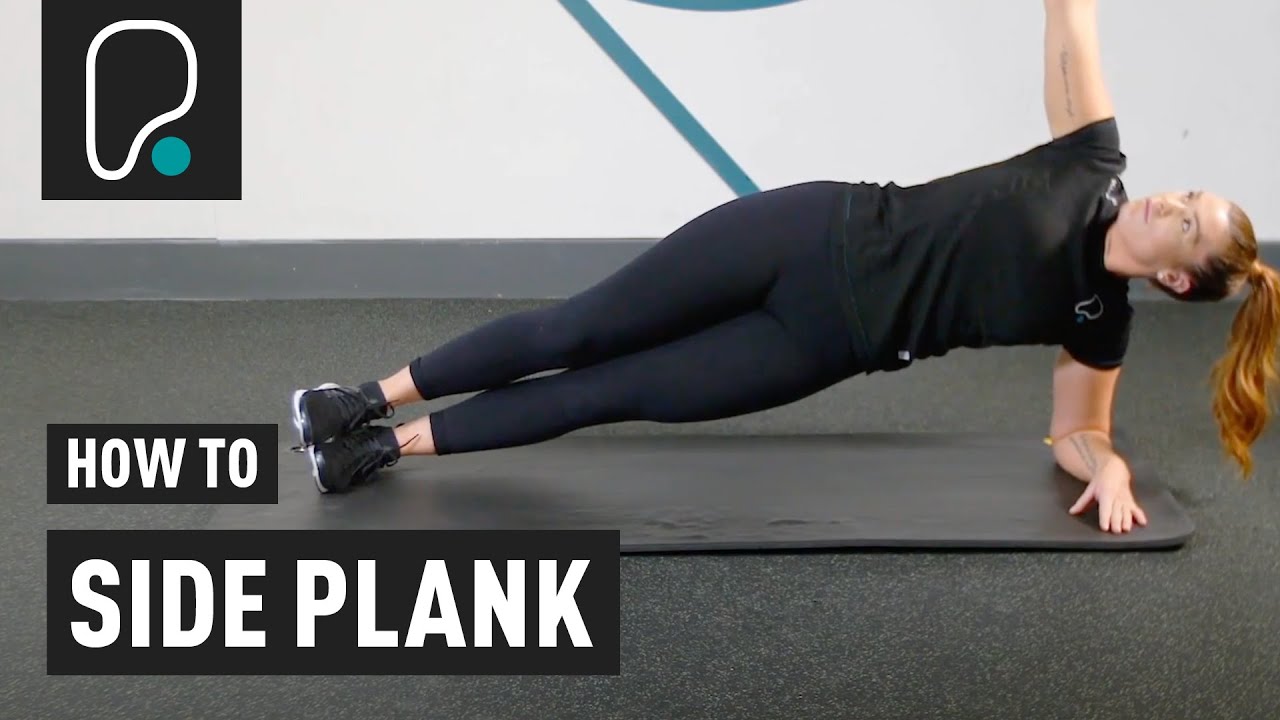
4. The Side Plank
Lateral core strength is frequently neglected in standard fitness routines, yet it is essential for preventing lateral spinal deflection and stabilizing the pelvis during everyday locomotion.
- Target Muscles: Obliques (internal and external), transverse abdominis, quadratus lumborum, gluteus medius.
- Prescription: 3 sets, holding for 15 to 30 seconds per side.
Step-by-Step Execution:
- Lie on your side on the mat with your legs stacked straight on top of one another.
- Prop your upper body up by placing your forearm directly beneath your shoulder, ensuring your elbow is positioned at a 90-degree angle.
- Engage your core and glutes, then lift your hips off the mat until your body forms a straight, diagonal line from your head to your heels.
- Hold this position while breathing steadily, preventing your hips from sagging toward the floor.
- Carefully lower your hips back to the mat, rest for a few seconds, and switch to the opposite side.
- Therapist Tip: "Position your elbow directly under your shoulder to protect the upper body," says Figueroa. "Maintain one straight line from your head to your feet, and avoid letting your hips sag. This can be modified by bending both knees and keeping your knees and feet down while lifting your hips off the ground."
Future Outlook: Building a Lifetime of Resilience
As medical science continues to emphasize healthspan—the number of years a person lives free from chronic disease and debilitating pain—the preservation of structural integrity emerges as a vital component of longevity. Accepting postural decline as an inevitable consequence of crossing the threshold into your thirties is no longer scientifically or clinically valid.
While the natural processes of spinal compression and muscular attrition will continue to challenge the aging body, they can be successfully counteracted with targeted intervention. By dedicating just a few minutes, three times a week, to exercises that reinforce spinal alignment, stabilize the core, and activate the posterior chain, adults can rewrite their physical trajectory.
Investing in your posture today is an investment in your independence, mobility, and confidence tomorrow. As Odalisse Figueroa and physical therapists worldwide demonstrate, it is never too late to stand tall against the test of time.