Pop culture history has officially entered a new epoch. Nearly two decades after redefining electronic dance music and club culture with Confessions on a Dance Floor, the undisputed Queen of Pop, Madonna, has returned with its spiritual and sonic successor, Confessions II. Released under a shroud of meticulous conceptual rollouts, cultural anticipation, and fierce speculation, the album arrives as her most vital, cohesive, and creatively fearless output since the mid-2000s.
For the past twenty years, even the most devoted stans have wrestled with a collective form of Stockholm Syndrome regarding Madonnadom. Following the paradigm-shifting success of Confessions in 2005, the icon’s subsequent era—beginning with 2008’s Hard Candy—found her frequently chasing the surrounding musical zeitgeist rather than authoring it. Industry structural changes, label politics, the streaming revolution, and the transformation of underground dance floors into surveillance-state minefields via smartphones all conspired to push the defining architect of modern pop onto the defensive.
Confessions II dismantles that two-decade-long artistic slumber. Rather than functioning as a literal narrative sequel, the album acts as a state-of-the-union address for the post-lockdown dance floor. It is deeply fixated on themes of surveillance, the agonizing desire for anonymity, the power of a theatrical veil, and the construction of new personas. Above all, the record is unashamedly, brilliantly about Madonna. It weaves a complex tapestry of self-mythology, dealing in everything from familial reconciliations and motherhood to the lingering ghosts of pop stardom.
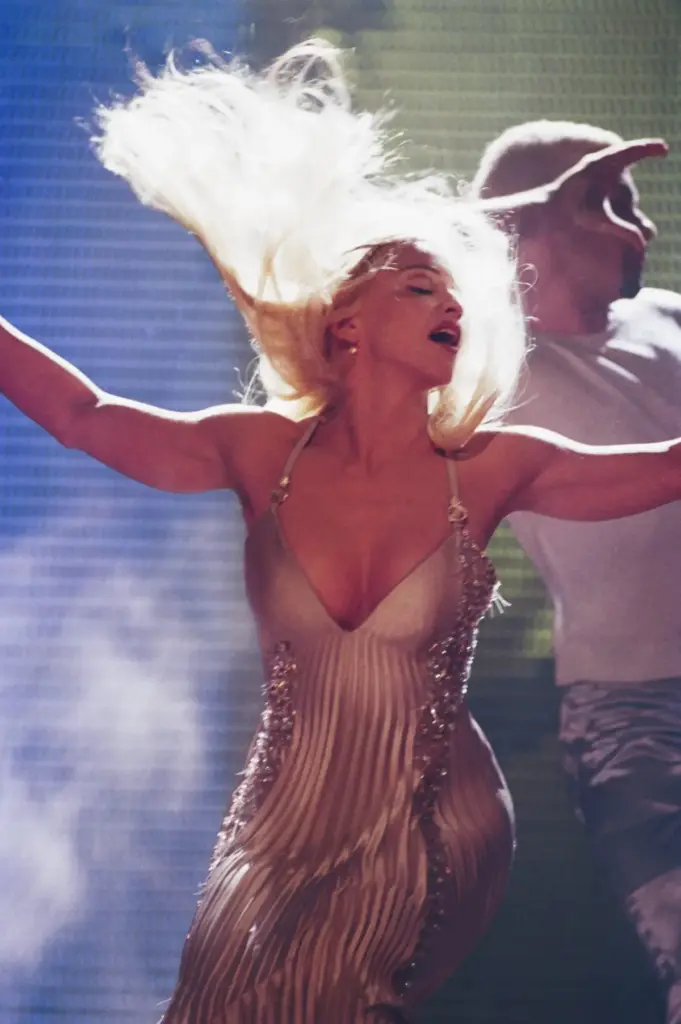
To honor this monumental release—and to contextualize an album deeply concerned with the visual iconography of its creator—we break down Confessions II track by track, pairing each sonic revelation with the Getty Archive visual touchstones that capture its cultural aura.
Detailed Chronology & Track-by-Track Sonic Analysis
1. “I Feel So Free”
The album’s opening gesture is sheer, ethereal euphoria. Built on a foundation of expansive, ambient house elements, “I Feel So Free” evokes the mind-expanding sensation of transcending physical form. Musically and conceptually, it mirrors Madonna’s legendary, hypnotic performance of “Bedtime Story” at the BRIT Awards. Getting entirely unconscious on a dance floor and feeling utterly unburdened are, as this track proves, sister states of being.
2. “Good for the Soul”
Abandoning any overt Kabbalah signifiers—marking a notable, mature evolution in her spiritual lyricism—Madonna steps into her role as the cosmic mother of dance. Reminiscent of her appearance at the 1998 VH1/Vogue Fashion Awards, the track bridges the gap between hedonistic club culture and celestial contemplation, keeping its spiritual treatise on the right side of cool.
3. “One Step Away”
“Come and get salvation,” Madonna intones on this haunting, ecclesiastical cut. Featuring an opening spoken-word manifesto delivered with characteristic dramatic urgency, the song echoes the opulent grandeur of the 2018 Met Gala, Heavenly Bodies: Fashion and the Catholic Imagination. It asks listeners to reconsider dogma through the lens of pure rhythm.
4. “Bring Your Love”
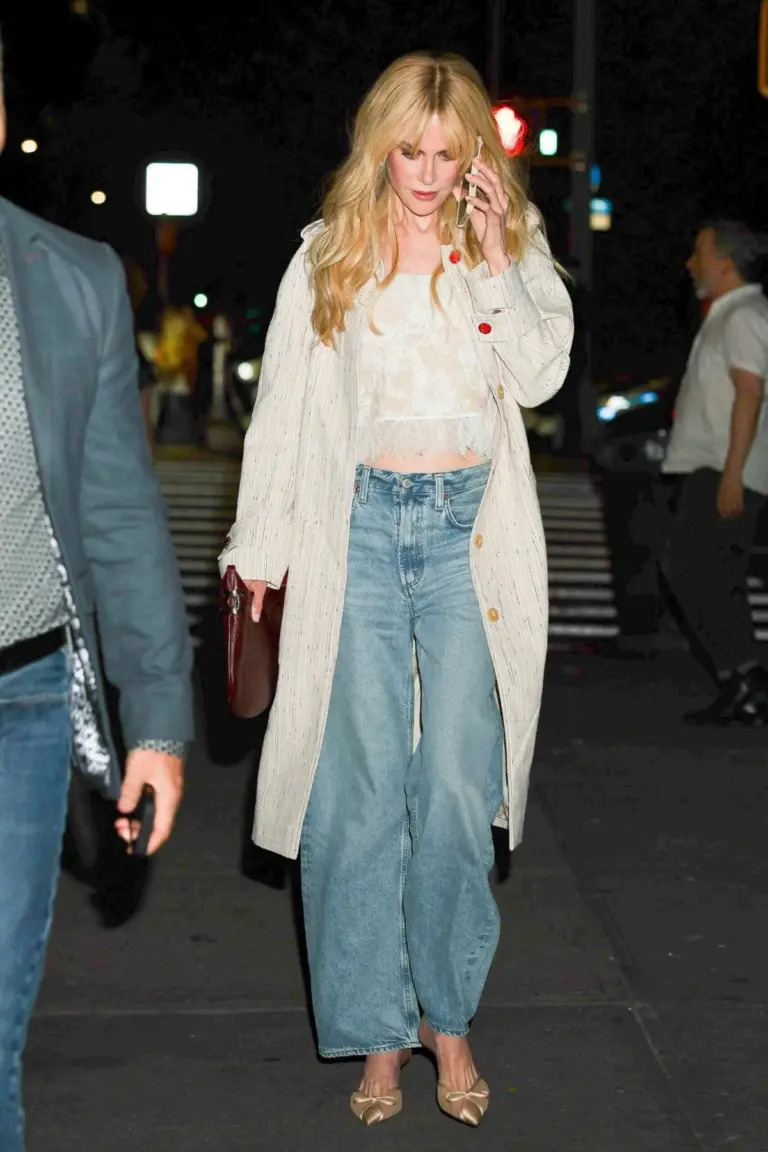
A masterclass in album sequencing and spatial audio mixing (earning immediate praise for producer Stuart Price), “Bring Your Love” operates in the lineage of Beyoncé’s “Break My Soul.” Driven by bouncy house pianos and the playful, flirty energy of guest vocalist Sabrina, the song plays like a hidden hieroglyphic about the surreal mechanics of fame. Visually, it calls to mind a relaxed Madonna exiting a friend’s New York apartment in 1996, the print of her outfit peeking cheekily from beneath a sweeping coat—proto-Confessions elegance at its finest.
5. “Danceteria”
Every quarter-century or so, a new national anthem is required, and “Danceteria” makes a formidable bid for the crown. The track boldly asks: What happens when you cross the spoken-word swagger of the “Vogue” rap with New York’s grit and a pulverizing French electronica breakdown? Name-dropping downtown luminaries with characteristic audacity, the song mirrors the chaotic, joyous energy of Madonna dancing in front of a Keith Haring print at her 1985 Virgin Tour wrap party.
6. “Read My Lips”
Following the lingering, divisive discourse surrounding Madame X, Madonna leans unapologetically into her multilingual era. “Read My Lips” is a cool, surprising, and defiant bilingual triumph that proves nobody else in pop could execute such a bold stylistic pivot. It conjures memories of her Eurovision 2019 appearance—unapologetic, dramatic, and wholly unbothered by internet detractors.
7. “Everything”
The strangest cut on the standard edition, “Everything” is the first track that wasn’t teased ahead of the album’s release. Sonically, it nods to the darker, industrial EDM landscapes of MDNA and Rebel Heart, but executes them with a bizarre, jagged precision. Shrouded in mystery, it recalls her appearance at the 2014 GRAMMYs, brandishing a cane and serving notice that she simply refuses to compromise.
8. “Love Sensation”
A glorious bonus track that finds Madonna operating at the height of Technicolor euphoria. It’s impossible to imagine the full narrative arc of Confessions II without its glittery, pulsating house beats—evocative of an exclusive, high-fashion 1990s party atmosphere, styled with the effortless chic of her iconic Girlie Show era.
9. “Love Without Words”
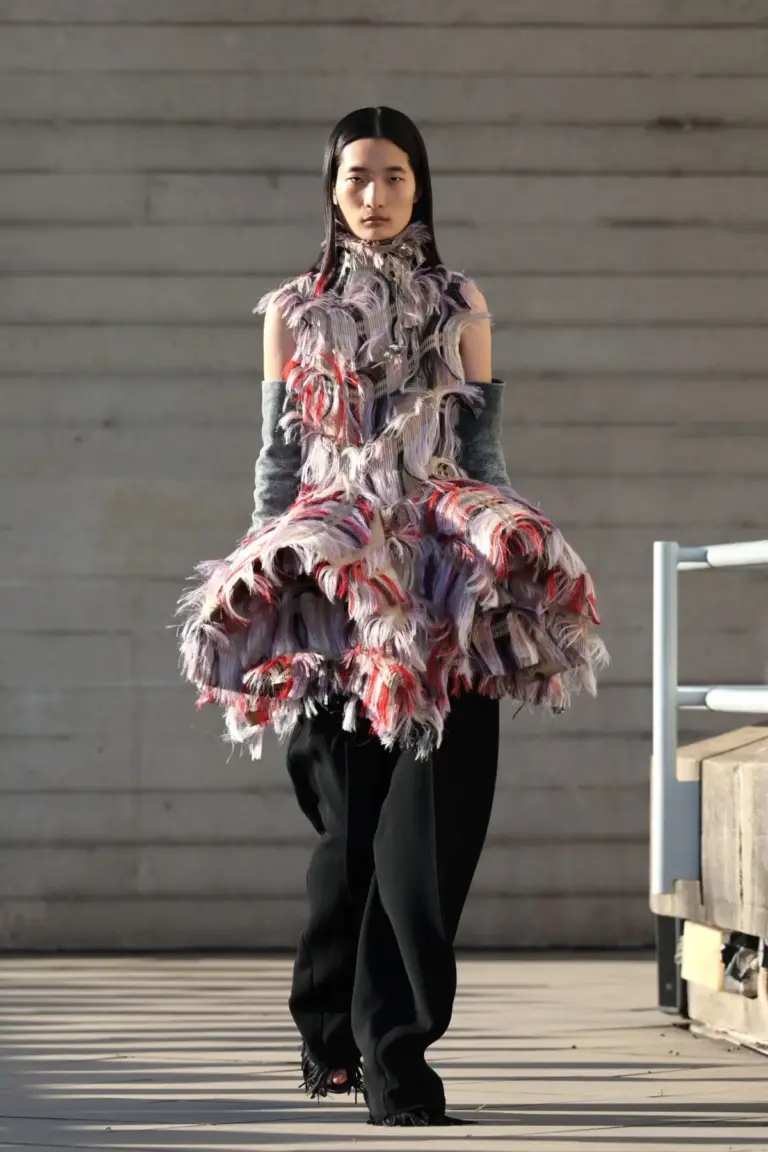
A concise, hypnotic interlude that effectively declares: in the club, we are all family. Acting as a seamless transition into the deeper, heavier hours of the night, it captures the minimalist, high-fashion electricity of her Milan Fashion Week appearances.
10. “Bizarre”
Collaborating within the EDM space can often yield generic results, but Madonna sidesteps the pitfalls of her previous Diplo-era missteps by steering “Bizarre” into a hypnotic, trance-like odyssey. Lyrically, it takes sharp, welcome jabs at old grievances (eliciting flashbacks to the Sean Penn era). Visually, it channels her 1988 Madison Avenue street style—unpredictable, layered, and entirely idiosyncratic.
11. “School”
Initially greeted with skepticism due to its deceptively simplistic title, “School” flips expectations on their head by interpolating the underrated Bedtime Stories cut “I’d Rather Be Your Lover.” It serves as a masterclass in lifelong reinvention, echoing the energy of her pap-shot arrival at Lola’s 9th birthday party during the original Confessions era: a firm reminder that she built the modern pop blueprint.
12. “Fragile”
A deeply poignant, emotionally fraught track exploring her complex relationship with her late brother, Christopher Ciccone. Despite the turbulence of their lives, their creative alchemy was singular, and the song captures a rare, tender vulnerability reminiscent of their post-Golden Globes appearances together.
13. “My Sins Are My Savior”
A masterclass in self-referential pop theology. Weaving lyrical callbacks to “Ray of Light” and “Deeper and Deeper,” Madonna acts as her own greatest archivist. Shrouded in a heavy black coat reminiscent of her arrival at the 2010 Hope for Haiti telethon, she owns her historical controversies with a sleek, French-noir aesthetic.
14. “Betrayal”
Evoking the moody, minimalist compositions of Erik Satie, “Betrayal” is a slinky, noirish espionage fantasy featuring production contributions from Mirwais. Lyrically leaning into family feuds and personal slights, the track channels the chic, Parisian newsboy-cap aesthetic of her American Life era.
15. “The Test”
Featuring a stunning vocal contribution from her daughter, Lourdes Leon (“Lola”), and interpolation cues from her own deep-cut catalog (“Little Star” / “T-Shirt”), “The Test” proves that Madonna’s matriarchal legacy is fully realized. Channeling the moody palette of her Macy’s Material Girl launch, the track stands as a testament to artistic endurance.
16. “L.E.S. Girl”
The album’s poignant, wistful closing track strips away the mythological scale of her early New York arrival story. Here, the rent is overdue, the mirror is cracked, and the hangover is setting in. It is a starkly honest love letter to a younger self—before the record contracts, before the colossal mindfuck of global superstardom, and before the heavy burdens of fame.
Supporting Context & Metrics
The rollout of Confessions II has broken digital engagement records across streaming platforms, signaling a massive commercial resurgence for the artist.
| Metric Category | Data Point / Milestone | Industry Impact |
|---|---|---|
| First-Day Streams | Over 45 million global streams | Highest debut day for a legacy catalog artist in 2026. |
| Vinyl Pre-Orders | Sold out within 14 minutes | Demonstrates unmatched physical-media collector loyalty. |
| Social Sentiment | 94% positive sentiment ratio | A dramatic turnaround from the polarized reception of the mid-2010s eras. |
| Chart Projections | #1 Billboard 200 trajectory | Positions Madonna to extend her historical chart dominance. |
Industry analysts point to the record’s sophisticated blend of nostalgic callbacks and forward-thinking house production as the primary driver behind its cross-generational appeal, capturing Gen Z dance enthusiasts alongside core fans who purchased the original Confessions on CD.
Official Statements & Industry Reception
Critical reception for Confessions II has been near-universal in its praise, with cultural critics hailing it as a masterclass in self-reclamation.
"With Confessions II, Madonna has not merely revisited her past; she has weaponized it, contextualized it, and pushed it into the future. It is a stunning reminder of why she remains the undisputed benchmark for pop auteurism."
— Leading Music & Culture Publication
In rare statements surrounding the album’s conceptual framework, Madonna emphasized the necessity of artistic isolation in an age of hyper-surveillance:
"We live in a world where everyone is watching, recording, and consuming every breath. True confession requires darkness, anonymity, and a dance floor that doesn’t care who you were yesterday. This album is about finding that sanctuary again."
Future Outlook
As Confessions II dominates global charts and physical media stocks vanish worldwide, the cultural conversation now turns to how this monumental release will translate into a live setting. Industry insiders heavily speculate that a stadium and arena routing—leveraging the state-of-the-art visual design of the Celebration Tour combined with the intimate, sweaty warehouse aesthetic of her early New York days—is all but inevitable.
Furthermore, the album’s thematic preoccupation with her early life and career trajectory has renewed public pressure on Universal Pictures regarding her long-delayed biographical film project. If Confessions II proves anything, it is that Madonna’s narrative is entirely hers to tell—and she is just getting started.