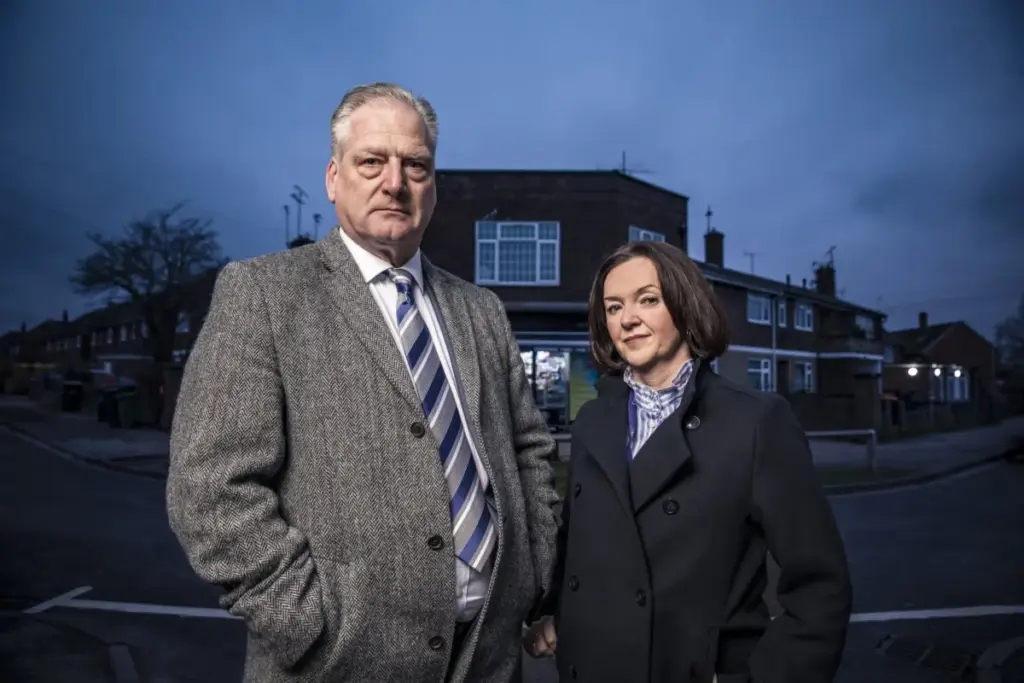
True crime enthusiasts have once again turned a chilling investigative docuseries into a massive streaming phenomenon. ITV’s gripping two-part documentary, The Real Unforgotten, has surged into Netflix’s global top 10 charts, captivating audiences with its deep dive into one of Britain’s most perplexing and horrific unsolved murders.
The series meticulously unpacks the brutal 1981 slaying of 36-year-old Carol Morgan, who was hacked to death with an axe or machete in the stockroom of her small-town convenience store in Linslade, Bedfordshire. More than just a retelling of a historic crime, the documentary exposes a catalogue of catastrophic police blunders from the initial investigation, highlighting how a web of deceit, institutional failures, and unpunished hubris allowed a killer to evade justice for nearly four decades.
Featuring exclusive interviews with the retired detectives who ultimately cracked the case, The Real Unforgotten offers a masterclass in modern cold-case resolution. It details the painstaking, old-fashioned police work required to untangle a web of circumstantial evidence, malicious plotting, and the ultimate betrayal of family trust. As viewers rush to binge the haunting project, the series has not only captured the public imagination but also reignited critical conversations regarding the vulnerabilities of early forensic policing and the relentless pursuit of absolute justice.
Detailed Chronology: From the 1981 Massacre to a Decades-Long Cover-Up
The Crime: August 13, 1981
On a seemingly ordinary summer day in Linslade, Bedfordshire, the brutal reality of murder struck a quiet community. Carol Morgan, a 36-year-old mother and local business owner, was found dead inside the stockroom of the convenience store she operated alongside her husband, Allen Morgan.
Carol had been subjected to a horrific, frenzied attack, hacked to death with either an axe or a machete. Alongside her battered body, the crime scene revealed that the assailant had made off with £435 in cash and approximately 1,400 cigarettes—items intended to point investigators toward the theory of a botched robbery.
At the time of the murder, Allen Morgan claimed he was away on a routine cinema trip with the couple’s two young children. Accepting this alibi at face value, early investigators quickly pigeonholed the homicide as a burglary gone catastrophically wrong.
Initial Missteps and Missed Opportunities
In the wake of the tragedy, the original Bedfordshire Police investigation suffered from severe tunnel vision. Rather than probing the dynamics of the Morgan household or the shifting behaviors of those closest to the victim, detectives focused heavily on peripheral sightings. Most notably, police chased down a reported lead involving a man carrying plastic bags who was seen getting into a car near the shop—despite subsequent timelines proving that Carol had been seen alive after this individual was spotted in the vicinity.
Crucially, Allen Morgan and his mistress at the time, Margaret Spooner, were never formally questioned under caution. The investigation failed to scrutinize obvious financial motives, marital friction, or the existence of shop-linked life insurance policies. Within a remarkably short window following his wife’s brutal murder, Allen sold the business, pocketed the proceeds, and swiftly married his mistress, raising few official red flags within an era of policing heavily restricted by technological and methodological limitations.
The 2018 Cold Case Breakthrough
Decades passed, leaving Carol’s murder shrouded in mystery and her children devastated by the unresolved trauma of losing their mother. However, the tides turned in 2018 when Bedfordshire and Cambridgeshire’s Major Crime Unit decided to subject the decades-old files to a rigorous, comprehensive review.
Led by veteran investigators, including former Detective Superintendent Carl Foster, the cold case team started from an exceptionally disadvantaged position. Due to decades passing, much of the original forensic evidence had either degraded, been misplaced, or become entirely compromised. A forensic breakthrough was virtually off the table, forcing the team to rely on what Foster termed "old-fashioned detective work."
Investigators began re-examining long-unanswered questions that should have been probed in 1981:
Why did Allen Morgan feel the need to report his wife’s murder using a neighbor’s landline when he had a telephone in his own home?
How could a genuinely grieving husband seamlessly liquidate his shared business and embark on a new life with his lover so soon after such a gruesome tragedy?
What were the precise financial interconnections between the shop, life insurance, and their burgeoning romance?
The Witness Who Broke the Case Wide Open
The investigation’s ultimate turning point came through a breakthrough witness statement that, in the words of investigators, "blew the case wide open."
Jane Bunting, who was a teenager at the time of the murder, came forward to share chilling memories she had long buried. She recalled that in the lead-up to Carol’s death, Allen Morgan had repeatedly approached her, attempting to solicit help or information regarding a contract killer.
Testifying at Luton Crown Court years later, Bunting recalled Allen’s explicit declarations:
“He’d say, ‘I hate Carol’, ‘I don’t want to be married to her’, ‘I wish she’d die’, ‘Wouldn’t an accident be nice?’”
This damning testimony, coupled with renewed circumstantial evidence gathered through relentless door-to-door inquiries and modern analytical techniques, finally built an ironclad case against the man who had orchestrated the murder from within his own home.
Supporting Context & Metrics: The True Crime Boom on Netflix
The roaring success of The Real Unforgotten on Netflix underscores a broader cultural phenomenon: the insatiable global appetite for real-life investigative docuseries. True crime has evolved from niche literature and late-night television slots into a premier entertainment vertical, commanding millions of concurrent streams worldwide.
Metric / Indicator
Detail / Impact
Platform Release
Acquired and streamed globally on Netflix, reaching the platform’s Top 10 within days of release.
Original Broadcast
Originally produced and aired as a high-profile two-part documentary by ITV/ITVX.
Core Subject
The 1981 murder of Carol Morgan and the 43-year pursuit of her killer.
Legal Resolution
Allen Morgan convicted of murder (hiring a hitman) in 2024; sentenced to life imprisonment with a minimum term of 22 years. Co-accused Margaret Spooner acquitted.
This particular docuseries resonates deeply with audiences because it avoids the sensationalist, stylized tropes often criticized in modern true crime entertainment. Instead, it leans heavily into procedural authenticity, honoring the victim while exposing systemic flaws within historical police investigations.
Official Statements and Retrospective Insights
The emotional weight of The Real Unforgotten is anchored by the reflections of the law enforcement officers who dedicated years of their lives to unearthing the truth. Speaking publicly about the grueling process of securing a conviction decades after the fact, former Detective Superintendent Carl Foster emphasized the sheer determination required from his team.
"I feel hugely proud of what the team achieved just through their tenacity and that old-fashioned police work," Foster shared in interviews surrounding the case’s resolution. "We just kept grinding away and eventually we got there."
However, Foster’s pride is tempered by a profound sense of sorrow for Carol Morgan’s immediate family—specifically her children, who had to grow up navigating an unimaginable nightmare.
"What was in my thoughts were Carol’s biological children, who have to come to terms with the fact that the man they called dad murdered their mother… Where do they start putting their lives back together?"
Although Allen Morgan was handed a life sentence in 2024 at the age of 74—with a minimum tariff of 22 years—investigators note that a haunting final chapter remains unwritten. To this day, Morgan has steadfastly refused to name the actual hitman he hired to hack his wife to death in that Linslade stockroom.
Future Outlook: Accountability and Unresolved Questions
As The Real Unforgotten continues to dominate viewing charts on Netflix, the impact of the documentary extends far beyond streaming metrics. It serves as a stark reminder of the evolution of British criminal justice and the vital importance of cold case reviews.
The Call for Closure: Investigators like Carl Foster remain hopeful that pressure from public exposure and the enduring legacy of the documentary might finally compel Allen Morgan to break his silence and name the physical perpetrator of the crime.
Advancements in Cold Case Strategy: The success of the 2018 reinvestigation highlights the necessity of funding dedicated cold-case squads capable of applying modern behavioral analysis, witness re-interview protocols, and historical intelligence mapping to decades-old files.
The Ethics of True Crime Media: Projects like The Real Unforgotten set a benchmark for ethical true crime reporting, prioritizing victim advocacy, institutional accountability, and procedural grit over cheap thrills.
For viewers streaming the series on Netflix, The Real Unforgotten is more than just a weekend binge. It is a sobering, haunting testament to the fact that while time may pass, truth has a way of lingering in the shadows—waiting for the right detectives, and the right witnesses, to drag it into the light.