Executive Overview
Thirty years into a career that fundamentally reshaped the architecture of modern American culture, Shawn "Jay-Z" Carter remains an enigma of lyrical depth and corporate empire-building. While his business ventures—ranging from fine art and tech investments to high-end spirits and sports agency management—frequently dominate contemporary headlines, his foundational mastery as a rap architect continues to be parsed by dedicated fans and academics alike.
Enter JA&-Z in 8, an ambitious, eight-episode documentary series premiering weekly on HBO Max, which strips away the corporate veneer to focus entirely on the text: the bars, the breaths, the pain, and the meticulous construction of a masterclass discography.
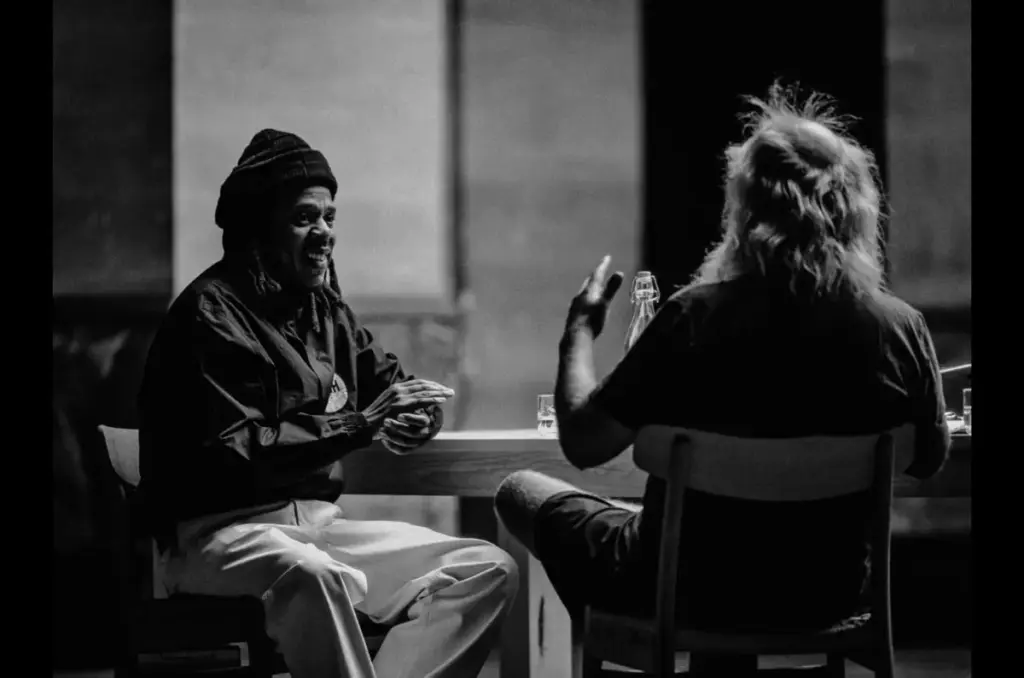
Directed through a lens of profound musical reverence, the series features Jay-Z in conversation with legendary producer and sonic minimalist Rick Rubin. Rather than presenting a conventional, linear chronology of rags-to-riches triumph, the documentary operates as an intimate, forensic dissection of the artist’s catalog. Across the first three episodes alone, the series explores deep cuts, least-played tracks, the psychological pressure fueling his creative output, and candid retrospectives on monumental peers like The Notorious B.I.G. and Tupac Shakur.
To celebrate the release, a star-studded special screening took place at the Metropolitan Opera Museum in New York City on September 13, setting the stage for what is poised to be one of the most culturally significant television events of the year.
Detailed Chronology: The Road to the Metropolitan Opera Museum Premiere
The roll-out for JA&-Z in 8 began with a wave of anticipation that rippled through the entertainment industry weeks ahead of its September 19 release date. The apex of this promotional campaign arrived on a brisk mid-September evening at Manhattan’s prestigious Metropolitan Opera Museum.
The red-carpet event served as a nexus where hip-hop royalty, institutional prestige, and high fashion collided. Heavyweights from across the entertainment spectrum—including pioneering producer Jermaine Dupri, global hitmaker DJ Khaled, East Coast stalwart Fat Joe, WNBA star Skylar Diggins, and renowned astrophysicist Neil deGrasse Tyson—graced the step-and-repeat, offering media outlets their initial reactions to the early screenings.
However, the undisputed focal point of the evening was the Roc Nation founder himself. Eschewing the typical Hollywood strategy of a quick red-carpet walk past a vetted line of reporters, Jay-Z engaged with nearly every single media outlet present. His willingness to linger, converse, and deconstruct the creative process underscored the collaborative, deeply personal nature of the project.
When pressed by Billboard about whether there were difficult or emotionally taxing moments while revisiting his three-decade catalog, Carter offered a candid, revealing assessment:
"Nothing was difficult. It wasn’t difficult at all. It was easy. The ease of the conversation with Rick [Rubin]; he’s super curious about life [and] music. We share the same love for music. It was an easy conversation."
That effortless chemistry between two titans of the modern soundscape anchors the entire eight-episode run. Attendees of the exclusive screening were treated to an advanced look at how Carter and Rubin unpack seminal tracks from his vast discography.
Rather than sticking exclusively to radio-friendly chart-toppers, the documentary pivots toward emotionally heavy and technically dense records such as “You Must Love Me,” “4:44,” “This Can’t Be Life,” and “What More Can I Say.” Through these deep dives, Carter unveils hidden motivations and conceptual frameworks that have eluded even the most ardent hip-hop historians for decades.
Supporting Context & Metrics: Deconstructing a Three-Decade Masterpiece
To understand the weight of JA&-Z in 8, one must contextualize the sheer statistical and cultural magnitude of Jay-Z’s career. Spanning over thirty years, Carter holds the record for the most number-one albums by a solo artist on the Billboard 200, with 14 chart-topping LPs. His catalogue bridges the gap between the golden era of 1990s sample-heavy boom-bap and the modern streaming epoch, where consumption metrics and algorithms dictate the shelf life of recorded music.
Yet, as the documentary illustrates, Jay-Z’s resilience was never merely a byproduct of commercial calculations; it was forged through relentless self-critique and an unyielding competitive drive. The decision to partner with Rick Rubin—a figure legendary for stripping artists down to their psychological and sonic bare essentials—was a masterstroke. Rubin, co-founder of Def Jam Recordings and a producer who has guided everyone from Slayer and the Beastie Boys to Johnny Cash and Adele, shares a unique philosophical alignment with Carter. Both men view music not as a disposable commodity, but as a lifelong spiritual inquiry.
The series dives headfirst into the mechanics of longevity. In an era where digital streaming platforms encourage high-volume, low-retention consumption, JA&-Z in 8 forces audiences to pump the brakes. It encourages listeners to examine the architectural integrity of songs like "4:44," where Carter confronted his own personal failings with unprecedented vulnerability, or "You Must Love Me," a devastatingly transparent reflection on his relationship with his late father.
By dedicating eight weekly episodes to this level of granular analysis, HBO Max and the creators are effectively treating hip-hop lyricism with the same institutional gravity historically reserved for classical literature or canonical film.
Official Statements and Insider Perspectives
The dialogue between Carter and Rubin serves as the heartbeat of the documentary, capturing spontaneous insights that shatter long-held industry myths. During the red carpet interviews and the previewed footage, several key themes emerged regarding the motivations behind the project:
- The Power of Radical Transparency: Carter noted that revisiting his past work did not evoke nostalgia or regret, but rather an objective curiosity. His partnership with Rubin eliminated the guardrails typically erected by public relations teams, allowing for an unfiltered exchange about artistic vulnerabilities.
- The Creative Catalyst of Pressure: Throughout the first three episodes, the documentary explores how internal and external pressures have historically fueled Carter’s writing process. Far from suffocating his creativity, the weight of expectations has consistently served as the anvil upon which his best bars are hammered.
- Intergenerational Respect: The presence of figures like DJ Khaled and Jermaine Dupri at the premiere highlighted the documentary’s broader industry impact. For contemporary producers and artists, JA&-Z in 8 functions as a masterclass in career sustainability and artistic evolution.
Future Outlook: The Cultural Legacy of JA&-Z in 8
As JA&-Z in 8 rolls out its weekly episodes on HBO Max, its ripple effects across the music industry and pop culture landscape are expected to be profound. In an entertainment ecosystem increasingly dominated by bite-sized, short-form video content and ephemeral social media trends, an eight-part, deep-dive conversational documentary is a bold counter-programming move.
The series establishes a new benchmark for how legacy hip-hop acts can document their journeys. By shifting the focus away from tabloid drama and superficial career milestones, Jay-Z and Rick Rubin have elevated the conversation around rap music to an art form worthy of rigorous, academic-level critique.
For fans, musicologists, and aspiring creators alike, the coming weeks will offer a treasure trove of lyrical breakdowns and philosophical gems. JA&-Z in 8 is not merely a retrospective look backward; it is a vital blueprint for how an artist can continuously interrogate their own legacy without losing the hunger that started it all.