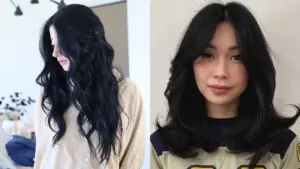
The aesthetic transitions of postpartum life are frequently met with a societal expectation of quiet grace. While physical changes such as abdominal scarring, shifts in skin elasticity, and fluid retention are increasingly discussed with radical acceptance, the hormonal rollercoaster of postpartum telogen effluvium—more commonly known as postpartum hair loss—remains a uniquely psychologically taxing hurdle for many new parents.
Approximately 14 months into the postpartum journey, the initial phase of sudden shedding often gives way to an awkward, equally challenging phase: the emergence of unruly tufts of new hair growth competing with stubbornly sparse temples and a fragile hair texture. For individuals accustomed to thick, wild, or resilient curls, this structural shift demands an entirely new approach to personal grooming.
Rather than succumbing to the traditional "mom bob"—the default styling shortcut meant to disguise thinning lengths—many are choosing a more nuanced path of strategic haircare overhaul. By consulting top-tier stylists and ditching heavy, pre-baby formulas in favor of lightweight, technologically advanced plumping agents, serums, and non-crunchy thickening foams, a new wave of postpartum beauty solutions has emerged. This comprehensive review investigates the psychological, structural, and physiological dimensions of postpartum hair recovery, detailing the professional advice, specialized regimens, and transformative products redefining the postpartum haircare landscape.
Detailed Chronology: The Lifecycle of Postpartum Hair Loss
Understanding how to treat postpartum hair requires a rigorous examination of the biological timeline. During pregnancy, elevated estrogen levels prolong the anagen (growth) phase of the hair cycle. This hormonal bubble prevents the usual daily shedding, resulting in noticeably thicker, more luxuriant hair for the duration of the gestation period.
However, the postpartum drop in estrogen and progesterone triggers a dramatic biochemical shift.
Phase 1: The Sudden Shedding (Months 2 to 6)
Around two to four months postpartum, the hair follicles that were artificially held in the growth phase rapidly transition into the telogen (resting and shedding) phase all at once. For many, this manifests as alarming clumps of hair coming away in the shower or remaining trapped in hairbrushes. While clinically normal, the visual and tactile reality can be deeply unsettling.
Phase 2: The Awkward In-Between (Months 6 to 14)
By the end of the first year, active shedding typically slows, but it leaves behind a distinct landscape: miniaturized density, receded or sparse temples, and a halo of short, frizzy, upright baby hairs along the hairline. Styling becomes a daily exercise in damage control. Traditional heavy styling creams, rich butters, and oil-heavy treatments that once defined a curly or textured hair routine suddenly become counterproductive, weighing down fragile strands and exacerbating the appearance of flatness.
Phase 3: Strategic Intervention and Regrowth (Month 14 and Beyond)
This is the juncture where targeted intervention becomes essential. Rather than masking the issue, modern hair science offers lightweight volumizing polymers, scalp-balancing serums, and peptide-infused cleansers designed to nurture new growth while creating an immediate optical illusion of fullness.
Supporting Context & Metrics: The Science of Thinning Hair Post-Pregnancy
Postpartum hair thinning is not merely a cosmetic inconvenience; it is a profound physiological event tied directly to endocrine fluctuations. According to dermatological studies, over 50% of women experience noticeable hair shedding following childbirth.
When addressing this demographic, traditional haircare regimens often fail. Heavy masks and dense silicones can form occlusive layers on the scalp, blocking emerging follicles and flattening delicate baby hairs. According to leading professionals, the strategy must pivot entirely toward scalp health and structural root-lifting.
Product Category
Traditional Pre-Baby Focus
Postpartum Restorative Focus
Shampoos
Mega-hydration, deep repair, smoothing
Scalp stimulation, gentle cleansing, follicle support
Volumizing foams, plumping creams, heat protection with light hold
The market has responded with sophisticated formulations containing ingredients such as red clover, caffeine, peptides, and Ayurvedic extracts like haritaki. These compounds do not merely mask the problem—they actively work to balance the scalp microflora and regulate dihydrotestosterone (DHT) production, which can influence follicular miniaturization.
Official Statements & Expert Insights
To decode the best methodologies for managing postpartum hair without sacrificing personal style or length, leading industry professionals emphasize structural adaptation over drastic haircuts.
Rachel Todisco, a prominent hairstylist at the Loch, notes that while a dramatic chop is the standard default recommendation given to new mothers, it is far from the only solution.
"When clients come to me with postpartum hair loss, I always advise a good cut as the first port of call," Todisco explains. "लेकिन [But] if they don’t want to lose length, there are still things we can do at the styling stage to help blend in new growth and create the illusion of thickness."
Todisco stresses the importance of eliminating heavy formulas from the home routine.
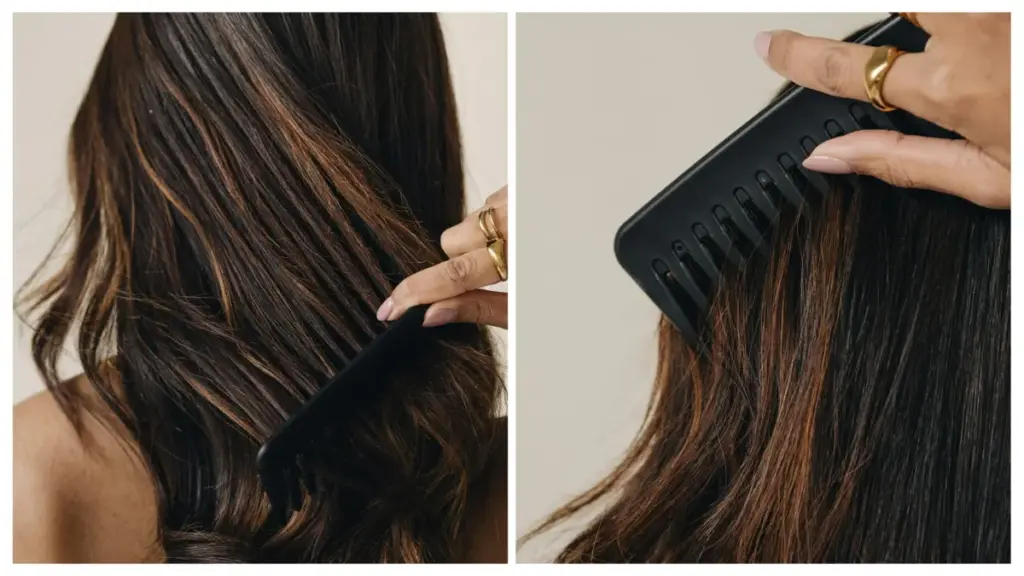
"I always recommend avoiding heavy masks, oils, and styling products, which can make finer hair look flatter. At home, I’d advise using a lightweight shampoo to cleanse the scalp and add strength and volume, and try some styling products designed to thicken."
Highlighting specific professional recommendations, Todisco points to advanced formulations like the Aveda Invati Ultra Advanced Thickening Foam and matching Thickening Tonic.
"The key is really in creating the illusion of thickness while being gentle with fragile new strands," she continues. "Postpartum regrowth can be short and fluffy around the hairline, so a soft root lift and strategic styling can make a huge difference without having to take away lots of length."
Field-Tested Product Review: The Postpartum Arsenal
Adapting a routine from thick, resilient curls to fragile, fine, and recovering strands requires rigorous product testing. Below is an authoritative breakdown of the top-performing products that successfully bridge the gap between hair health and aesthetic volume, free of crunchiness or powdery residue.
1. Hair by Sam McKnight Cool Girl Body Plumping & Volumizing Cream
Price: $40.00
Function: Heat-protective plumping cream with conditioning polymers.
Review: Historically, volumizing products carry a notorious reputation for leaving hair stiff, sticky, or texturally brittle. Sam McKnight’s formulation challenges this convention entirely by utilizing a cream base. Clever conditioning polymers wrap individually around each hair fiber, yielding immediate visual density and reliable thermal defense. Ideal for a bouncy blowout, this product offers cumulative benefits, rewarding consistent use with visibly fuller-looking hair over time.
2. Champo Pitta Growth Serum
Price: $62.00
Function: Scalp-balancing and follicle-stimulating serum.
Review: Formulated for nightly application, this serum combines Ayurvedic haritaki extract with red clover, caffeine, and peptides. It targets scalp health at the root, balancing oil production and supporting hair density along the hairline without leaving an oily residue. Paired with the brand’s lightweight Pitta Repair Mask, it provides deep conditioning suitable for fine textures without weighing lengths down.
3. Aveda Invati Ultra Advanced Thickening Foam
Price: $39.00
Function: Lightweight root-lifting and density-building foam.
Review: Endorsed by top editorial stylists, this foam achieves what many volumizers fail to do: it delivers airy, bouncy density without stickiness. Applied throughout the lengths or concentrated specifically at the roots, it offers natural-looking lift that successfully masks thinning patches.
4. Davines Naturaltech Energizing Shampoo
Price: $40.00
Function: Circulation-boosting daily cleanser for thinning hair.
Review: Shifting from ultra-hydrating formulas to a stimulating, herbal cleanser makes a profound tactile difference. The circulation-boosting formula provides a refreshing sensation during morning routines, lifting the hair root and creating natural movement that contributes to an overall impression of increased density.
5. Virtue 6-in-1 Styler
Price: $20.00
Function: Multi-tasking smoothing cream with vegan keratin.
Review: Designed to add structure, control frizz, and deliver light hold, this dense cream features patented alpha keratin 60ku. By binding directly to damaged sites along the hair shaft, it repairs cracks and fortifies fragile strands over time. Because a mere pea-sized amount is sufficient for long hair, a single tube offers exceptional longevity.
Future Outlook: The Path Forward for Postpartum Beauty
As the conversation surrounding maternal health and postpartum wellness matures, the beauty industry is shifting away from generic "anti-aging" or "body-firming" narratives toward targeted, empathetic science. The emergence of specialized postpartum haircare lines indicates a permanent market evolution: parents no longer need to choose between harsh medical treatments and simply suffering through aesthetic changes.
Looking ahead, the future of postpartum hair management will likely see an increase in biotechnology-backed scalp therapies, microbiome-friendly cleansers, and multi-functional styling hybrids that treat hair as an extension of holistic self-care. While the timeline of hormonal recovery can test the patience of even the most resilient individuals, the availability of intelligent, lightweight formulations ensures that the journey through the "awkward months" can be navigated with both style and renewed confidence.