
Anna Sui’s enduring footprint on New York fashion is a masterclass in independent vision, aesthetic longevity, and cultural synthesis. From her origins in the raw, fertile underground of downtown Manhattan—rubbing shoulders with creative vanguards like Steven Meisel and achieving global breakout status when Madonna wore her pieces to a Jean Paul Gaultier show—Sui has consistently resisted trend-chasing in favor of building an instantly recognizable, highly idiosyncratic universe. More than two decades after establishing her foundational label, her design language remains as vital and culturally attuned as ever.
Ahead of the debut of her highly anticipated Wonderment collection, Sui welcomed PAPER into her studio for an exclusive, behind-the-scenes preview. The resulting conversation offers a rare, intimate look at her creative engine: a meticulous alchemy of archival excavation, analog discovery, and the preservation of romantic rebellion. Blending 1970s bohemian nonchalance with the gritty, effortless cool that defined her 1990s golden era—typified by muses like Kate Moss and Naomi Campbell—the Wonderment collection bridges the gap between historical romanticism and contemporary street sensibilities. Through an exhaustive exploration of mother-of-pearl iridescence, Art Nouveau framing, boudoir references, and grunge layering, Sui continues to prove that while trends are cyclical, an authentic design voice is entirely timeless.
Detailed Chronology: From 1970s Vogue Spreads to the Studio Floor
The genesis of Wonderment did not begin in a modern digital mood board or an algorithmic trend-forecasting report. True to Sui’s analog ethos, it started with the tactile, deliberate act of flipping through historical print media.
While researching hairstyles for a phone conversation with legendary stylist Ara Gallant, Sui opened an archive issue of 1970s Vogue. Her eyes caught an image of society figure Justine Cushing photographed in Newport, Rhode Island. Intrigued by the indistinct artwork hanging on the walls, Sui tracked down further spreads featuring Cushing’s home. Beneath an otherwise conservative residential facade lay a series of breathtaking fairytale paintings covering the walls.
Further investigation revealed the artist: Howard Gardiner Cushing, the homeowner’s uncle. A contemporary of renowned American painters James McNeill Whistler and John Singer Sargent, Howard Cushing specialized in ethereal, mythic imagery. His work had recently been the subject of a major retrospective in Newport, where conservationists painstakingly removed murals painted directly onto historical plaster walls to frame them. Cushing was also an intimate associate of Gertrude Vanderbilt Whitney, documented painting within her historic studio.
For Sui, this discovery underscored the magic of serendipity. Though she had browsed through that specific vintage magazine numerous times over the decades, the cultural resonance only clicked when her mind was already primed for the narrative worlds of fairy tales and myth. This spark transformed into the foundational blueprint for Wonderment, shifting her team’s focus toward materializing an otherworldly aesthetic rooted in physical history.
Supporting Context & Metrics: The Mechanics of Wonderment
Translating whimsical, 19th-century Art Nouveau and 1970s bohemian motifs into a modern ready-to-wear lineup required an extraordinary breadth of textile development and hand craftsmanship. Rather than relying on flat, digital printing shortcuts, Sui’s studio synthesized traditional hand-dying techniques with cutting-edge textile engineering to produce textures that actively react to light.
Materiality and the Color Narrative
The collection’s color story—anchored by deep orchids, moody denim blues, crisp blacks, and stark whites—was directly informed by the iridescent properties of mother-of-pearl and abalone shells discovered during her research into historical fine art and a lacquer piece inlaid with mother-of-pearl at Paris’s Musée des Arts Décoratifs.
Key fabric developments and detailing include:
- Moonlight Roses: A signature hybrid textile that combines digital printing, structural embroidery, and sequential embellishment to achieve a shifting, luminous finish.
- Hand-Crafted Elements: Custom botanical scrunchies shaped like tulips and calla lilies designed by a specialty maker; hand-dyed silk ribbons; and hand-crocheted shawls and bags.
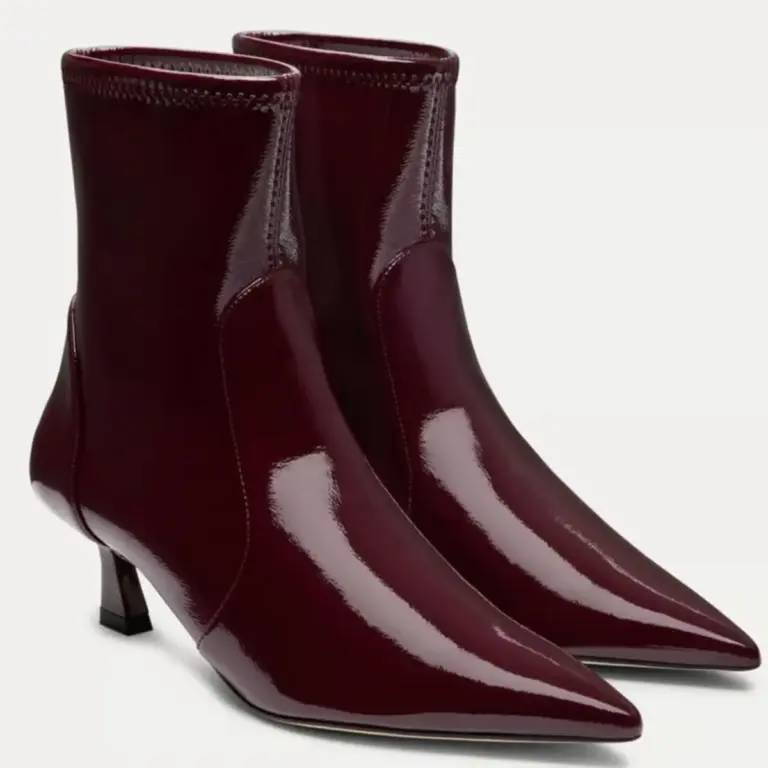
- The Boudoir Footwear Collaboration: Partnering once again with footwear visionary John Fluevog, Sui sourced vintage-grade upholstery and decorative fabrics—originally intended for interior furnishings—to construct ornate, romantic slippers detailed with traditional fabric rosettes.
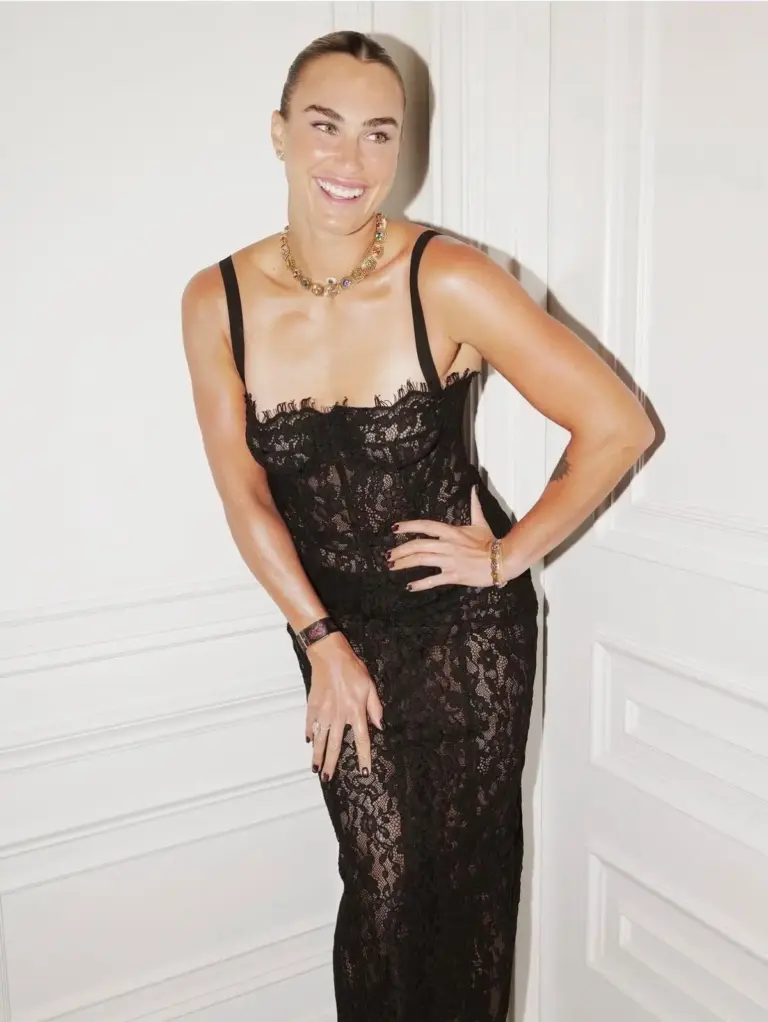
- Archive Resurrection: In a nod to fashion history, Sui collaborated directly with Swarovski to recreate an iconic black dress covered in star-shaped stone embellishments originally worn by Kate Moss on the 1990s runway. Swarovski also lent its technical expertise to a collection of heavily embellished denim.
Styling and Textural Juxtaposition
The styling of Wonderment thrives on friction. It is an intentional clash of disparate subcultural codes:
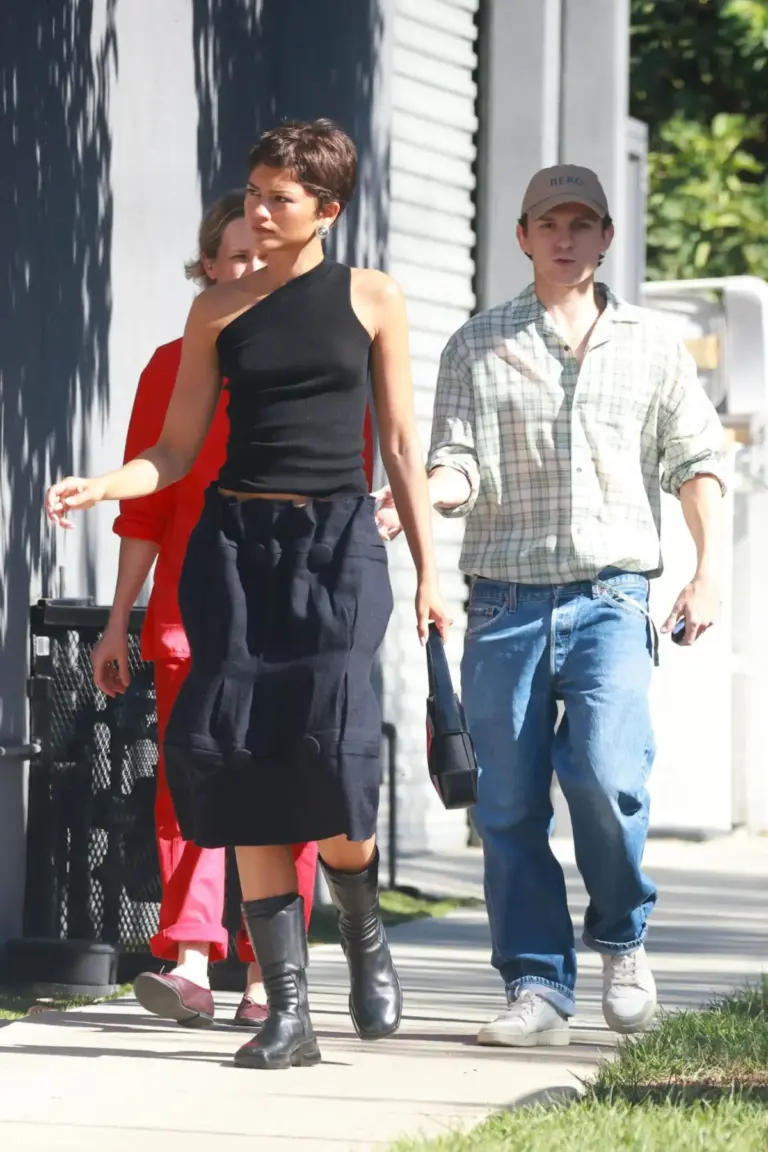
- Grunge Meets Romance: A pristine satin-striped dress is casually styled with a plaid flannel shirt tied around the waist and a sheer lace T-shirt underneath.
- Lattice and Neon: Intricate lattice embroidery is overlaid directly upon fluorescent, neon-hued lingerie, allowing electric pops of color to bleed through sheer layers.
- Maximalist Layering: Outfits routinely pile sheer iridescent tunics over denim, crinkle chiffon trimmed with rock crystal over petticoats, and Art Nouveau-printed robes over slouchy knitwear. The overall effect is "witchy, 70s, and grunge"—a collection that looks breathtakingly complex yet entirely effortless.
Official Statements: In Conversation with Anna Sui
During her exclusive interview with PAPER conducted just days before the runway presentation, Anna Sui articulated her philosophy on contemporary inspiration, the digital fatigue gripping younger creatives, and her enduring design methodology.
On the Power of Analog Discovery:
"I love finding something you’ve never seen before or even heard about—something that takes you down this rabbit hole of discovery, research and inspiration… I hope younger generations can find that feeling again because it’s so important to have inspiration and dreams—to have that moment when something changes you and brings you somewhere else."On Rejecting Digital Fatigue:
"People are getting tired of everything being digital. There’s something about going back to making things manually, being creative in a different way and actually letting the inspiration go through you instead of just consuming it."On the Effortless Nature of the Sui Aesthetic:
"[The wearer] looks pretty and fresh, but not worried about it… You could probably create this entire look using vintage clothes, but here we get to develop our own color combinations so everything works together and feels connected."On Collaborative Continuity:
Speaking on her long-standing creative partnerships—such as jeweler Karen Erickson of Showroom Seven, who has collaborated with Sui since her debut runway show—Sui emphasized the importance of a unified creative ecosystem. "The eyewear has these Art Nouveau shapes with rhinestones and pearls. Then you have the embroidered shoes… the mother-of-pearl jewelry—it all belongs to the same world."
Future Outlook: Archival Preservation and Hometown Homecoming
As Anna Sui prepares to unveil Wonderment to the global fashion community, her influence extends far beyond the immediate runway season. Her career trajectory demonstrates that staying relevant does not require abandoning one’s roots; rather, it demands a continuous, fearless dialogue between past inspirations and present realities.
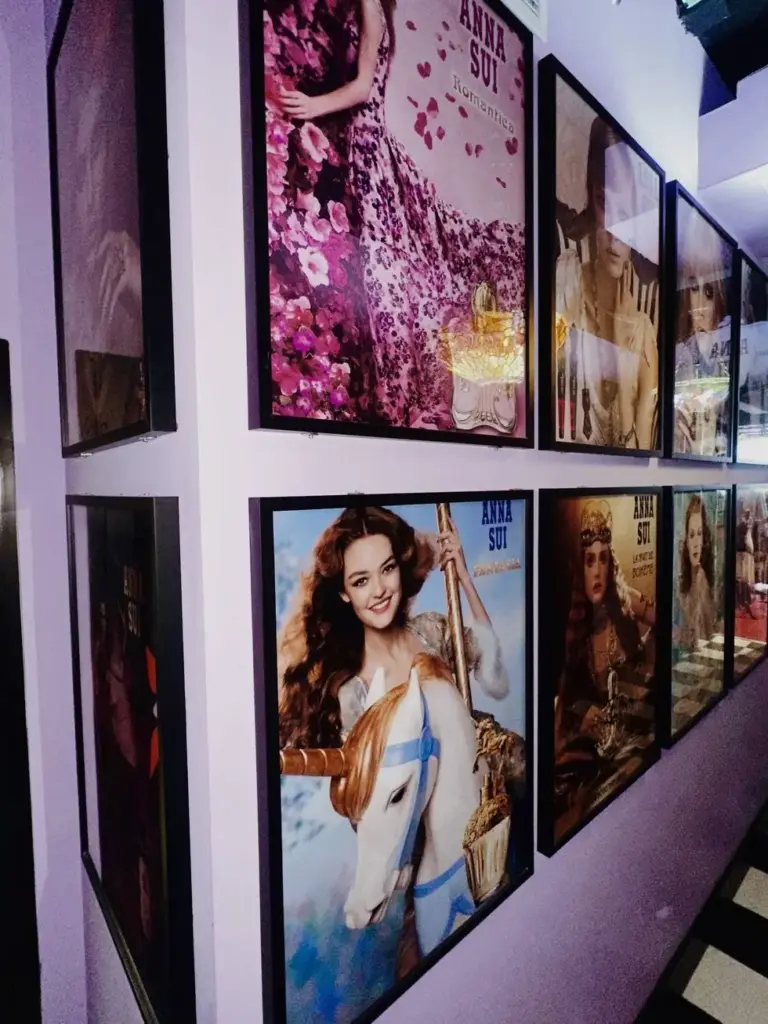
Simultaneously, Sui’s cultural footprint is being institutionalized on a global scale. Following successful, critically acclaimed runs in London, Tokyo, Shanghai, New York, and various cultural hubs across the United States, her landmark museum retrospective, The World of Anna Sui, is scheduled to open on October 17 at the Cranbrook Art Museum in her home state of Michigan. This homecoming exhibition serves as a physical archive of her multi-decade ascent—a testament to how a downtown New York underground favorite evolved into an international icon of independent design.
With Wonderment, Sui proves that fashion at its highest level is not merely about clothing the body, but about invoking a state of wonder—reminding a digital age of the profound, transformative magic found when one pauses to truly look, research, and dream.