
Executive Overview
Marks & Spencer (M&S), a cornerstone of British retail and a high-street titan, has officially etched a new milestone into its historic ledger. Celebrating a century in fashion, the legacy brand staged its debut catwalk show at London Fashion Week (LFW), transforming the striking main atrium of The Design Museum on High Street Kensington into a high-octane fashion arena.
The event was a masterclass in bridging heritage with contemporary accessibility. Drawing a stellar crowd of fashion royalty, cultural icons, and industry veterans, the presentation featured a diverse, multi-generational cast of supermodels and fresh faces. More importantly, the collection successfully democratised high-fashion trends, proving that sophisticated, runway-ready style does not need to carry an exorbitant price tag. With half of the collection priced under £50 and made available for immediate purchase via a "see-now, buy-now" retail model, M&S has firmly signaled its intent to lead the high street into a new era of consumer-centric fashion delivery.
Detailed Chronology: Inside the LFW Showcase
The Arrival and the Front Row
The atmosphere inside The Design Museum was electric well before the first notes of the soundtrack echoed through the brutalist-inspired architecture. Guests navigated the sleek corridors of the Kensington landmark to find their seats in the sunlit main atrium, where anticipation hung thick in the air.
True to the gravitas of a centenary celebration, the front row was a masterclass in cultural capital and timeless elegance. British screen icon Dame Joan Collins commanded attention, seated near fashion doyenne Suzy Menkes. Cultural commentator Raven Smith shared the limelight with Stylist cover star Laura Jackson, alongside an array of editors, influencers, and industry insiders. The gathering underscored M&S’s unique ability to bridge generational divides, appealing equally to heritage traditionalists and contemporary style icons.
The Catwalk and the Cast
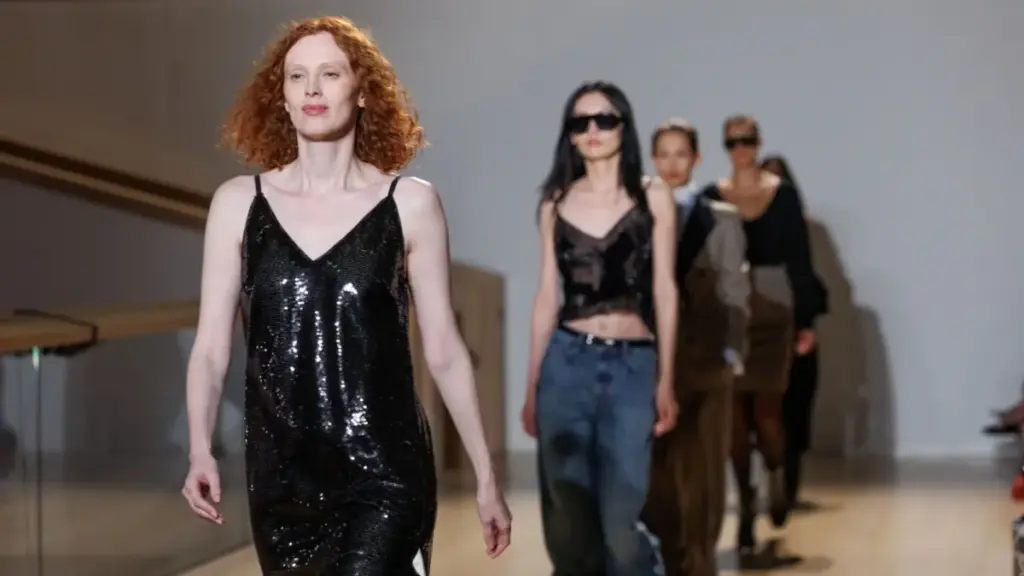
As the house lights dimmed and the music swelled, the audience’s attention was drawn upward. Models began their descent from the gallery high above the atrium, circling the audience in a theatrical procession that doubled the visual impact of the show.
The casting was a triumphant celebration of both British modelling royalty and modern inclusivity. Industry veterans who defined the golden eras of fashion—such as Lara Stone, Jodie Kidd, Erin O’Connor, and Karen Elson, sporting her trademark, vibrant red hair—commanded the runway alongside contemporary names like Lennon Gallagher. Spanning an age range from 21 to 60, the diverse cast sent a powerful message about longevity, fluid style, and the universal appeal of the brand’s offerings.
The Collection: Tailoring, Tones, and Textures
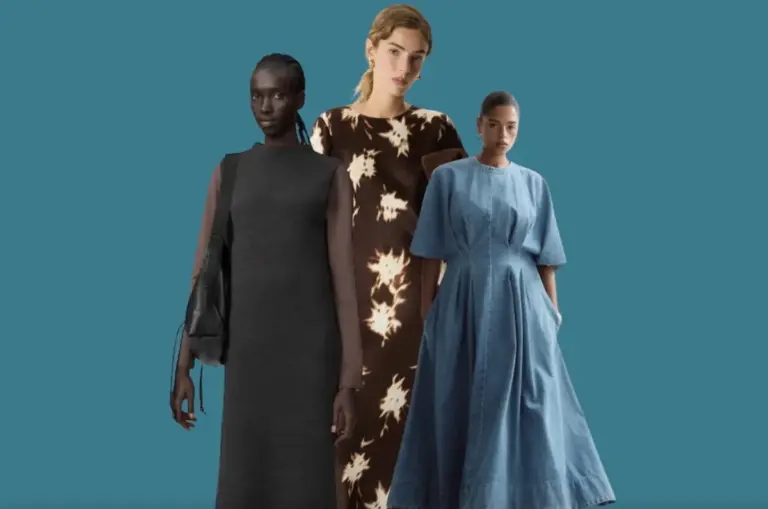
When turning to the clothes themselves, M&S delivered a curated vision that honoured its foundational strengths while injecting fresh, trend-forward energy. The collection featured a striking interplay of textures and silhouettes:
- Dresses: The standout piece was an exquisite cream mini dress featuring an elegant, trailing train that offered a high-fashion juxtaposition of playful hemlines and dramatic structural flair.
- Tailoring: Sharp, architectural blazers and impeccably cut separates demonstrated the brand’s enduring mastery of corporate and smart-casual wear.
- Outerwear: Coats and jackets stole the spotlight. A cohesive, bold palette of rich reds and earthy khakis dominated the outerwear category. Chief among them was the faux fur trim flight bomber jacket, expertly styled with a vivid red triangular scarf, which immediately emerged as the must-have piece of the season.
The Finale and Immediate Retail Integration
The show concluded to the clinking of champagne flutes and the presentation of gourmet canapés, keeping with the celebratory atmosphere. However, the true innovation lay not just in the presentation, but in the logistics.
In a departure from traditional fashion week cycles—where collections debut months before hitting shelves—M&S ensured the entire line was available for purchase immediately. To democratise the experience further, the brand broadcasted the runway show globally at 6:00 PM on the same day, allowing consumers everywhere to watch, engage, and shop in real-time.
Supporting Context & Metrics: The Economics of High-Street Democratisation
A Century of Cultural Footprint
Founded in 1884 as a penny bazaar by Michael Marks and Thomas Spencer, the company has spent the last 100 years evolving from a modest market stall supplier into a multi-channel British institution. While historically celebrated for its food halls and dependable essentials, its fashion division has undergone a quiet yet aggressive renaissance over the past decade. By aligning with contemporary trends, refining its fits, and collaborating with forward-thinking designers, M&S has reclaimed its status as a destination for trend-conscious shoppers.
Pricing Architecture and Accessibility
The cornerstone of M&S’s LFW debut was its commitment to accessible luxury. Industry analysts noted the strategic brilliance of the pricing structure:

- Sub-£50 Milestone: Exactly 50% of the debut collection is priced under £50, defying the inflationary pressures that have recently gripped the luxury and mid-market retail sectors.
- Value Retention: Despite the accessible price points, the garments utilized high-grade synthetic furs, robust tailoring fabrics, and elevated detailing (such as the aforementioned train on the cream mini dress), defying the traditional compromises often associated with budget-friendly fashion.
The "See-Now, Buy-Now" Paradigm
By leveraging digital infrastructure and immediate-broadcast technology, M&S bypassed the traditional six-month lag between runway viewing and retail availability. This modern approach captures immediate consumer impulse and significantly reduces the risk of trend fatigue, positioning the high street giant as an agile competitor to fast-fashion disruptors while maintaining ethical and quality standards.
Official Statements and Industry Reception
While the glitter of the front row faded, the critical reception solidified the success of the milestone showcase. Industry insiders were quick to praise the brand’s bold step into the official London Fashion Week schedule.
Lucy Reber, Fashion Director at Stylist, captured the sentiment of the fashion press:
"The venue of M&S’s very first catwalk show at LFW today was as striking as expected… The clothes were a mix of marvellous dresses – we were particularly keen on the cream mini dress with an elegant train – sharp tailoring and brilliant coats – all the things we know and love M&S for. I was particularly taken with the bold red and khaki theme, and the piece I’ll be buying now is the faux fur trim flight bomber jacket."
Reber’s enthusiasm was mirrored across digital platforms, where consumers flooded the brand’s e-commerce channels following the 6:00 PM broadcast. Retail analysts noted that the integration of cross-generational modelling—featuring names like Erin O’Connor and Karen Elson alongside younger talent—effectively dismantled ageist paradigms that have historically plagued the fashion industry.
Future Outlook: What the LFW Debut Means for M&S
M&S’s successful debut at London Fashion Week is far more than a one-off anniversary stunt; it represents a calculated pivot in the brand’s long-term commercial and creative strategy.
1. Reclaiming High-Street Dominance
As legacy department stores and mid-market retailers face intense pressure from online-only fast-fashion giants and ultra-luxury houses alike, M&S has carved out a distinct defensive and offensive trench. By proving it can command a runway alongside avant-garde designers while maintaining high-street accessibility, the brand has elevated its perceived value in the eyes of consumers.
2. The Evolution of Experiential Retail
The combination of an in-person physical spectacle, a star-studded front row, a global live stream, and instant e-commerce integration points the way forward for the entire retail sector. Future collections are expected to lean even further into this hybrid model, where the line between entertainment and retail transaction is completely dissolved.
3. Sustainability and Longevity
With a cast spanning decades and timeless pieces designed for longevity rather than disposable wear, M&S is subtly addressing growing consumer demands for sustainable fashion practices. By offering durable tailoring and versatile outerwear that bridges seasons, the brand is positioning itself as a smart, conscious choice for the modern wardrobe.
As the digital traffic settles and the faux fur trim flight bomber jacket rapidly climbs the bestseller charts, one thing is abundantly clear: Marks & Spencer’s first century in fashion may be complete, but its next chapter has begun on the most stylish footing imaginable.