Executive Overview
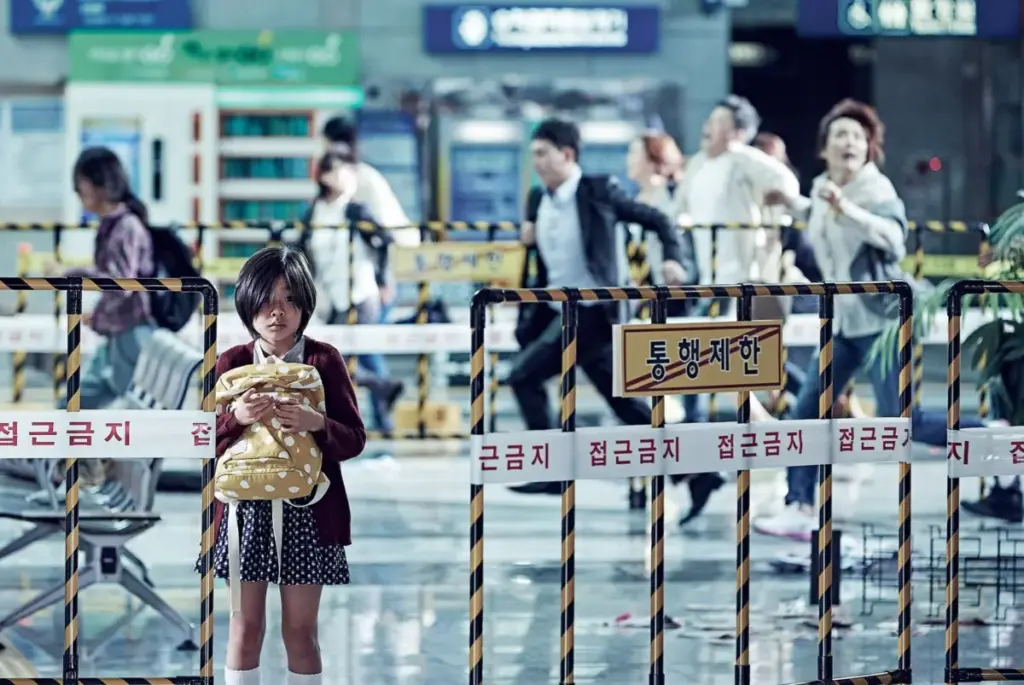
Two decades after it first redefined the parameters of the modern zombie genre, Yeon Sang-ho’s relentless masterpiece Train to Busan is officially returning to the big screen. As part of Cineworld’s highly anticipated Horror Film Season, UK audiences will once again have the opportunity to experience the claustrophobic, heart-pounding terror of South Korea’s most iconic cinematic export. Screening for one night only on October 6, the 20th-anniversary re-release invites both die-hard enthusiasts and uninitiated viewers to witness the harrowing journey of a father and daughter trapped on a speeding bullet train overrun by the undead.
With online tickets priced at an accessible £5.99 (£6.99 in-person), the event is expected to draw massive crowds. Yet, this theatrical return is more than just a nostalgic trip down memory lane. It serves as a timely cultural reassessment of a film that transformed from a midnight screening at the 2016 Cannes Film Festival into a global cultural phenomenon.
Holding a stellar 95% critical approval rating on Rotten Tomatoes and grossing over $98 million worldwide against an estimated $8.5 million budget, Train to Busan proved that creature features could be elevated by sharp social commentary, fully realized characters, and a devastating emotional core. As director Yeon Sang-ho continues to shape the landscape of contemporary horror—most recently with his 2026 standalone thriller Colony—this anniversary screening offers a masterclass in how genre cinema can balance breathless spectacle with profound human empathy.
Detailed Chronology: From Seoul to Cannes and Beyond
The journey of Train to Busan from an ambitious South Korean production to an international benchmark of horror is a masterclass in strategic storytelling and festival placement.
The Conception and Production (2014–2015)
Before directing live-action features, Yeon Sang-ho made a name for himself as an acclaimed animation auteur, known for gritty, socially conscious works like The King of Pigs (2011) and Seoul Station (2016). When he conceptualized Train to Busan, he sought to strip away the sprawling, apocalyptic geography typical of Western zombie narratives like The Walking Dead or 28 Days Later, compressing the chaos into a hyper-confined, moving environment: an express train hurtling down a 453-kilometer track from Seoul to Busan.
Casting was crucial to grounding the high-concept premise. Gong Yoo, already a major star in East Asia, was brought on to play Seok-woo, a morally compromised, workaholic fund manager. Child actor Kim Su-an was cast as his neglected daughter, Soo-an. Filming required immense physical endurance, as the cast and crew spent weeks working on intricate sets that replicated narrow train corridors, luggage racks, and glass-paneled doors—all while executing complex stunt choreography involving dozens of rapid-fire zombie extras.

The Cannes Breakthrough (May 2016)
The film’s international trajectory changed forever on May 13, 2016, when it premiered in the prestigious Midnight Screenings section of the 69th Cannes Film Festival. Unlike standard arthouse fare, the midnight slot at Cannes is notorious for waking up sleepy festival-goers with high-octane genre thrills. Train to Busan did precisely that. The screening ended with a rapturous, roof-raising standing ovation, instantly sparking a ferocious bidding war among international distributors eager to secure rights for North America, Europe, and Latin America.
Domestic Dominance and Box Office Records (Summer 2016)
Released theatrically in South Korea by Next Entertainment World on July 20, 2016, the film shattered domestic box office records on its opening day, pulling in a staggering $4.1 million from 370,000 admissions—at the time, the highest opening day in South Korean box office history. Within less than a fortnight, it became the first South Korean film of 2016 to surpass the coveted 10-million-admissions milestone, ultimately finishing its domestic run with over 11.5 million ticket sales.
Expansion and Cinematic Legacy (2016–2026)
The runaway success of the original spawned an entire cinematic ecosystem. Yeon’s own animated prequel, Seoul Station, arrived in cinemas shortly after the live-action release, exploring the societal rot and initial outbreak at the Seoul railway terminal. Four years later, the standalone sequel Peninsula (2020) transported audiences back to a post-apocalyptic, quarantine-locked Korean peninsula.
Now, sitting firmly in 2026, the film’s influence is felt across global cinema, paving the way for international streaming blockbusters like Squid Game (which incidentally features Train to Busan lead Gong Yoo in a memorable cameo) to capture mainstream Western consciousness.
Supporting Context & Metrics: Why the Film Endures
To understand why Train to Busan commands such reverence two decades after its conception, one must examine the metrics of its success and the mechanics of its storytelling.
Critical Reception and Ratings Breakdown
The film’s critical consensus on Rotten Tomatoes praises it for delivering a "thrillingly unique — and purely entertaining — take on the zombie genre, with fully realized characters and plenty of social commentary."

- Rotten Tomatoes: 95% Fresh (based on over 110 reviews).
- Metacritic: 72/100 (generally favorable reviews, praising its relentless pacing).
- Box Office: Grossed approximately $98.5 million globally against an ultra-lean budget of roughly $8.5 million.
The Anatomy of Terror: Emotional Resonance Meets Fast-Paced Action
Entertainment reporter and film critic Joel Harley notes that the film’s secret weapon is its refusal to rely solely on jump scares. "Yes, there are zombies, and they are terrifying… but at its heart, Train to Busan is a film about a father and his daughter."
The narrative operates as a dual-track journey: outwardly, it is an escalating battle for survival against bloodthirsty, hyper-kinetic infected individuals who sprint, leap, and react violently to sound and sight. Inwardly, it is a searing critique of modern corporate capitalism and the moral decay of urban society.
Seok-woo represents the ultra-competitive ethos of contemporary Seoul—cold, transactional, and emotionally distant from his family. As the train races south, the confined carriage becomes a microcosm of societal class warfare. Passengers turn on one another, hoarding resources, locking doors on the vulnerable, and displaying a chilling lack of empathy. Conversely, characters like the working-class expectant father Sang-hwa (Ma Dong-seok) and his fierce wife Sung-kyung (Jung Yu-mi) inject the narrative with profound acts of selflessness.
Renowned critic Chris Stuckmann encapsulated the film’s uncompromising nature in his review, stating: "It could not be done better. They pulled no punches with this movie." Similarly, RogerEbert.com praised it as "the most purely entertaining zombie film in some time… delivering something unique for an era in which kindness to others seems more essential than ever."
Official Statements and Industry Perspectives
The enduring cultural footprint of Train to Busan has made its creator, Yeon Sang-ho, a pivotal figure in modern international horror. In recent interviews surrounding the release of his 2026 standalone zombie thriller Colony, Yeon reflected on the heavy legacy of his breakout hit and how it liberated him as a filmmaker.
Reflecting on the psychological weight of following up a global phenomenon, Yeon shared his evolving philosophy with Filmhounds Magazine:

"It is true that Train to Busan was a hugely successful film, and I feel that the pressure to achieve even greater success when making a movie has almost disappeared these days. I have become more interested in making more unique films. Of course, since a project like Colony involved a considerable budget, a certain level of box office success is very important, but rather than the pressure, the desire to create more unique films has grown."
Yeon added that this creative freedom directly inspired his recent slate of projects, including smaller-budget, high-concept dramas like The Ugly:
"I think that is what led me to start a project like The Ugly last year, which allows me to create a unique story on a much smaller budget."
This perspective highlights a major shift in Asian genre cinema over the past decade. Directors who achieve international commercial blockbusters are increasingly using their clout to champion daring, auteur-driven narratives rather than falling into the trap of endless, diminishing-return sequels.
Future Outlook: The Evolution of Modern Horror and Cineworld’s Season
As Cineworld rolls out its comprehensive Horror Film Season for late 2026, the inclusion of Train to Busan signals a broader industry trend: the theatrical re-evaluation of modern classics. In an era dominated by home-streaming algorithms and digital libraries, cinema chains are discovering that audiences crave communal, theatrical experiences for films that demand high-tension viewing.
For Yeon Sang-ho, the horizon is wide open. Following the release of Colony—which trades train tracks for a high-tech corporate biotech conference center besieged by a mutating serum outbreak—the director continues to dissect human nature under extreme laboratory and societal conditions. Starring Go Su, Jun Ji-hyun, and Koo Kyo-hwan, Colony proves that Yeon has no intention of resting on his laurels.

Yet, for all his subsequent experiments in animation, live-action thriller, and dark fantasy, Train to Busan remains the apex predator of his filmography. It is a cinematic lightning-in-a-bottle moment where technical virtuosity, cultural critique, and raw emotional storytelling aligned perfectly.
As the October 6 screening approaches, horror aficionados are reminded why this bullet train ride into the dark remains unrivaled. Grab your tickets, prepare your tissues, and check the doors behind you—the dead are boarding once again.