Executive Overview
In the grand tradition of Silicon Valley disruption, technology companies have long targeted traditional industries, systematically transforming media, transportation, finance, and retail. Yet, the latest frontier being colonized by software engineers, data scientists, and venture capitalists is not digital—it is deeply physical. Over the past twenty-four months, a surreal convergence has taken place at the intersection of venture capital and haute streetwear. From Palantir’s tactical chore coats to Anthropic’s branded "thinking caps" and OpenAI’s dedicated apparel division, Supply Co., big tech has officially entered the fashion game.
Once defined by unassuming corporate swag—inexpensive, boxy promotional t-shirts handed out at developer conferences—tech merchandising has undergone a radical metamorphosis. Today, major artificial intelligence and defense technology firms are launching curated apparel collections, orchestrating limited-edition "drops," appointing executives to roles styled as "Head of Vibes," and opening temporary pop-up shops.
This cultural pivot has triggered a sharp schism. While mainstream consumers and a dedicated subset of pro-tech enthusiasts have rushed to buy out these limited runs, the traditional fashion and streetwear communities have reacted with visceral hostility. Critics within the style press and independent design circles have lambasted these initiatives as hollow, manufactured, and derivative. Beyond aesthetics, many view corporate fashion lines as a transparent exercise in reputation laundering—an effort by controversial defense contractors and surveillance-adjacent AI giants to wrap themselves in the anti-establishment, counter-cultural cool of streetwear.
To unpack this strange cultural phenomenon, The Glossy Fashion Podcast recently sat down with Chris Erik Thomas, a style writer for Highsnobiety. According to Thomas, the phenomenon represents a bizarre collision of two worlds that speak entirely different languages. While tech companies see fashion as a legitimate branding vehicle and a community-building tool, style purists see a dated, tone-deaf imitation of late-2010s streetwear that papers over the very real ethical and environmental controversies trailing Silicon Valley’s elite.
Detailed Chronology: From Developer Swag to the Tech-Streetwear Industrial Complex
To understand how Silicon Valley transitioned from handing out cheap cotton tees emblazoned with database logos to executing curated capsule drops, one must trace the evolution of tech corporate identity. For decades, the uniform of the software engineer was famously utilitarian: a plain black hoodie, a fleece vest (particularly ubiquitous in San Francisco’s Financial District), or a branded polo.
However, as tech companies evolved into trillion-dollar global conglomerates, their cultural footprint expanded exponentially. The traditional boundaries separating Silicon Valley from mainstream culture dissolved. Tech founders became celebrities, and their lifestyle choices were scrutinized with the same intensity previously reserved for Hollywood actors and hip-hop artists.
The Palantir Catalyst
The modern tech-streetwear wave arguably crystallised with Palantir Technologies. Known for its deep integration with defense intelligence agencies, law enforcement, and corporate data analytics, Palantir has long courted controversy. Yet, the company recognized early on that shifting public perception required cultural currency.
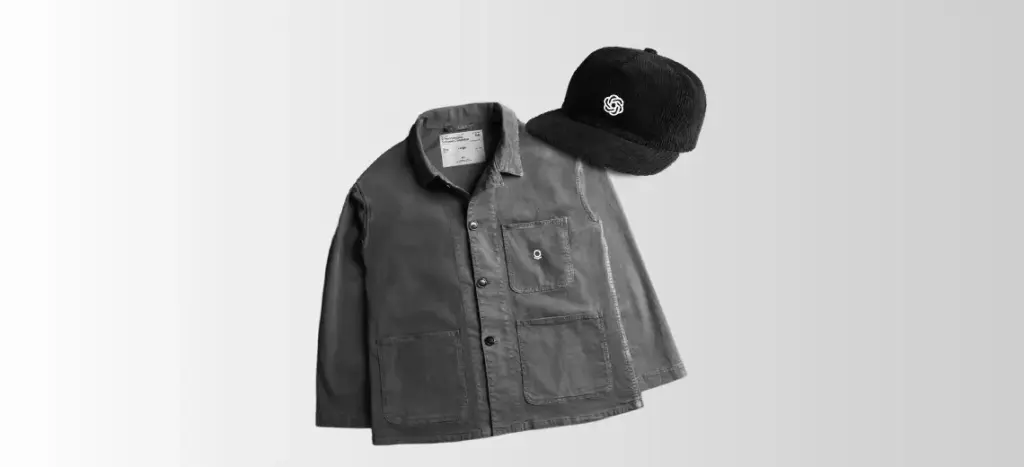
The turning point arrived with the introduction of the Palantir chore coat—a rugged, utilitarian garment typically associated with blue-collar labor, reimagined as a piece of limited-edition techwear. The item quickly circulated through niche tech circles, instantly signaling an insider status that transcended traditional corporate attire. This success was compounded by structural changes within the firm, notably the creation of unconventional corporate titles such as "Head of Vibes," a role explicitly tasked with curating the cultural ecosystem surrounding the company.
The Anthropic "Thinking Cap" and OpenAI’s Supply Co.
As the generative artificial intelligence boom took flight following the public launch of ChatGPT in late 2022, the race for cultural dominance intensified. Anthropic, developer of the Claude AI model, soon followed suit with its own high-profile merchandise experiments, most notably the "thinking cap"—a piece of headwear that immediately became a tongue-in-cheek status symbol among Silicon Valley insiders and AI researchers.
Recognizing the immense marketing and brand-loyalty potential of these items, OpenAI formalized its fashion ambitions by launching Supply Co., an in-house apparel arm designed to roll out regular, highly anticipated merch drops. No longer content with passive promotional items, OpenAI began operating like a legitimate streetwear label, leveraging artificial scarcity, drop-culture timing, and design-conscious silhouettes to capture the attention of tech enthusiasts and early adopters alike.
Today, this trend has metastasized into a full-scale subculture. Major tech firms routinely deploy pop-up shops during major industry conferences, transforming the mundane act of developer relations into exclusive cultural happenings.
Supporting Context & Metrics: A House Divided by Aesthetics and Ethics
Despite the friction between Silicon Valley and the global fashion community, the financial metrics underpinning tech streetwear tell a surprising story of commercial viability.
The Financial Reality: Sell-Out Drops and Booming Sales
While traditional fashion critics dismiss the trend, the consumer appetite for tech merch is undeniably robust. Industry metrics reveal that OpenAI’s apparel drops consistently sell out within hours of release. Meanwhile, Palantir’s dedicated apparel division has reported staggering growth, projecting that its sales will double year-over-year.
Chris Erik Thomas notes that while these garments are rarely spotted on the streets of traditional fashion capitals like New York, London, or Paris, they have carved out a distinct niche among a dedicated demographic.
"I haven’t seen anyone out in the wild with any of this stuff yet, but there is a subset of the population that is very pro-AI; they love big tech, they wear their Apple Vision Pro on the plane," Thomas observed during his appearance on The Glossy Podcast.
This consumer base spans two distinct mindsets: true believers who view technological acceleration as humanity’s highest calling, and ironic consumers who wear the merch as a knowing nod to the dystopian undertones of modern corporate dominance.
The Aesthetic Critique: A Decade Behind the Curve
From a purely design-oriented perspective, however, style writers have savaged tech-infused apparel for its lack of originality. According to Thomas, the visual language deployed by companies like OpenAI and Palantir is profoundly anachronistic, feeling less like the cutting edge of fashion and more like an archaeology dig of late-2010s Hypebeast culture.
"It has this post-Covid, early 2020s look — like the Kith, Aimé Leon Dore, Supreme era — that a lot of others have already aped," Thomas explained. "Other companies, other brands, other aesthetics have already taken their place, so this all just looks very dated."
In the fast-moving ecosystem of contemporary streetwear—where trends cycle through hyper-niche aesthetics like Gorpcore, Blokecore, and archival Americana at breakneck speed—adopting the corporate-adjacent aesthetic of a 2018 Supreme drop reads to fashion insiders as fundamentally uncool.
Official Statements and Industry Reactions: Reputation Laundering vs. Brand Expression
The collision of tech and fashion has ignited a fierce debate regarding corporate motives. The central accusation leveled against tech giants venturing into apparel is reputation laundering: using the cultural capital of streetwear to mask deeply controversial business practices.
The Backlash Against Surveillance and Environmental Impact
Critics point out that many of the companies leading the tech-streetwear charge are deeply enmeshed in politically and socially sensitive sectors. Palantir, for instance, has faced sustained protests and employee dissent over its contracts with immigration enforcement agencies and military intelligence operations. Similarly, the rapid scaling of generative AI models has drawn intense scrutiny regarding massive carbon footprints, energy consumption, intellectual property theft, and the displacement of creative labor.
To fashion purists, wrapping these corporate entities in the anti-establishment ethos of skate and streetwear culture is an act of supreme irony—or cynicism. Streetwear was historically born out of marginalized communities, counter-cultural movements, and DIY subcultures. For multi-billion-dollar tech conglomerates involved in mass surveillance and data extraction to co-opt that visual language is viewed by many as a hostile corporate takeover of culture itself.
The Defense: Community Building and Tech Tribalism
Conversely, defenders of tech merch argue that companies are merely responding to organic demand from their communities. In an era where software developers and AI researchers wield immense cultural influence, wearing a piece of branded apparel functions similarly to wearing band merchandise or a sports jersey. It is a badge of tribal affiliation, signaling membership in what proponents view as the defining technological revolution of the twenty-first century.
Future Outlook: Where Do Tech and Fashion Go From Here?
As we look toward the future of the tech-fashion convergence, two divergent paths lie ahead.
- The Novelty Fizzle: One possibility is that tech streetwear will prove to be a cyclical fad tied exclusively to the generative AI hype cycle. As public scrutiny over the environmental and ethical costs of artificial intelligence intensifies, and as the initial novelty of wearing corporate logos wears off, the market may contract. If the aesthetic remains permanently stuck in the late-2010s streetwear paradigm, it risks becoming an embarrassing corporate relic—the digital age equivalent of dot-com-era windbreakers.
- The Institutionalization of Techwear: Alternatively, tech companies may mature their fashion strategies, moving away from derivative streetwear knockoffs toward genuine design collaborations. By partnering with avant-garde designers, technical outerwear specialists, and sustainable fashion innovators, Silicon Valley firms could transcend simple merchandise drops to create functional, high-performance apparel rooted in their engineering DNA.
Ultimately, whether viewed as an exercise in cynical reputation laundering or a harmless expression of tech tribalism, the entry of AI and big tech into the fashion space underscores a fundamental truth: in the modern economy, every company is a media company, and every brand desperately desires the cultural cachet of the runway.
For more candid conversations on how today’s trends are shaping the future of the fashion industry, subscribe to the Glossy Fashion Podcast on Apple Podcasts or Spotify.