Executive Overview
The modern beauty landscape exists in a perpetual state of hyper-acceleration, fueled by algorithmic feeds, viral beauty hacks, and relentless product launches. While makeup remains a vital medium for artistic expression and personal identity, it is fundamentally an engine of consumerism. For decades, the multi-billion-dollar cosmetics industry has engineered a sophisticated marketing apparatus designed to exploit human insecurities, manufacturing a continuous stream of niche problems so they can sell hyper-specific, highly priced solutions.
From color-changing sunscreens and peel-off lip tints to specialized eye primers and disposable makeup sponges, the market is saturated with items that promise revolutionary transformations but deliver little more than wasted money and underwhelming results. But where do we draw the line between genuine innovation and elaborate marketing ploys?
To cut through the digital noise, we consulted an elite roster of professional makeup artists, columnists, and industry insiders—including Saffron Hughes, Scarlett Burton, Rose Gallagher, and Mira Parmar—to dissect the viral products dominating our feeds. Their verdict is clear: many of the beauty industry’s most aggressively marketed staples are entirely redundant. This investigative report explores the specific items you should immediately drop from your routine, the psychological triggers behind their virality, and the expert-approved alternatives that will save both your skin and your wallet.
Detailed Chronology: The Evolution of Viral Consumerism in Beauty
To understand how modern vanity tables became cluttered with single-use gadgets and redundant formulas, one must examine how the relationship between the consumer and the cosmetics market has shifted over the last two decades.
Phase 1: The Traditional Retail Era (Pre-2015)
Before the ubiquity of short-form video algorithms, product adoption was dictated by traditional editorial media, department store counter consultations, and brand-led marketing campaigns. The lifecycle of a beauty product was measured in years, not weeks. Consumers invested in foundational staples—a reliable mascara, a versatile palette, a standard foundation—and relied on professional artistry books or magazine tutorials to master application techniques. Products served broad, functional purposes.
Phase 2: The Instagram Aesthetic & Multi-Step Routines (2015–2019)
The rise of Instagram democratized beauty tutorials but simultaneously inflated the expected baseline of daily makeup application. This era was characterized by an obsession with heavy contouring, baking, ultra-precise matte liquid lips, and painstakingly carved brows. Brands capitalized on this by introducing hyper-specialized products: brow pomades, baking powders, liquid lip primers, and intricate color-correcting palettes. The consumer routine ballooned from a five-minute morning ritual into a complex, multi-step production requiring dozens of specialized items.
Phase 3: The TikTok Virality & Micro-Trend Economy (2020–Present)
Enter the era of TikTok, Reels, and algorithmic virality. The speed of trend cycles went from seasonal to daily. Products are no longer judged by their long-term performance or efficacy, but by their visual performance on a 9:16 vertical screen.
- The Spectacle Factor: Items that offer a dramatic visual transformation on camera—such as a stark green cream that turns beige, a peel-off gel that reveals a stained lip, or a white, chalky lash primer—consistently achieve viral velocity.
- The Planned Obsolescence of Simplicity: As consumers began pushing back against heavy, cakey makeup in favor of "clean girl" aesthetics and minimalist skin tints, the industry pivoted rapidly. Instead of simplifying, brands flooded the market with new layers of complexity: specialized freckle pens, color-changing hydrators, and single-use applicators designed to soak up expensive liquid formulas.
Supporting Context & Metrics: Unpacking the Redundant Ranks
Let’s examine the specific categories identified by our experts as the most egregious offenders in the modern cosmetics lineup, alongside the data and practical realities that expose their shortcomings.
1. Color-Changing Sunscreens and "Universal" CC Creams
- The Pitch: "Universal" pigments suspended in white or green bases that magically adapt to your specific skin tone upon application, offering simultaneous UV protection, color-correction, and hydration.
- The Reality: According to makeup artist Saffron Hughes, these formulations rarely deliver in the real world. "Farbwechselnde Sonnen- und Feuchtigkeitscremes führen oft zu einem gräulichen Teint oder einem falschen Ton," she notes, highlighting how poorly these one-size-fits-all formulas perform on deeper skin tones, frequently resulting in an ashen or chalky cast.
Furthermore, dermatologists routinely warn against relying on color-correcting CC creams or tinted moisturizers for sun protection. To achieve the labeled SPF rating, an individual must apply a standard volumetric dose—statistically measured as the "two-finger rule" (generous lines squeezed along the index and middle fingers). Because consumers rarely apply tinted products or sunscreens in these quantities due to aesthetic heaviness, the actual UV protection is severely compromised. - The Green CC Cream Pitfall: Scarlett Burton points out the widespread misuse of green color-correcting creams designed to neutralize redness. While color theory dictates that green cancels red, applying green formulas across the entire face rather than targeted localized spots leads to a dull, muted, and greyish complexion.
- The Expert Alternative: Apply a dedicated, high-protection broad-spectrum chemical or mineral sunscreen as your foundational base. Follow it with a lightweight skin tint specifically matched to your undertone, such as the MAC Strobe Dewy Skin Tint or Fenty Beauty Eaze Drop Blurring Skin Foundation.
2. Peel-Off Lip Tints
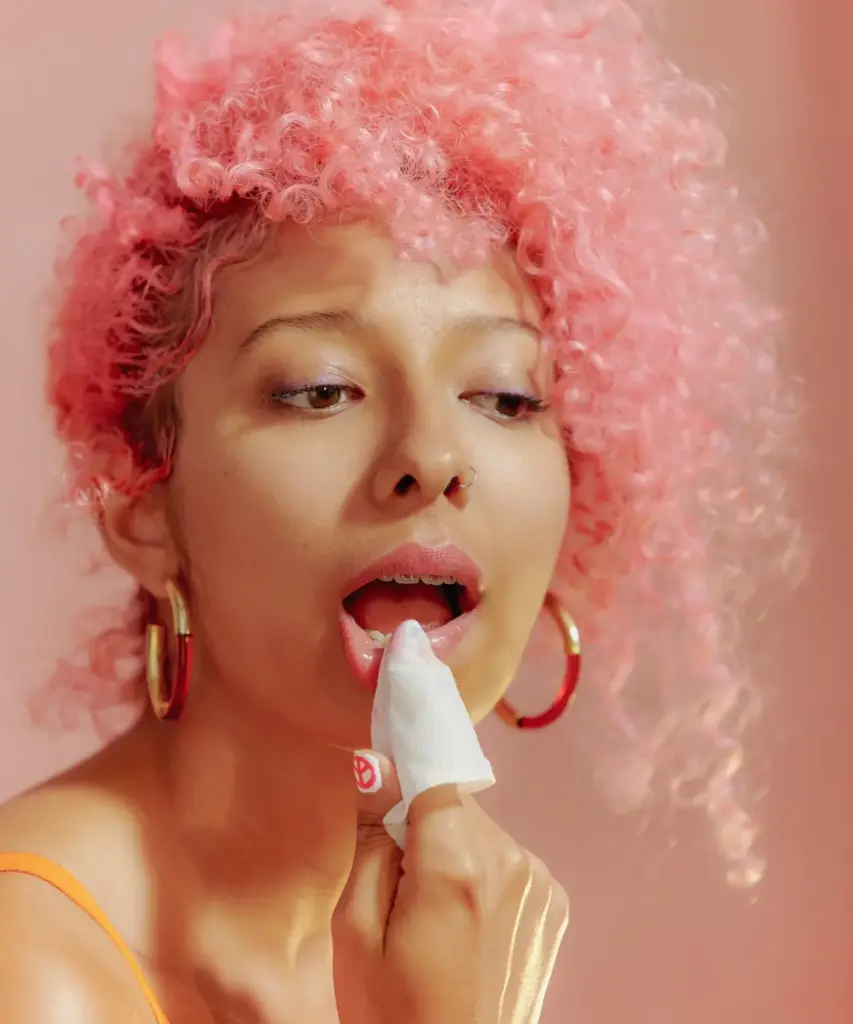
- The Pitch: A viscous, brightly colored gel painted across the lips, left to dry, and subsequently peeled away to reveal a long-lasting stain underneath.
- The Reality: Labeled as pure social media bait by beauty editor Rose Gallagher, these products solve a problem that never existed. "Niemand, der oder die es morgens eilig hat, hat irgendwas von einer solchen abziehbaren Lippentönung," Gallagher explains. Beyond the sheer impracticality of waiting for a gel to dry before peeling it off, these products frequently cause unnecessary friction, drying out the delicate lip barrier and occasionally peeling away healthy skin cells along with the dried product.
- The Expert Alternative: Opt for reactive balm formulas like the Givenchy Rose Perfecto Pink Irresistible, which interact with the skin’s natural pH to deliver a customized, effortless flush of color in a single swipe without the mess or discomfort.
3. Dedicated Freckle Pens
- The Pitch: Felt-tip pens engineered to dot fake sun-kissed freckles across the bridge of the nose and cheeks for an effortless, youthful summer aesthetic.
- The Reality: Burton warns that many dedicated freckle pens bleed upon contact with natural facial oils and skin moisture. Instead of crisp, realistic specks, the pigment spreads into fuzzy, unnatural blotches. Worse still, many formulas dry down with a distinctly orange or reddish undertone that immediately betrays their artificial nature.
- The Expert Alternative: Skip the markup and raid your existing kit. Burton recommends using an ultra-fine eyebrow pencil—such as the e.l.f. Ultra Precise Brow Pencil—which features a drier, more controlled wax-based formula that stays put, resists bleeding, and mimics the natural translucency of real skin spots.
4. Single-Purpose Eye and Lip Primers
- The Pitch: Specialized primers designed exclusively to prep eyelids for eyeshadow or lips for lipstick, purported to exponentially increase longevity and prevent creasing.
- The Reality: According to Hughes and fellow makeup artist Mira Parmar, these products are often redundant expenses. Regular facial primers undergo rigorous dermatological safety testing and are formulated to smooth texture, control sebum, and lock down pigments. Unless a product label explicitly warns against application near ocular tissue, most high-quality facial primers perform admirably on the eyelids. Similarly, lip primers lack empirical proof of superiority; a light sweep of residual foundation or concealer followed by a precise lipliner provides an identical, if not superior, canvas for lipstick adherence.
- The Expert Alternative: Extend your standard, tested facial primer upward onto the eye area, or utilize your existing complexion products to prep the lips.
5. Traditional Beauty Sponges with Liquid Skincare Hybrids
- The Pitch: High-density foam blending sponges designed to press foundation and concealer seamlessly into the skin.
- The Reality: While sponges excel at diffusing thick, high-coverage matte foundations, the beauty industry’s recent pivot toward lightweight skin tints, serums, and fluid hybrids has rendered traditional sponges financially inefficient. Gallagher points out a simple law of physics: porous foam acts like a sponge in the literal sense, absorbing high volumes of expensive, fluid-based skincare-makeup hybrids. Instead of blending the product onto your face, a large percentage of it is swallowed by the sponge, drastically accelerating how quickly you run through—and must repurchase—your cosmetics.
- The Expert Alternative: For fluid skin tints and tinted moisturizers, bypass the sponge entirely and use clean fingertips. The warmth of your skin melts the product fluidly while ensuring zero wastage.
6. White and Colored Mascara Primers
- The Pitch: Pre-mascara base coats (often stark white) designed to thicken, lengthen, and volumize lashes before the application of black mascara.
- The Reality: Hughes notes that these formulas frequently result in a clunky, heavy-handed finish. Because stark white formulas are difficult to completely coat and conceal with standard black mascara, users invariably apply extra layers of mascara to hide the white cast, leading to heavy, spidery, and brittle lashes. Modern advancements in mascara formulation mean that volume and length are now built directly into the primary tube.
- The Expert Alternative: Invest in high-performance lengthening and volumizing mascaras that do the heavy lifting in a single step, such as the Lancôme Lash Idôle, Benefit They’re Real!, or Maybelline Lash Sensational Sky High.
7. Overpriced, Alcohol-Heavy Setting Sprays
- The Pitch: Luxury fixing mists promising 24-hour locked-in wear and a flawless finish.
- The Reality: A close examination of ingredient lists reveals a startling truth: the primary active ingredient in the vast majority of setting sprays is water. Furthermore, mists marketed toward a "matte finish" frequently contain high concentrations of denatured alcohol. Hughes warns that this can severely dehydrate the skin, leading to compromised moisture barriers, flaky patches, and excessive oil rebound as the skin desperately tries to compensate for the lost moisture. Ironically, if touched before fully drying, water-heavy sprays can actually cause makeup to shift more than if no spray had been used at all.
- The Expert Alternative: Skip the expensive mists and invest in a finely milled, high-grade setting powder—such as the Laura Mercier Translucent Loose Setting Powder, Charlotte Tilbury Airbrush Flawless Finish Powder, or the budget-friendly e.l.f. Halo Glow Setting Powder—which locks makeup in place reliably without stripping the skin’s natural hydration.
Official Statements and Industry Insights
The critique voiced by these independent makeup artists points to a broader structural issue within the beauty economy. As digital content creation rewards novelty over utility, beauty consumers are increasingly caught in a cycle of overconsumption.
"The beauty industry thrives on making you feel like your current routine is incomplete. Every time a new micro-trend surfaces, it is accompanied by three new auxiliary products you supposedly cannot live without. Our job as artists is to remind clients that technique, skin health, and multi-functional products will always outperform a drawer full of single-use gimmicks."
— Saffron Hughes, Professional Makeup Artist
Industry veterans emphasize that true professional kit curation has always relied on versatility rather than volume. By stripping away redundant steps—such as swapping specialized primers for multi-use complexion prep, replacing peel-off tints with pH-reactive balms, and ditching liquid-absorbing sponges for clean fingertips—consumers can build a more sustainable, cost-effective, and skin-friendly routine.
Future Outlook: Toward a More Sustainable Beauty Economy
As we look toward the future of the cosmetics industry, several shifting paradigms suggest that consumer fatigue with viral gimmicks is reaching a critical tipping point.
- The Rise of Skinimalism: Consumers are increasingly prioritizing skin health over heavy mask-like coverage. The demand for breathable, hybrid skincare-makeup products will continue to grow, forcing brands to move away from heavy-handed setting sprays and complex priming layers in favor of lightweight, skin-nurturing formulations.
- Critical Consumerism and De-Influencing: The explosive growth of "de-influencing" content on social media platforms signals a cultural pushback against hyper-consumerism. Buyers are demanding transparency, functional longevity, and multi-purpose utility rather than one-hit-wonder products designed solely for a ten-second video clip.
- Smart Regulation and Ingredient Transparency: As shoppers become more ingredient-literate, brands relying on water-heavy formulas masked by luxury branding will face increased scrutiny. The future belongs to brands that offer honest formulations, ethical pricing, and items that respect both the consumer’s wallet and their physiological skin barrier.
Ultimately, the best beauty routine is not the one with the most steps or the highest price tag, but the one that honors your skin’s integrity while respecting your hard-earned cash. Before clicking "Add to Cart" on the next viral sensation sweeping your feed, take a moment to consult the professionals: your skin—and your bank account—will thank you.