Executive Overview
The intersection of music, corporate influence, and geopolitical advocacy has rarely played out on a public stage as explosively as it did in September 2026. What began as a series of impassioned onstage protests by rapper Macklemore during Ed Sheeran’s sprawling Loop Tour quickly snowballed into a cross-industry firestorm. The controversy culminated in Macklemore being dropped from the tour—allegedly under intense pressure from high-profile venue owners led by billionaire New England Patriots owner Robert Kraft—and triggered a domino effect that saw every remaining supporting act voluntarily withdraw from the lineup in solidarity.
In response to the intense industry pressure and his subsequent dismissal, Macklemore announced he is donating the entirety of his $1 million net earnings from the Loop Tour to six humanitarian organizations providing direct relief to Palestinians. Simultaneously, the Seattle-born rapper issued a direct challenge to Kraft, inviting the billionaire businessman to match his seven-figure donation.
This unfolding controversy has reignited fierce global debates over free speech in the entertainment industry, the boundaries of corporate oversight in live music, and the heavy toll of the ongoing humanitarian crisis in Gaza. As artists, promoters, and venue executives lock horns, the fallout from the Loop Tour serves as a watershed moment for how political discourse is handled on modern concert stages.
Detailed Chronology of a Crisis
The Spark: MetLife Stadium and "Hind’s Hall"
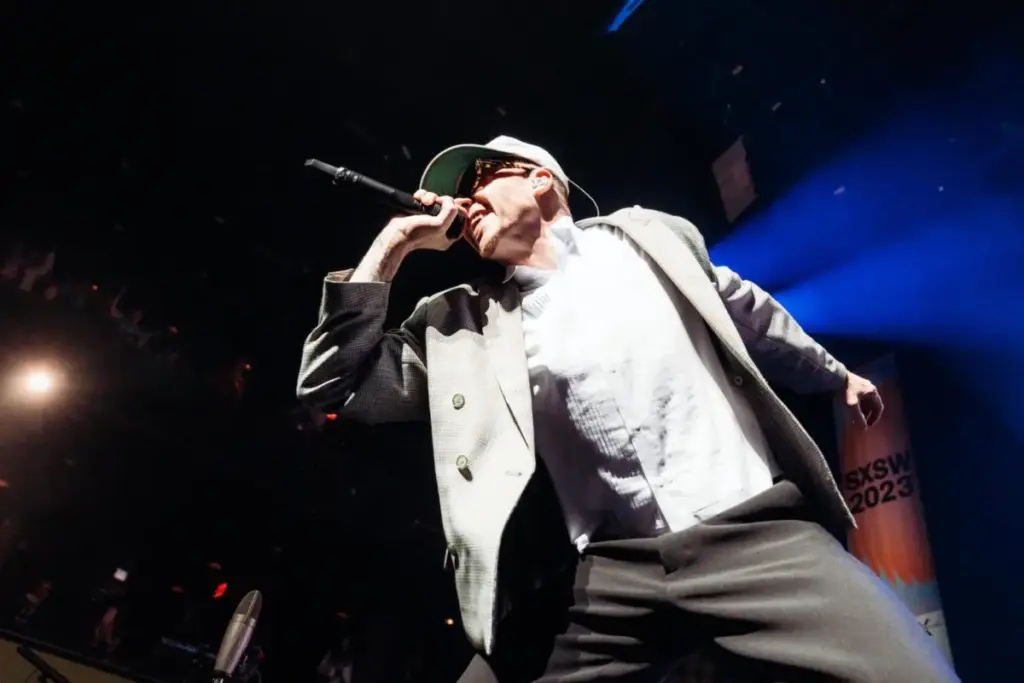
The roots of the controversy stretch back to early September 2026, when Macklemore joined Ed Sheeran as a supporting act for the North American leg of the Loop Tour. During consecutive performances on September 4 and 5 at MetLife Stadium in East Rutherford, New Jersey, Macklemore used his platform to voice fierce opposition to the ongoing military conflict in Gaza.
Performing his powerful protest anthem, "Hind’s Hall"—a track released earlier in 2024 that accuses Israel of committing genocide against Palestinians following the October 7, 2023, Hamas-led attacks—Macklemore projected stark images of the violence in Gaza onto the venue’s massive screens. Capping his performance with an unyielding "Free Palestine" declaration, the rapper ignited an immediate debate among concertgoers, industry executives, and political advocacy groups.
The Backchannel Pressures and Venue Ultimatums
As footage and reports of the performances circulated, backstage tensions escalated rapidly. According to public statements and subsequent reporting, Robert Kraft—owner of Gillette Stadium and head of the Kraft Group—reportedly spearheaded an effort among major stadium owners to bar Macklemore from performing at subsequent tour stops.
Sources indicate that venue stakeholders issued a stark ultimatum to the tour’s promoters: either Macklemore is removed from the lineup, or the remaining shows across several prominent U.S. stadiums would be canceled entirely. For Ed Sheeran and his management team, the threat presented an unprecedented dilemma.
The Promoter’s Announcement
On Monday, September 14, the Messina Touring Group—the U.S. promoter for the Loop Tour—officially pulled the plug on Macklemore’s remaining appearances. In an official statement, the promoter cited external venue restrictions:
"We have been notified by venues on the upcoming U.S. tour dates that they will not allow a concert to take place with Macklemore on the lineup, which would result in the cancellation of the tour and impact hundreds of thousands of fans. After discussions with stakeholders, Macklemore will not be performing on the remaining support dates."
The Domino Effect: Supporting Acts Walk Out
The immediate aftermath of Macklemore’s dismissal triggered a mass exodus from the tour. Ed Sheeran attempted to steady the ship on Tuesday, September 15, releasing a statement clarifying that while he participated in discussions with Kraft and venue owners, the decision to dismiss Macklemore ultimately belonged to the promoter. Sheeran emphasized his responsibility to his touring crew, musicians, and fans who had purchased tickets.
However, Sheeran’s assurance failed to quell the rising tide of discontent. Within hours of his statement, every remaining supporting act on the tour—Aaron Rowe, Finneas, and Lukas Graham—announced their immediate withdrawal from the Loop Tour. Each artist released individual statements backing Macklemore’s stance, effectively leaving Sheeran without an opening lineup.
Macklemore’s Counter-Move: The Million-Dollar Pledge
Refusing to let the conversation fade into the background, Macklemore took to social media on Wednesday, September 16, to reframe the narrative. Announcing his decision to distribute his entire $1 million net profit from the tour to Palestinian relief organizations, the rapper directly called out Robert Kraft.
"Writing a check is one of the least costly forms of solidarity available to me," Macklemore wrote. "I am doing it because I can, and because these organizations are doing the work while much of the world debates it… And I invite Robert Kraft—the billionaire who allegedly rallied other Loop Tour venue owners to get Macklemore dropped from the bill—to match my donation."
Supporting Context & Metrics
To fully understand the gravity of the Loop Tour controversy, one must examine the broader socio-political backdrop against which it is unfolding. The humanitarian situation in Gaza has remained a focal point of intense global polarization since the outbreak of hostilities in late 2023.
According to figures cited from Gaza’s Health Ministry, more than 73,000 Palestinians had been killed in relentless military strikes as of mid-2025, with countless others enduring extreme hunger, displacement, and a near-total collapse of medical infrastructure. While international bodies, including various United Nations agencies, have characterized the scale of devastation in severe humanitarian and legal terms, Western allies—including the United States and Israel—have strongly contested such classifications, maintaining that military operations are targeted against Hamas infrastructure.
Financially, the organizations selected by Macklemore to receive his $1 million donation represent some of the most active frontline humanitarian groups operating in the region:
- Palestine Children’s Relief Fund (PCRF): Providing specialized medical care, psychological support, and humanitarian aid to injured and sick children.
- HEAL Palestine: Focused on health, education, and aid for youth affected by conflict.
- Gaza Soup Kitchen: Providing vital daily nutritional support and hot meals to displaced families.
- Medical Aid for Palestinians (MAP): Delivering emergency medical supplies, equipment, and frontline health workers to overwhelmed hospitals.
- UNRWA USA National Committee: Supporting the United Nations Relief and Works Agency in providing education, health, and social services to Palestine refugees.
- Anera: Delivering sustainable developmental and humanitarian aid, including food, clean water, and medicine, across the Middle East.
Official Statements and Industry Reactions
The public statements issued by the key figures in this controversy underscore a stark philosophical divide regarding the intersection of art, activism, and corporate real estate.
Robert Kraft’s Defense
Following his identification as a central figure in the tour’s backstage maneuvering, Robert Kraft released a detailed statement defending his actions. Kraft framed his intervention not as an attempt to stifle political debate, but as a preventative measure to protect his venue from being utilized for what he termed "hate speech."
"Advocacy should not come at the expense of the Jewish community," Kraft wrote. "I would welcome the opportunity to sit down with Macklemore and discuss the facts, because ultimately our goal is the same—peace for all people, an end to suffering, and an end to all hate."
Kraft also acknowledged the immense suffering of innocent Palestinians, stating that "their pain and loss are real," while emphasizing his commitment to Jewish safety and communal harmony in the wake of rising global antisemitism.
Ed Sheeran’s Precarious Position
Ed Sheeran found himself caught in the crossfire between corporate venue stakeholders, progressive artists, and hundreds of thousands of ticket holders. In his statement, Sheeran underscored his desire to protect the livelihoods of his crew and support staff, noting:
"Macklemore coming off tour was the promoter’s decision, it was not mine. Macklemore’s contract for the tour was with the promoter, not me… I would never let down the fans who had made plans, nor would I abandon the touring crew and the other support acts and musicians who rely on me for work and to make a living."
Despite these assurances, the rapid departure of Finneas, Lukas Graham, and Aaron Rowe effectively dismantled the tour’s traditional supporting infrastructure, leaving Sheeran’s management scrambling to address logistical gaps.
Future Outlook: Implications for Live Music and Activism
The Macklemore-Kraft-Sheeran debacle has sent shockwaves through the live entertainment industry, establishing a complex and contentious precedent for how large-scale tours navigate geopolitical dissent.
As corporate entities and venue conglomerates increasingly flex their financial muscles to influence artist lineups, industry analysts predict a chilling effect on political expression within major concert venues. Promoters and stadium owners may implement stricter contractual clauses regarding onstage commentary, while artists who utilize their platforms for political advocacy face heightened risks of exclusion from commercially lucrative tours.
Conversely, the unified walkout by supporting acts and Macklemore’s strategic deployment of his tour earnings signal a new era of artist solidarity. Rather than quietly accepting industry discipline, modern musicians are leveraging their independent financial capital and collaborative networks to push back against institutional censorship.
Whether Robert Kraft will respond to Macklemore’s million-dollar challenge remains to be seen, but the broader cultural implications of this standoff are indelible. As the news cycle eventually shifts its focus elsewhere, the debate over artistic freedom, corporate real estate power, and the humanitarian crisis in Gaza will continue to resonate deeply across the global entertainment landscape.