

The video game industry has long romanticized the art of long-range marksmanship. From the visceral, slow-motion X-ray killcams of the Sniper Elite series to the grounded, tactical open-world integration found in Metal Gear Solid V: The Phantom Pain, sniping is traditionally framed as a high-stakes, poker-faced discipline. It requires calculating bullet drop, monitoring wind speed, managing stealth, and ultimately delivering lethal kinetic force to achieve a satisfying dopamine hit.
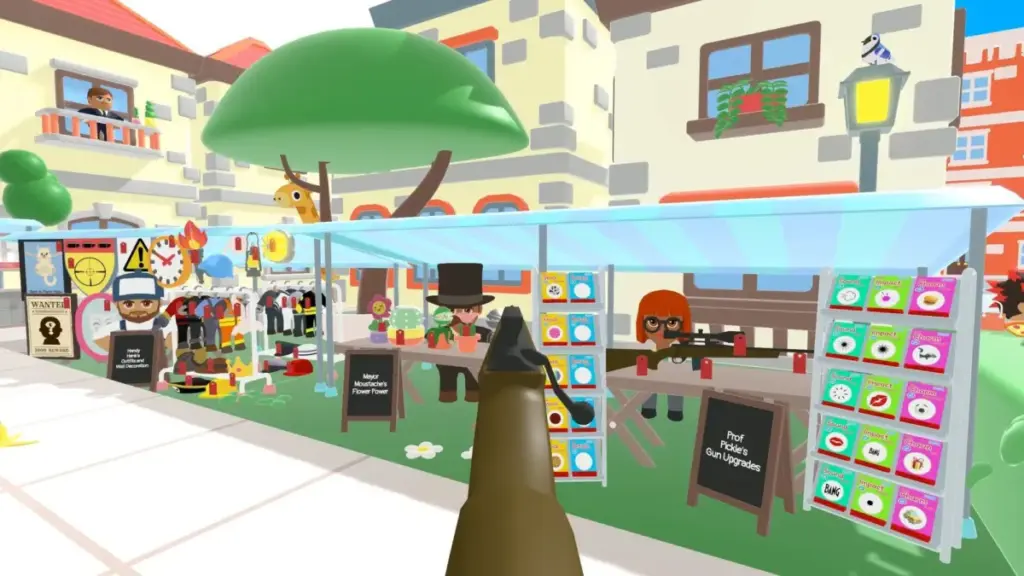
Enter Sniper Dan, a radical new indie title developed by Denki and published by PQube that upends the genre entirely. Crafted by former Grand Theft Auto veterans, Sniper Dan exchanges grim militarism and visceral violence for primary-colored, slapstick whimsy. In this cheerful universe, a high-powered, bolt-action sniper rifle is never used to take a life. Instead, it serves as an over-engineered tool for community service, baffling problem-solving, and chaotic hidden-object discovery.
Priced accessibly at £9.99 and released on September 17, 2026, across PlayStation 5, Xbox Series X/S, PC, and Nintendo Switch platforms (including support for next-generation hardware), Sniper Dan has captured the attention of critics and casual players alike. Earning a respectable 6/10 review score from industry publications, the game delivers an inventive, family-friendly twist on mature mechanics. However, structural limitations in its gunplay under pressure and the classic pitfalls of the hidden-object genre prevent it from reaching AAA greatness. This comprehensive review and analysis examines Sniper Dan’s mechanics, development pedigree, market reception, and long-term future in the indie landscape.
Detailed Chronology & Gameplay Mechanics
The gameplay loop of Sniper Dan departs significantly from conventional shooter mechanics. Every single interaction within the game—ranging from answering office phone calls to selecting missions from the world map—is performed by putting a high-velocity bullet into an interactive target.
The Setup: Climbing the Tower
Each level drops the player into the shoes of Dan, who ascends a towering sniper perch to survey a bustling, brightly colored diorama. Below, townsfolk go about their daily routines, while others find themselves frozen in the midst of absurd comedic accidents. Some of these scenarios are merely environmental set dressing, but a significant portion require direct, bullet-based intervention.
Armed with a zoomable scope, players must scan the chaos and cross-reference the scene with a hidden list of objectives. The clues provided are often delightfully cryptic, requiring lateral thinking to deduce the correct course of action. Once a target is identified, a small circle highlights the object, signaling that the player has correctly solved the riddle.

Creative Problem-Solving
Rather than assassinating targets, Dan’s mission is to render assistance through firearms. Gameplay tasks include:
- Extinguishing candles on a birthday cake from hundreds of meters away.
- Assisting with agricultural chores, such as milking a cow via precision impact.
- Freezing or freeing a boat lashed to a dock.
- Aiding morning hygiene routines by shooting a tube to squeeze toothpaste onto a toothbrush.
Players must time their shots carefully. While accidental friendly fire or targeting innocent civilians only incurs a mild $10 fine rather than a total game-over state, precision is still rewarded. Completing objectives within designated time limits yields higher performance grades and vital reputation points.
Economy, Progression, and Minigames
The currency and points earned during missions fuel a robust progression system. Reputation points can be spent on:
- Unlocking subsequent campaign levels.
- Purchasing valuable hints to bypass frustrating search phases.
- Accessing supplementary minigames.
Meanwhile, cash earnings are funneled back into the Sniper HQ. Players can purchase decorative items that confer passive statistical bonuses to future earnings. Furthermore, funds can be used to upgrade Dan’s trusty rifle, introducing faster reload times, larger clip capacities, and an advanced zoom tier that brings players intimately close to the mechanical puzzles they are solving.
Supporting Context & Metrics: Breaking Down the Indie Experiment
Sniper Dan occupies a unique market niche. Developed by Denki—a studio historically recognized for smart, accessible puzzle design—and backed by publisher PQube, the title reflects a calculated risk to cross-pollinate genres that rarely intersect.
Genre Convergence: Hidden Object Meets Ballistics
At its core, Sniper Dan is less of a first-person shooter and more of a classic hidden-object puzzle game transposed onto a 3D diorama. This creates an interesting dichotomy regarding player engagement:

[Phase 1: Exploration] ---> High engagement, discovering obvious objectives and Easter eggs.
       |
       v
[Phase 2: Deduction] ----> Moderate engagement, interpreting cryptic mission clues.
       |
       v
[Phase 3: Pixel-Hunting] --> High frustration, searching for the final 1-2 obscured objects.
As noted in critical evaluations, this structural pipeline exposes the inherent weaknesses of the hidden-object genre. While the initial discovery phase is endlessly entertaining, hunting down the final remaining items on a sprawling map can lead to protracted periods of trial-and-error frustration. Because hints are tied to scarce reputation points, players frequently find themselves depleted of resources just when they need them most.
Easter Eggs and Cultural Nodding
To mitigate exploration fatigue, Denki loaded each level with dense layers of environmental humor and hidden Easter eggs. Players are encouraged to shoot random objects simply to observe the slapstick chain reactions they trigger. Fittingly, nearly every map features a hidden character wearing a stripy vest and bobble hat—an overt, affectionate nod to Where’s Wally? (Where’s Waldo? in North America).
Technical Performance and Platform Versatility
Released on September 17, 2026, across a wide array of hardware—including PlayStation 5, Xbox Series X/S, PC, and both current and next-generation Nintendo Switch systems—Sniper Dan scales effectively. Its vibrant, cel-shaded art style ensures that the visual clarity required for long-range target identification remains sharp, whether played on a high-end gaming PC or a portable console screen.
Official Statements & Critical Reception
Critical reception for Sniper Dan has settled into a comfortable, consensus-driven middle tier, exemplified by its 6/10 overall review score. Reviewers have universally praised the game’s bold premise while remaining candid about its mechanical shortcomings.
The GameCentral Review Summary
In its official assessment, industry outlet GameCentral encapsulated the title’s strengths and weaknesses:
- The Short: A colourful, pleasingly silly game of helpful sniping, where you deploy your high-powered rifle to find hidden objects and help townsfolk with comedy calamities.
- The Pros: Relentlessly cheerful with a slapstick sense of humour. Dozens of Easter eggs to find and an amusingly non-lethal take on a genre usually associated with nothing but killing. Suitable for children aged 7 and up.
- The Cons: Early objectives are more entertaining than finding those final, hard-to-spot goals in each day’s sniping. Gunplay falls apart in minigames where players must race against the clock.
Developer Intentions vs. Execution
Industry analysts observing the team of former Grand Theft Auto veterans note the fascinating ideological shift behind Sniper Dan. Having spent years building sprawling open worlds defined by criminal enterprise and lethal sandbox mechanics, the developers pivoted to a world where a sniper rifle becomes an instrument of absolute benevolence.

However, critics pointed out that this mechanical transition exposes underlying friction. While the physics engine accommodates leisurely, deliberate puzzle-solving with ease, it struggles under pressure. When emergency phone calls trigger time-sensitive missions or minigames requiring rapid-fire inputs, the gunplay lacks the crisp responsiveness and tactile feedback expected of precision shooters, laying bare the limitations of its budget-conscious scope.
Future Outlook & Market Legacy
As the gaming landscape prepares for a generational shift—with discussions of 2027 hardware launches like the anticipated PlayStation 6 and next-generation Xbox consoles dominating industry headlines—smaller indie titles like Sniper Dan serve as vital testbeds for creative risk-taking.
The Budget Indie Space in 2026
At a price point of £9.99, Sniper Dan does not pretend to rival AAA blockbusters. It carves out a sustainable economic footprint by offering a self-contained, highly stylized, 3-to-4-hour experience that families and casual gamers can enjoy without a massive financial or time commitment. It stands as a rare example of a sniping simulator that carries a PEGI 7 age rating, opening up a historically mature genre to younger demographics.
Potential for Expansion and Sequels
While developer Denki has not yet formally announced post-launch DLC or a sequel, the modular nature of Sniper Dan leaves the door wide open for future content drops. Additional level packs themed around different seasonal events, historical eras, or fantastical settings could easily be layered onto the existing framework.
Ultimately, Sniper Dan may not redefine the tactical shooter genre, but it succeeds wildly in its primary mission: subverting expectations. By transforming the grim art of long-range marksmanship into a wholesome, vibrant, puzzle-solving escapade, Denki has delivered a memorable, family-friendly curio that proves a well-placed bullet doesn’t always have to hurt.