Executive Overview
As the dust settles on the runways of New York Fashion Week (NYFW), a distinct sartorial narrative has emerged, one that challenges the prevailing dominance of minimalist streetwear and utility-driven athleisure. The unassuming silk scarf—once relegated to the realm of conservative corporate attire, mid-century aviation uniforms, or strictly traditional interpretations of heritage styling—has undergone a radical contemporary reclamation.
Far from being a fleeting novelty, silk scarves and bandanas dominated the spring/summer presentations and are primed to dictate transitional and cold-weather styling. This resurgence is not merely a nostalgic nod to old-school Hollywood glamour; it represents a fundamental shift in how modern consumers approach accessories. Today’s styling is defined by a distinct lack of rules, genderless adaptability, and an effortless fusion of high-end luxury with accessible street style.
Beyond their undeniable visual impact, silk scarves offer a rare intersection of aesthetics and utility. For the hair-conscious consumer, high-grade mulberry silk functions as a protective treatment, minimizing friction, retaining moisture, and mitigating frizz—all while elevating an everyday outfit. Industry insiders, designers, and market analysts alike point to this accessory as the ultimate transitional piece for the upcoming season, capable of transforming heavy neutral layers with a single, highly deliberate touch of texture and color.
Detailed Chronology: From Runway Staple to Global Streetwear Phenomenon
The trajectory of the silk scarf’s modern renaissance can be traced through a meticulous evolution of high-fashion presentations, consumer behavior shifts, and digital culture adaptation over the past several seasons.
Phase 1: The Subtle Runway Tease
In early fashion cycles, luxury houses began subtly reintroducing silk accessories into capsule collections, moving away from oversized winter wools in favor of lightweight, fluid neckerchiefs. Designers toyed with proportions, pairing diminutive square silks with sharp, oversized tailoring. This juxtaposition created an immediate visual tension that resonated with street-style photographers outside the tents of global fashion capitals.
Phase 2: The Digital Acceleration and Hair-Care Integration
As content creators and beauty influencers began experimenting with alternative uses for hair protection, the narrative surrounding silk shifted from pure ornamentation to functional wellness. Creators demonstrated how wrapping hair in 16-momme mulberry silk prevented nighttime breakage and midday frizz.
Simultaneously, platforms like TikTok and Instagram saw an explosion of tutorials dedicated to tying techniques—transforming the scarf from a neck accessory into a crown, a makeshift top, and a belt. This democratization of styling stripped away the intimidation factor historically associated with silk accessories.
Phase 3: The New York Fashion Week Domestication
By the most recent installment of New York Fashion Week, the accessory reached critical mass. Silk scarves and bandanas were no longer just editorial styling tricks; they were foundational elements worn by attendees, models off-duty, and front-row fixtures alike. The styling had evolved significantly from past decades. Rather than rigid knots and pristine folding, scarves were tied haphazardly, incorporated into messy updos, or left to trail loosely behind leather jackets and trench coats. The industry had officially crossed a threshold: the silk scarf was no longer a symbol of rigid formality, but of effortless, lived-in cool.
Supporting Context & Metrics: The Economics and Ergonomics of Silk
To understand why the silk scarf has captured the contemporary market, one must examine both the economic accessibility of the trend and the material science driving its utility.
Market Accessibility and Luxury Perception
Historically, authentic silk accessories demanded a prohibitive luxury price point, limiting their adoption to legacy fashion houses. However, a new wave of direct-to-consumer (DTC) brands and contemporary labels—such as OLAH, Quince, and Madewell—have democratized access. Today, consumers can secure 100% mulberry silk bandanas and square scarves featuring hand-rolled edges for anywhere from $20 to $60. This low barrier to entry has fueled explosive experimentation, allowing shoppers to test bold colorways (like rich chocolate browns and olive greens) and playful patterns (ranging from classic paisley to retro polka dots) without significant financial risk.

Material Science: The Hair-Care Connection
The functional appeal of silk extends far beyond surface-level aesthetics. Dermatologists and hair-care experts have long championed silk pillowcases for their friction-reducing properties, and this science directly informs the popularity of silk headscarves. Unlike cotton or synthetic blends, which absorb natural hair oils and create micro-friction that leads to breakage and split ends, high-grade mulberry silk maintains the hair’s hydration balance.
- Friction Reduction: The smooth, protein-based fibers of silk allow hair strands to glide effortlessly across the fabric, preventing mechanical damage.
- Moisture Retention: Unlike absorbent cotton fibers, silk does not strip the hair of essential moisture, making it ideal for maintaining blowouts, curls, and natural hair textures.
- Year-Round Thermoregulation: Silk naturally regulates temperature, keeping the head cool in warmer transitional months and providing a comfortable insulating layer when the temperature drops.
Official Statements and Industry Insights
The philosophy behind this modern accessory movement is best articulated by those driving its production and design. Yong Wang, co-founder of the handmade silk hair accessory brand OLAH, emphasizes that the core of the current trend lies in the complete dismantling of historical styling dogmas.
“What feels exciting now is that there are no rules anymore,” Wang shared in an interview with E!. “In the past, silk scarves were often styled in a very polished or traditional way, but today people are approaching them with much more creativity. The modern approach is also much more genderless and seasonless. Silk scarves are no longer reserved for a certain type of dresser or occasion.”
Wang further elaborates on the transformative power of the accessory during seasonal shifts, highlighting its unmatched versatility:
“My favorite way to see a silk scarf is on the head. It gives an old-school Hollywood glamour feel, but paired with an oversized blazer, vintage denim, or a leather jacket, it feels very now. I especially love scarves styled in the fall because one scarf can completely change the mood of heavier and neutral layers. It’s a small styling choice, but it makes the whole look.”
Expert Styling Guide: How to Wear the Trend
For those looking to integrate silk scarves and bandanas into their daily wardrobes, industry experts recommend breaking down styling choices by placement, proportion, and texture pairing.
1. The Crown Statement (Head Styling)
- The Look: Old Hollywood glamour meets modern downtown edge.
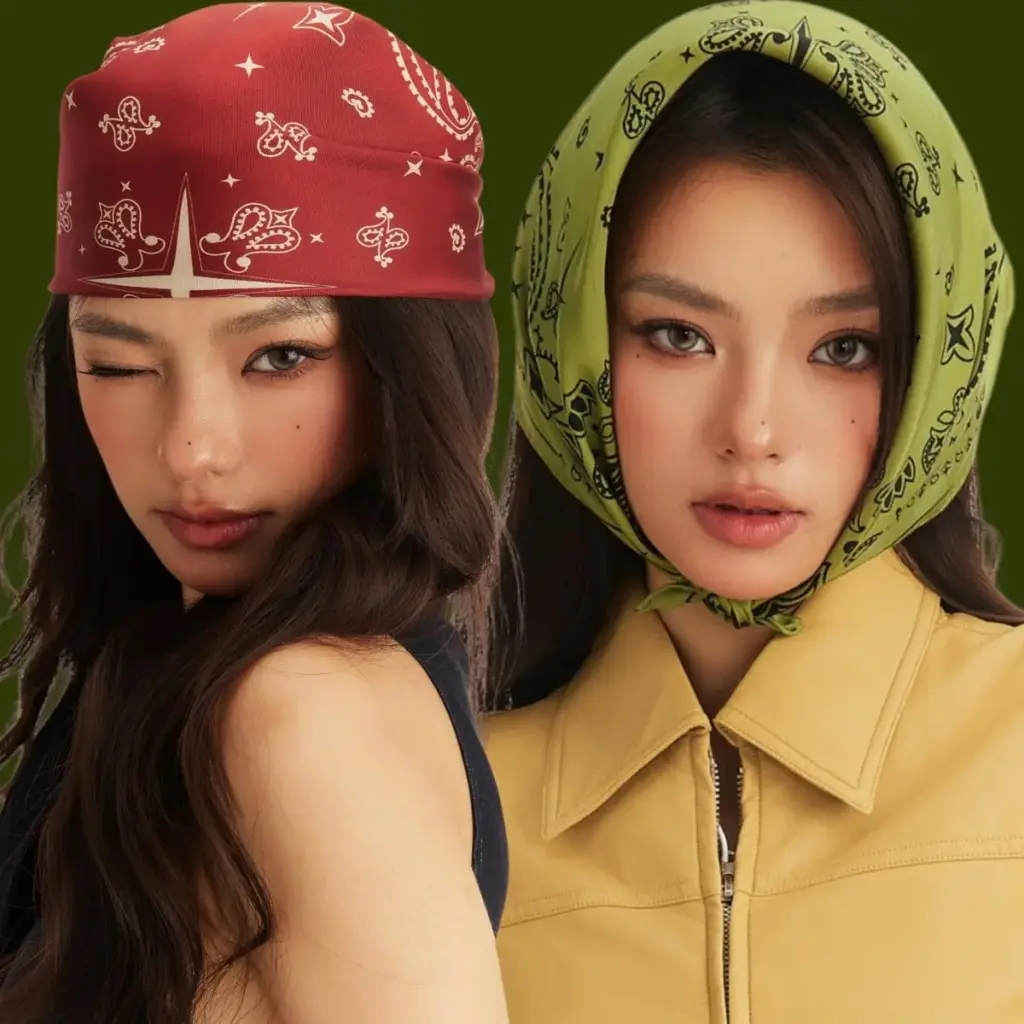
- Execution: Fold a square scarf into a triangle and tie it securely under the chin or wrap it bandeau-style across the forehead. Ideal for securing soft hair that tends to slip, while simultaneously protecting tresses from environmental elements.
- Pairing: Pair with an oversized leather blazer, vintage distressed denim, or a structured trench coat to create a high-low contrast.
2. The Neckerchief Approach (Neck Styling)
- The Look: Preppy, refined, and effortlessly chic.
- Execution: Fold a smaller bandana or neckerchief on the bias and tie it snugly around the neck, positioning the knot either dead-center or casually swept to the side.
- Pairing: Perfect for transitional weather when temperatures are too mild for a heavy wool or knitted scarf. Complement with a crisp white button-down or a lightweight cashmere crewneck.
3. The Waist and Hip Accent (Body Styling)
- The Look: Bohemian-tinged textural disruption.
- Execution: Thread a lightweight silk scarf through your jeans’ belt loops or tie it casually around one hip on a slip skirt or pair of trousers.
- Pairing: An effortless way to introduce a pop of autumn color (such as chocolate brown or burnt orange) to a monochromatic or neutral-heavy outfit without committing to a head or neck accessory.
Essential Market Curations: Top Silk Scarf Picks for the Season
For readers looking to embrace the trend, editors and industry insiders have curated a definitive list of accessible, high-quality silk pieces currently dominating the market:
- OLAH Paisley Silk Bandana Scarf: Crafted from 100% mulberry silk, featuring meticulous hand-rolled edges and a timeless paisley motif in versatile colorways.
- Onllh 100% Mulberry Silk Scarf: An exceptionally affordable entry point for those wanting to experiment with diverse patterns and vibrant color palettes.
- Hello Updo 100% Silk Head Scarf: Designed with 16-momme mulberry silk, this double-sided piece doubles as an active hair treatment to minimize frizz and breakage.
- Gap 100% Silk Bandana: Capitalizing on the season’s premier color trend with rich chocolate brown and playful polka-dot detailing.
- Quince 100% Silk Printed Square Scarf: Offers a luxurious, fluid drape suitable for styling across the neck, head, top, or waist.
- ANDANTINO 100% Silk Square Scarf: A budget-friendly $20 option available in a multitude of natural shades and classic prints.
- Madewell Medium Silk Bandana: Features an expansive lineup of 14 neutral and bold colorways designed for maximum mix-and-match potential.
- Lost Pattern "Retro Polka" Silk Bandana Scarf: A vintage-inspired masterpiece in trendy olive green, complete with hand-stitched finishing and playful polka dots.
Future Outlook: The Longevity of the Silk Renaissance
As we look toward upcoming fashion cycles, market indicators suggest that the silk scarf has graduated from a cyclical trend to a permanent fixture in the modern capsule wardrobe. As consumer demand increasingly favors multi-functional, durable, and sustainable accessories over fast-fashion novelties, natural fibers like mulberry silk stand out for their longevity and timeless appeal.
Furthermore, the breaking down of gender and generational barriers ensures that the silk scarf will continue to evolve in unexpected ways. Whether adopted by Gen Z street-style stars tying them to handbag straps or career professionals utilizing them as sophisticated neck accents, the silk scarf remains an enduring canvas for personal expression. Ultimately, its message is clear: true style lies not in rigid adherence to rules, but in the creative, effortless execution of the small details that define a complete look.