Executive Overview
In an aggressive play to revitalize its long-term financial growth and capture a larger share of the lucrative prestige and mass-market cosmetics sectors, retail giant Target is making a major bet on experiential shopping. The Minneapolis-based company has officially announced the rollout of the Target Beauty Studio, a dedicated physical and digital department designed to transform how everyday shoppers interact with cosmetics, skincare, and wellness goods.
Launching on September 10 across more than 600 brick-and-mortar locations and online at Target.com, the new destination introduces an expansive catalog of over 1,600 products curated from 90 distinct brands. Crucially, more than two-thirds of these participating labels are stepping onto Target’s shelves for the very first time. For a substantial portion of these companies—ranging from digitally native startups to decades-old luxury houses—the Beauty Studio marks their historic debut in physical retail altogether.
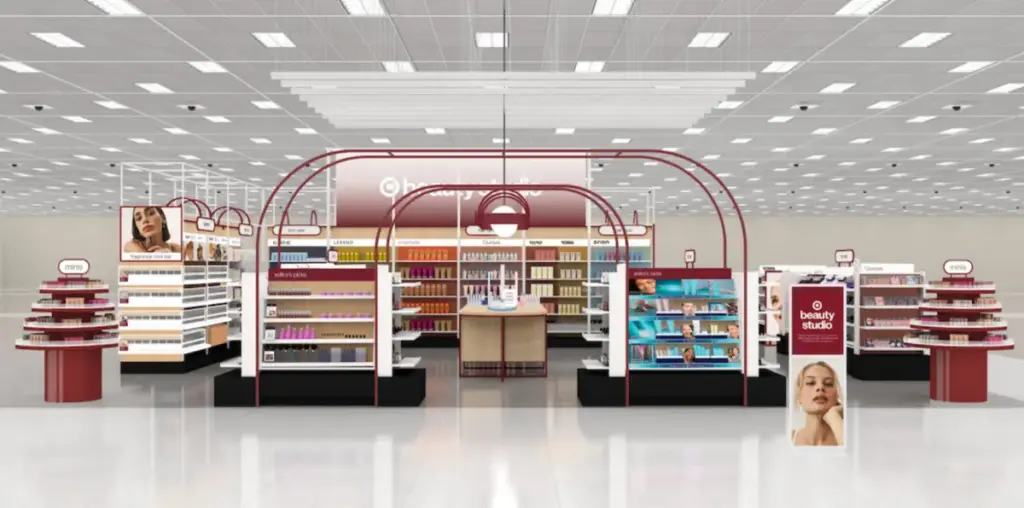
Rather than relying on the traditional, transactional model of simply stocking shelves with static inventory, Target has engineered an immersive environment centered around discovery, education, and personalized customer service. Staffed by specially trained "beauty advisers," the section features rotating product spotlights, dedicated mini-assortments for low-risk experimentation, and interactive testing opportunities.
This strategic overhaul represents much more than a routine seasonal merchandise refresh. It is a calculated stroke of retail engineering designed to lure beauty enthusiasts who increasingly demand both their trusted everyday staples and bleeding-edge indie innovations under one roof. By offering a curated, high-touch experience reminiscent of specialty cosmetics chains, Target is positioning itself as a formidable heavyweight in the beauty space, proving that big-box retail can successfully marry mass convenience with high-end curation.
Detailed Chronology & Strategic Evolution
A Multi-Year Pursuit of the Modern Shopper
The genesis of the Target Beauty Studio did not happen overnight; it is the culmination of years of quiet negotiations, logistical alignments, and shifting retail strategies. For many participating brand founders, the journey from initial pitch meetings to the upcoming September launch spanned well over 24 months.
Conversations between Target’s merchandising team and various indie founders typically began years in advance. However, many of these discussions stalled or lingered in exploratory phases until Target formalized its vision for a dedicated, experiential beauty department. It was the promise of a curated environment—one supported by specialized employee training and dedicated fixtures—that finally convinced digital-first and prestige brands to make the leap into mass-market brick-and-mortar retail.
Behind the scenes, the collaboration required rigorous preparation. Multiple founders reported that they were required to supply Target with comprehensive educational materials, including in-depth training videos and product documentation. This ensures that Target’s floor staff—dubbed beauty advisers—can speak authoritatively about complex formulations, active ingredients, and specific niche concerns, bridging the gap between digital consumer education and traditional store-floor assistance.
Key Milestones on the Road to Launch
- Early-to-Mid 2023: Initial dialogues commence between Target’s merchant buyers and emerging indie beauty brands, though unified retail strategies remain fluid.
- Late 2023 / Early 2024: Target begins conceptualizing the Beauty Studio framework, shifting focus toward high-touch education, interactive testing, and experiential retail fixtures.
- Mid 2024: Brand selection solidifies, resulting in a roster of 90 brands and over 1,600 SKUs spanning skincare, haircare, fragrance, bath and body, and nail care.
- August 2024: Target formally announces the nationwide rollout via corporate press releases, generating massive waves of industry buzz.
- September 10, 2024: Official launch day across 600+ physical stores and Target.com, accompanied by targeted digital marketing campaigns.
- September 26, 2024: In-store launch celebrations and exclusive perks rolled out via the Target Circle loyalty program.
Supporting Context & Metrics: The Brand Perspectives
The appeal of the Target Beauty Studio is best understood through the diverse profiles of the brands signing on for the debut. From bootstrapped startups making their physical retail debut to legacy international houses seeking fresh avenues of growth, the participating companies illustrate the broad demographic pull of Target’s customer base.
Remilia Hair: From Amazon Dominance to Physical Retail
Eliran Luzone founded Remilia Hair in 2018, steadily scaling the brand into a seven-figure powerhouse primarily driven by Amazon sales. Despite digital success, Luzone had long hesitated to enter brick-and-mortar stores due to the risk of getting lost in the vast, uncurated aisles of traditional big-box retailers.
When Target approached Remilia regarding the Beauty Studio, the proposition was entirely different. "We’re not just putting products on shelves; it’s a completely new environment where it’s really focused on beauty discovery and education and its own sales associates," Luzone notes. For Remilia, which specializes in targeted hair serums, shampoos, and conditioners, the Target partnership provides a risk-mitigated physical storefront that mirrors the educational touchpoints of a prestige boutique.
Clearstem: Overcoming Retail Hesitation
Anti-acne and anti-aging skincare brand Clearstem approached its retail debut with extreme caution. Quietly launched in 2017 with a single serum, the brand blossomed into a robust operation complete with a third-party logistics partner and an expansive product line, hitting an impressive $50 million in sales last year, according to co-founders Danielle Gronich and Kayleigh Christina.
Despite fielding numerous retail inquiries over the years, Clearstem deliberately held out for the right partner. The catalyst arrived when Target buyers—who were already personal users of Clearstem’s products—reached out directly. "We wanted to work with a team and buyers that had experienced transformation with Clearstem and really understood how much we can change people’s lives and skin through our products and education," Christina explains.
Borghese: Scaling Accessible Luxury
While many brands in the Beauty Studio are digital natives, legacy houses are also seizing the moment. Borghese, a 70-year-old Italian skincare brand already distributed through prestige heavyweights like Macy’s, Neiman Marcus, Bloomingdale’s, Ulta, and Amazon, saw the Target partnership as a logical next step in its mission to democratize luxury beauty.
Dawn Hilarczyk, Chief Operating Officer of Borghese, notes that her company was drawn to the initiative precisely because it rejected the generic "product-on-shelf" model. "We could have done that at any mass retailer," Hilarczyk states. Instead, Target offered an integrated environment where consumers could seamlessly blend everyday errands with luxury self-care.
The financial upside for Borghese is projected to be astronomical. Following a 38% sales increase last year, Hilarczyk expects revenue to surge by 60% in the current fiscal cycle, with the potential to double that figure next year purely on the strength of Target’s massive distribution volume.
By the Beach Suncare: A Fresh-Faced Challenger
At the opposite end of the corporate timeline is By the Beach Suncare, a "fragrance-first" sun-care brand that only launched in October of the previous year. Co-founded by Jessica Singer and Andrew Glass, the company expects to cross the $4 million sales threshold in its inaugural year, having already moved over 250,000 units.
"It’s so incredible to have such a big retailer have the guts to want to really showcase something that’s new and emerging," Singer remarks. Glass emphasizes that Target’s willingness to grant creative freedom for brand-specific fixtures—coupled with in-store testing capabilities—was essential for introducing an entirely new product concept to skeptical consumers.
Fur: Self-Funded Success in Bodycare
Co-founded by Laura Schubert and Lillian Tung a decade ago, body-care pioneer Fur built its reputation on specialty items like pubic hair oils, ingrown-hair treatments, and specialized cleansers. Entirely self-funded and female-run, the brand pulls in between $10 million and $20 million in annual revenue.
While Fur had previously avoided pursuing a Target partnership, the launch of the Beauty Studio changed the calculus. "You can’t get into things that you can’t support," Tung observes. "If we didn’t feel like body-hair care and ingrown care have enough of a demand, we’re not going to put ourselves out there. Target Beauty Studio is the right mix… It’s definitely catering to a more targeted customer."
Official Statements & Industry Vision
Retail leadership at Target has framed the Beauty Studio not merely as a merchandising layout change, but as a masterclass in modern experiential retail design.
"When guests shop for beauty, they want to pick up their standbys while also exploring what’s new and trending, and Target Beauty Studio is designed with that mix in mind," said Amanda Nusz, Senior Vice President of Merchandising, Essentials, and Beauty for Target, in an official corporate news release. "It’s an inspiring destination to discover what’s new, now and next in beauty — and a powerful example of how our merchandising authority comes to life through an elevated guest experience."
Industry analysts point out that this philosophy directly addresses a major pain point in modern retail: consumer fatigue with sterile, overcrowded aisles. By injecting curation, localized product education, and interactive discovery zones into the physical shopping loop, Target is successfully bridging the gap between the sensory engagement of specialty beauty boutiques and the unbeatable convenience of mass-market retail.
Future Outlook & Market Implications
As the September 10 launch approaches, the broader retail and beauty industries are watching closely to see how consumers respond to the Target Beauty Studio. The implications of this rollout extend far beyond Target’s quarterly balance sheets.
- A New Blueprint for Mass Retail: If the Beauty Studio successfully drives long-term financial growth and boosts average basket sizes, expect other big-box competitors to rapidly replicate the specialized, advisory-driven shop-in-shop model.
- Accelerated Omnichannel Growth for Indies: For digital-first startups like Remilia Hair and Clearstem, the transition to physical retail via a trusted partner like Target validates their brand equity and opens doors to demographic cohorts that traditional digital marketing struggles to reach.
- The Rise of Experiential Value: Consumers are increasingly valuing retail spaces that offer discovery over mere transactional fulfillment. By incorporating mini-sizes, rotating editor’s picks, and dedicated beauty advisers, Target is redefining what shoppers expect from a mass-market retail run.
Ultimately, the Target Beauty Studio represents a high-stakes, forward-thinking evolution in retail strategy. By championing both emerging indie disruptors and storied legacy houses within a cohesive, highly curated ecosystem, Target is proving that the future of brick-and-mortar beauty belongs to those who prioritize discovery, education, and community above all else.