Executive Overview
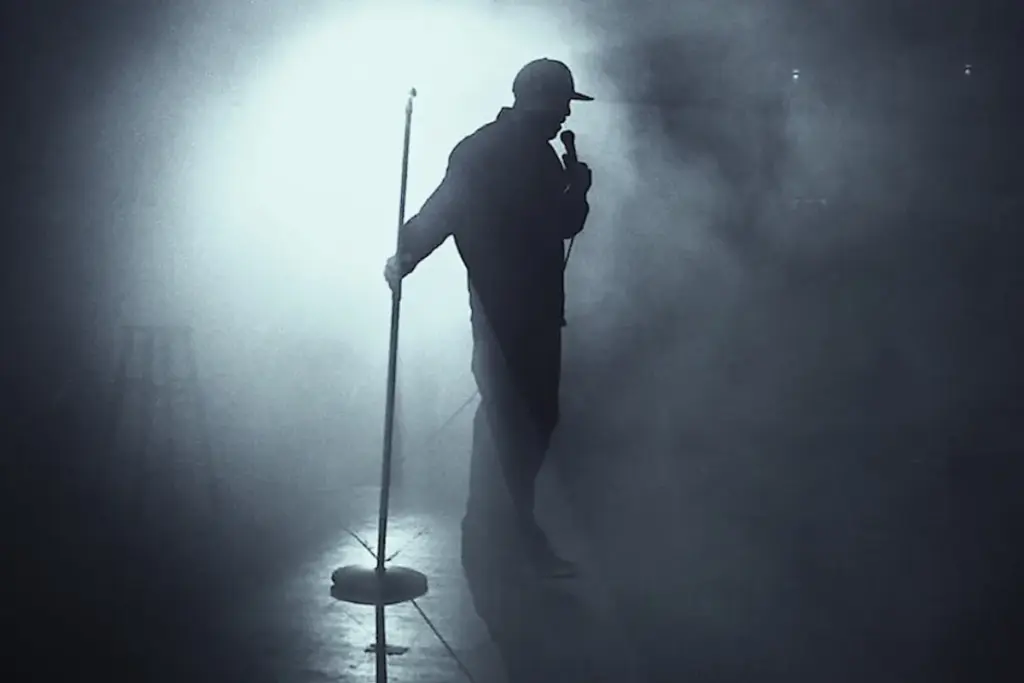
Comedian Jo Koy has established himself as a dominant force in contemporary stand-up comedy, balancing massive arena tours with high-profile television and film projects. His eighth overall career project and sixth special with streaming giant Netflix, titled Jo Koy: Blue in the Face, marks a distinct artistic pivot. Recorded live in Stockton, California—an inland port city in Northern California celebrated historically as the first major hub for Filipino immigrants arriving in America a century ago—the hour-long performance is deeply personal, deeply cultural, and profoundly reflective.
While Koy spent his formative years growing up in Washington state and coming of age in the bustling entertainment ecosystem of Las Vegas, his choice of Stockton is far from arbitrary. By anchoring his latest special in America’s original "Little Manila," Koy leverages his platform to cast a bright spotlight on a historic community that paved the way for generations of Filipino-Americans.
Despite encountering headwinds in Hollywood’s traditional executive corridors in recent years—including his high-profile, critically scrutinized stint hosting the 2024 Golden Globes and his cinematic leading-man debut in Easter Sunday—Koy remains completely bulletproof on the live stand-up circuit. Co-headlining major arenas alongside fellow cultural beacon Gabriel Iglesias, Koy continues to fill massive venues by forging a direct, unfiltered connection with audiences. Blue in the Face is a masterclass in this connection. Eschewing biting political commentary in favor of universal domestic storytelling, Koy weaves together self-deprecating anecdotes about dental trauma, childhood employment, canine psychology, and a poignant, hilarious tribute to his late stepfather—a decorated Vietnam War veteran.
Ultimately, Blue in the Face serves as an emphatic reminder of Koy’s foundational strengths as a live performer. It is a show that invites viewers to bypass the relentless negativity of modern social media algorithms and embrace laughter, making it an essential addition to the Netflix comedy library.
Detailed Chronology and Thematic Breakdown
Setting the Stage: Why Stockton Matters
The decision to film Blue in the Face in Stockton underscores Koy’s ongoing commitment to his heritage. Throughout his career, Koy has utilized his growing industry leverage to champion Filipino culture and elevate Filipino-American comedians. This mission was notably crystallized in his 2020 Netflix travelogue and stand-up showcase, Jo Koy: In His Element.
By choosing Stockton for his sixth Netflix special, Koy pays homage to the city’s profound historical significance. A century ago, Stockton served as the primary port of entry and cultural hearth for early waves of Filipino laborers coming to the United States. By bringing a major global production to the region, Koy honors the architectural, cultural, and human history of "Little Manila," fusing his own personal narrative with a broader tapestry of immigrant resilience.
Dental Trauma, Fast Food, and the Pursuit of Smiles
Koy opens the special by addressing the proverbial elephant in the room: the internet critics who have accused him of laughing too much at his own material during live performances. His response is characteristically defensive yet charming: "Can I enjoy the f—ing laugh, too?"
Koy explains that his laughter onstage is frequently genuine. As he dives into improvisational riffs, he often surprises himself, verbalizing unexpected truths and realizations in real-time. This spontaneity leads directly into one of the special’s most relatable comedic sequences: his battle with dental insecurities.
At age 12, a childhood accident involving a run through the woods left Koy with fractured front teeth. He details the crude attempts by military dentists to cement his teeth back into place and the resulting years of self-consciousness that forced him to reflexively cover his mouth with his hand during his early days in stand-up comedy.
This leads to a broader reflection on socio-economic mobility and youthful ambition. Koy contrasts the complaints of modern youth regarding $20-per-hour wages with his own humbling introduction to the workforce: a 15-year-old gig at McDonald’s requiring maternal authorization for a meager $3.85 an hour, limited strictly to four hours a day, four days a week, with zero free food permitted. His employment famously ended over stolen McNuggets, a petty crime that not only got him fired but also triggered domestic friction when his mother unsuccessfully attempted to fight management for his job back.
When his breakthrough appearance on The Tonight Show with Jay Leno finally yielded a $100,000 corporate endorsement deal for cell phone ads, Koy’s immediate thoughts turned to culinary indulgence—specifically, how many Cinnabons or Carl’s Jr. burgers his newfound wealth could buy. Ultimately, guided by his mother’s discipline and a Beverly Hills dental transformation facilitated by an Oprah-inspired medical discovery, Koy fixed his smile. Today, he offers a tongue-in-cheek piece of financial advice to the younger generation: "Don’t worry about flossing. Just get a good job and buy your teeth."
Canine Commentary and Domestic Observations
Transitioning from dental history to domestic life, Koy explores the psychology of pet ownership. Having learned from his McDonald’s firing that humans can be unreliable snitches, Koy champions dogs as the ultimate confidants.
With sharp physical comedy and vocal inflection, Koy translates canine barking into complex conversational dialogue. He acts out the inner monologues of dogs interrogating their owners with phrases like "Who is this guy?!" and "Where have you been?!", alongside the more visceral thoughts occupying a dog’s mind during moments of territorial dominance or playful pursuit. These routines position Koy alongside physical comedians like Sebastian Maniscalco, utilizing expressive body language and vocal dynamics to turn mundane domestic moments into universally understood spectacles.
Sgt. Fred Harrison: The Heart of the Hour
The emotional anchor and absolute centerpiece of Blue in the Face is Koy’s tribute to his late stepfather, Sgt. Fred Harrison. A towering 6-foot-4 Vietnam War veteran from West Virginia, Harrison accumulated prestigious military accolades—including Purple Hearts, Bronze Stars, and a Combat Infantryman Badge (CIB)—long before he married Koy’s mother.
Reflecting on his upbringing, Koy notes, "I needed Sgt. Fred Harrison." Beyond learning foundational discipline, such as making his bed with military precision, Koy shares humorous memories of watching television with his stepdad, absorbing invaluable advice regarding his mother, and navigating the complexities of a blended household.
Years later, when Koy achieved financial success, he was finally able to treat his stepfather to a live Los Angeles Dodgers game in person. True to the unpredictable nature of sports and life, that particular outing happened to be an grueling 18-inning postseason marathon. Koy recounts the hilarious and slightly terrifying image of his veteran stepdad sitting in the stands, literally turning "blue in the face" as he frantically tried to conserve his oxygen tank through extra innings. It is a brilliant, poignant metaphor that ties the special’s title directly to deep-seated family bonds.
Supporting Context & Metrics
To fully understand the positioning and impact of Jo Koy: Blue in the Face, it is necessary to examine the metrics of his career trajectory and the cultural landscape of contemporary stand-up comedy:
- Streaming Dominance: Blue in the Face represents Koy’s sixth exclusive comedy special for Netflix, solidifying a long-standing creative partnership that includes Comin’ In Hot (2019), In His Element (2020), and Live from the Los Angeles Forum (2022). Across streaming platforms, Koy remains a reliable driver of global viewership.
- Live Touring Powerhouse: While Hollywood film and television projects have yielded mixed results—such as his 2022 Universal Pictures comedy Easter Sunday and his polarizing turn hosting the 81st Golden Globes in January 2024—Koy’s bread and butter remains live performance. His ongoing co-headlining arena tours with Gabriel Iglesias routinely pull massive box office revenues, proving that his core constituency of loyal fans dwarfs traditional critical gatekeepers.
- Cultural Representation: Koy joins an elite tier of crossover comedians—alongside Iglesias (representing Mexican-Americans) and George Lopez—who use their platform to center specific immigrant and first-generation experiences. By shifting the cultural geography of his specials to cities like Stockton, Koy expands the boundaries of mainstream comedy to include historically underrepresented working-class communities.
Official Statements and Industry Reception
While Netflix and Koy’s management team have largely let the special speak for itself through targeted promotional rollouts, industry analysts and comedy critics have weighed in heavily on the trajectory of his career post-Golden Globes.
Media coverage surrounding Blue in the Face has frequently highlighted Koy’s resilience in the face of public scrutiny. Following the 2024 Golden Globes—where a difficult room and mixed reviews created a temporary PR firestorm—industry insiders noted that Koy quickly retreated to what he does best: the intimate, unfiltered environment of the live stage.
Prominent comedy critics, including Sean L. McCarthy of The Comic’s Comic, have emphasized that Koy’s strength lies in his ability to pivot away from Hollywood noise and lean directly into personal storytelling. By addressing his critics head-on in Blue inf the Face—whether mocking internet haters or laughing at his own spontaneous riffs—Koy disarms his detractors through self-awareness and unbridled joy.
Future Outlook
As Jo Koy looks beyond the release of Blue in the Face, his career trajectory suggests a dual focus: expanding his footprint as a global live touring icon while selectively pursuing television and streaming projects that honor his cultural roots.
The success of Blue in the Face proves that Koy’s audience is remarkably resilient, largely insulated from the ephemeral controversies of Hollywood award shows. By prioritizing regional authenticity—such as filming in Stockton—Koy has carved out a unique lane as a populist comic who values community engagement over coastal elitism.
Going forward, industry observers anticipate that Koy will continue to leverage his massive arena-touring apparatus to test new material, mentor rising diverse talent, and potentially develop scripted television projects that explore the multi-generational immigrant experience. For an artist who urges his audiences to "change the narrative" and "LOL at the good quicker than you do the bad," the future of his comedic empire looks remarkably bright—and undeniably funny.