Executive Overview
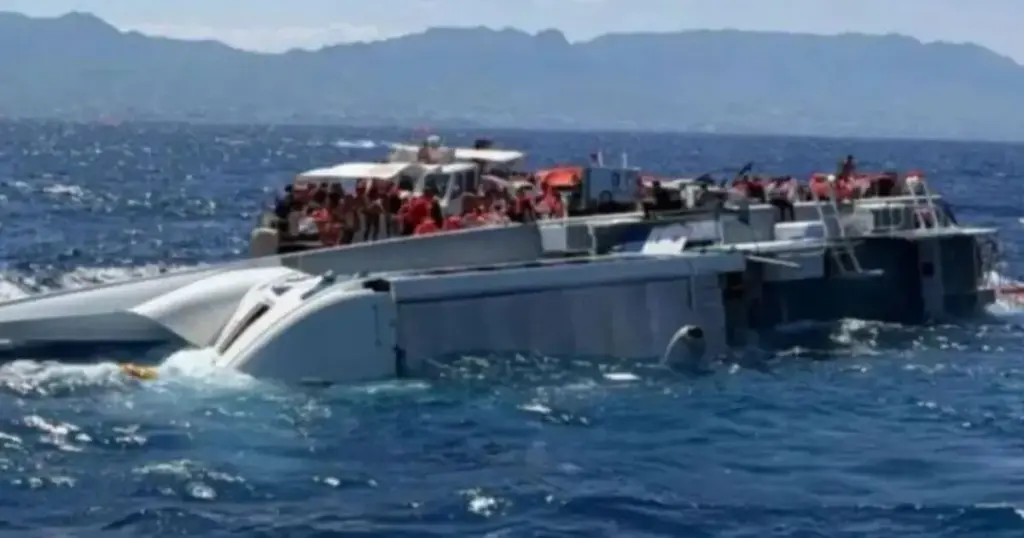
The maritime community and the citizens of Northern Cyprus are mourning what has officially been designated the island’s worst-ever maritime disaster. On Sunday, August 31, 2026, the passenger ferry Filo Jet—carrying a total of 267 souls, comprising 259 passengers and 8 crew members—capsized and ultimately plummeted to the seabed just 1.2 miles (2 kilometers) off the coast of Kyrenia.
As rescue operations transitioned from immediate life-saving responses to deep-sea recovery efforts, the confirmed death toll stood at eight, with a harrowing 18 individuals still unaccounted for. Approximately 237 people have been successfully pulled from the frigid waters, though many survivors bear both physical injuries and deep psychological trauma. Among the hospitalized are three young children currently fighting for their lives in intensive care units.
In the wake of the catastrophe, the legal and political fallout has been swift. The captain of the Filo Jet and seven surviving crew members have been placed in police custody as authorities launch a sweeping, unsparing criminal investigation. Government officials, including the Prime Minister of the self-proclaimed Turkish Republic of Northern Cyprus (TRNC), Ünal Üstel, have vowed that no level of negligence will go unpunished. With the vessel now resting at a staggering depth of 514 meters (nearly 1,700 feet) and international assistance mobilized—most notably from mainland Turkey—the hunt for answers, accountability, and the remaining missing persons is entering a critical, high-stakes phase.
Detailed Chronology of the Disaster
Departure and the Fatal Final Moments
The sequence of events began on Sunday, August 31, 2026, at the bustling port of Kyrenia on the northern coast of Cyprus. The Filo Jet, a commercial passenger ferry scheduled for a routine crossing to the port of Taşucu in southern Turkey, prepared for departure with 267 people on board. For holidaymakers, migrant workers, and regular commuters alike, the journey was supposed to be a standard maritime transit across a familiar stretch of the Mediterranean Sea.
However, shortly after clearing the harbor and reaching a distance of just two kilometers north of the Kyrenia coastline, disaster struck with terrifying suddenness. According to preliminary reports and survivor accounts, the vessel experienced catastrophic instability, rapidly listing to one side before capsizing.
Unlike open-ocean incidents where ships drift for hours before succumbing to the waves, the Filo Jet disaster unfolded dangerously close to land, yet left passengers with precious little time to issue distress calls, don life jackets, or organize an orderly evacuation. The speed at which the vessel turned turtle compounded the chaos, trapping a number of passengers below deck and throwing others violently into the sea.

The Immediate Rescue Phase
The proximity to Kyrenia’s port proved to be a double-edged sword: while it allowed land-based emergency services to spot the crisis quickly, the rapid sinking caught first responders in a desperate race against the clock. Coast guard vessels, local fishing boats, and emergency medical teams rushed to the site of the capsizing.
Searchlights, rescue rafts, and naval aircraft from both local authorities and mainland Turkey converged on the disaster zone as daylight faded into evening. Rescuers pulled exhausted and hypothermic survivors from the water, transferring them urgently back to the safety of Kyrenia’s piers. Triage units were immediately established at the harbor, where paramedics treated the walking wounded and rushed critical cases—including three children who required immediate life-support interventions—to regional hospitals.
The Final Descent and Current Status
By Sunday evening, hope that the vessel might remain partially buoyant or stable enough for internal rescue teams to safely penetrate its hull was dashed. Northern Cyprus Transport Minister Erhan Arıklı confirmed to state broadcaster TRT that the Filo Jet had completely and definitively sunk, plunging 514 meters to the dark, high-pressure depths of the Mediterranean floor.
Tufan Erhurman, president of the self-styled TRNC, addressed the grim reality of the recovery phase, noting that it did not "appear easy" to reach anyone potentially trapped within the submerged wreckage given the extreme depth. Consequently, the operation has entered a sobering phase: transitioning from a surface rescue mission to a complex salvage and deep-sea forensic investigation, driven by the absolute necessity of recovering the ship’s data recorder—its black box—to unravel why the tragedy occurred.
Supporting Context & Metrics
The Scale of the Tragedy
To understand the profound impact of the Filo Jet sinking, one must examine the baseline statistics of the disaster:
- Total Souls on Board: 267
- Passengers: 259
- Crew Members: 8
- Confirmed Rescued: ~237 (with figures subject to refinement as hospital registries cross-check admissions)
- Confirmed Dead: 8
- Still Missing: 18
- Location of Sinking: 2 kilometers (1.2 miles) north of Kyrenia
- Depth of Wreckage: 514 meters (1,686 feet)
These figures make the event an unprecedented disaster for the maritime infrastructure of Northern Cyprus. The unprecedented loss of life has paralyzed local communities, overwhelmed regional medical facilities, and cast a long shadow over cross-Mediterranean transit routes.

Logistical and Environmental Challenges
The geography of the sinking presents monumental hurdles for salvage teams. At 514 meters deep, standard scuba and surface-supplied diving operations are completely obsolete; remotely operated underwater vehicles (ROVs) and specialized deep-sea marine salvage equipment are mandatory. The extreme pressure, near-freezing temperatures, and total darkness at that depth mean that recovering the black box and investigating the hull integrity will require advanced engineering support, likely sourced from international maritime specialists or Turkish naval engineering corps.
Furthermore, the suddenness of the capsize has raised acute questions regarding cargo distribution, passenger manifest accuracy, vessel load limits, and structural integrity. Maritime analysts note that sudden capsizes in relatively calm coastal waters without documented extreme weather events typically point to internal factors: catastrophic shifting of cargo, severe ballast mismanagement, stability failures, or latent structural defects.
Official Statements and Accountability
Political Repercussions and Arrests
The political leadership of Northern Cyprus has reacted with uncharacteristic severity, signaling that systemic failures will not be swept under the rug. Prime Minister Ünal Üstel took to social media to broadcast a strong, uncompromising message to the public, announcing that the captain of the Filo Jet and seven surviving crew members had been immediately detained by law enforcement.
"Every aspect of this incident will be investigated," Üstel wrote in a detailed public statement. "Even the slightest negligence will be uncovered. No one will be spared, regardless of who is found to be at fault or responsible. It is both the duty of our state and its responsibility to the people we have lost and their families to fully illuminate all aspects of this great tragedy."
Transport Minister Erhan Arıklı echoed these sentiments, emphasizing the critical importance of retrieving the sunken vessel’s black box. Speaking to the press, Arıklı stressed that only objective, data-driven forensics retrieved from the ship’s internal systems could provide an undeniable narrative of the final minutes leading up to the capsize.
International and Presidential Reactions
Given the unique geopolitical status of Northern Cyprus, the response from Ankara was immediate and comprehensive. Turkish President Recep Tayyip Erdogan addressed the nation during a military ceremony on Sunday, extending heartfelt condolences to the families of the victims and the broader Turkish Cypriot community.

President Erdogan confirmed that the full weight of Turkey’s search-and-rescue apparatus had been deployed in direct coordination with local authorities. "Immediately after the accident, we launched extensive search-and-rescue operations in co-operation with the authorities of the Turkish Republic of Northern Cyprus," Erdogan stated, assuring the public that operations to locate the 18 missing individuals would continue uninterrupted, day and night, utilizing advanced maritime assets and aerial surveillance.
In tandem with rescue efforts, authorities have established a dedicated crisis hotline to assist frantic relatives seeking information about loved ones. However, as of late Monday, officials noted that the precise nationalities of all passengers and the full medical breakdown of the injured remained fluid, as investigators work to verify passenger manifests against ticket sales and port departure logs.
Future Outlook: Investigation and Reform
As the shockwaves of the Filo Jet disaster reverberate through Northern Cyprus and across the wider region, attention is rapidly shifting toward the future. The aftermath of Sunday’s tragedy demands accountability on multiple fronts:
- Judicial Proceedings: The detention of the captain and crew members is merely the opening salvo in what promises to be a complex criminal trial. Prosecutors will seek to determine whether negligence, overloading, mechanical neglect, or poor seamanship contributed to the rapid destabilization of the vessel.
- Maritime Safety Overhaul: The sinking has exposed vulnerabilities in the regulatory oversight of ferries operating between Northern Cyprus and Turkey. Calls are mounting from civic groups and maritime experts for a comprehensive safety audit of all commercial vessels currently servicing regional ports, ensuring strict adherence to international stability and load-line conventions.
- Deep-Sea Salvage Operations: The technical challenge of recovering the black box from over 500 meters of water will dictate the speed at which investigators can establish definitive technical findings. Maritime engineering teams are currently staging equipment in Kyrenia harbor to map out the debris field and plan the complex recovery operation.
- Support for Victims and Families: Beyond the immediate medical needs of survivors—such as the three children currently in intensive care—the government faces the long-term obligation of providing psychological, financial, and legal support to the bereaved families of the deceased and the relatives of the 18 still missing.
The sinking of the Filo Jet will forever remain a dark milestone in the maritime history of Cyprus. For a region defined by its connection to the sea, this catastrophe serves as a painful, urgent reminder that maritime safety, rigorous regulatory enforcement, and unyielding accountability are non-negotiable pillars of public trust. As search teams continue their somber work off the coast of Kyrenia, a traumatized nation waits, demanding justice for the victims and answers for the sea that took them.