Executive Overview
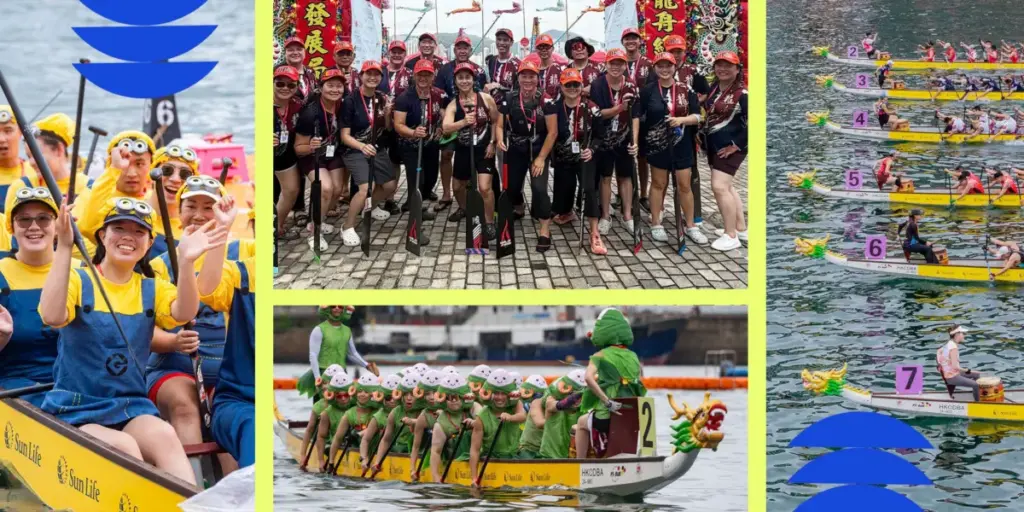
Under a brooding late-June sky, Victoria Harbour pulsates with an unmistakable energy. At 9 a.m., the thermometer reads an unforgiving 82 degrees Fahrenheit, compounded by an 88 percent humidity rate and the looming threat of thunderstorms. Yet, along the iconic Tsim Sha Tsui Promenade in Hong Kong, the atmosphere is electric. Vibrant, gold-accented canoes carved with intricate dragon heads slice through murky, slate-colored waters. Crowds roar from the shoreline, a cacophony of Cantonese commentary melds with ABBA’s "Dancing Queen" blasting from loudspeaker arrays, and athletes from all walks of life celebrate with fierce camaraderie.
This is the Hong Kong International Dragon Boat Festival—a striking convergence of ancient heritage and modern, high-octane sport. Marking the 50th anniversary of modern international dragon boat racing since its institutionalization in 1976, this year’s event drew over 220 teams from across the globe.
Far from being an exclusive club for elite rowers, dragon boating has evolved into a global movement defined by radical inclusivity. Spanning generations, backgrounds, and physical abilities, the sport requires absolute synchronization. As veterans and novices alike attest, it is perhaps the ultimate team sport: a grueling, full-body sprint where individual egos are instantly dismantled the moment the paddle touches the water.
Detailed Chronology: From Ancient Folklore to Modern International Sport
To truly understand the beating heart of dragon boat racing, one must look back over two millennia to its dark, romantic origins in ancient China.

The Legend of Qu Yuan
During the Warring States period, more than 2,000 years ago, the Kingdom of Chu was plagued by political corruption. Qu Yuan, a renowned aristocrat and brilliant poet, found himself profoundly at odds with the ruling emperor and the systemic corruption of the court. In protest and heartbreak over his subsequent banishment, Qu Yuan cast himself into the Miluo River.
According to historical folklore, local villagers who deeply loved and revered the poet scrambled into their fishing boats and rushed out onto the water. Desperate to save him—or at the very least, protect his mortal remains from being devoured by fish—they thrashed their oars wildly and beat drums to frighten aquatic predators away. They also threw sticky rice dumplings (zongzi) into the water to distract the fish.
This act of desperate devotion laid the psychological and cultural foundation for what would eventually become the Dragon Boat Festival (Tuen Ng Festival). For centuries, the ritual was commemorated annually in southern China as a tribute to loyalty, patriotism, and sacrifice.
The 20th-Century Renaissance
While localized racing traditions persisted for generations, the sport as a formalized global competition was born in 1976, when the Hong Kong Tourism Association organized the first modern International Dragon Boat Races. This institutional pivot transformed a sacred cultural festival into an international athletic discipline.

Today, the standard international racing shell accommodates precisely 22 people:
- The Drummer: Positioned at the bow on a small stool, this individual acts as the heartbeat of the boat, maintaining the stroke rate and synchronizing the team.
- The Paddlers: Ten benches hold 20 paddlers (10 per side), strategically arranged by weight and capability. The front benches set the tactical timing; the middle benches—often referred to as the "power paddlers"—maintain sustained cruising momentum; and the final benches, known as "the rockets," unleash remaining stamina to surge across the finish line.
- The Steersperson: Positioned at the stern, this critical crew member uses a long sweep oar to navigate the vessel, battling currents and wind resistance to keep the dragon boat on a razor-straight vector.
Supporting Context & Metrics: Anatomy of a Dragon Boat Athlete
While spectators often mistakenly assume that dragon boating is an upper-body exercise reliant entirely on arm strength, experienced athletes know otherwise.
Biomechanics and Energy Systems
"It’s coming from your lats, your core, your hips," explains Lisa Minerd, 67, president of the San Diego Dragon Boat Team. "Your big muscles are recruited to provide that power to propel the boat."
Dragon boat racing is fundamentally a high-intensity sprint rather than an endurance marathon. The standard competitive distance is 500 meters (roughly one-third of a mile), though elite international competitions occasionally feature longer stretches of 1 or 2 kilometers. A competitive 500-meter race typically lasts under two minutes, pushing anaerobic energy systems to their absolute limits.

"You tend to get pretty tired out by the 350- to 400-meter mark, and all teams train for that to make sure that they don’t gas out," Minerd notes.
Off-Season and In-Season Training Methodologies
Preparing the body for this level of explosive output requires rigorous, structured conditioning. Teams typically balance on-water technical drills with intensive strength and conditioning programs:
- On-Water Technique and Endurance: During the off-season, teams focus strictly on stroke synchronization. As race season approaches, they transition to distance-building drills—such as paddling continuously for 800 meters to make the 500-meter racing distance feel manageable.
- Cardiovascular Conditioning: Athletes engage heavily in Zone 2 and Zone 3 cardio to build aerobic capacity. Standard workouts include interval drills like the "six by eight"—eight minutes of active paddling followed by two minutes of rest, repeated six times.
- Strength Training: To generate maximal rotational power, athletes incorporate heavy deadlifts, TRX rows, and ergometer training. Functional movements and core rotations are vital for protecting the lower back and shoulders against repetitive-use strain.
Official Statements and Perspectives from the Water
The true magic of dragon boating lies in its unique demographic tapestry. It is one of the few sports in the world where teenagers compete alongside octogenarians, and seasoned Olympians share a bench with amateur fitness enthusiasts.
Radical Inclusivity Across Generations
"You can be an Olympian or you can be the 60-year-old who paddled for two or three years and that’s it," says Minerd. "And you get into that boat together, you are working together as a team. You have to, or that boat isn’t going to move very well, and you can forget about winning anything."

This philosophy is embodied by organizations like the Oyster Point Dragons, based in San Francisco. Shirley Lau, a 56-year-old co-captain of the team, notes that their active roster spans an astonishing age gap: their youngest competitor is 10 years old, while their oldest is 81.
For Lau, joining the sport felt like a predestined homecoming. "I was 6 years old when I came to this exact race," she recalls, remembering sitting on her father’s shoulders in Hong Kong, captivated by the festive spectacle. Decades later, after immigrating to the United States and raising a family, Lau rediscovered the sport at the finish line of a half-marathon where the Oyster Point team was recruiting. Today, at 56, she credits dragon boating with providing her ultimate physical and mental peak.
Jane Chao Pun, a 54-year-old nurse practitioner and fellow Oyster Point teammate, echoes this sentiment: "At 54, this is the best shape I’ve ever been in my whole life. Doing this activity will even maybe add years to my life that I didn’t think I would gain before."
The Mindset of a Competitor
Beyond the physical conditioning, elite dragon boat racing demands extraordinary mental fortitude. Athletes must learn to override pain signals when lactic acid floods their muscles in the final meters of a heat.

When Minerd represented Team USA at the 2023 World Dragon Boat Racing Championships in Thailand—securing a silver medal in the grueling 1,000-meter race—she relied heavily on psychological mantras. "The final 50 meters, what went on in my head was, ‘Don’t die. Don’t die. You got to finish this,’" she recalls. "I have a saying that I keep in my head all the time, which is: ‘When you think you are completely spent, you have 40 percent more.’ And that plays on a loop in my head."
Future Outlook: The Expanding Horizon of Dragon Boating
As dragon boat racing enters its next half-century, the trajectory of the sport points decisively toward unprecedented growth, driven heavily by youth engagement and women’s participation.
Cultivating the Next Generation
Club leaders emphasize that welcoming new blood is critical for the sport’s longevity. Programs across North America, Europe, Asia, and Australia have actively lowered barriers to entry, encouraging curious individuals to commit to at least three introductory practices before making a final judgment.
"The sport is growing," says Minerd. Specifically, she highlights the influx of "more and more youth paddlers, which is wonderful for the sport, because that’s how we can ensure longevity."

Furthermore, the sport serves as a powerful equalizer regarding gender representation. While historical sports often segregate competition or disproportionately spotlight men, dragon boating is inherently mixed-gender, and international festivals frequently feature robust women’s divisions that rival or exceed men’s turnouts.
"I look at myself as an athlete first, not a female athlete," Minerd asserts. "I want to beat my male friends as well."
A Global Community Without Gatekeeping
Ultimately, the enduring appeal of dragon boating transcends medals, prize money, or sponsorships. For the thousands of professionals, retirees, students, and survivors who descend upon waterfronts from Hong Kong to San Diego each year, it offers a rare sanctuary of absolute equity.
In a world increasingly fractured by individualism, the dragon boat stands as a floating metaphor for collective humanity. As Minerd aptly summarizes: "Everyone’s equal. You get in that boat, you work together or succeed or fail, you are together."