Executive Overview
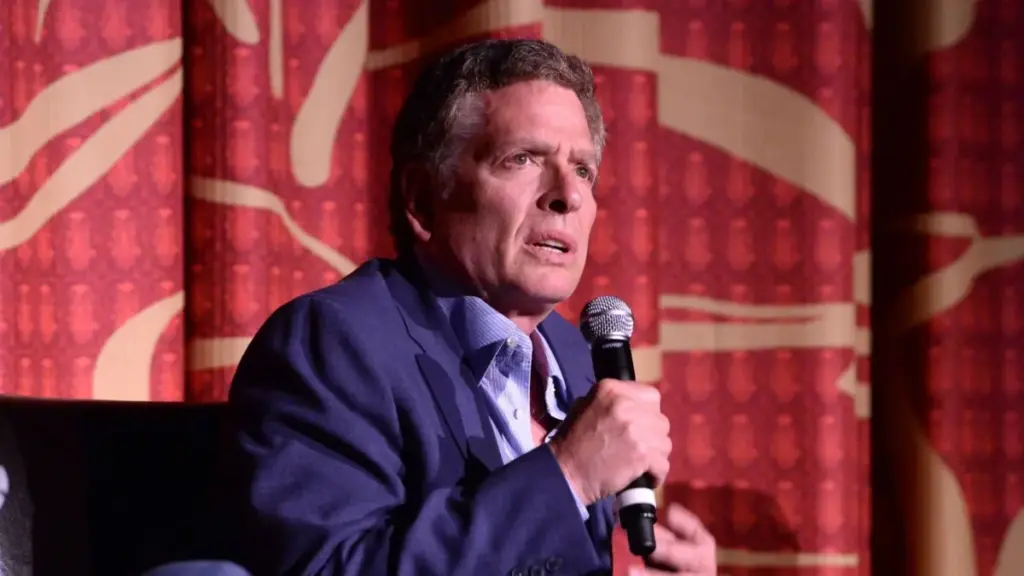
In the annals of comedy history, few filmmakers have left a footprint as indelible, distinct, and aggressively silly as David Zucker. Alongside his brother Jerry Zucker and their childhood friend Jim Abrahams—collectively known as the legendary filmmaking trio ZAZ—David helped redefine cinematic satire. Together, they engineered a golden era of fast-paced, irreverent, and endlessly quotable spoof comedies that prioritized non-stop gag rates over high-minded pretension. From the aviation disaster parody Airplane! to the surreal sketch work of The Kentucky Fried Movie and the slapstick brilliance of The Naked Gun: From the Files of Police Squad!, Zucker’s professional life was dedicated to one primary pursuit: extracting the loudest, most unreserved laughter possible from an audience.
However, a lesser-known chapter of Zucker’s career reveals that his appetite for high-concept absurdity was not strictly confined to the silver screen. In a feat of comedic dedication that blurs the line between visionary performance art and sheer financial recklessness, Zucker engineered a multi-year, highly elaborate practical joke that played out entirely within the hallowed, traditional confines of the American thoroughbred racing industry.
Between 1989 and 1993, at the prestigious racetracks of Saratoga Springs, New York, Zucker executed a scheme that cost him approximately $60,000 out of pocket. His sole objective? To manipulate race broadcasts into airing a single, synchronized double entendre. Spanning four years, multiple horses, strict jockey instructions, and a staggering financial investment, this hidden chapter of Zucker’s life stands as one of the most expensive and committed punchlines ever executed. This investigative retrospective examines the chronology, the mechanics, the financial metrics, and the cultural legacy of David Zucker’s ultimate off-screen gag.
Detailed Chronology: The Four-Year Quest for a Punchline
To truly understand the scale of Zucker’s undertaking, one must trace the timeline of events that unfolded at the historic Saratoga Race Course in upstate New York. While most owners enter the multi-million-dollar world of horse racing with visions of Triple Crown glory, lucrative stud fees, and gleaming silver trophies, Zucker entered the sport with the singular focus of a vaudevillian setup man.
Phase I: Inception and the Arrival of "All Pink" (1989)
The seed of the idea was planted sometime during the mid-to-late 1980s. As Zucker’s cinematic career reached new heights with the commercial and critical success of his directorial and writing efforts, his mind apparently wandered to the monotonous cadence of racecourse announcers. Radio and trackside announcers operate under immense pressure, describing fast-moving packs of horses with split-second precision, often relying on standardized phrasing and spatial descriptions.
Zucker realized that if he could strategically place a horse with a specific, carefully chosen name in a race, and instruct the jockey to ride that horse in a very precise tactical position, he could trick a live race announcer into unwittingly delivering a classic, edgy punchline on air.
By 1989, Zucker purchased his first thoroughbred to spearhead the operation. True to his vision, he registered the horse under the name All Pink. The game plan was simple in theory, yet notoriously difficult to execute in practice: the horse was explicitly commanded not to win. In fact, winning was the worst possible outcome for Zucker’s investment. Instead, the jockey was given strict, non-negotiable instructions to keep the horse toward the rear of the pack, but specifically to hug the innermost boundary of the track—the inner rail.
The ultimate goal was to maneuver All Pink so tightly against the fence that during the heat of the call, the track announcer would look down the stretch and inform the assembled crowd and radio listeners that it was “All Pink on the inside.”
For those uninitiated in mid-to-late 20th-century colloquial humor, this was a direct nod to a well-known, slightly risqué joke concerning race relations and dating preferences, the punchline of which famously asserts: "We’re all pink on the inside."
Despite the meticulous setup, the inaugural campaign was fraught with complications. Thoroughbreds, by nature and breeding, want to run; trainers want to win races; and live racing is inherently unpredictable. All Pink failed to deliver the desired audio cue, proving that executing a comedic timing routine in a live sporting arena is vastly different from editing a feature film in post-production.
Phase II: The Sophomore Slump with "Ol’ Pink" (1990–1992)
Undeterred by the initial logistical failures of All Pink, Zucker doubled down. Recognizing that his first equine vehicle lacked the competitive nuance—or perhaps simply the right alignment of atmospheric conditions—to pull off the stunt, he acquired a second horse.
Registered under the folksy, slightly altered moniker Ol’ Pink, this second iteration entered the Saratoga racing circuit during the early 1990s. Once again, Zucker maintained his strange operational parameters: financial loss was guaranteed, winning was strictly prohibited, and hug-the-rail positioning was paramount.
Yet, the racing gods—or perhaps skeptical jockeys who were understandably confused by instructions to deliberately underperform while maintaining razor-thin proximity to a wooden fence—refused to cooperate. Ol’ Pink ran races, accumulated veterinary and boarding bills, and drained Zucker’s bank account, all while stubbornly refusing to provide the announcer with the setup phrase in the precise spatial context required. Seasons passed at Saratoga, and while Zucker was accustomed to crafting airtight scripts that generated guaranteed laughs in Hollywood screening rooms, real-world stochastic chaos continually disrupted his theatrical timing.
Phase III: The Climax and Redemption of "Awl Pink" (1993)
Persistence, however, is a hallmark of great comedy writers. By 1993, refusing to let his multi-thousand-dollar practical joke die an unfulfilled death, Zucker made a third and final acquisition. This time, he adjusted the spelling, purchasing a mare named Awl Pink.
The strategy remained identical: position the horse near the rear, hug the inner rail for dear life, and wait for the announcer’s microphone to pick up the spatial description.
As the race unfolded at Saratoga in the summer of 1993, the alignment of the planets finally favored the Hollywood satirist. According to Zucker’s recounting of the event, Awl Pink ran the race precisely as scripted. As the field thundered around the final turn and charged down the homestretch, the track announcer—swept up in the frantic play-by-play of tracking the horses’ relative positions—scanned the inner boundary of the track.
Without an inkling of the comedic conspiracy unfolding around him, the announcer spoke the immortal words into the broadcast booth microphone, describing the position of Zucker’s horse relative to the rail. The punchline landed. The cosmic joke was complete. Having finally secured the audio clip he had chased for four years, Zucker promptly closed the book on his career as a thoroughbred racing impresario.
Supporting Context & Metrics: The Anatomy of a $60,000 Joke
To fully appreciate the absurdity of David Zucker’s endeavor, it is necessary to examine the hard metrics and contextual realities of both the sport of horse racing and the financial landscape of the entertainment industry in the late 1980s and early 1990s.
The Financial Breakdown
When Zucker remarked that the multi-year prank cost him a staggering $60,000, casual observers might initially scoff, viewing it as a modest sum for a successful Hollywood director. However, when adjusted for inflation, $60,000 in the early 1990s equates to well over $130,000 in modern currency.
Furthermore, this capital was not spent on a luxury asset or an appreciating investment; it was effectively burned on operational overhead for a comedy bit. The expenses associated with campaigning a thoroughbred racehorse—even one not intended for high-level stakes competition—are notoriously relentless:
- Purchase Prices: Acquiring three separate horses (All Pink, Ol’ Pink, and Awl Pink) over a four-year span.
- Boarding and Stable Fees: Maintaining the horses at professional training facilities, particularly at high-tier tracks like Saratoga.
- Veterinary Care: Routine checkups, feed, shoeing, and medical interventions necessary to keep the animals healthy.
- Trainer and Jockey Commissions: Paying professionals for their time, even when explicitly instructed to employ suboptimal racing strategies.
- Race Entry Fees: Administrative costs associated with entering horses into official track events.
Viewed through this lens, spending the equivalent of a luxury sports car or a down payment on a home purely to orchestrate a double entendre broadcast is a level of comedic dedication that borders on the obsessive-compulsive.
The Saratoga Factor
The choice of venue—Saratoga Race Course—adds another layer of delicious irony to the endeavor. Established in 1863, Saratoga is one of the oldest, most revered, and historically prestigious sporting venues in the United States. It is often referred to as the "Graveyard of Champions," where legendary racehorses have suffered shocking upsets (such as Secretariat’s historic defeat in 1973).
The atmosphere at Saratoga during the summer meet is steeped in upper-class tradition, high fashion, sophisticated wagering, and journalistic reverence. By injecting a sophomoric, tongue-in-cheek dirty joke into this hallowed sporting cathedral, Zucker was engaging in a subtle form of institutional subversion. He took the high-brow, polite world of elite American equestrianism and weaponized it to deliver a punchline worthy of a late-night sketch comedy show.
Official Statements and Industry Reception
While the stunt was largely kept under wraps during its active execution between 1989 and 1993, Zucker has occasionally reflected on the undertaking in retrospective interviews, sharing the story with comedy historians and fans as the ultimate testament to his commitment to absurdity.
In various accounts detailing the creation of his comedic masterpieces, Zucker has recounted the Saratoga experiment with a mixture of fondness and self-aware amusement. Industry peers and comedy historians have frequently cited the anecdote as evidence of a rare psychological profile: the perpetual gagman who cannot turn off his creative machinery, even when vacationing far away from a movie set.
The Announcer’s Perspective
Though the identity of the specific track announcer who uttered the fateful phrase on that summer day in 1993 has faded into the misty lore of racing history, the psychological impact on any professional broadcaster who learns the truth is profound. Track announcers take immense pride in their diction, accuracy, and professional integrity. The realization that their breathless, rapid-fire play-by-play was secretly co-opted as the delivery mechanism for a multi-thousand-dollar toilet-humor setup highlights the unique vulnerability of live broadcasting.
Yet, within the fraternity of comedy writers, Zucker’s stunt is universally revered. It represents the pinnacle of "long-form trolling" executed decades before the internet popularized the term. It required patience, capital, logistical coordination, and an absolute refusal to compromise on the purity of a punchline.
Future Outlook: The Legacy of Zucker’s Equestrian Absurdity
As we look back on David Zucker’s storied career—from his revolutionary spoof films that shaped generations of comedic sensibilities to his behind-the-scenes hijinks—the Saratoga horse racing experiment stands out as a masterclass in committed absurdity.
In an era of modern entertainment where marketing campaigns are meticulously focus-grouped, risk-averse, and algorithmically optimized, the notion of a major filmmaker quietly dropping $60,000 of his own money on a four-year practical joke feels almost quaintly romantic. It speaks to a bygone era of Hollywood where creators pursued eccentricities simply because they possessed the means and the imagination to do so.
Whether future generations of comedy creators will attempt to outdo Zucker’s equestrian endeavor remains to be seen. Given the skyrocketing costs of thoroughbred acquisition and maintenance in the 21st century, a modern equivalent of the "All Pink" prank would likely cost well into the hundreds of thousands of dollars today. Inflation, regulatory changes in racing, and the digitization of track broadcasts would make replicating the exact stunt nearly impossible.
Consequently, David Zucker’s $60,000 dirty joke at the Saratoga Race Course is destined to remain a singular, untouchable monument in comedy history. It proves that whether he was lampooning disaster films, spoofing police procedurals, or tricking a live equestrian announcer into reciting a classic pun, David Zucker remained eternally devoted to a singular philosophy: no expense should ever be spared in the pursuit of a good laugh.