Executive Overview
Nearly three years after the harrowing events of October 7, 2023, the critically acclaimed Israeli political thriller series Fauda has returned for its fifth season. Created by Lior Raz and Avi Issacharoff, the show has long distinguished itself by exploring the multifaceted, deeply human dimensions of the Israeli-Palestinian conflict from both sides of the divide. However, Season 5 marks a radical departure for the franchise. It is the series’ most personal, somber, and emotionally raw installment to date, tackling the immediate fallout of the Hamas-led attacks head-on.
The narrative kicks off with a stark opening shot defining the Arabic concept of Tha’ar—blood revenge—before immediately anchoring the viewer in profound grief. A grieving father prays over his son’s grave, setting into motion an international narrative arc that moves away from the traditional confines of the West Bank and Gaza. Instead, the hunt for vengeance spans borders, pulling familiar characters out of their element and placing them in the unfamiliar streets of Marseille, France.
While Season 5 retains the high-stakes espionage, tactical shootouts, and adrenaline-fueled pacing that made Fauda a global phenomenon on streaming platforms, it is ultimately a psychological study of trauma. Protagonist Doron Kavillio, brilliantly portrayed by co-creator Lior Raz, grapples with severe PTSD-related memory lapses tied directly to the horrors of October 7. Meanwhile, his comrades are forced to choose between the rule of law and the primal, consuming urge for retribution. For fans of geopolitical thrillers and character-driven drama, the verdict is definitive: Season 5 is a mandatory watch, offering a fascinating, albeit heavy-handed, look at how a fictional universe responds to real-world devastation.
Detailed Chronology: The Pursuit of Tha’ar
The narrative engine of Fauda Season 5 begins in the wake of unimaginable tragedy. Salem, a Bedouin character played by Bian Anteer, is reeling from the loss of his teenage son during the October 7 onslaught. The boy was hunted down and killed by a Nukhba (Hamas) terrorist inside the safe room of a home belonging to Salem’s Israeli friend, Eli (portrayed by Yaakov Zada-Daniel).
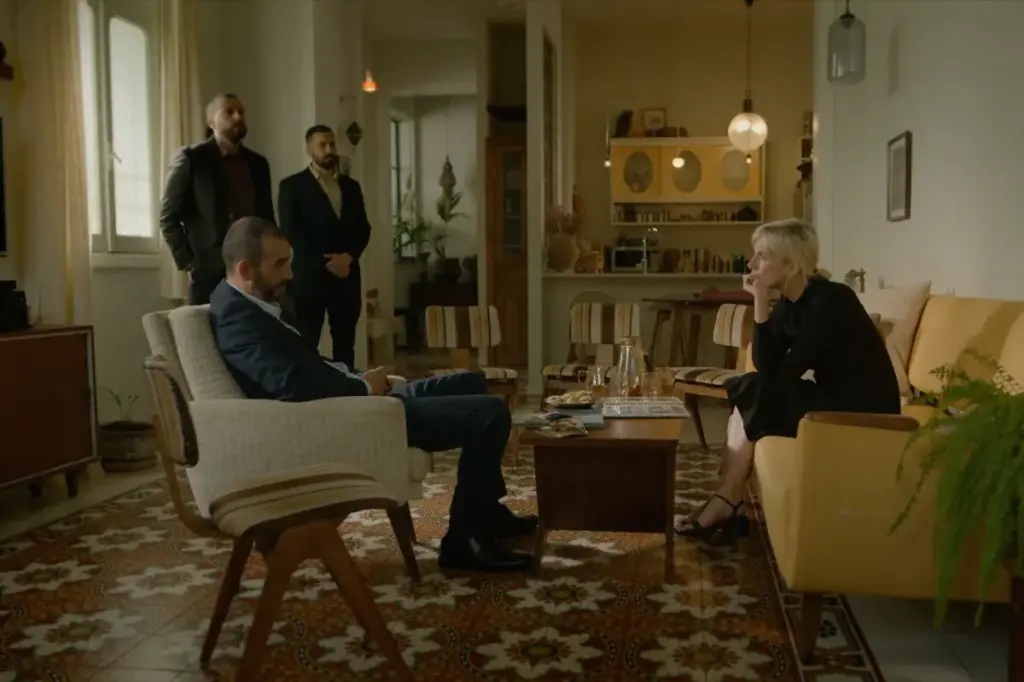
Driven by shared grief and an unyielding desire for Tha’ar, Salem crosses community lines to visit Eli. He shares a grim discovery: intelligence suggests that the specific Nukhba operative responsible for the murder has fled and settled in Marseille, France. Salem proposes a cross-border mission of blood revenge, appealing to Eli—who also suffered devastating personal losses during the attacks—to join him.
Realizing the extreme danger of the unauthorized plot, Eli turns to his former Israel Defense Forces (IDF) colleague, Doron Kavillio. Doron, however, is in no condition to mount a rescue or intervention operation. He is struggling significantly with the psychological aftershocks of October 7, suffering from debilitating PTSD and memory fragmentation that impairs his operational readiness.
Despite Doron’s hesitation and the fierce objections of his wife, Gali (Netta Garti)—who desperately wants her husband to stay away from deep-cover operations—circumstances force his hand. With logistical and operational assistance from another veteran IDF colleague, Gabi (Itzik Cohen), Eli and Salem slip out of the country and head for France. Realizing that his friend is walking into a trap and risking an international incident, Doron boards a flight to Marseille. His mission: to track down Eli and Salem, pull them back from the brink, and prevent them from executing a catastrophic revenge plot.
The tension builds steadily upon their arrival in the French port city. The season’s first major turning point arrives when Doron traces the duo to a restaurant owned by the former Nukhba terrorist. Instead of finding his comrades, Doron stumbles upon a chaotic, blood-soaked crime scene. Moments later, he discovers an injured and disoriented Eli hiding in an alley around the corner, setting off a high-stakes cat-and-mouse game across European soil.
Supporting Context & Metrics: The Evolution of a Global Phenomenon
To understand the weight of Fauda Season 5, one must examine the production timeline and the unique cultural weight the series carries. When Fauda dropped its fourth season in early 2023, the world was a vastly different place. Just months later, the October 7 attacks fundamentally altered the geopolitical landscape of the Middle East, casting a long, unshakeable shadow over Israeli society, culture, and media production.
Raz and Issacharoff took an unprecedented amount of time crafting Season 5, a deliberate pause that speaks to the sensitivity and complexity of addressing real-time historical trauma in a fictional format. Unlike previous seasons, which largely focused on tactical operations within familiar territories—the West Bank, Gaza, and Brussels—Season 5 steps into the fraught realm of post-October 7 psychological fallout.
Key Structural Themes of Season 5:
- The Psychology of Trauma: Moving away from standard action-hero tropes, the season heavily invests in the clinical and emotional realities of PTSD through Doron’s character arc.
- Cross-Cultural Alliances: The bond between Salem (a Bedouin Israeli) and Eli highlights the multi-ethnic fabric of those affected by the attacks, transcending traditional binary narratives.
- International Espionage: Relocating the conflict to Marseille introduces new operational challenges, pitting retired and rogue IDF operatives against decentralized threat networks in Europe.
While the series excels in emotional resonance, critics have noted that it avoids deep exploration of the broader, massively costly Gaza war that followed the Hamas attacks. Instead, Fauda narrows its lens tightly onto the micro-level trauma of individuals, utilizing the language of espionage to process collective national grief.
Official Statements and Creative Insights
The creators and cast of Fauda have been vocal about the unique burdens and responsibilities of bringing Season 5 to life under the shadow of real-world war. In various press briefings and interviews accompanying the release, Lior Raz emphasized that this season could not simply ignore the reality of what happened on October 7.
"We couldn’t write a season as if nothing happened," Raz noted during early promotional rollouts. "The characters you’ve known for five years—Doron, Eli, Gabi—they live in this reality. Their trauma is our trauma. The challenge was finding a narrative that honors the pain of that day without turning the show into a documentary."
Avi Issacharoff echoed these sentiments, explaining that the decision to introduce characters like Salem, a Bedouin mourning his son, was vital to reflecting the diverse makeup of the casualties. "The tragedy of October 7 did not discriminate based on background," Issacharoff stated. "Exploring Tha’ar through the lens of both an Israeli and a Bedouin father allowed us to examine revenge and grief as universal human failures and tragedies, rather than purely political talking points."
Network executives and streaming partners have also praised the writers’ room for taking a measured, albeit courageous, approach to a narrative that easily could have fallen into sensationalism. Instead, the creative team prioritized character continuity, ensuring that every gunshot and tactical maneuver in Marseille feels earned through the lens of pre-existing emotional scars.
Future Outlook: Where Does Fauda Go From Here?
As audiences stream Season 5, a lingering question remains across the entertainment industry: Is this the definitive end of the road for Fauda, or can the franchise expand further?
From a narrative standpoint, Season 5 feels like a narrative reckoning. By dragging its aging, battle-worn operatives into foreign territory to fight ghosts of the past, the series strips away the romanticism of the "operator" lifestyle. Doron Kavillio is no longer just a hyper-competent tactical asset; he is a broken man trying to outrun his own failing memory and the collective trauma of a nation.
If this season serves as a concluding chapter for the core ensemble, it provides a fittingly somber, high-stakes resolution. However, if Raz and Issacharoff choose to continue exploring the post-October 7 security landscape, Season 5 proves that the show’s universe remains fertile ground for gripping, albeit deeply uncomfortable, storytelling.
For now, viewers are advised to stream Season 5 with open eyes. It is not an easy watch, nor does it offer clean, neatly tied-up geopolitical solutions. Instead, it offers a raw, pulse-pounding, and deeply human reflection on vengeance, grief, and the heavy price of survival.