As September rolls in, the global fashion industry shifts into high gear. The atmospheric chill of early autumn brings with it a collective urgency, pulling designers, editors, and buyers away from quiet summer retreats and onto the high-stakes circuit of fashion month. Moving in a relentless wave from New York to London, Milan, and Paris, the industry uses this pivotal window not only to stage jaw-dropping runway spectacles, but to set the commercial and aesthetic agenda for the seasons ahead.
Between the flashbulbs of the front rows and the intricate logistics of presentation halls, heritage houses and mass-market giants alike are aggressively claiming their territory. This month’s most influential product drops, high-profile designer collaborations, and strategic retail rollouts prove that the conversation around luxury and utility is evolving. Leading the charge into the new season are Cartier, which is reimagining the architecture of everyday carryalls through the lens of fine jewelry; Rimowa, elevating the mundane airport commute into a masterclass in German engineering and tactile leather craftsmanship; and Gap, executing a brilliant cultural pivot under the creative vision of accessories veteran Reed Krakoff with the debut of the highly anticipated "GapBag" collection.
From foundational fall wardrobe staples to the season’s buzziest designer team-ups, these are the critical fashion launches and structural movements defining the September landscape.
Executive Overview: The Macro Economics of September Luxury
The timing of September’s fashion blitz is far from accidental. Psychologically, consumers treat the arrival of autumn as a natural fiscal and stylistic reset—a second New Year where wardrobes are evaluated, culled, and rebuilt. Commercially, luxury conglomerates and high-street titans look to Q3 and Q4 product introductions to drive their annual revenue figures, leveraging the immense cultural cachet generated by fashion month.
What makes this particular September distinct is the blurring lines between high jewelry, industrial travel accessories, and accessible American sportswear. Consumers are no longer compartmentalizing their purchases. The modern buyer demands that a $4,700 leather tote possess the structural integrity of a piece of fine jewelry, that an airport duffel double as a boardroom staple, and that a mass-market denim jacket find its spiritual echo in an everyday luxury handbag.
Brands that understand this cross-pollination of categories are dominating the market share. By examining the precise mechanics of Cartier’s hardware updates, Rimowa’s leather expansion, and Gap’s democratic luxury strategy, industry analysts can map out where the broader retail market is headed over the next twelve to eighteen months.
Detailed Chronology: The Fall 2024 Product Launches
The September calendar has unfurled at a breakneck pace, marked by milestone releases that reveal the shifting priorities of legacy brands.
Cartier’s Architectural Evolution: The Clash de Cartier Bag
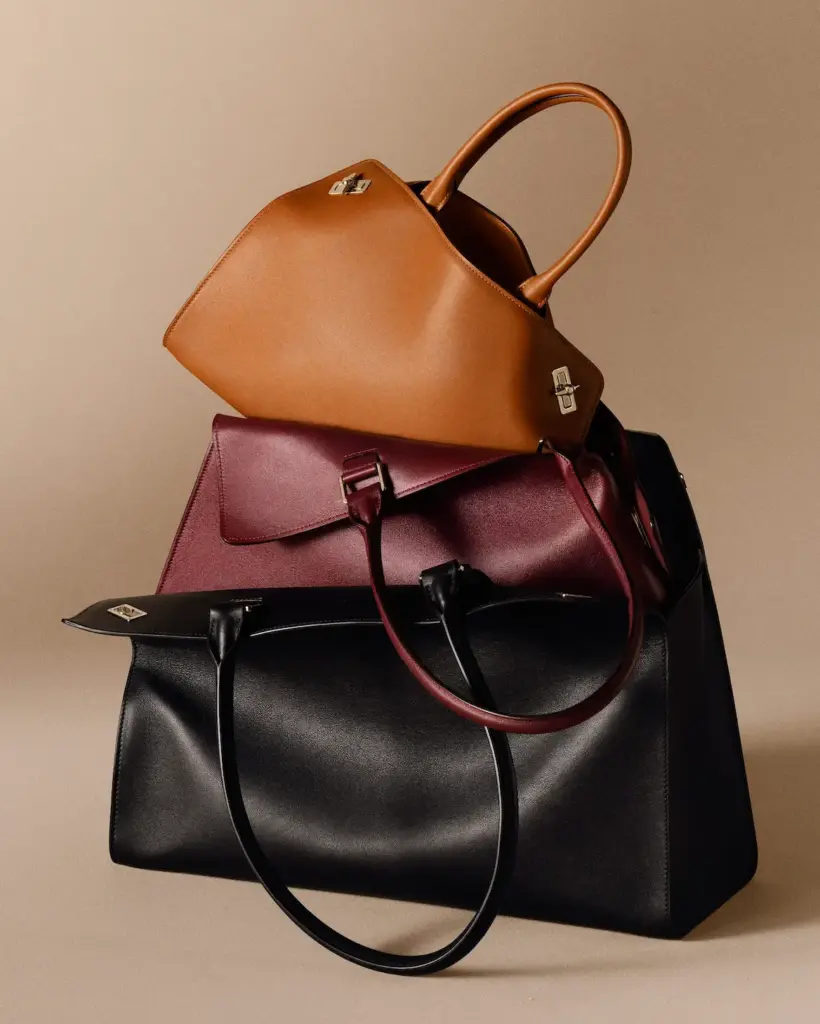
Kicking off the season with an unmistakable statement of Parisian opulence, Cartier has expanded its footprint in the leather goods sector with the latest iteration of the Clash de Cartier bag. Available now across select boutiques and online at Cartier’s digital flagship, the collection makes a definitive case for hardware as fine jewelry.
The French maison’s design philosophy has always hinged on the tension between classical elegance and unexpected edge. In this new handbag edition, that tension is mediated by a striking twist-lock clasp directly inspired by the Clash de Cartier jewelry line—a collection celebrated for its juxtaposition of sharp, industrial studs with soft, fluid curves.
Rendered in exceptionally supple leather, the bag bridges the gap between the meticulous precision of a jewelry atelier and the casual utility of an everyday carryall. Available in both large ($4,700) and small ($4,100) tote configurations, the accessory is engineered for versatility. Whether worn by hand, slung casually over the shoulder, or tucked snugly beneath the arm, it serves as a wearable sculpture designed to weather the demands of daily urban life.
Rimowa’s Transit Revolution: Expanding the Never Still Collection
For the frequent flyer, the daily commuter, and the modern digital nomad, travel is rarely a glamorous affair—delayed flights, crowded terminals, and endless transit hubs are the gritty reality. However, German luxury luggage titan Rimowa is setting out to transform that narrative with a sweeping expansion of its iconic Never Still collection.
Debuting this month across Rimowa stores and online platforms, the new lineup of leather bags brings a heightened sense of luxury and architectural design to everyday movement. Ranging from a compact flap backpack and versatile duffles to an urban-ready crossbody and a laptop-optimized tote, the collection addresses the specific friction points of modern mobility.
The pieces are offered in sophisticated, understated colorways—smoky anthracite and warm mocha—that effortlessly transition from the first-class lounge to the corporate boardroom. Beneath the refined exterior lies an array of deeply practical engineering details: ergonomic padded backs, removable and adjustable straps, and integrated suitcase sleeves designed to slide seamlessly over the handles of Rimowa’s signature aluminum luggage. By pairing these functional innovations with the brand’s iconic grooved textures, Rimowa has successfully turned the daily commute into an extension of personal style.
Gap’s Nostalgic Renaissance: The Debut of the GapBag by Reed Krakoff
Perhaps no launch has generated as much industry chatter and cultural curiosity this September as the arrival of the "GapBag" collection. Hitting select stores and digital shelves on September 8, the collection represents a watershed moment for the iconic American retailer, anchored by the creative direction of Reed Krakoff, the brand’s executive director of accessories.
The central creative premise of the collection is disarmingly simple yet conceptually brilliant: What if your favorite pair of well-worn jeans became a handbag? Krakoff and his design team have translated Gap’s most indelible signatures—including the classic five-pocket denim construction and the ubiquitous Arch Logo hoodie—into a comprehensive lineup of totes, satchels, crossbody bags, and pouches.
The collection is built around five distinct silhouettes:
The Five-Pocket Tote: Featuring genuine washed denim, authentic jean-stitch detailing, and signature metal shanks.
The Hoodie Tote: Playing on the relaxed, tactile comfort of Gap’s core apparel line.
The Favorite Tote: A clean, utilitarian silhouette designed for maximum daily capacity.
The Crescent Bag: Offering a sleek, curved profile that taps into current contemporary handbag trends.
The Oversize Shoulder Bag: A statement piece engineered for the utilitarian dresser.
Executed in a curated palette of washed denim, durable canvas, tactile faux suede, cozy fleece, and playful graphic prints, the GapBag collection successfully bridges the gap between mass accessibility and high-concept design.
Supporting Context & Metrics: Market Positioning and Consumer Behavior
To fully understand the weight of these September launches, one must look at the underlying financial and cultural metrics driving the accessories market.
The global luxury handbag and accessories market continues to show remarkable resilience despite inflationary pressures and shifting macroeconomic tides. According to recent retail analytics, consumers are increasingly allocating their discretionary spending toward "investment pieces"—items that offer high utility, enduring material quality, and strong resale potential.
Cartier’s High-End Play: At price points hovering between $4,100 and $4,700, Cartier’s Clash de Cartier totes are not impulse buys; they are strategic halo products designed to capture the growing overlap between fine jewelry collectors and luxury leather goods buyers. By leveraging its centuries-old authority in precious metals and stones, Cartier is successfully convincing high-net-worth consumers that its leather goods hold the same intrinsic value as its iconic timepieces and Cartier Love bracelets.
Rimowa’s Premium Mobility: With travel spending returning to pre-pandemic highs, Rimowa’s expansion into non-luggage categories—such as the Never Still Flap Backpack ($1,850 to $2,250) and Large Duffle ($2,500)—captures the lucrative "bleisure" market. Professionals are investing heavily in durable, high-status transit gear that projects success and organizational polish.
Gap’s Democratic Luxury: Conversely, Gap’s strategy under Reed Krakoff addresses a different psychological driver: accessible heritage. By positioning a denim-based accessory line as both a nostalgic nod to the 1990s and a masterclass in functional design, Gap is capturing younger, trend-conscious consumers who value authenticity and self-expression over traditional logo-driven luxury.
Official Statements: The Vision Behind the Design
The philosophy guiding these September releases is best articulated by the creative minds steering the houses forward.
Reflecting on his inaugural collection for Gap, Reed Krakoff emphasized the deep emotional resonance of the brand and its foundational design tenets in an official statement:
"Gap has been part of my life, as it has for so many people around the world, for as long as I can remember. For more than five decades, Gap’s design language has shaped the way the world dresses. The GapBag Collection draws on that legacy: iconic American style, simple, never plain, built on the idea that form follows function and that luxury is the coming together of style, utility and design.
The five-pocket tote series is emblematic of that unmistakable Gap style, in its broken-in washed denim, jean-stitch detailing and signature metal shanks. It is made for everyone, every day, every occasion."
This sentiment of democratization through thoughtful design runs parallel to Cartier’s approach with the Clash line, where the domestic and the industrial are merged into a singular aesthetic language. Similarly, Rimowa’s design team continues to champion the German Bauhaus principle that form must always serve function, ensuring that every zipper, strap, and reinforced panel in the Never Still collection is rigorously tested for the realities of modern transit.
Future Outlook: What September’s Launches Tell Us About Tomorrow’s Wardrobe
As the dust settles on the initial September product drops and the fashion pack rotates through the European capitals, several clear trends emerge for the future of the accessories and luxury markets:
The Rise of Hybrid Utility: Consumers are rejecting single-purpose items. Whether it is Rimowa building laptop sleeves into grooved leather totes or Cartier incorporating jewelry clasps into everyday carryalls, the winning products of tomorrow are those that effortlessly transition across environments—from boardroom to airport, from casual brunch to formal evening event.
The Elevation of the Everyday: The success of the GapBag proves that luxury is no longer defined solely by exotic skins and exorbitant price tags. Instead, it is increasingly defined by clever conceptual design, cultural storytelling, and the transformation of familiar, democratic materials (like denim and canvas) into objects of desire.
Cross-Category Dominance: Traditional boundaries between industries are evaporating. Jewelry houses are making bags; luggage brands are making streetwear-adjacent backpacks; and casualwear retailers are launching designer-led accessories collections.
For the style-conscious consumer navigating the remainder of 2024 and looking ahead to 2025, the message is clear: the most exciting fashion moments are happening in the details. Whether you choose to invest in the industrial jewelry-inspired hardware of Cartier, the bulletproof transit engineering of Rimowa, or the nostalgic, denim-clad ingenuity of Gap, this season’s offerings prove that utility and high design are no longer mutually exclusive—they are the ultimate modern luxury.