Executive Overview
For urban fitness enthusiasts who struggle to find the internal drive to lace up their running shoes, a rapidly growing subculture is offering a uniquely rewarding incentive: carbohydrates. Welcome to the "Pastry Run," a fitness trend that is sweeping through metropolises like Berlin, fundamentally redefining the post-run reward system. The concept is refreshingly straightforward—run a predetermined circuit, cross a designated finish line, and reward your efforts with artisanal baked goods and specialty coffee.
What began as an organic merging of two seemingly contradictory lifestyles—endurance sports and indulgent pastry consumption—has rapidly evolved into an organized movement. On any given weekend, trendy Berlin cafés are packed with flushed, endorphin-fueled runners enjoying flat whites alongside flaky croissants, sourdough tarts, and vegan Danishes. Dedicated run clubs now map their routes specifically to terminate at specialized bakeries, transforming traditional workouts into vibrant social events where fitness, gastronomy, and community building intersect seamlessly.
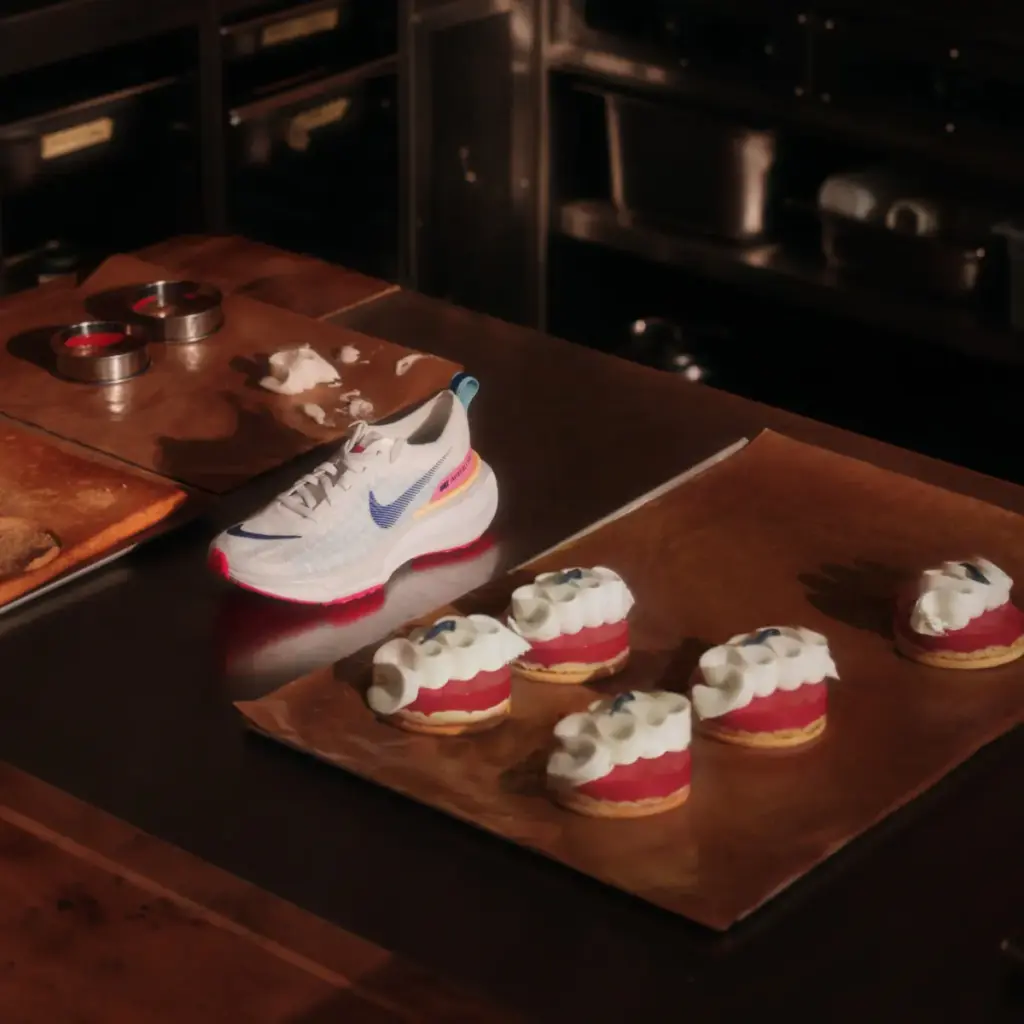
Recognizing this cultural shift, brands and local culinary institutions are beginning to collaborate in unprecedented ways. A prime example is a recent high-profile partnership between athletic giant Nike and the FREA Bakery—Berlin’s pioneering vegan, zero-waste bakery. Tasked with translating the physical sensation of a high-performance running shoe into an edible masterpiece, the team at FREA developed a limited-edition pastry inspired by the Nike Invincible 3.
This deep-dive report explores the anatomy of the Pastry Run trend, the logistics of merging high-end footwear design with zero-waste pastry craftsmanship, and what this innovative crossover signals for the future of urban lifestyle marketing and community wellness.
Detailed Chronology: From Underground Movement to Mainstream Phenomenon
The evolution of the Pastry Run did not happen overnight; it is the culmination of post-pandemic shifts in how urban populations approach wellness, socializing, and third-wave café culture.
Phase 1: The Organic Convergence (2021–2023)
As urban running experienced a massive resurgence, run clubs moved away from hyper-competitive, time-obsessed training regimens toward social, inclusive community building. At the same time, Berlin’s artisanal café scene exploded. Runners began naturally migrating toward local bakeries for their post-run social hours. Cafés that once catered strictly to laptop workers and brunch dates suddenly found themselves accommodating groups of sweaty athletes in neon moisture-wicking gear.
Phase 2: Institutional Adoption (Late 2023)
Local bakeries recognized the economic and cultural opportunity. Establishments previously intimidated by athletic crowds began adjusting their weekend hours and outdoor seating arrangements. Organized run clubs formalized the trend, officially naming their weekend outings "Pastry Runs." Routes were optimized to weave through scenic urban parks like the Mauerpark or Tiergarten before culminating at a specific bakery doorstep.
Phase 3: The Footwear Crossover (Spring 2024)
The movement reached a new zenith when lifestyle branding intersected with artisanal baking. Jasmin, co-owner of the FREA Bakery, was approached with an unusual challenge: design a pastry that physically and conceptually mirrors the Nike Invincible 3 running shoe. What followed was a rigorous culinary development process—complete with design briefs, flavor profiling, test-kitchen trials, and an exclusive public drop that fused athletic innovation with plant-based pastry art.
Supporting Context & Metrics: The Intersection of Fitness, Food, and Community
To understand why the Pastry Run has captured the cultural zeitgeist, one must examine the underlying sociological and economic drivers.
The Psychology of the Post-Workout Reward
Behavioral psychology has long supported the "pre-commitment" and "reward substitution" models. Knowing that a decadent, high-quality pastry awaits at the end of a grueling 10-kilometer route acts as a powerful psychological buffer against running reluctance. Unlike traditional sports nutrition—gels, electrolyte drinks, and protein bars—artisanal baked goods offer a sensory, emotional reward that transforms exercise from a chore into a holistic ritual.
The Rise of the "Third Place" for Athletes
Sociologist Ray Oldenburg’s concept of the "third place"—social surroundings separate from the two usual environments of home ("first place") and the workplace ("second place")—has traditionally been occupied by coffee shops and pubs. The Pastry Run movement expands this definition, turning bakeries into the ultimate third place for health-conscious urbanites.
- Social Connectivity: 78% of urban runners cite community and socialization as primary motivators for joining local run clubs.
- The Café Economy: Specialty coffee shops hosting run clubs report an average weekend revenue increase of 25% to 40% during peak running hours.
- Sustainability Alignment: The modern running demographic heavily overlaps with consumers who prioritize sustainable, ethical, and plant-based food systems—making zero-waste establishments like FREA Bakery natural hubs for the movement.
Official Statements: Behind the Scenes at FREA Bakery
Jasmin, co-owner of FREA Bakery—located in the heart of Berlin between Torstraße and Invalidenstraße—admits that the running subculture was initially outside her immediate purview, though she quickly witnessed its impact firsthand.
"Mir war das Konzept neu," says Jasmin, reflecting on her initial introduction to the Pastry Run trend. "Aber tatsächlich kommen zum Beispiel nach einem Marathon viele Läufer:innen zu uns."
FREA’s bright, spacious, and meticulously designed zero-waste facility proved to be an ideal terminus for endurance athletes. Runners could easily structure a route starting from the iconic Mauerpark, navigate a scenic, low-intensity urban loop, and cross the finish line directly at the bakery’s doors to convene over specialty coffee and plant-based delicacies.
When the opportunity arose to collaborate on a pastry inspired by the Nike Invincible 3—a shoe engineered for maximum cushioning, impact absorption, and cloud-like comfort—Jasmin saw an immediate conceptual overlap.
"Es ist eine neue Art von Challenge," Jasmin explains. "Wir wollten, dass der Geschmack das gleiche softe Gefühl liefert, wie ein Lauf mit dem Invincible 3."
The shoe’s distinctive white colorway accented with vibrant pops of color instantly sparked her imagination. The execution, however, required serious culinary engineering. Head Pastry Chef Thomas took the creative lead, supported by Jasmin and the broader kitchen team through multiple iterative development cycles.
"Das Tasting war der schönste Part!" Jasmin laughs, recalling the rigorous quality-control phases designed to achieve the precise equilibrium of structural bite and melt-in-your-mouth softness.
The resulting creation was an architectural feat: a delicate raspberry tart crafted from an airy sponge cake base, elevated with a velvety, whipped white chocolate ganache designed to mirror the lightweight, responsive cushioning of the Nike running shoe.
Future Outlook: Where the Pastry Run Movement is Headed
The success of the Nike x FREA Bakery activation signals a profound shift in how brands engage with urban subcultures. Rather than relying on traditional billboard advertising or sponsored social media posts, modern lifestyle brands are investing in experiential, community-driven touchpoints that integrate seamlessly into daily life.
1. Hyper-Localized Brand Collaborations
We can expect to see more performance athletic brands partnering with independent, artisanal food producers. Whether it’s specialty gelato shops collaborating on marathon recovery treats or artisanal sourdough bakeries launching limited-edition runs tied to major city half-marathons, the intersection of high-performance sport and slow-food craftsmanship is wide open for exploration.
2. The Institutionalization of Run Clubs
As bakeries and cafés increasingly recognize the foot-traffic value of runners, formal partnerships will likely emerge. Expect to see dedicated "Run Club Menus," loyalty programs linked to GPS running apps, and specially designed bicycle racks and hydration stations outside popular pastry shops.
3. Sustainable Fitness Culture
As demonstrated by FREA’s zero-waste ethos, future iterations of fitness-food crossovers will face increasing scrutiny regarding their environmental impact. The modern athlete demands that their post-run indulgence aligns with their ecological values. Plant-based, locally sourced, and waste-conscious baking will become the gold standard for athletic partnerships.
Conclusion
The Pastry Run is much more than a fleeting social media trend; it is a celebration of balance. It proves that living an active, health-conscious lifestyle does not require deprivation, but rather a thoughtful integration of physical exertion and culinary pleasure. As Jasmin and the team at FREA Bakery have proven, when you pair the kinetic energy of a runner with the creative genius of an innovative pastry chef, the finish line has never tasted so sweet.
Note: For detailed allergen information regarding limited-edition athletic collaborations and daily plant-based bakery offerings, visitors are encouraged to consult directly with the FREA Bakery staff.