Executive Overview
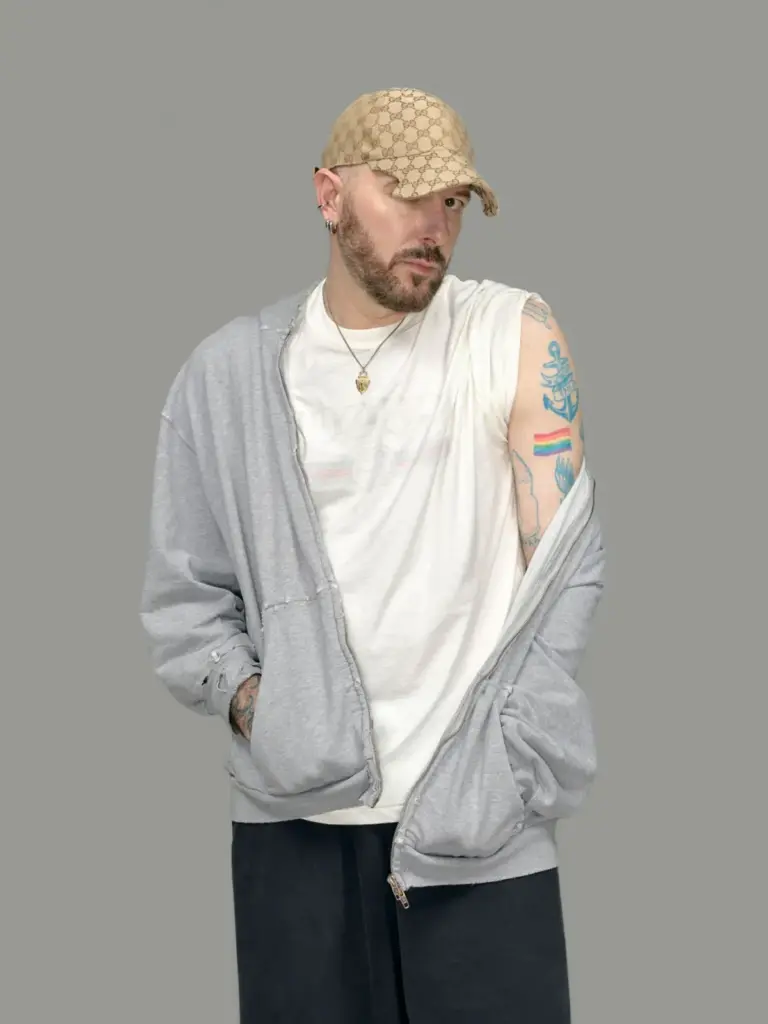
On a crisp February morning in Milan, exactly twenty-four hours before a make-or-break runway show, Demna—formerly known by his full surname Gvasalia before shedding it five years ago—tours his design headquarters with an unexpected aura of calm. "Obviously, I’m a bit stressed, but I feel good," he reflects, adjusting his black Adidas track trousers, black Slipknot band T-shirt, and chunky Gucci mules.
At 45 years old, the Georgian-born designer occupies one of the most scrutinized seats in global luxury: artistic director of Gucci. Once celebrated as the radical iconoclast of French fashion—the disruptor who dismantled traditional luxury codes at Vetements and later rewrote them at Balenciaga—Demna is now tasked with steering Kering’s crown jewel through an unpredictable industry downturn.
His appointment last summer was a calculated gamble by a conglomerate desperate to revitalize a flagship brand that had drifted from the cultural center. Yet, rather than relying solely on the biting, post-ironic conceptualism that defined his early career, Demna has embraced a surprising evolution. Working alongside newly appointed Gucci CEO Francesca Bellettini, he is trading esoteric theory for a visceral, highly commercial sensuality.
From redefining sizing systems for diverse body types to staging blockbuster spectacles in the heart of Times Square, Demna is attempting the ultimate balancing act: maintaining the artistic integrity of an avant-garde provocateur while engineering the disciplined, enduring growth required of a mega-brand.
Detailed Chronology: From the Post-Soviet Underground to the Heart of Milan
The Genesis of an Iconoclast (2014–2016)
Demna’s ascent into the upper echelons of fashion began a decade ago. In 2014, he co-founded Vetements, introducing a gritty, oversized aesthetic drawn from post-Soviet Eastern European youth culture—a demographic that simultaneously admired and despised the Western capitalist world. Mere months later, he was named artistic director of Balenciaga.

"It made him the most influential designer of the decade," notes Alexandre Samson, fashion historian and curator at Paris’s Palais Galliera. "He created characters that were very clear and reflective of a generation with no money, looking to the West."
By 2016, his debut at Balenciaga yielded massive commercial and cultural hits, most notably the chunky Triple S trainer. Within three years, the historic house had doubled in size, crossing the billion-dollar sales mark and earning Demna praise from The Washington Post for fundamentally "changing what we consider fashion."
The Swiss Respite and the Pandemic Pivot
Seeking refuge from the claustrophobia of Paris, Demna relocated to the Swiss woods with his husband, musician Loïk Gomez. There, surrounded by landscapes reminiscent of a Caspar David Friedrich painting, he began planning Balenciaga’s long-dormant haute couture relaunch.
However, the tranquility was short-lived. The COVID-19 pandemic delayed his couture debut, and the house subsequently faced a severe public relations crisis following an advertising campaign featuring children holding controversial accessories. Celebrities distanced themselves, and Demna issued a public apology.
Restless and uninspired by the rural quiet—noting that "boredom is a scary and tricky thing for a creative person"—Demna moved to Geneva, Paris, and eventually Los Angeles. This Californian interlude provided a crucial psychological shift. "It’s radically different, culturally speaking," he observes. "It’s not for no reason that Silicon Valley happened in California: there’s something about feeling more free in your head. In Europe, it’s much more conservative."

The Gucci Transition and the LA Fires
When Francesca Bellettini assumed the role of president and CEO of Gucci under the Kering umbrella last autumn, her mandate was immediate and clear. Seeking a visionary who could guarantee sustainable, long-term momentum rather than volatile boom-and-bust cycles, she approached Demna over dinner.
Demna requested time to study the brand. Traveling to the Gucci archives in Florence under a cloak of near-espionage, he immersed himself in the house’s staggering history. "I saw the whole world," he recalls. "Homeware. Chairs. Umbrellas. A roulette wheel. And the most incredible collections. I was seduced."
Working from his newly acquired 1950s bungalow in Los Angeles during the winter holidays, Demna compiled a comprehensive presentation outlining his vision for the brand. That very night, however, the devastating Los Angeles wildfires broke out. Fleeing with only his passport and laptop—having failed to back up his presentation files—he sent the manifesto directly to Kering headquarters.
"I was like: this is my vision," Demna remembers. "If they don’t like it, I might as well know now." Bellettini immediately understood the proposal, recognizing that Gucci’s lack of a strict couture founder—unlike a Christian Dior or Yves Saint Laurent—offered a unique freedom.
Supporting Context & Metrics: Decoding "Gucci-Core"
The Business of Scale and Sourcing
Gucci serves as the financial bellwether for Kering, making every creative shift a matter of intense economic scrutiny. The brand’s recent trajectory requires a fine calibration between heritage craftsmanship and modern market appeal.

To achieve this, Demna established a dual-base strategy. "In LA, I’m really in the epicenter of thinking behind how we use fashion," he explains. "Whereas in Italy, what I have is the product, the heritage, the history, the manufacturing—all those things that don’t exist in LA. It’s a pretty good balance. Gucci needs both."
Revolutionizing Sizing and Proportions
One of Demna’s most significant, yet quietest, innovations at Gucci involves a complete overhaul of traditional sizing. High fashion has historically adhered to tall, lean runway models, grading garments up or down in a linear fashion that often distorts proportions for diverse body types.
"It doesn’t consider the body type," Demna points out. "If someone is shorter and more muscled, he’s going to look like a dork." At Gucci, he is pioneering a multi-tiered sizing and fit architecture. Many pieces in his collections are engineered in distinct proportional variations—ranging from standard small and medium fits to a relaxed, oversized "Demna fit" designed to flatter varied physical forms without losing structural integrity.
Official Statements & Industry Perspectives
The cultural weight of Demna’s transition has drawn commentary from across the fashion and business landscapes:
- Francesca Bellettini (Gucci CEO): On steering the brand away from cyclical volatility: "I know that a lot of people say Gucci is like the phoenix, going up and down and re-emerging from the ashes. No. We need to go up with normal growth—and stay up."
- Luca de Meo (Kering CEO): On the immense scale of the enterprise: "The team have a big responsibility, because they are handling a mega brand."
- Kim Kardashian (Long-time Friend and Muse): On Demna’s creative autonomy: "He designs what he wants. He’s just so unapologetically himself… Being at Gucci, he can dream as big as he wants, right? He can say ‘I want a show in Times Square’ and pull it off."
- Vivian Wilson (Model): On Demna’s cultural resonance: "He knows how to garner attention, how to make a moment. He has a very good tap on the cultural conscience."
Future Outlook: A Defined Silhouette and a New Era
As Demna prepares his upcoming collections, his primary objective is the establishment of a definitive, recognizable Gucci silhouette—a structural signature akin to the Chanel boxy jacket or the Dior hourglass.

"Personally, I’m in need of a defined Gucci silhouette, and I will dare myself to show it," he states. "It’s about centimetres, it really is. It’s about proportion. And I want to do something that also I haven’t done before, which limits the possibilities."
Refining his design philosophy around a core emotional vocabulary—summarized on his laptop as Sharp, Confident, Chic, Bold, Rich, Eccentric, Hot, Sexy, Cool—Demna has shifted away from purely intellectual irony toward an intuitive, sensory engagement with clothing.
This vision culminated in his recent New York cruise presentation in Times Square, where supermodel Cindy Crawford closed the show in a cascading black feather gown, drawing a breathless silence across the bustling metropolis.
For Demna, the journey from post-Soviet outsider to the custodian of Italian luxury has fostered a profound personal and professional transformation. Having undergone a decade of therapy, he admits to finally feeling at peace with his identity and his work. As he watches the models take their final turns on the runway, the former provocateur finds himself operating from a place of unreserved affection for his craft: "The feeling when someone falls in love with someone? I have it now."