Executive Overview
It is another suffocatingly hot summer evening in London. A heatwave has gripped Europe, turning concrete pavements into ovens and leaving a fine sheen of sweat on the foreheads, necks, and limbs of commuters. Packed shoulder-to-shoulder on a northbound Tube carriage, passengers murmur quiet prayers for efficient ventilation.
"Thank fuck Wembley has air-con," a young woman tells her companion.
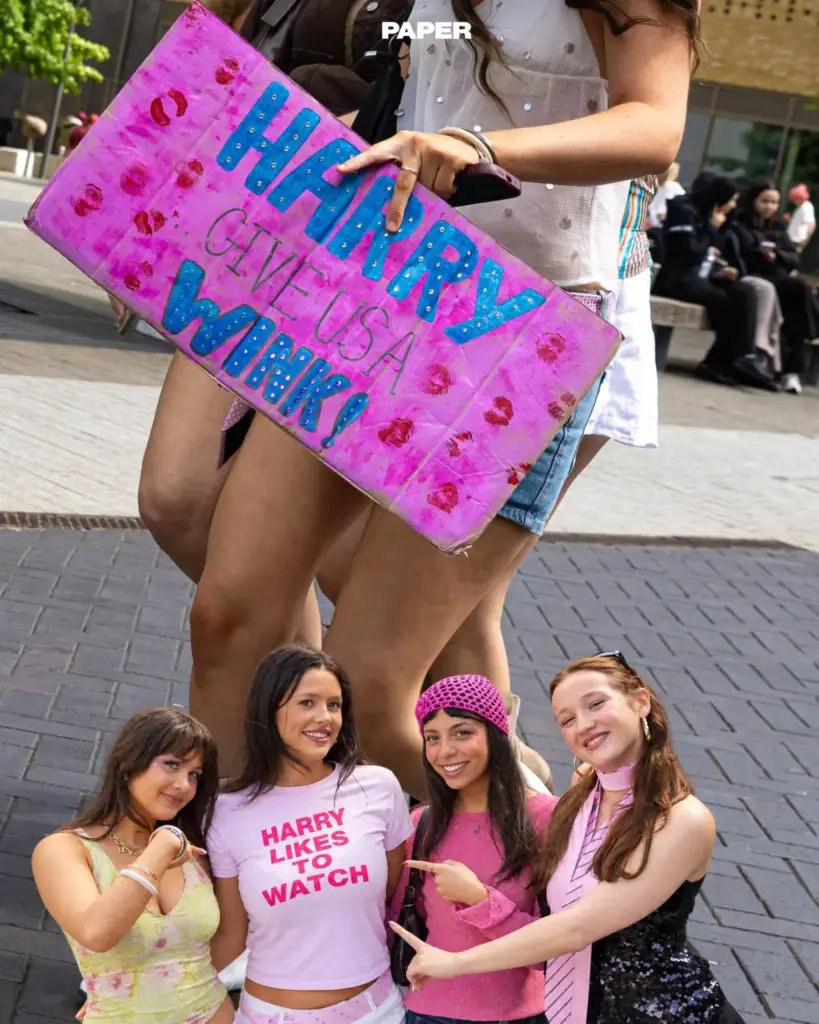
She doesn’t need to announce her destination. Her final stop is glaringly obvious on the pure, unfiltered merit of her neon-pink cowboy hat and matching marabou feather boa. Predictably, this is one of the nights Harry Styles is headlining Wembley Stadium. Almost the entirety of the carriage—and seemingly the entire Tube line at large—has adhered to the exact same sartorial blueprint.
Stepping off the train and meeting a friend outside the station, a sobering realization hits: We are severely underdressed.
Crucially, the outfits worn—cute boots, a modest mini skirt, standard concert attire since the inception of rock-and-roll—fail to make the cut. In the current cultural landscape of 2026, standard going-out clothes no longer suffice. Boots and a mini skirt are the antithesis of proper decorum for today’s Big Live Pop zeitgeist.
Outside the hallowed gates of Wembley, the scene resembles a surrealist costume convention. Little girls and their mothers, groups of women three drinks deep into pre-show festivities, and hyper-earnest teenagers are all outfitted in feather boas and Elton John-style oversized sunglasses. This hyper-curated, immersive dressing is no longer an eccentric outlier; it is the uniform of the modern music fan. From London to Los Angeles, wherever tour merchandise is sold and stadiums reach maximum capacity, the rules of engagement for live music have fundamentally shifted. Concert dressing has evolved from a casual expression of personal style into a high-stakes, communal ritual—a secular religion complete with vestments, sacraments, and an unwavering dogma of belonging.
Detailed Chronology: The Evolution of Concert Costume Culture
To understand how a pair of jeans and a nice top became social anathema at pop concerts, one must trace the rapid evolution of post-pandemic fandom. For decades, live music dress codes fell into loose, predictable categories. Fans wore band T-shirts to rock shows, bohemian fringe to indie-folk festivals, and clubwear to electronic dance music events. You could wear a vintage Nirvana tee to a Geese gig, flash a knowing nod to indie purists, and coast on the cultural currency of looking effortlessly nonchalant.
Yet, over the past half-decade, this casual approach to concert-going has been utterly upended. The genesis of this modern phenomenon can be traced directly through the post-lockdown resurgence of live entertainment, catalyzed by a triumvirate of megastars: Beyoncé, Taylor Swift, and Harry Styles.
The Renaissance Decree and The Eras Blueprint
When live music returned from pandemic hibernation, Beyoncé’s 2023 Renaissance tour demanded immediate commitment from the Beyhive. The superstar explicitly commanded her audience to dress in silver to celebrate Virgo season and honor the futuristic, house-music-inspired aesthetic of her album. Millions complied, turning stadiums into shimmering oceans of chrome and metallic lamé.
Shortly thereafter, Taylor Swift’s record-breaking Eras tour elevated fan participation to an Olympic sport. Arriving at a Swift concert in 2024 without a thematic costume invited gentle interrogation. Standing in the concourse in a simple white maxi skirt, one might be asked: "What Era are you meant to be?" A tentative suggestion of Folklore would be met with a sweet, pitying critique: "I feel like that’s more of a cardigan-oriented look. Maybe you could see it as a 2008 VMAs nod."
Meanwhile, Swifties weaponized lyricism into tangible culture. The famous line from Midnights—"You’re On Your Own, Kid"—inspired the ritualistic creation and trading of friendship bracelets. What began as a cute nod to a bridge lyric snowballed into a mass anthropological phenomenon. Fans chronicled their bead-stringing sessions on TikTok and Instagram with the industrial zeal of local rosary bead factories, turning trade-offs with strangers into sacred sacraments.
The Shift from Idol Worship to Community Bonding
This hyper-costumed engagement marks a profound psychological break from previous generations of fandom. Consider the Directioners of the early 2010s: young women who dressed to catch the eye of Harry Styles, curating looks rooted in the tropes of Wattpad fanfiction, hoping against hope to be noticed from the front row.
Today, Styles’ audiences—and pop fans at large—no longer dress for validation from the artist. They dress for each other. The object of the gaze has inverted. The primary goal is no longer to be singled out by the object of affection on stage, but to achieve seamless, harmonious integration within the crowd. The community is the event.
Even artists who issue no explicit dress codes find themselves caught in the gravitational pull of this phenomenon. Charli XCX, the undisputed doyen of underground-infused pop cool, never mandated a specific look for her Brat tour. Yet, across every stop, audiences spontaneously assembled in Charli’s signature aesthetic: rave shades, white ribbed tank tops, and an all-consuming, highly specific shade of acid-lime green that outshone the stage lighting itself.
Supporting Context & Metrics: The Economics and Psychology of Fandom
The modern concert-dressing phenomenon is underpinned by immense economic engines and complex sociological drivers. Live music is no longer merely an auditory experience; it is a multi-sensory, highly monetized ecosystem where fashion acts as the primary currency of social capital.
The Consumerist Paradox
Critics are quick to point out the glaring commercialization of these trends. To participate fully in the Eras tour or a Harry Styles residency requires significant financial outlay beyond the already exorbitant cost of ticket prices. Fans purchase custom-made sequin bodysuits, bulk-order beads, invest in specialty lighting glasses, and buy feather boas destined for a single night of use.
[Ticket Purchase]
       │
       ▼
[Thematic Wardrobe Assembly] ──► (Fast Fashion / Custom Etsy Orders)
       │
       ▼
[Pre-Show Rituals] ──────────► (Friendship Bracelet Trading / TikTok Hauls)
       │
       ▼
[Stadium Integration] ───────► (Communal Validation / Parasocial Belonging)
Fast-fashion retailers and independent Etsy creators have built micro-economies around these rolling tours, dropping capsule collections explicitly tailored to upcoming album eras or tour legs. A twenty-dollar feather boa or a sequined cowboy hat may be disposable commodities, but to the consumer, they represent admission tickets to an exclusive social hierarchy.
The Antidote to Isolation
To dismiss this wave as mere consumerist conformity is to misunderstand the psychological profile of today’s young concert-goers. Gen Z and younger Millennials came of age during a period marked by profound social isolation, economic uncertainty, and extended disruptions to traditional milestones like school, university, and early-career socializing.
Sociologists note that ritualistic dressing fulfills a deep-seated human need for tribal affiliation. For a demographic frequently scrutinized, diagnosed, and analyzed through the lens of chronic anxiety and digital alienation, the collective effort of concert dressing is an act of reclamation. By transforming themselves into walking canvases of shared pop-culture lore, fans engineer tangible spaces of safety, joy, and mutual recognition. They are not dressing to please a distant celebrity; they are dressing to signal solidarity, warmth, and shared identity to the stranger standing next to them in the pit.
Official Statements and Industry Perspectives
Cultural commentators, fashion historians, and industry insiders increasingly view fan-led costuming as the most significant development in live entertainment culture this century.
Dr. Aris Thorne, a professor of contemporary cultural sociology at the University of London, notes that modern concert dressing mirrors ancient communal rites.
"Historically, humans have always utilized costume, paint, and synchronized adornment to mark transitionary rituals and reinforce tribal bonds," Dr. Thorne explains. "What we are witnessing with pop fandoms is the secularization of ritual. The stadium is the cathedral; the artist is the focal icon; the fan-made costumes and exchange items are the liturgy. It gives participants a profound sense of agency in an otherwise atomized world."
Prominent live-event producers have also noted the shift in audience behavior. Stage designs, lighting cues, and merchandise strategies are increasingly calibrated to complement, rather than overshadow, the visual spectacle generated by the crowd itself.
"Ten years ago, artists brought all the visual drama," shares a veteran tour manager who has worked with top-tier pop acts across European and North American stadiums. "Today, the artist provides the structural framework, but the audience completes the art installation. If you look out at a crowd during a major tour now, the audience is the light show. We design sets with the knowledge that thousands of camera phones and glowing, customized outfits will reflect every beam of light right back at the stage."
Future Outlook: Where Does Pop Fandom Go From Here?
As the live music industry continues its post-pandemic boom, the stakes for concert participation will only escalate. The era of casually throwing on a vintage band tee and faded denim to catch a stadium show feels quaint—a relic of a bygone era when pop music was consumed passively rather than lived actively.
Looking ahead, we can anticipate several evolutionary leaps in this phenomenon:
- Hyper-Personalized Digital Integration: Expect augmented reality (AR) and wearable tech to merge with physical concert wardrobes. Future tours may feature garments embedded with near-field communication (NFC) chips that sync with stadium light shows or allow instant digital connection and social media profile exchanges between trading fans.
- Sustainability Reckoning: As eco-consciousness clashes with the hyper-disposable nature of fast-fashion concert costumes (such as single-use feather boas and synthetic sequins), fan communities are already experiencing internal pressure to pivot toward thrifted, upcycled, and rental-based tour wardrobes. The next wave of fan fashion will likely prioritize circular economies without sacrificing theatricality.
- Genre Expansion: While pop, hip-hop, and indie icons like Beyoncé, Taylor Swift, and Charli XCX pioneered this movement, the expectation of themed dressing is bleeding into traditionally conservative genres. Country, rock, and even classical crossover events are beginning to see audiences adopt specialized dress codes.
Ultimately, the phenomenon of cult concert dressing transcends the sum of its commercial parts. It represents a powerful cultural reframing of the live music experience. In an era defined by digital fragmentation, young people are proving remarkably adept at using pop music as mortar to build physical communities brick by glittering brick. Whether that requires a twenty-dollar feather boa, a meticulously beaded friendship bracelet, or a head-to-toe homage to an album cycle, the message from the stadium floor is resounding and clear: we are here, we are together, and we have dressed for the occasion.