Executive Overview
The horizon for fans of The Witcher franchise has just become significantly clearer, albeit demanding a remarkable exercise in patience. CD Projekt Red has officially confirmed that The Witcher 4—the highly anticipated tentpole project that marks the dawn of an entirely new saga—is targeting a release window of 2028.
The announcement, delivered via a video message shared by joint CEO Michał Nowakowski on the official Witcher social media channels, establishes concrete expectations for what the studio describes as its "biggest, boldest, and most ambitious game to date." While the confirmation provides a long-awaited anchor for industry watchers and eager players, it simultaneously dashes any immediate hopes of a physical or playable presence for the next-gen sequel at this week’s Gamescom convention.
Instead, CD Projekt Red is pivoting its immediate convention spotlight toward a surprising relic of the past: a brand-new expansion for 2015’s universally acclaimed The Witcher 3: Wild Hunt, titled Songs Of The Past. Set for a 2027 release window and featuring the legendary Geralt of Rivia, this late-stage DLC is increasingly viewed by analysts as a narrative bridge designed to prime audiences for the paradigm shift coming in The Witcher 4.
With development ramps underway, a targeted 2028 launch grants the studio ample padding to refine its ambitions—leaving wiggle room for late-year adjustments or a potential spill into 2029. As the gaming landscape digests the wait, related projects helmed by franchise alumni are stepping into the spotlight to fill the dark-fantasy void.
Detailed Chronology of the Announcement
The unfolding of CD Projekt Red’s Gamescom strategy and long-term roadmap has been a masterclass in expectation management, trickling out through coordinated digital reveals rather than traditional floor-space bombshells.
The Gamescom Disappointment and Digital Reveal
As industry insiders converged on Cologne for Gamescom, speculation mounted regarding whether CD Projekt Red would offer a first playable demo or a cinematic deep-dive into The Witcher 4. Those theories were systematically dismantled when joint CEO Michał Nowakowski appeared in a pre-recorded broadcast shared via Geoff Keighley’s network and the official Witcher X (formerly Twitter) account.
"To our beloved fans, players, and community: As we near Gamescom in just a few days, CD Projekt Red Joint-CEO Michał Nowakowski would like to personally invite YOU to join us there, and hear about the future of The Witcher franchise!" the official account posted, setting the stage for the dual-news drop.
While The Witcher 4 was explicitly ruled out of the convention floor, Nowakowski delivered the critical milestone update: the studio is zeroing in on a 2028 release window for the project.
The Songs Of The Past Gamescom Presence
To soften the blow of the four-year wait for the next saga, CD Projekt Red confirmed that The Witcher 3: Wild Hunt is receiving a brand-new, officially backed expansion titled Songs Of The Past.

Though an exact calendar date remains under wraps, the DLC is slated to launch sometime in 2027. Attendees at Gamescom will receive their first taste of the expansion via a dedicated trailer premiering during Opening Night Live, followed by a physical showcase on the showroom floor. Whether general attendees will be handed controllers or restricted to a guided developer walkthrough remains unverified by CD Projekt Red at the time of publication, but the mere existence of fresh content for an 11-year-old game has electrified the community.
Supporting Context & Metrics: The Anatomy of a Decade-Long Wait
Understanding why The Witcher 4 is tracking for a 2028 release requires examining CD Projekt Red’s internal evolution, project management philosophy, and historical development cycles.
Learning from Past Traumas
The ghosts of Cyberpunk 2077’s tumultuous 2020 launch continue to loom large over the corporate ethos of CD Projekt Red. The executive board has pivoted away from rigid, early lock-in release dates that force crunch culture and precipitate technical instability.
When management floated hints back in early 2025 suggesting a potential 2027 arrival for The Witcher 4, prudent analysts treated the forecast with healthy skepticism. By formally stepping back and committing to a broad 2028 target, the studio is engineering a safety buffer. This timeline allows developers to absorb unforeseen engineering roadblocks—particularly given the transition to Epic Games’ Unreal Engine 5—without resorting to emergency delays.
The Unreal Engine 5 Migration
A massive factor dictating the 2028 timeline is the foundational technology underpinning the upcoming saga. Abandoning their proprietary REDengine in favor of Epic Games’ industry-standard Unreal Engine 5 represents a complete structural overhaul for CD Projekt Red’s pipeline.
While UE5 promises cutting-edge graphical fidelity, seamless open-world streaming via Nanite and Lumen, and streamlined cross-team training, rebuilding internal toolsets and workflows takes years. The engineering teams are essentially constructing a new methodological foundation while simultaneously designing a generation-defining role-playing game.
The Narrative Bridge: Why a 2015 Game is Getting DLC in 2027
The announcement of Songs Of The Past for The Witcher 3 defies conventional industry logic. Releasing a substantial narrative expansion more than a decade after a single-player game’s initial debut is unprecedented outside of MMOs.
However, industry experts suggest this is a calculated narrative maneuver. With The Witcher 4 stepping away from Geralt of Rivia to focus on Ciri—his adopted daughter—as the primary protagonist of a brand-new saga, Songs Of The Past may serve as a thematic torch-passing exercise. By keeping Geralt in the spotlight one last time in 2027, CD Projekt Red can gracefully close the book on the original trilogy while laying narrative breadcrumbs that lead directly into Ciri’s new frontier.
Official Statements & Community Reactions
The fallout from Nowakowski’s address has sparked widespread discourse across developer forums, investor calls, and community hubs alike.

The CEO’s Appeal for Patience
Recognizing that a 2028 arrival tests the limits of fandom endurance, Michaël Nowakowski addressed the community directly with a mixture of candor and humility:
"I know it’s a bit of a wait and you’d love to play it sooner, but let the team cook. It will be worth the wait."
This sentiment echoes the studio’s broader post-mortem restructuring. Investors have largely responded favorably to the measured approach, prioritizing long-term brand equity and polish over rushed quarterly earnings.
Community Response
Reactions across social media platforms and the official Witcher subreddits have been largely philosophical. While a vocal contingent expressed disappointment over missing out on a 2027 target, the prevailing mood is one of quiet acceptance. The community’s collective trauma from premature cyberpunk hype has turned patience into a badge of honor; most fans would rather wait until 2028 or beyond for a polished masterpiece than receive a fractured product earlier.
Future Outlook: Filling the Dark-Fantasy Void
As the gaming community stares down a multi-year wait for The Witcher 4, the dark-fantasy action-RPG market is far from dormant. Coincidentally, alternatives crafted by industry veterans are arriving to bridge the gap.
The Blood Of Dawnwalker: A Spiritual Successor Emerges
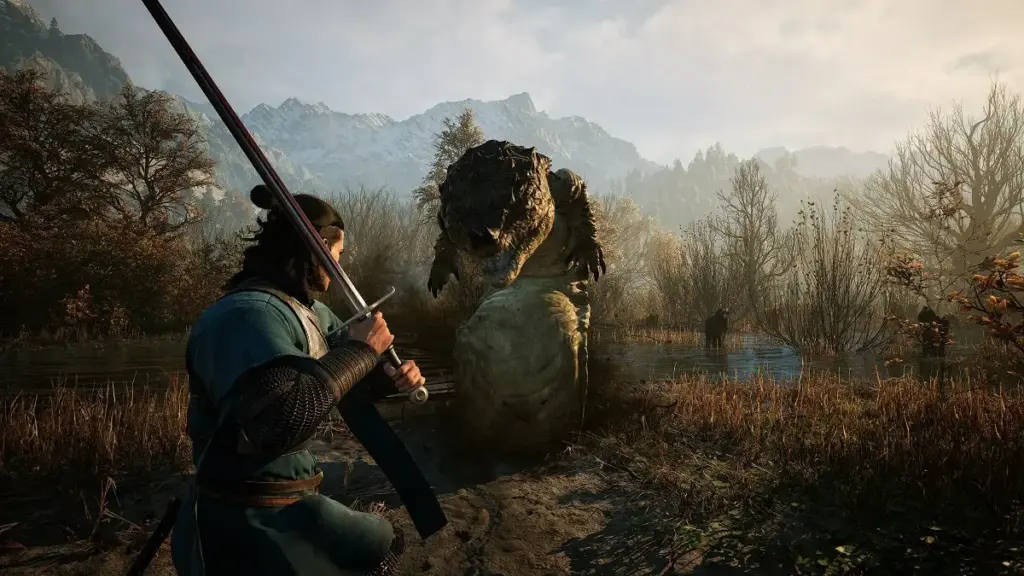
For players searching for immediate relief, September 3 marks the launch of The Blood Of Dawnwalker, a high-profile action RPG that has drawn undeniable comparisons to The Witcher series.
The title is being developed by Rebel Wolves, a studio founded in 2022 by former CD Projekt Red veterans—most notably Konrad Tomaszkiewicz, who served as co-director on The Witcher 3. Set in a grim, atmospheric world, players assume the role of a human-vampire hybrid who is given a frantic 30-day window to save his family. Featuring a blend of traditional swordplay and supernatural vampire abilities such as tactical teleportation, The Blood Of Dawnwalker carries the distinct DNA of classic Polish RPG development. Preview sessions have noted that its tone, pacing, and gritty narrative framing evoke the exact brand of dark fantasy that made The Wild Hunt a cultural phenomenon.
Looking Ahead to the New Saga
When The Witcher 4 finally materializes in 2028, it will shoulder the immense weight of revitalizing a legendary franchise. By passing the protagonist mantle to Ciri, CD Projekt Red is taking a daring creative risk—one that moves away from the beloved, gravel-voiced witcher fans have followed for decades into uncharted, multiverse-spanning territory.
Until then, the path forward is marked by Songs Of The Past in 2027, spiritual successors like The Blood Of Dawnwalker hitting shelves this autumn, and a development team quietly hunkered down in Warsaw, polishing the next great chapter of open-world role-playing.