Executive Overview
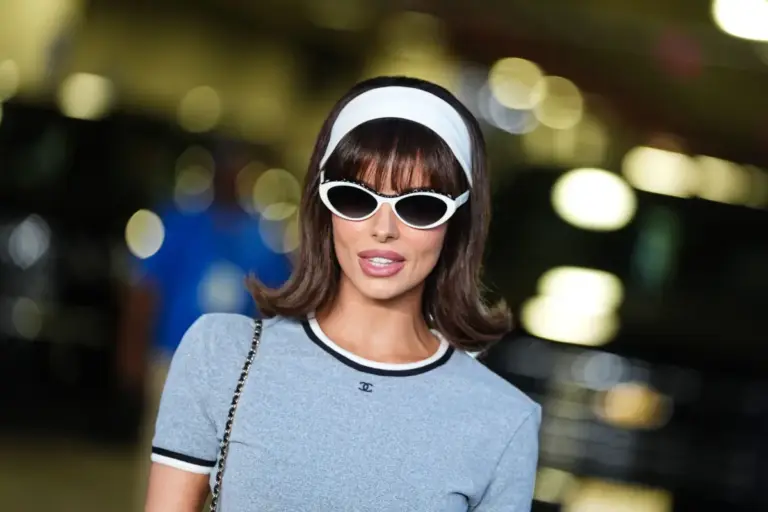
As the beauty industry pivots away from the stark, high-contrast geometry and ultra-edgy styling that defined the early 2020s, a softer, more romantic philosophy is taking root across global salons. Entering the beauty market with significant momentum, the "love-layers" haircut has emerged as the definitive style of 2026. Championed by top-tier Hollywood stylists and adapted rapidly for international runways, this fresh iteration of layered hair focuses on movement, face-framing softness, and an organic silhouette that feels as effortless as it is precise.
Unlike its heavily texturized predecessors, the love-layers cut is engineered to look less obviously layered. It prioritizes fluid motion, cascading lengths, and a distinctive heart-shaped framing effect that gently embraces the face. Spearheaded by celebrity stylists such as Dimitris Giannetos—who has already styled high-profile figures like Gigi Hadid, Penélope Cruz, and Ciara in the cut—the trend bridges the gap between summer buoyancy and autumn elegance.
However, beneath its seemingly effortless exterior lies a sophisticated architectural haircut that demands specific technical execution, tailored maintenance schedules, and a committed styling routine. This report investigates the mechanics of the love-layers trend, examining its divergence from previous generational cuts like the C-cut, how to customize it for various hair textures, the logistical realities of its upkeep, and what industry metrics signal for its longevity as we move deeper into the 2026 calendar year.
Detailed Chronology: The Evolution of the Layered Silhouette
To understand the current dominance of love layers, one must trace the evolutionary arc of modern haircutting trends over the past half-decade. The journey from heavy, blunt interventions to soft, seamless framing highlights a broader cultural shift toward restorative, wearable beauty.
Phase 1: The Era of High-Contrast Shags (2020–2022)
In the immediate wake of global lifestyle shifts, consumer preferences leaned heavily toward radical transformations. Haircuts like the modern shag and the wolf cut dominated social media feeds. These styles relied on stark, highly visible layers, heavy crown volume, and intentionally disheveled textures. They were designed to look edgy, rebellious, and unapologetically distinct.
Phase 2: The Rise of Curvature and the C-Cut (2023–2025)
As beauty consumers sought a return to polish without sacrificing modern movement, the industry witnessed the birth of the C-cut. Characterized by curved, inward-sweeping layers that mimicked the letter "C," this cut provided a softer alternative to the aggressive layering of the shag. It focused on framing the face while maintaining structural integrity at the ends. Yet, for many clients, the C-cut could sometimes feel rigid, mechanical, and overly manufactured.
Phase 3: The Birth of the Love-Layers Phenomenon (2026)
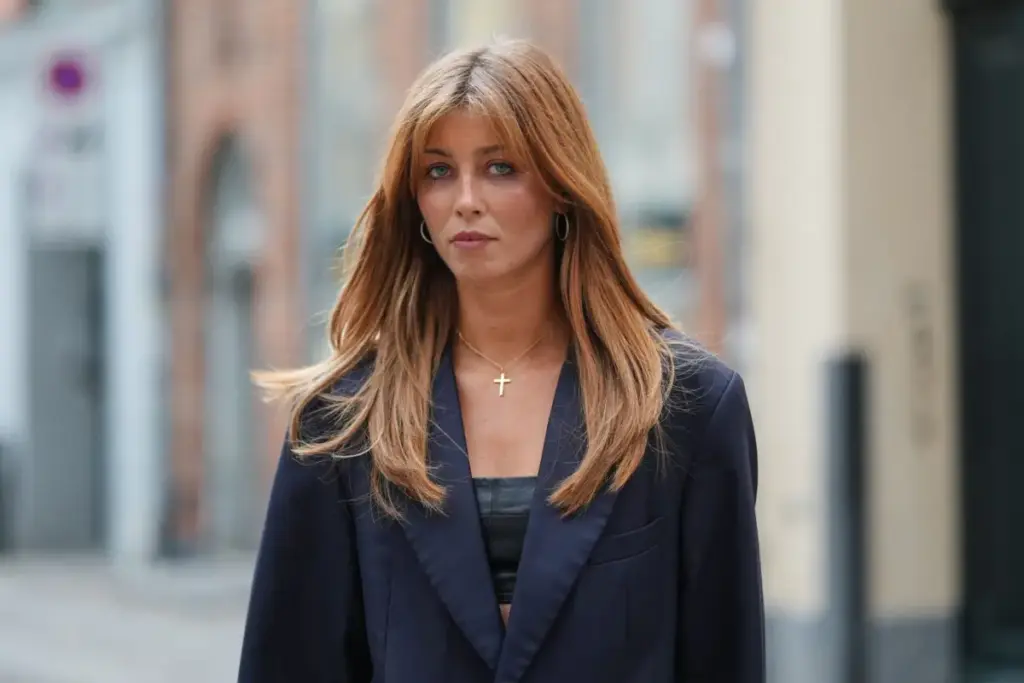
By early 2026, the demand shifted further toward understated luxury and hyper-natural motion. Enter the love-layers cut. Building upon the foundational concepts of the C-cut, this new technique refines the execution. Stylists eliminated sharp demarcation lines in favor of continuous, fluid transitions. By conceptualizing the hair as a heart-shaped frame—concentrating volume near the upper crown while letting the lower tiers taper gracefully past the shoulders—the love-layers cut successfully marries precision tailoring with romantic, touchable movement.
Celebrity adoption accelerated this chronology. When trendsetting figures began appearing on red carpets and in high-fashion editorials with face-framing layers that appeared to float rather than fall, salon booking requests surged globally, marking the official transition into the love-layers era.
Supporting Context & Metrics: Technical Breakdown of the Cut
What fundamentally separates the love-layers cut from traditional layered styles is the technical vocabulary employed by master stylists. A casual observer might view it simply as "long hair with face-framing pieces," but professional execution requires precise geometric planning.
The Anatomy of Love Layers
- The Foundation: The cut is designed primarily for medium-to-long hair, typically falling anywhere between the shoulders and the mid-back.
- The Transition Point: Unlike classic layers that begin near the crown or mid-ear, love layers traditionally start softly below the chin. This prevents the hair from losing its weight prematurely and ensures that the upper section acts as a seamless veil around the face.
- The Taper: As the layers descend toward the ends, they undergo a specialized tapering process. This creates the signature heart-shaped silhouette, where the hair gently hugs the jawline and sweeps inward toward the collarbones or chest.
Advanced Cutting Techniques
Mastering this look requires abandoning traditional heavy-shears cutting in favor of more nuanced methods. Stylists rely heavily on:
- Slide Cutting: Allowing the scissors to glide softly down the hair shaft to create graduated, weightless lengths.
- Point Cutting: Texturizing the ends at an angle to diffuse blunt lines and encourage natural wave patterns.
- Targeted Shaving: Utilizing razor-cutting techniques on specific density zones to remove bulk without causing frizz.
These combined techniques ensure that the hair’s overall length is preserved. Clients who are emotionally attached to their long locks can embrace the love-layers trend without fearing a radical, irreversible chop. It is an intervention built entirely on enhancing existing texture rather than dismantling it.
Official Statements & Stylist Insights: Tailoring the Trend to Your Hair Type
Navigating a major hair trend requires a realistic appraisal of individual hair architecture. Industry experts emphasize that while the love-layers cut is remarkably versatile, it is not a universal cookie-cutter style. Customization is essential.
Hair Density and Texture Considerations
- Medium to Thick Hair: This texture is the ideal candidate for love layers. With an abundance of natural density, medium-to-thick hair easily supports the heart-shaped silhouette. The layers have enough structural integrity to hold their shape, puff slightly at the crown, and sweep inward organically.
- Fine Hair: Individuals with fine or thin strands must approach the trend with caution. Over-layering fine hair can inadvertently deflate the style, causing it to lie flat rather than bounce with movement. Stylists working with fine hair must exercise immense restraint, utilizing fewer, longer layers to maintain density at the ends while still achieving a customized, face-framing effect.
Expert Guidance from the Salon Chair
Renowned stylists recommend scheduling an in-depth consultation prior to your appointment. Discussing your daily styling habits, natural curl or wave pattern, and washing frequency ensures that the stylist can modify the drop point of the layers.
Furthermore, beauty authorities stress the importance of home-care continuity. As Dimitris Giannetos and other leading stylists point out, the romantic illusion of the love-layers cut is largely maintained through intentional styling practices.
Future Outlook: Maintenance, Styling, and Long-Term Viability
While the visual payoff of the love-layers haircut is undeniably high, it requires a clear-eyed commitment to maintenance and daily styling. Consumers evaluating this trend must weigh its aesthetic rewards against the logistical requirements of upkeep.
The Daily Styling Commitment
For those accustomed to a strict air-dry routine, the love-layers cut demands a lifestyle adjustment. Because the cut relies on directional movement—specifically, blowing the front sections away from the face to create the characteristic rounded, heart-framing effect—some active styling is non-negotiable.
- The Blow-Dry Ritual: Stylists recommend drying the hair using a large round brush or a modern hot-air styling tool (such as an infrared thermal bounce brush). For maximum longevity, sections should be clipped up while warm to set the memory of the wave before being gently tousled with fingers.
- Product Selection: Lightweight products are paramount. A quality volumizing mousse applied to damp hair provides the necessary foundational lift at the roots without weighing down the mid-lengths and ends. Heavy oils or sticky serums should be avoided; the integrity of the cut relies on loose, weightless motion.
- Day-Two Refreshing: On subsequent days, the style can be rapidly revived using large velcro rollers or a quick touch-up with a round brush, bypassing the need for a complete wash-and-blow-dry cycle.
Salon Maintenance and Upkeep Schedule
The geometric precision of the love-layers cut comes with a maintenance clock. Because the heart-shaped silhouette depends heavily on specific proportions, the cut must be touched up in the salon every six to eight weeks.
If neglected beyond this window, the strategic layers will grow out of alignment, causing the face-framing elements to lose their distinctive sweep and transforming a high-fashion statement into an overgrown, shapeless grow-out phase.
The Verdict for the Rest of 2026 and Beyond
Despite the maintenance considerations, industry forecasts predict that the love-layers cut will retain its crown as a dominant salon request well into the upcoming seasons. Its unique ability to offer a dramatic aesthetic upgrade without sacrificing length makes it an irresistible option for beauty enthusiasts worldwide.
Ultimately, the love-layers trend proves that sophistication does not require severity. By favoring soft transitions, romantic framing, and touchable movement, this haircut delivers the sweetest possible evolution in modern hairstyling—proving that when hair looks this good, the effort required to maintain it is entirely justified.